
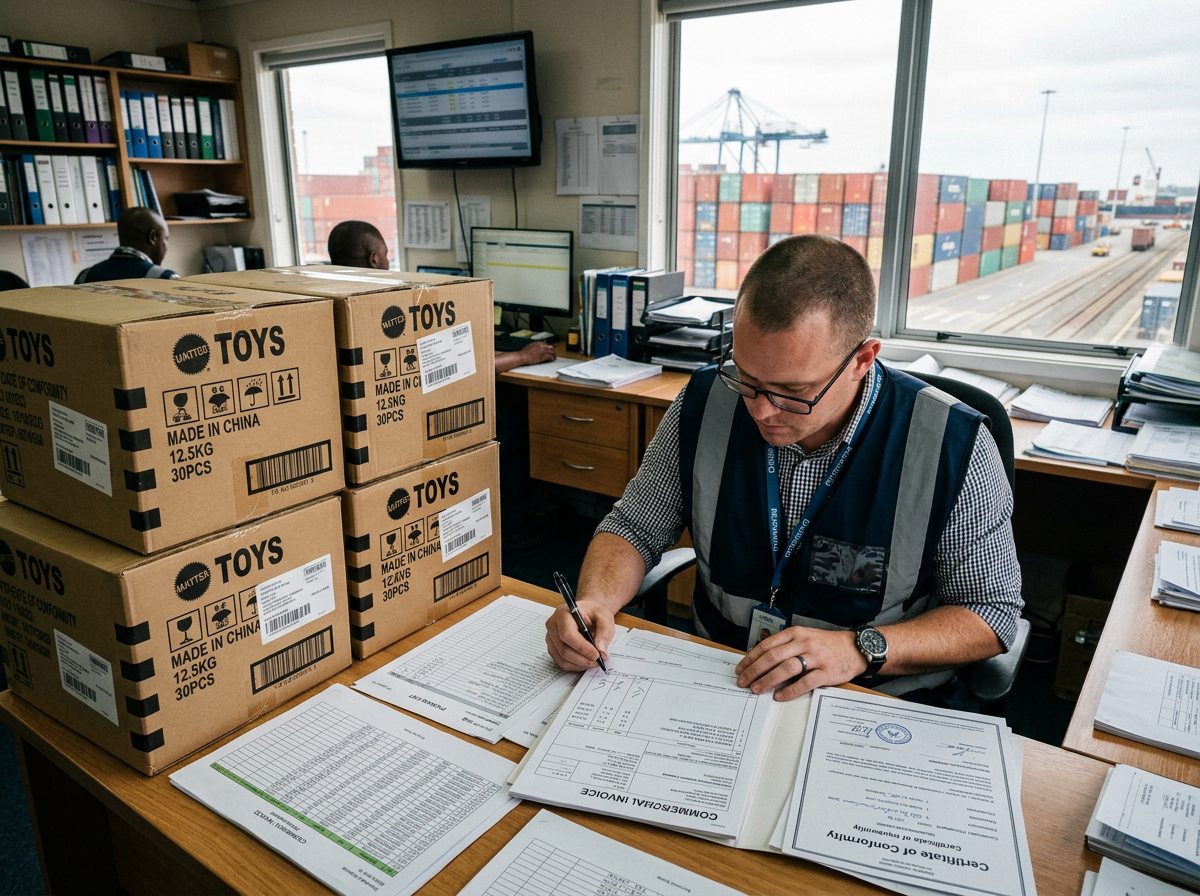
A toy shipment can pass every safety test in the factory’s file and still sit in a bonded warehouse for three weeks because one certificate names the wrong company. The gap between a passed test and a cleared entry is where first-time importers lose money, and it rarely involves product quality. Importing toys from China runs on documents, and every page of that file is the buyer’s legal responsibility by the time the container reaches the port.
The stakes sit higher than most sourcing checklists admit. Customs can reclassify a mislabeled product and re-bill duty retroactively, port surveillance teams can detain a container whose certificate does not match the exact SKU, and retail buyers now audit the document chain before confirming listings. This guide maps the full trail for a toy import program: what clears customs, what a certificate must contain, and where shipments most often stall. For most buyers importing toys from China, the paperwork decides the timeline long before the product does.
Why a Passed Safety Test Is Not an Import Document
Compliance testing and import compliance are two different processes with different owners. A test report says a sample met a standard; import compliance says the shipment itself is documented, classified, and traceable from the factory gate to the destination port. Importing toys from China is regulated twice — in the laboratory and at the border — and the second exam is the one most buyers under-prepare for.
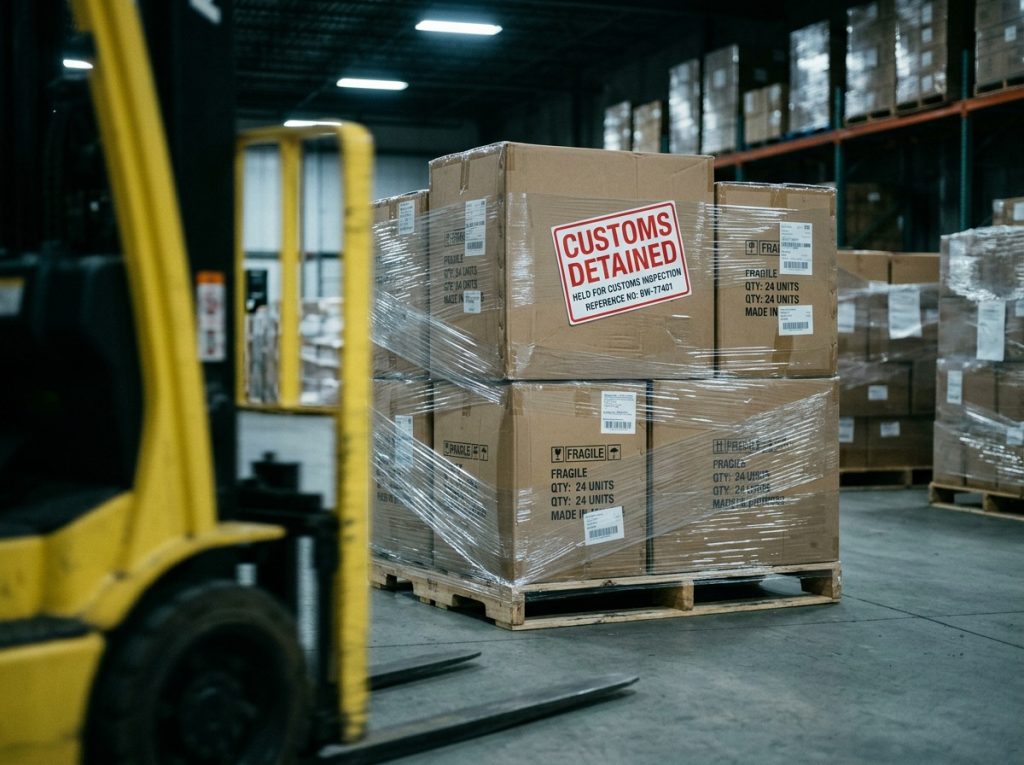
Under the CPSIA, the importer of record steps into the manufacturer’s legal shoes. When a children’s product crosses the US border, the importer certifies conformity in English, based on third-party testing by a CPSC-accepted laboratory, naming the product, the applicable rules, and the place and date of manufacture. The testing and certification requirements are codified at 16 CFR Part 1107. A factory certificate issued in another company’s name is not that document, and importing toys from China under someone else’s paper leaves the legal duty exactly where it started — with the importer.
European entries run on the same principle. An EU importer verifies CE marking and a matching Declaration of Conformity before placing a toy on the market, and keeps that file available for ten years. In every regulated market, toy sourcing from China makes the buyer the accountable link in the chain.
The Document Chain That Clears a Toy Shipment
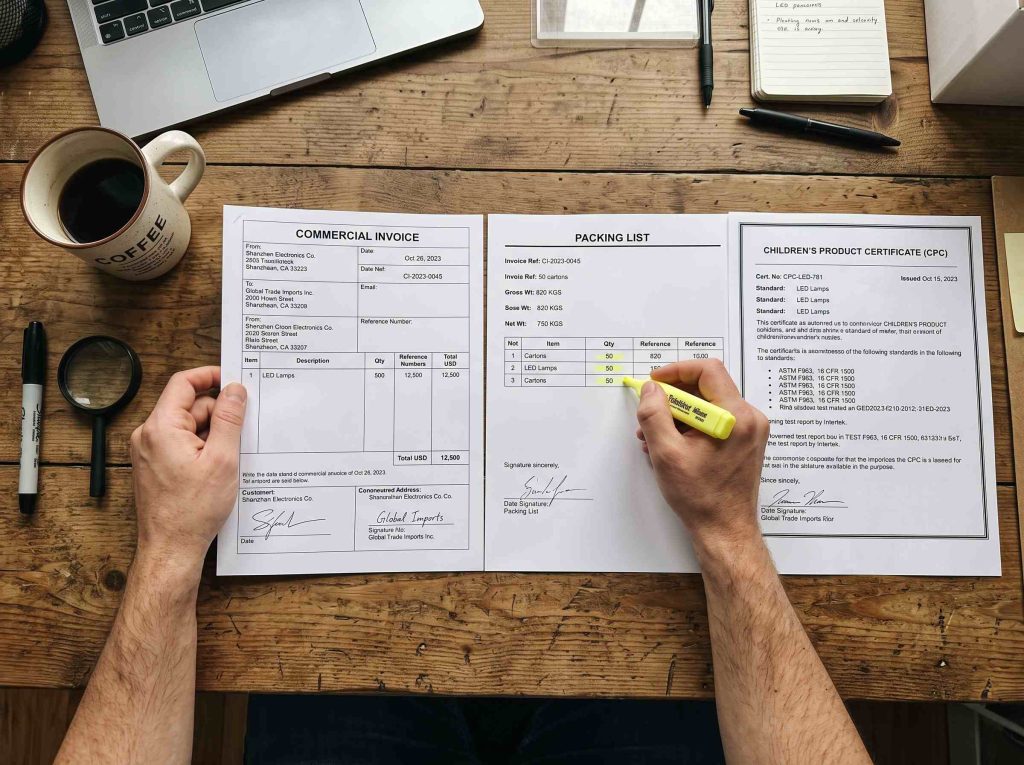
Every entry stands on a chain of documents in which each link references the others. Border officers read that chain across its links, not one page at a time.
| Document | Issued by | What it proves to customs |
| Commercial invoice | Exporter | Transaction value, Incoterms, and declared HS code — must match the purchase order |
| Packing list | Exporter | Carton counts and weights — must reconcile line by line with the invoice |
| Bill of lading or air waybill | Carrier | Title to the goods and consignee — must match the invoice parties |
| Children’s Product Certificate (US) | Importer of record | Conformity based on third-party tests of the exact SKU |
| Declaration of Conformity (EU) | Manufacturer or importer | CE conformity under the Toy Safety Directive |
| Entry summary | Customs broker | Final classification, duty payment, bond status |
Missing pages are less dangerous than broken links between them. The formal entry process is outlined in CBP’s guide to importing commercial goods, and toys add the certificate layer on top of it. Once a shipment exceeds the formal-entry value threshold of $2,500, a customs bond and a broker-filed entry summary join the chain. Assembling the complete file before the goods leave the factory — while a mismatch can still be fixed at the source — is what turns importing toys from China into a routine step rather than a detention report.
Tariff Classification Starts at the HS Code
The duty bill is decided by the Harmonized System code on the invoice, and toys occupy a narrow corner of it. Most toys — building sets, puzzles, ride-ons, stuffed animals, scale models — fall under heading 9503, which carries a 0% base rate into the United States. Dolls representing human figures sit in 9502, board games in 9504, and classification follows the product’s physical form, not catalog marketing. Getting this code right is the first cost decision in importing toys from China, and it is made in the specification, not at the port.
The 0% base rate is not the whole bill for China-origin goods. Section 301 tariffs have applied to most toys from China at 7.5% since 2020, and successive surcharges imposed, struck down, and replaced since 2025 have moved the combined figure repeatedly. A buyer importing toys from China with a duty budget of zero is making a structural error: the workable method is to model the surcharge stack, then re-confirm exact rates with a customs broker at entry time.
Classification errors compound because every layer keys off the same code. A wrong heading re-prices the surcharges, misstates the certificate citations, and invites retroactive duty bills. Where a product is genuinely ambiguous — a hybrid toy-book, an electronic learning device, a collectible figure — customs issues a binding ruling on request; obtaining one before shipping removes the argument from arrival day. It is one of the few steps in importing toys from China that buys certainty in advance.
What EU Importers Add to the File
European entries add an operator requirement that did not exist before December 2024. The EU’s General Product Safety Regulation (2023/988) has applied since 13 December 2024, and it requires every product on the EU market to carry a responsible economic operator established in the Union. For buyers importing toys from China into Europe, the file therefore needs a named EU party before the goods ship — not after they arrive.
| Requirement | United States | European Union |
| Certification document | Children’s Product Certificate, in English, based on third-party tests | Declaration of Conformity with CE marking |
| Legal basis | CPSIA; testing rules at 16 CFR Part 1107 | Toy Safety Directive 2009/48/EC; GPSR (EU) 2023/988 |
| Responsible party | Importer of record issues and signs the certificate | Economic operator established in the Union |
| Retention | Certificate accompanies each shipment; copies to retailers on request | Conformity file kept for ten years after market placement |
The toy-specific layer still runs through the Toy Safety Directive and CE marking. Importing toys from China into both the US and the EU effectively means maintaining two parallel files, and a mismatch in either one stalls the shipment on its own side of the Atlantic.
Traceability Labels and Batch Records Keep Recalls Contained
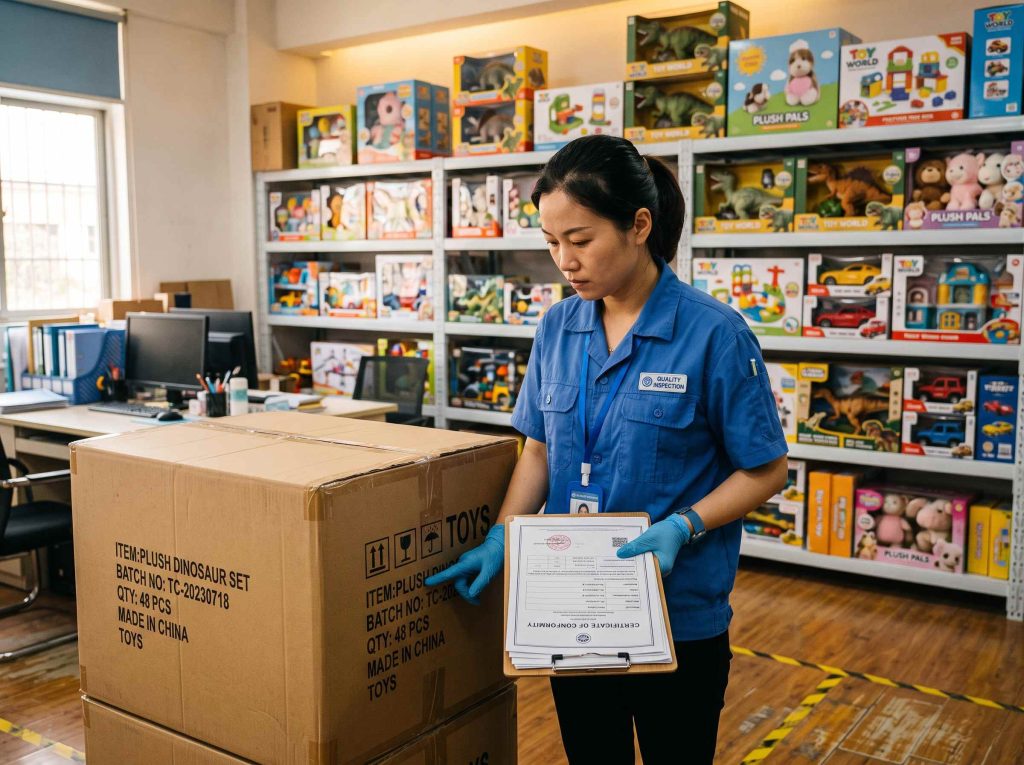
Traceability is the part of the document chain printed on the product itself. CPSIA section 103 requires a permanent distinguishing mark on children’s products and their packaging: the manufacturer or private labeler’s name, the location and date of production, and a batch or run number. That mark turns a safety concern into a targeted recall of one production run, not an entire season’s inventory.
Batch records make the printed marks meaningful. A disciplined factory ties each run number to its material lots, production date, inspection results, and test report, so an auditor pulling one carton retrieves the full history in minutes. Importing toys from China without that loop — marks on the goods, records at the factory, certificates naming the batch — leaves the importer holding stock nobody can vouch for.
A Pre-Shipment Checklist for Importing Toys from China
Border problems are cheapest to fix at the factory, never at the port. A short document review before the goods ship catches most of the failures that stall entries later:
- Certificate names the importer of record, in English, citing the correct rules for the exact SKU
- Test reports match the production batch and date actually being shipped
- Commercial invoice, packing list, and bill of lading agree on quantities and values
- HS code reflects the product’s physical form, with a binding ruling where the case is unclear
- Tracking labels on product and retail packaging carry the batch number
- EU shipments name a Union-established responsible operator
Two limits frame this checklist. It describes the US and EU routes; other markets — the United Kingdom, the Gulf states, East Asia — run separate approval regimes that need their own research. The tariff layer also changes often enough that any quoted rate is a snapshot, so the durable skill in importing toys from China is knowing which document proves what, then verifying current numbers with a broker at entry.
The most common misuse of the whole framework is treating the factory’s certificate as transferable compliance. A certificate issued to another company, or covering a different SKU or batch, satisfies no one at the border and shifts no legal responsibility away from the importer of record. Samples deserve the same caution: the duty-free threshold for small parcels was suspended for China in May 2025 and removed globally later that year, so even samples now follow the same documented path as full orders.
Where Document Discipline Actually Gets Built
Classification rules and certificate formats describe what a border needs; a factory’s internal systems decide whether those documents exist, match, and arrive on time. That is why experienced buyers audit the document trail as closely as the production floor when importing toys from China.
A manufacturer running one quality system across materials builds cleaner files than three separate suppliers stitched together. Vindstier, an educational toy manufacturer working on a cross-material model — FSC-certified wood machined in-house, child-safe plastics, magnetic learning components, and printed packaging under one ISO 9001/14001 system — issues SKU-level CPC and CE documentation from a single source. Batch-level test reports are tied to production runs, so the tracking labels printed on cartons trace back through inspection records to material lots. The same discipline supports sampling cycles of roughly 7–14 days, because certificates and packing data travel with the sample instead of catching up to it.
Supplier evaluation extends naturally into the import file. Buyers can check the certifications an educational toy manufacturer should hold, review what to know before ordering custom educational toys, and align minimum order quantities and tooling timelines with the documentation schedule. A program that plans MOQ, production, and the import file together is the version of cross-border toy procurement that clears customs without surprises.
Importing Toys from China Without Compliance Surprises
The competitive edge in toy sourcing has shifted from price toward paperwork reliability. A buyer who can assemble a matching chain — test report to batch, certificate to importer, invoice to carton, HS code to product — turns customs from a risk into a routine step. Importing toys from China becomes a repeatable process with known costs rather than a quarterly gamble at the port.
Buyers planning a first or next toy program can pressure-test that chain before committing capital. Sending Vindstier the target quantities, destination markets, and customization scope brings back a landed-cost and documentation preview — per-SKU certificates, batch-matched test reports, and HS codes — before any deposit is paid.