
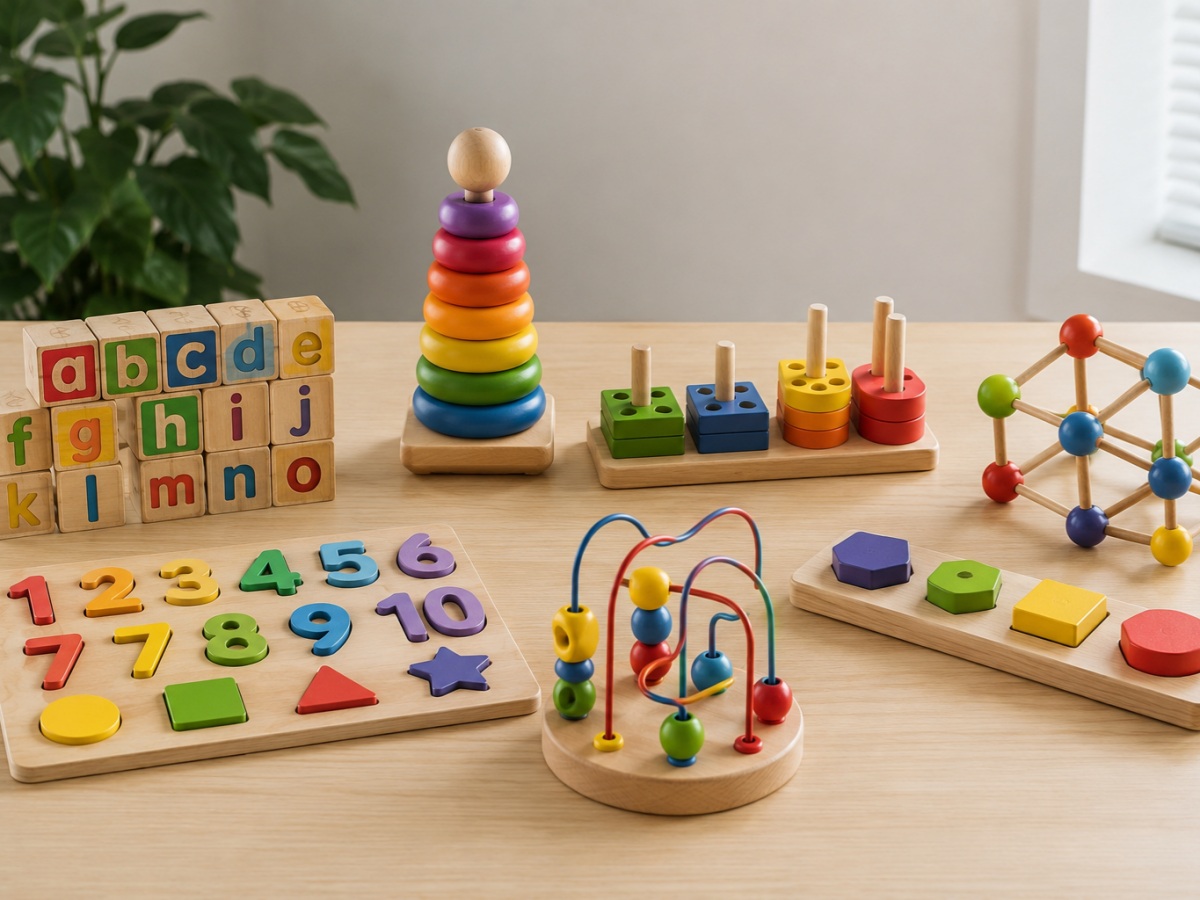
The global educational products industry has experienced remarkable growth over the past decade. According to Grand View Research, increasing attention to early childhood development and interactive learning has driven steady expansion in the educational toys market. Against this backdrop, more brands, distributors, publishers, and educational institutions are investing in Custom Educational Toys to create differentiated products and establish stronger market identities.
Compared with standard products, Custom Educational Toys provide greater flexibility in design, learning objectives, packaging, and branding. However, successful product development requires more than creative ideas. Material selection, manufacturing experience, cost structures, and long-term market positioning all influence the final result.
Understanding these factors before production begins can help businesses reduce risks and improve competitiveness.
Why Are Custom Educational Toys Becoming More Popular?
Research shows that modern consumers increasingly prefer products that combine education with interaction. Data from Statista indicates that STEM-related toys and early childhood learning products have become some of the fastest-growing categories within the toy industry. This trend has encouraged many companies to develop Custom Educational Toys that align with their target audiences and educational philosophies.
Unlike generic products, customized solutions allow brands to incorporate exclusive illustrations, learning concepts, and packaging designs. As a result, educational brands are able to create products that are difficult to replicate while improving customer recognition.
In our experience working with OEM projects for overseas markets, many customers initially focus on appearance. However, after prototype development begins, factors such as durability, ease of assembly, and packaging efficiency often become equally important. This shift highlights why designing Custom Educational Toys requires both creativity and engineering considerations.
Research indicates that products designed around specific learning objectives generally achieve stronger user engagement than products focused solely on entertainment.
Another reason for the growing popularity of Custom Educational Toys is the expansion of private-label businesses. Many distributors now prefer exclusive products instead of competing directly with identical items available on the market.
Market Segments Showing Strong Growth
Several categories continue to demonstrate strong demand, including Montessori learning tools, STEM educational kits, sensory toys, wooden puzzles, and preschool learning games. Industry data suggests that these segments are expected to maintain stable growth over the coming years.
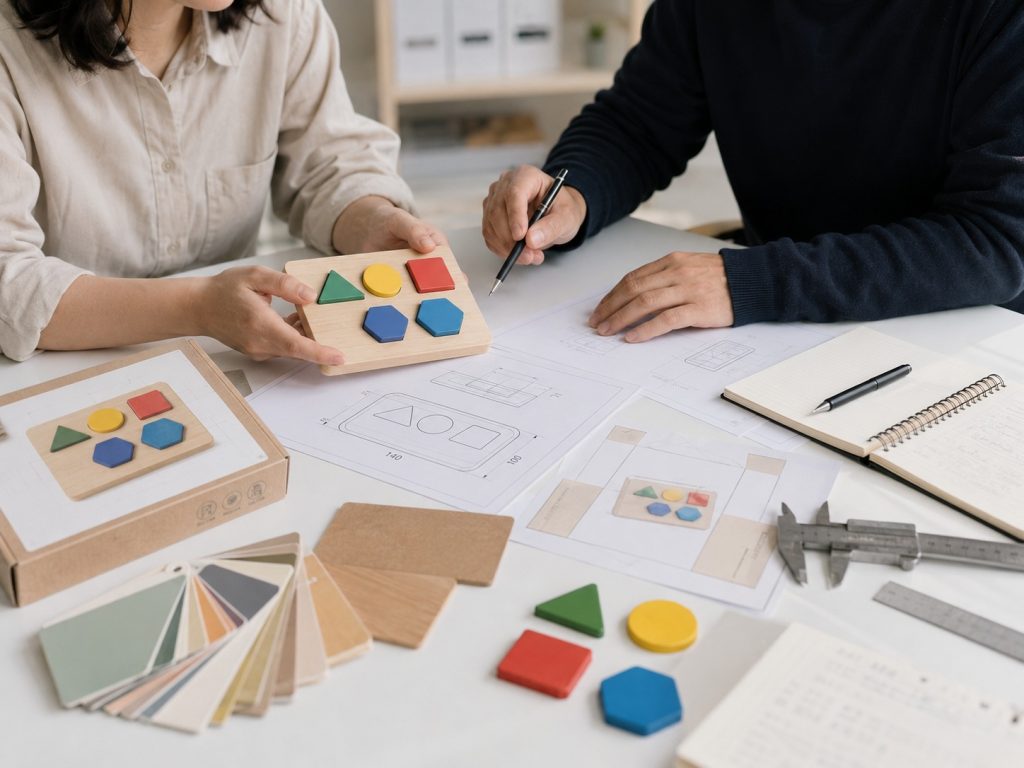
Which Factors Matter Most When Ordering Custom Educational Toys?
Developing Custom Educational Toys involves much more than selecting colors or adding logos. Educational objectives should always be considered first because they influence almost every aspect of product development.
For example, toys designed to improve mathematical thinking often require different structures from products intended to enhance fine motor skills. Likewise, language-learning products may require multilingual manuals and carefully designed illustrations.
The following table summarizes several important considerations.
| Evaluation Factor | Main Considerations |
| Learning Objective | Literacy, STEM, sensory development |
| Material Type | Beech wood, ABS plastic, EVA foam |
| Packaging Solution | Color box, magnetic box, gift box |
| Customization Level | Logo, artwork, manuals |
| MOQ | Production quantity requirements |
| Compliance Standards | ASTM F963, EN71 Parts 1-3, CPSIA |
Instead of relying on broad descriptions, experienced manufacturers generally provide measurable specifications. Wooden components are commonly maintained at moisture levels between 8% and 12%, while edge radii are usually kept above 2 mm to improve handling. Water-based printing inks are frequently tested according to EN71-3 requirements, and food-contact-grade ABS materials are often used in plastic components.
These technical details provide buyers with a more objective basis for evaluating quality.
Why Educational Objectives Should Guide Development
Research shows that products built around clear learning goals often deliver better user experiences. In many OEM projects, customers initially present broad concepts. During prototype discussions, these ideas are gradually refined into products with more focused educational functions.
This process allows Custom Educational Toys to deliver stronger value and stand apart from mass-produced alternatives.
How Does Material Selection Influence Custom Educational Toys?
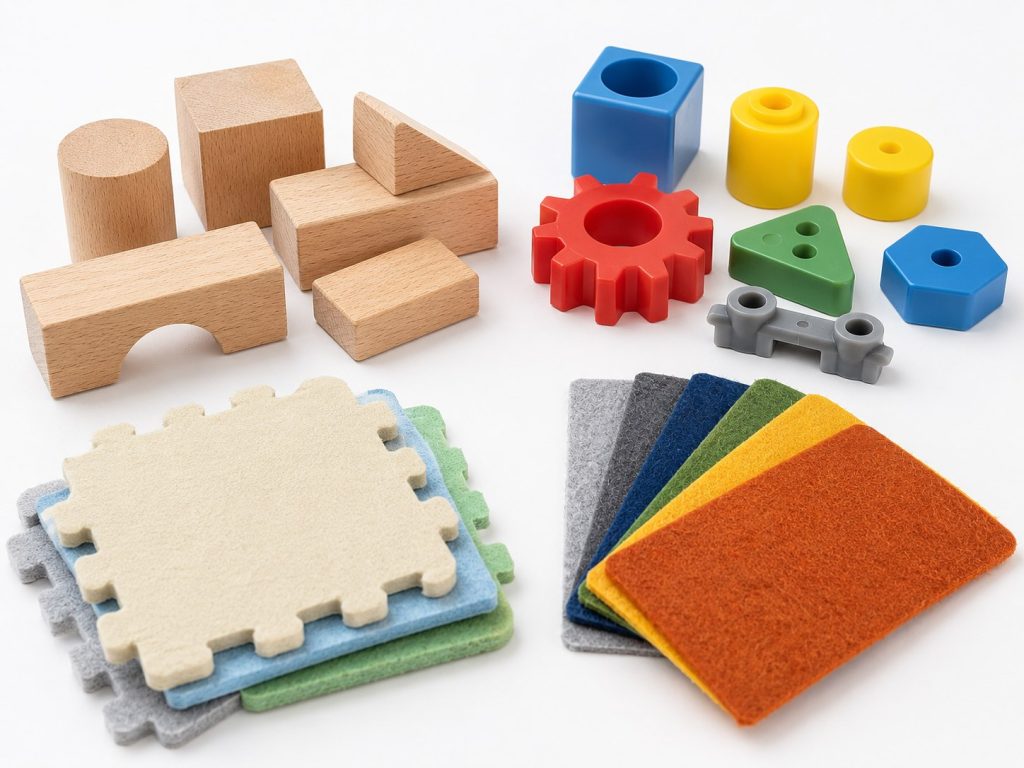
Material selection directly affects durability, appearance, and production consistency. Buyers searching for a custom wooden educational toys manufacturer usually pay close attention to wood stability and surface finishing because these factors influence long-term performance.
Beech wood, pine wood, and rubber wood are commonly used in Montessori boards, alphabet puzzles, and stacking blocks. Research data suggests that wooden educational products continue to enjoy strong consumer preference because of their durability and premium appearance.
Plastic materials also play an important role. ABS components are widely used in STEM learning kits and interactive educational products because they provide excellent dimensional stability and impact resistance.
Why Material Stability Matters During Mass Production
Based on our manufacturing experience, one challenge frequently overlooked during sampling is material consistency. Slight variations in moisture content or surface treatment may lead to dimensional changes during production.
For this reason, professional suppliers closely monitor technical parameters throughout the manufacturing process.
| Material | Typical Lifespan | Common Applications |
| Beech Wood | 5–10 years | Montessori toys |
| ABS Plastic | 3–8 years | STEM learning kits |
| EVA Foam | 2–5 years | Soft puzzles |
| Felt Fabric | 2–4 years | Quiet books |
Research indicates that products manufactured with stable materials generally achieve lower defect rates during large-scale production.
Why Does Supplier Experience Affect Custom Educational Toys Quality?
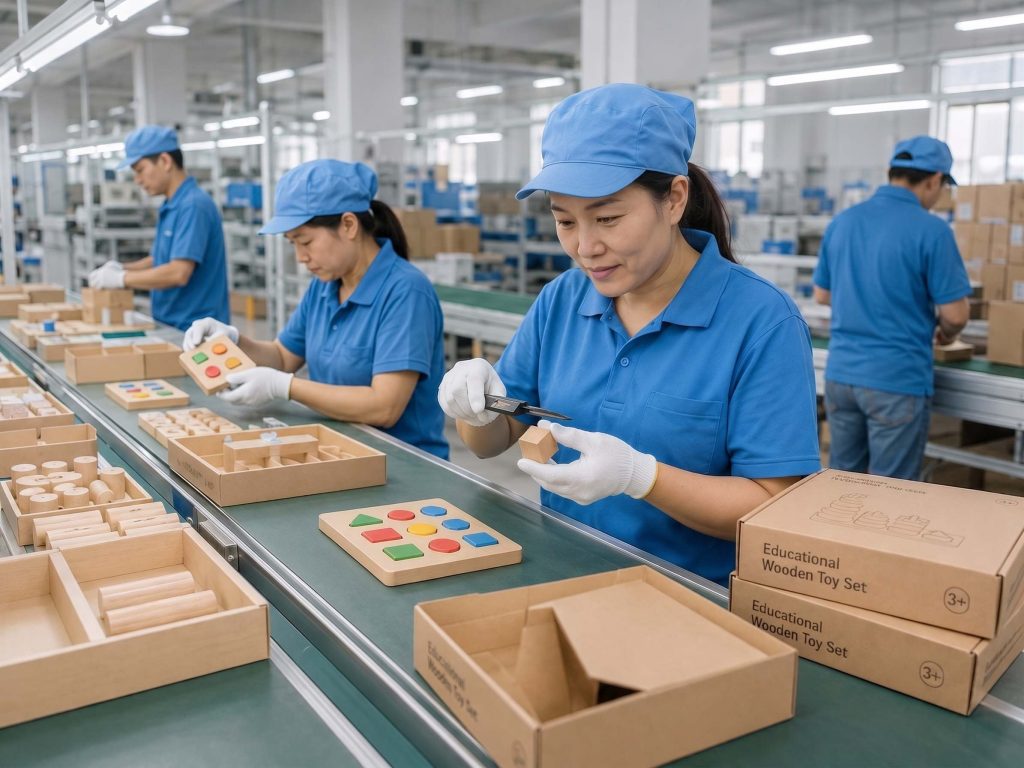
Selecting the right manufacturing partner often determines the success of a project. An experienced OEM educational toys supplier does more than produce components. From prototype development to packaging optimization, professional teams can help brands improve efficiency and reduce unnecessary costs.
According to manufacturing studies, early engineering support can significantly enhance production consistency. Factories with extensive experience in educational products generally demonstrate better color control, assembly precision, and packaging solutions.
Based on our experience with OEM projects, prototype revisions commonly involve two or three rounds before mass production begins. During this stage, customers frequently adjust artwork, dimensions, or packaging structures after evaluating physical samples.
Another situation we often encounter involves component optimization. In some projects, reducing the number of individual parts not only simplified assembly procedures but also improved packaging efficiency and lowered shipping costs.
During prototype development, it is also common for customers to revise instruction manuals or retail packaging several times. In multilingual markets, changes to layouts and illustrations are frequently necessary to improve readability and user experience.
Data shows that early collaboration between brands and manufacturers can reduce overall production costs by approximately 10% to 20%.
Another advantage of experienced suppliers is their familiarity with international requirements and export procedures, which helps simplify project management.
A Typical OEM Project Example
For example, a European educational brand developing Montessori mathematics products may require FSC-certified beech wood, multilingual manuals, and customized gift boxes.
During prototype development, packaging dimensions may be optimized to improve container utilization, while instruction manuals are adapted for different markets. In one similar project, reducing the height of the gift box by several centimeters allowed more units to be loaded into each shipping carton, helping improve transportation efficiency.
Such adjustments often contribute to better user experiences and lower logistics costs.
What Costs Should You Consider Before Ordering Custom Educational Toys?
Many buyers initially focus on unit price. However, total project costs usually include design fees, mold expenses, sample development, packaging solutions, and transportation.
Materials generally account for the largest share of production expenses, followed by manufacturing and logistics.
| Cost Category | Percentage |
| Materials | 35%-45% |
| Manufacturing | 25%-30% |
| Packaging | 10%-15% |
| Logistics | 10%-20% |
| Tooling & Samples | 5%-10% |
Research suggests that optimizing product structures during the early development stage can significantly improve cost efficiency.
From our experience, communication during the sampling stage often has a greater impact on overall costs than many buyers expect. Addressing structural issues before mass production usually prevents expensive modifications later.
Therefore, sourcing Custom Educational Toys should be viewed as a long-term investment rather than a simple price comparison.
How Can Custom Educational Toys Strengthen Brand Value?
Today, Custom Educational Toys are increasingly viewed as tools for brand building rather than simple products. Private label educational toys enable companies to establish unique market identities while improving customer loyalty.
Customized packaging, exclusive illustrations, branded manuals, and QR codes linked to digital learning resources all contribute to stronger user experiences. Research shows that brands maintaining consistent visual identities often achieve higher repeat purchase rates.
Search trends also indicate growing demand for OEM development and private-label services. Many buyers searching for a custom wooden educational toys manufacturer are not simply looking for production capacity. They are also seeking partners capable of supporting prototype development, packaging optimization, and long-term product planning.
Similarly, businesses developing STEM learning products often prefer working with an experienced OEM educational toys supplier that can provide engineering support and manufacturing recommendations. Interest in personalized learning toys wholesale solutions has also increased steadily as distributors seek exclusive products with stronger brand identities.
As competition within the educational products industry intensifies, customized solutions have become an effective way to improve market positioning and create long-term value.
Frequently Asked Questions About Custom Educational Toys
What Is the Typical MOQ for Custom Educational Toys?
Minimum order quantities vary depending on product complexity and manufacturing processes. For many projects, MOQ requirements range from 500 to 3,000 units. Prototype development generally begins with smaller quantities before mass production.
How Long Does Production Usually Take?
Sample development often requires two to four weeks, while mass production may take thirty to sixty days. Actual lead times depend on materials, packaging requirements, and order quantities.
Can Packaging and Logos Be Customized?
Yes. Most manufacturers provide customization options for logos, illustrations, instruction manuals, and packaging structures. These services help brands establish distinctive market identities.
Which Materials Are Commonly Used?
Beech wood, rubber wood, ABS plastic, EVA foam, and felt fabric are among the most widely used materials. Selection usually depends on educational objectives and target markets.
Conclusion
Ordering Custom Educational Toys involves much more than selecting colors, adding logos, or comparing quotations. Educational objectives, material specifications, production experience, and total project costs all influence the final outcome.
Research and industry data consistently show that brands cooperating with experienced manufacturers are more likely to achieve stable quality and sustainable growth. From prototype development to packaging optimization, early planning often helps improve efficiency while reducing unnecessary expenses.
Whether you are developing Montessori learning products, STEM kits, sensory toys, or private label educational games, working with an experienced manufacturer can simplify the entire process. Based on our experience, effective communication during sampling and production stages frequently contributes to smoother project execution and better long-term results.
As market competition continues to evolve, well-designed Custom Educational Toys provide opportunities to strengthen brand identity, improve customer loyalty, and create products that stand out in increasingly competitive markets. Careful planning at the beginning of a project often lays the foundation for a more successful product launch and stronger business growth.