
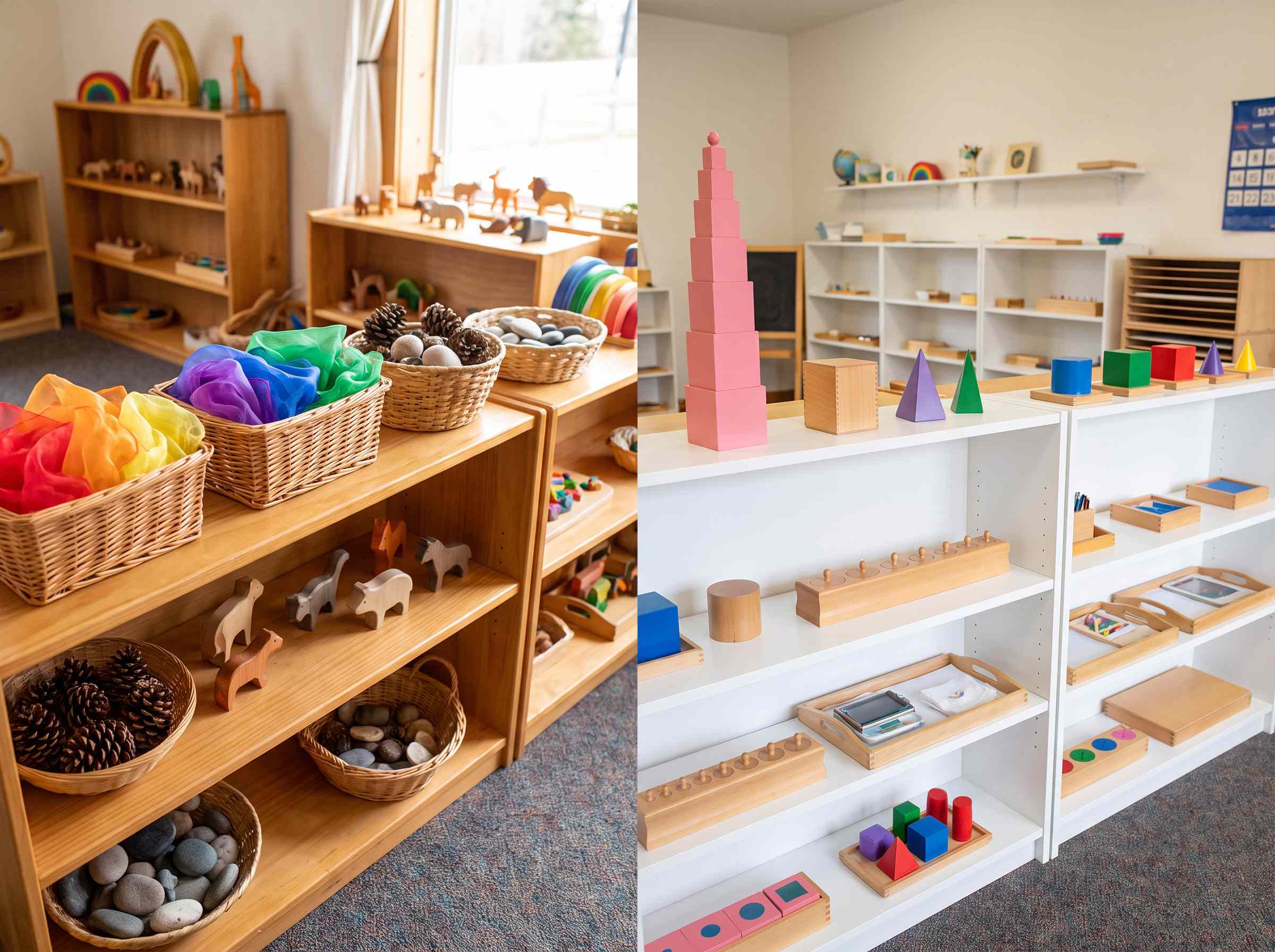
Early childhood educators and parents face persistent confusion when building toy collections aligned with specific pedagogical approaches. A Waldorf-inspired classroom rejects plastic and electronic toys entirely, favoring silk scarves and wooden figures, while a Montessori environment down the hall stocks precision-engineered sensorial materials with built-in error correction. Both programs claim research-backed developmental benefits, yet their material requirements contradict each other so fundamentally that purchasing decisions made for one approach actively undermine the other.
The confusion stems from genuine philosophical differences rather than marketing distinctions. Waldorf toys and Montessori materials represent fundamentally divergent beliefs about imagination’s role in learning, appropriate materials for different developmental stages, and whether toys should prescribe specific uses or invite open-ended transformation. Understanding these differences—and their practical implications for material selection, classroom implementation, and child outcomes—determines whether toy investments support intended learning or create friction between pedagogical intent and available resources.
Philosophical Foundations That Shape Material Design
Both approaches emerged in early 20th century Europe as alternatives to conventional education, but their founders held contrasting views about childhood development and learning mechanisms that create incompatible material requirements.
Waldorf Philosophy: Imagination as Developmental Foundation
Rudolf Steiner founded Waldorf education in 1919 based on beliefs about human development progressing through distinct seven-year cycles. The first cycle (birth to age seven) emphasizes imaginative play and sensory experience over intellectual instruction, positioning fantasy and creative transformation as essential cognitive work.
Waldorf toys intentionally lack defined features—simple wooden figures without painted faces, fabric dolls with minimal detail, building blocks in basic geometric shapes. This design allows children to assign identities and purposes through imagination rather than accepting predetermined narratives. The same silk scarf becomes a river, a cape, a doll blanket, and a tent roof across different play scenarios, with cognitive value residing in the imaginative work of transformation rather than material properties themselves.
Montessori Philosophy: Structured Independence Through Precise Materials
Maria Montessori developed her educational approach beginning in 1907 based on scientific observation of children’s natural learning behaviors. Montessori philosophy positions children as inherently motivated to master their environment through focused, purposeful work with materials that isolate specific concepts and provide immediate feedback.
Rather than imagination-driven transformation, Montessori values reality-based learning—children work with real tools at child-scale, materials represent concrete concepts, and toys teach specific skills through built-in controls of error that allow self-correction without adult intervention. Pink tower blocks teach size relationships through precisely graduated dimensions, not fantasy narratives. Geometric solids present accurate representations for tactile discrimination rather than transforming based on imaginative play.
This fundamental divide—imagination-as-learning versus structured-discovery-as-learning—explains why waldorf toys and Montessori materials rarely overlap despite both emphasizing hands-on engagement and natural materials.
Core Material Differences: Design, Selection, and Progression
The philosophical divide manifests in concrete attributes that make toys from one tradition incompatible with the other’s pedagogical requirements.
| Dimension | Waldorf Toys | Montessori Materials | Practical Implication |
|---|---|---|---|
| Design Purpose | Minimal features requiring imaginative completion | Precise specificity guiding discovery of intended concepts | Waldorf toys lack isolated concepts Montessori requires; Montessori materials provide excessive specificity that short-circuits Waldorf’s imaginative work |
| Material Selection | Natural materials with “warmth” (fruit wood, plant-dyed wool, silk, beeswax) chosen for energetic properties | Precision materials prioritizing durability and consistent feedback (wood, metal, glass, sandpaper) | Waldorf collections need ongoing natural material replacement; Montessori demands higher upfront investment in precision items with longer lifecycles |
| Color Palette | Soft, warm earth tones (rose, peach, lavender, soft blue) | Saturated primaries and clear gradations teaching color relationships | Different aesthetic expectations and educational purposes behind color choices |
| Complexity Progression | Extreme simplicity in early years, increasing only as children mature beyond age seven | Substantial complexity from age three onward through isolated difficulties within structured sequences | Waldorf needs fewer items across wide age ranges; Montessori requires comprehensive domain-specific sets |
| Predetermined Use | No prescribed purposes; same item transforms across play scenarios | Single correct method with self-correcting features revealing errors | Fundamental incompatibility in how materials function pedagogically |

Design Specificity and Intended Use
Waldorf toys deliberately lack specificity, presenting minimal features that require imaginative completion. A wooden figure with no facial features becomes whatever character the child envisions. Simple wooden blocks in curved, organic shapes suggest possibilities without prescribing outcomes.
Montessori materials embody opposite design principles—precise specificity that guides children toward discovering intended concepts. Pink tower cubes progress in exact 1cm increments, teaching size gradation through carefully calibrated dimensions. Color tablets progress through specific gradation sequences that teach chromatic relationships systematically.
This design difference creates purchasing incompatibility—waldorf toys introduced into Montessori environments lack the isolated concepts and self-correcting features that enable independent discovery, while Montessori materials in Waldorf settings provide excessive specificity that contradicts the imaginative work Waldorf philosophy prioritizes.
Material Selection and Sensory Properties
Both traditions favor natural materials but for different reasons with different selection criteria.
Waldorf toys emphasize materials with “warmth” and “living qualities”—wood from fruit trees, plant-dyed wool and silk, beeswax crayons, natural rubber. The material palette includes softer textures, warmer colors, and organic irregularities that communicate handmade origins. Plastic, metal, and synthetic materials are largely excluded based on beliefs about their energetic properties.
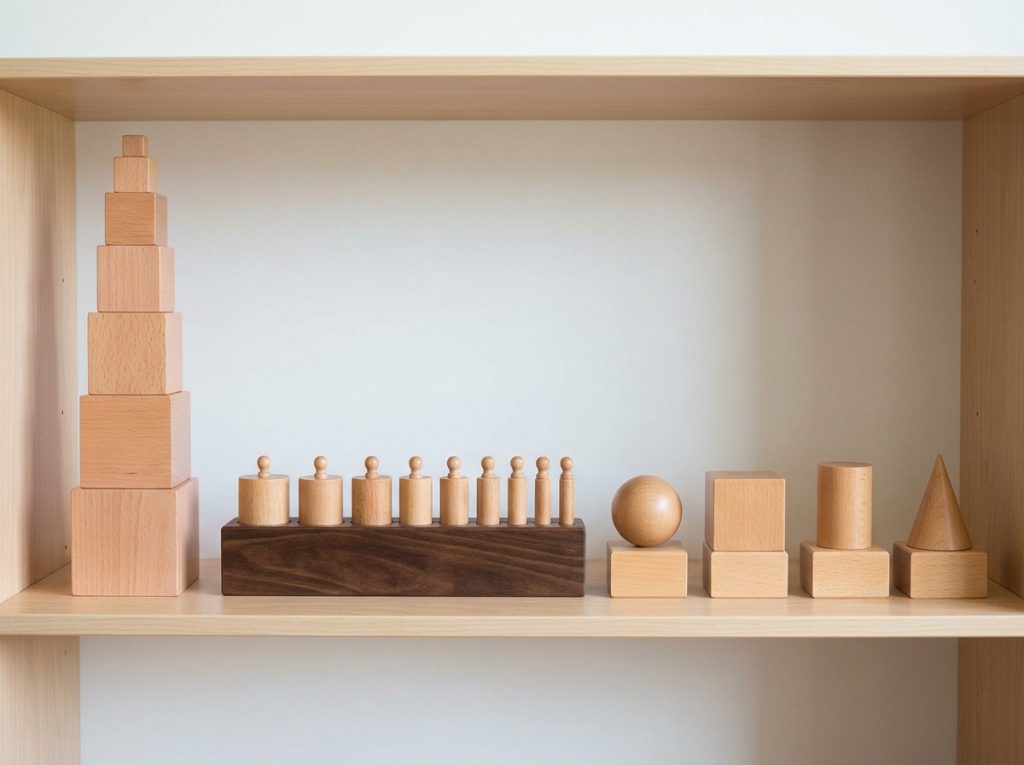
Montessori materials prioritize precision, durability, and consistent sensory feedback regardless of material origin. Metal insets for geometry work, glass bottles for pouring exercises, and sandpaper letters for tactile-visual learning appear when they provide superior functional properties. Colors tend toward saturated primaries that teach color relationships unambiguously.
For institutional buyers, these preferences create different sourcing patterns. Waldorf toy collections require ongoing investment in natural, often handcrafted items with shorter lifespans (silk scarves fade and fray, wooden toys show wear), while Montessori materials demand higher upfront investment in precision-manufactured items with longer institutional lifecycles but requiring exact replacement when damaged.
Complexity Progression and Age Appropriateness
The two traditions hold contrasting views about appropriate complexity at different developmental stages.
Waldorf philosophy advocates extreme simplicity in early years, with complexity increasing only as children mature. Children under seven receive the simplest waldorf toys—plain wooden blocks, simple dolls, unstructured natural materials—reflecting beliefs that excessive detail overwhelms developing sensory systems. Complexity increases in later childhood as children move beyond purely imaginative play.
Montessori materials introduce substantial complexity from age three onward, structured through isolated difficulties. Three-year-olds work with sophisticated materials like the pink tower (ten precisely graduated cubes), knobbed cylinders (fine motor precision requirements), and sandpaper letters (abstract symbol introduction). The complexity resides within carefully designed sequences where each material targets specific skill development.
This progression difference affects purchasing for mixed-age programs. Waldorf toy collections require fewer distinct items since simple materials remain appropriate across wide age ranges through different imaginative applications, while Montessori environments need comprehensive material sets covering multiple developmental domains with specific items for each skill progression stage.
Practical Implementation: Classroom and Home Use Patterns
Philosophical differences translate into distinct usage patterns, environmental organization, and adult facilitation approaches.
Environmental Organization and Material Accessibility
Waldorf classrooms organize materials to create homelike warmth rather than systematic skill development visibility. Waldorf toys appear in natural groupings—baskets of shells and stones, fabric scraps in woven containers, wooden figures on silk-covered shelves—arranged aesthetically to invite rather than instruct. Materials rotate seasonally and thematically (autumn nature treasures, winter celebrations, spring growth) rather than following skill progression sequences.
Montessori environments follow opposite organizational principles—materials arranged on open shelving in precise developmental sequences, organized by learning domain (sensorial, mathematics, language, practical life). Children select materials independently, work at tables or floor mats, then return items to exact shelf positions. The environment transparency allows children to see available choices and understand learning progressions without adult explanation.
For educators implementing either approach, environmental organization affects material inventory requirements. Waldorf settings need attractive natural storage and space for seasonal rotation, while Montessori classrooms require open shelving systems with specific heights and spacing to accommodate standardized material dimensions.
Adult Facilitation and Play Guidance
The two approaches require fundamentally different adult roles that affect whether materials function as intended.
Waldorf teachers rarely intervene in play with waldorf toys, believing children’s imaginative processes unfold organically without adult direction. Teachers model domestic activities (cooking, cleaning, crafting) that children naturally imitate, but avoid instructing how to use play materials or suggesting narrative directions. The adult presence provides security and rhythm through consistent daily schedules while respecting children’s self-directed imaginative work.

Montessori teachers provide formal material presentations demonstrating precise manipulation sequences, then step back to allow independent practice. Each Montessori material has a specific presentation—exact hand movements, ordering of steps, placement of components—that teachers demonstrate without excessive verbal instruction. After presentation, children work independently while teachers observe and offer new materials when mastery indicates readiness.
For staff training budgets, these facilitation approaches create different professional development needs. Waldorf implementation requires helping teachers learn to trust emergent play processes, while Montessori adoption needs training in precise presentation techniques and observation-based readiness assessment.
Learning Assessment and Progress Documentation
The two approaches measure effectiveness through incompatible metrics, making cross-tradition comparisons problematic.
Waldorf programs assess through qualitative observation of imaginative play quality, social interaction patterns, engagement depth, and creative expression rather than skill mastery documentation. Teachers note children’s imaginative themes, collaborative play complexity, and sustained engagement duration rather than tracking specific competencies.
Montessori programs track skill mastery systematically, documenting which materials children have received presentations for, which they choose independently, and when they demonstrate mastery. Observation records note specific competencies (can order pink tower independently, completes binomial cube without errors) that indicate developmental progression through material sequences.
For programs serving diverse parent populations, these documentation differences create communication challenges. Parents expecting measurable skill progression evidence may find Waldorf assessment narratives vague, while those valuing creative development may view Montessori skill checklists as reductive.
Selecting Between Waldorf Toys and Montessori Materials
Choosing between approaches requires matching philosophical priorities with family values, child temperament, and practical constraints rather than seeking objectively superior options.
Child Temperament and Learning Style Considerations
Different children thrive in different environments based on individual characteristics.
Children who initiate elaborate imaginative scenarios independently, transform common objects into varied play props, and sustain focus through self-directed storytelling often flourish with waldorf toys. The open-ended materials match children who generate internal narratives and prefer fantasy-based play over reality-grounded activities.
Children who seek clear task parameters, demonstrate satisfaction through mastery and completion, prefer working independently toward visible goals, and show interest in understanding how things work concretely often thrive with Montessori materials. The precision and self-correcting features match children who value competence demonstration and prefer reality-based learning over fantasy narratives.
Neither temperament indicates superior development—the approaches align with different but equally valid learning preferences that manifest across typically developing children.
Family Values and Educational Priorities
Parental educational philosophy alignment matters more than child temperament for long-term satisfaction.
Families prioritizing creative expression, imaginative development, artistic engagement, and limiting early academic pressure align naturally with Waldorf approaches and waldorf toys emphasizing play over instruction. These families typically accept delayed reading instruction, minimal technology exposure, and arts-integrated rather than academically focused curricula.
Families valuing early independence, self-directed learning, practical life skills, and concrete skill progression align with Montessori materials and systematic developmental sequences. These families appreciate transparent learning progressions, measurable competencies, and children’s ability to work independently without requiring adult entertainment or direction.
Misalignment between family values and chosen approach creates friction regardless of material quality. Waldorf toys frustrate parents expecting measurable academic progress, while Montessori materials disappoint families seeking imaginative play emphasis.
Practical Constraints: Budget, Space, and Flexibility
Economic and spatial realities influence viable choices beyond philosophical alignment.
Waldorf toy collections often cost less initially since simple natural items (wooden blocks, fabric scraps, natural objects) require smaller investment than precision Montessori materials. However, ongoing replacement needs (natural materials wear faster), handcrafted item premiums, and seasonal material rotation create sustained costs. The toys’ flexibility allows smaller inventories serving multiple purposes, reducing space requirements.
Montessori materials demand significant upfront investment—comprehensive sets covering sensorial, mathematical, language, and practical life domains total several thousand dollars for home use, tens of thousands for classroom implementation. The materials’ durability and long replacement cycles offset higher initial costs through extended usability, but the investment barrier affects accessibility. Precise items require dedicated storage with specific spacing, increasing space demands.
For budget-conscious buyers, waldorf toys offer lower entry barriers with incremental building, while Montessori materials suit those able to make larger initial investments expecting long-term durability returns.
Common Selection Mistakes and Boundary Recognition
Neither approach suits all situations perfectly, and both face implementation challenges that realistic purchasers must acknowledge.
Mixing approaches without philosophical understanding creates pedagogical incoherence. Combining waldorf toys and Montessori materials in single environments without intentional integration produces mixed messages—children receive open-ended materials encouraging imagination alongside prescriptive materials guiding specific learning, creating confusion about expected engagement modes.
Romanticizing natural materials over functional requirements. Both approaches emphasize natural materials, but waldorf toys particularly prioritize material purity sometimes exceeding practical durability needs. Families or programs may invest in beautiful handcrafted items lacking sufficient robustness for active use, leading to premature wear and replacement frustration.
Underestimating adult facilitation demands. Neither approach functions optimally with passive adult presence. Waldorf toys require adults modeling meaningful work and maintaining predictable rhythms that support imaginative play, while Montessori materials need trained adults capable of precise presentations and observation-based guidance.
Age compression and premature complexity. Marketing often positions materials as “Waldorf-inspired” or “Montessori-aligned” for ages younger than original philosophies intended. Materials marketed for infants under these labels typically represent adaptations rather than authentic implementations.
Conclusion
Waldorf toys and Montessori materials reflect fundamentally different philosophical beliefs about learning mechanisms during early childhood. Waldorf emphasizes imagination-driven transformation through simple natural materials lacking prescribed purposes, positioning fantasy play as essential cognitive work. Montessori prioritizes structured discovery through precision materials that isolate concepts and provide self-correcting feedback, valuing reality-based learning and systematic skill progression.
The approaches create incompatible material requirements in design specificity, material selection criteria, complexity progression patterns, environmental organization, adult facilitation roles, and assessment methods. Neither proves objectively superior—effectiveness depends on alignment between philosophical priorities, child temperament, family values, and practical constraints including budget, space, and adult preparation capacity.
Successful selection matches materials to clearly defined priorities rather than seeking universally optimal solutions. Those valuing imaginative development and play-based early childhood find waldorf toys align with their goals, while those prioritizing independence and transparent learning progressions benefit from Montessori materials. For institutional buyers, understanding philosophical requirements prevents costly inventory investments that mismatch pedagogical approaches, recognizing that authentic implementation demands adult training and environmental organization beyond material purchases alone.