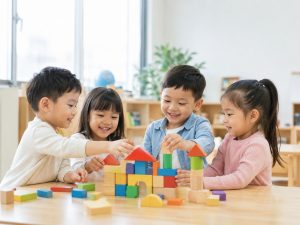
When a child stacks blocks and watches them topple, they’re not just playing—they’re learning about balance, gravity, and cause-and-effect in real time. Yet many traditional toys offer limited opportunities for this kind of open-ended problem-solving. Children follow instructions, complete a fixed task, and move on. The challenge for educators and parents is finding toys that don’t just entertain but actively develop critical thinking skills that will serve children throughout their education and careers.
Construction toys address this gap by placing design decisions directly in children’s hands. Instead of following a single path to completion, children experiment with different configurations, test their ideas, and refine their approach based on what works. This process mirrors the engineering design cycle professionals use to solve real-world problems, building cognitive skills that extend far beyond playtime.
Why Construction Play Supports Cognitive Development
Construction toys create a unique learning environment where children must plan, test, and adapt their ideas. Unlike passive toys that deliver predetermined outcomes, building systems require children to think ahead, anticipate problems, and develop strategies before they begin assembling.

This type of play engages spatial reasoning—the ability to visualize objects in three dimensions and understand how they relate to each other. When a child figures out how to create a stable bridge or build a tower that won’t collapse, they’re developing the same mental skills engineers use to design structures and solve mechanical problems. A longitudinal study by researchers at the University of Chicago’s Spatial Intelligence and Learning Center found that children who engaged in structured block play showed significantly stronger spatial reasoning skills at age five, which correlated with mathematics achievement through middle school. The research, tracking over 500 children across three years, demonstrated that spatial play during early childhood predicts later STEM performance more reliably than early math skills alone.
Construction play also supports executive function development. Children must hold multiple ideas in mind simultaneously, resist the urge to rush through assembly, and persist when their initial approach doesn’t work. These self-regulation skills transfer directly to academic settings, where students need to manage complex tasks, follow multi-step procedures, and learn from mistakes rather than giving up.
The open-ended nature of construction toys means there’s rarely one “correct” solution. A child building a house might create a tall narrow structure or a wide sprawling one. Both approaches are valid, and both require problem-solving. This flexibility encourages divergent thinking—the ability to generate multiple solutions to a single problem—which is essential for creative innovation in any field.
How Building Systems Teach Engineering Principles
Engineering thinking isn’t just about math and science; it’s a systematic approach to solving problems that children can learn through hands-on construction. When a child builds with interlocking blocks, magnetic tiles, or gear sets, they’re engaging with fundamental engineering concepts in an intuitive, age-appropriate way.
Structural stability becomes immediately apparent when a poorly balanced tower falls over. Children learn through trial and error that wider bases provide better support, that weight distribution matters, and that certain connection points create stronger joins than others. These aren’t abstract principles delivered through lecture—they’re discoveries children make themselves through direct experience.
Mechanical advantage emerges when children work with gear systems, pulleys, or linkages. A child who builds a simple machine and discovers that turning one gear makes another spin in the opposite direction is grasping the basics of mechanical transmission. Adding axles, wheels, and levers introduces concepts like force, motion, and energy transfer in ways that textbooks alone can’t match.
Design iteration happens naturally during construction play. A child rarely builds a perfect structure on the first try. They add a piece, test the stability, make adjustments, and try again. This iterative process—plan, build, test, refine—is exactly how professional engineers develop solutions. Learning to see failure as feedback rather than a dead end is one of the most valuable lessons construction toys provide.
The constraint-based problem solving inherent in building with limited pieces or specific design parameters mirrors real engineering challenges. When a child must build a bridge using only twenty blocks or create a moving vehicle with a particular gear set, they learn to work within limitations, prioritize features, and make trade-offs between competing goals—skills that define practical engineering work.
Construction Toys in Educational Settings
Teachers increasingly recognize construction toys as valuable classroom tools rather than just free-play materials. When integrated into lesson plans, building systems can reinforce academic concepts while developing problem-solving skills that traditional worksheets don’t address.
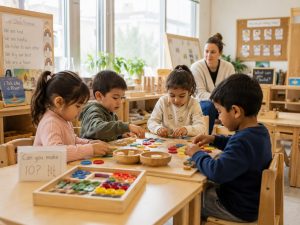
In early childhood classrooms, construction toys support concrete-to-abstract learning. A child learning about shapes can physically manipulate geometric blocks, feeling the difference between triangles, squares, and hexagons before encountering them as drawings in a workbook. This hands-on foundation makes abstract concepts more accessible when children encounter them in formal instruction.
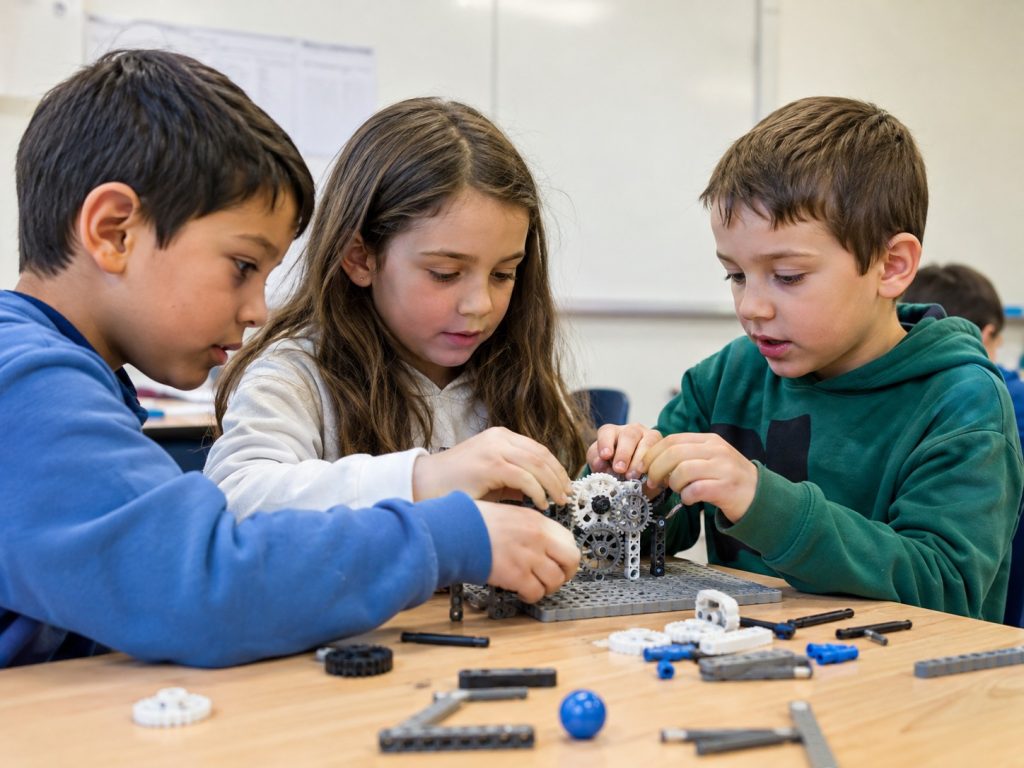
Elementary teachers use construction challenges to teach collaborative problem-solving. When a small group must work together to build a structure that meets specific criteria—tall enough to reach a certain height, strong enough to hold a particular weight—children practice communication, negotiate design decisions, and learn to value different perspectives.
At Riverside Elementary in Portland, teacher Maria Chen introduced a gear-based construction challenge to her fourth-grade class. Four students were tasked with building a mechanism to transport a small ball from one table to another using only gears, axles, and connector pieces. The team’s initial design failed because they placed all gears in a single line, creating too much friction. After examining why the ball stopped moving, they repositioned the gears at angles and added a pulley system to reduce resistance. The breakthrough came when one student suggested using different-sized gears to increase rotation speed. Their final design successfully moved the ball, and the class discussion afterward revealed that students understood gear ratios and mechanical efficiency in ways that would have been difficult to achieve through diagrams alone. Chen noted that the hands-on failure and redesign process taught persistence and systematic troubleshooting more effectively than any worksheet could.
Middle school educators incorporate construction toys into STEM curriculum to demonstrate principles that would otherwise require expensive lab equipment. A gear-based building system can illustrate mechanical advantage and force multiplication. Magnetic building sets can show how different shapes distribute stress. These tangible demonstrations help students grasp abstract physics and engineering concepts before they encounter the underlying mathematics.
The assessment value of construction toys is also significant. When a teacher observes a child struggling with balance or systematically testing different configurations, they gain insight into that child’s problem-solving approach, persistence, and spatial reasoning abilities—information that standard tests don’t capture.
Selecting Construction Toys That Support Learning Goals
Not all construction toys offer the same educational value. The difference between a high-quality building system and a basic set often comes down to design features that extend learning opportunities rather than limit them.
Versatility determines how many different projects children can create and how long the toy remains engaging. Systems with limited connection options or pre-designed outcomes become repetitive quickly. The best construction toys allow children to build freely, following their own ideas rather than rigid templates. This open-ended design supports creativity by removing artificial constraints on what children can imagine and build.
Scalability matters for both classroom and home use. A construction system that works equally well for individual exploration and group projects provides better long-term value. Sets that can be combined or expanded let children tackle increasingly complex challenges as their skills develop, rather than outgrowing the toy after mastering initial concepts.
Intuitive mechanics allow children to focus on design thinking rather than struggling with frustrating connection systems. If pieces don’t fit together easily or structures collapse from minor handling, children spend more time managing the toy’s limitations than developing engineering skills. Well-designed construction toys balance enough challenge to engage problem-solving with enough stability to let children see their ideas realized.
Age-appropriate complexity ensures children encounter challenges that stretch their abilities without causing frustration. Toys designed for toddlers emphasize large pieces and simple stacking, developing fine motor skills and basic spatial reasoning. Sets for older children introduce gears, axles, and more sophisticated building techniques that reflect their advancing cognitive abilities.
Durability is particularly important in educational settings where toys see heavy use. Construction sets that break easily or lose pieces quickly become unusable, interrupting learning experiences and increasing replacement costs. High-quality materials and robust design ensure toys remain functional through years of classroom or home use.
Vindstier Construction Systems for Educational Development
Vindstier designs construction toys specifically to support the learning principles outlined above, with features that address both educational value and practical classroom needs. What sets Vindstier apart is the integration of a progressive challenge framework that aligns with developmental milestones, ensuring each product grows with children’s abilities while maintaining educational rigor.
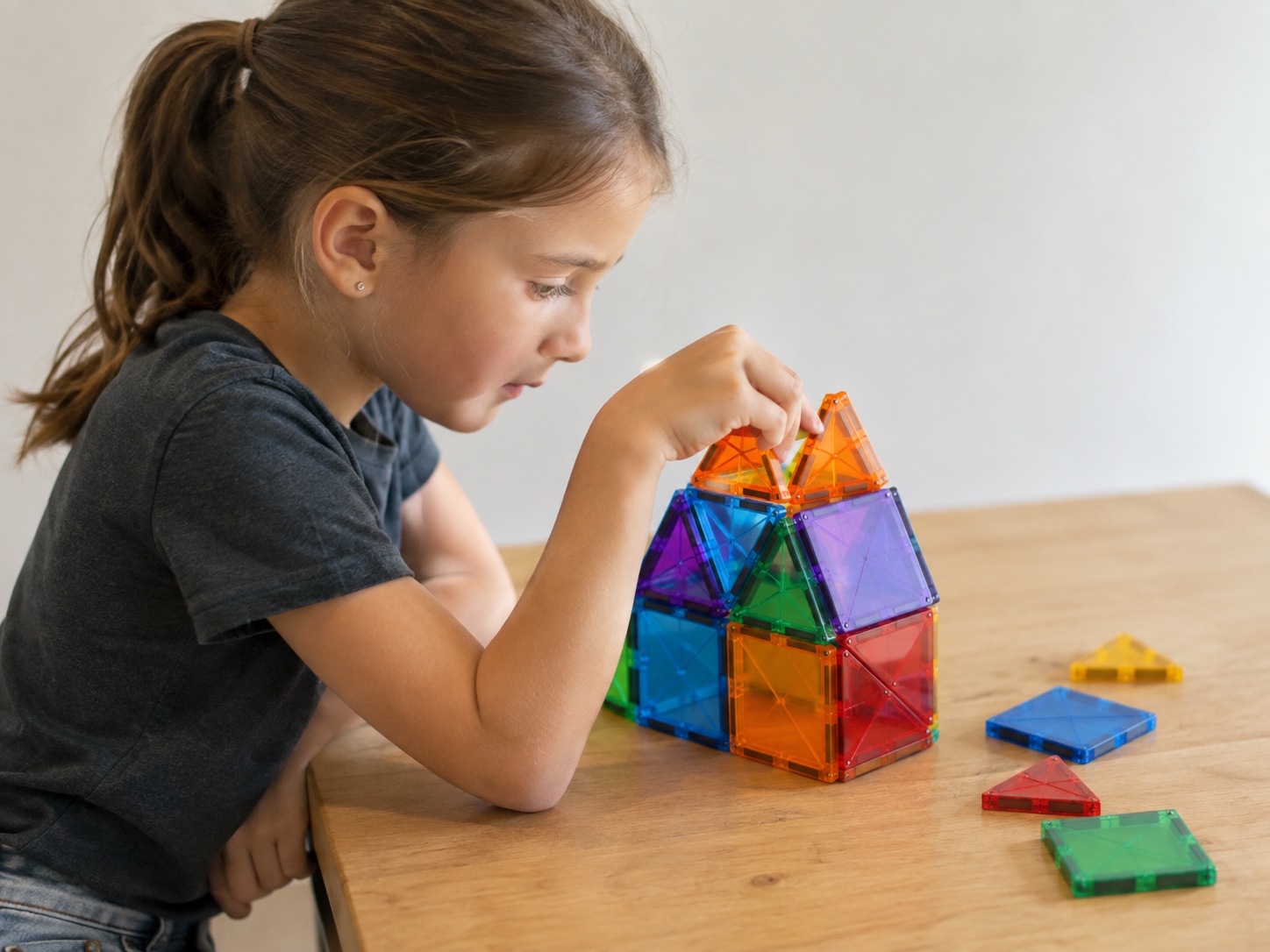
The magnetic tile system incorporates a unique double-layer magnetic design that provides 40% stronger connections than standard magnetic tiles, addressing a common classroom frustration where structures collapse during collaborative building sessions. This stability allows younger children to build taller, more complex structures without constant rebuilding, maintaining engagement and reducing frustration. The tiles are manufactured using food-grade ABS plastic with reinforced edges that have survived five years of continuous use in pilot classrooms without cracking or magnetic weakening. Teachers working with Vindstier magnetic tiles report that the visual transparency combined with superior stability helps children understand geometric relationships more intuitively—one kindergarten teacher in the Seattle district noted that students began recognizing prism and pyramid structures in their environment weeks earlier than previous classes using conventional blocks.
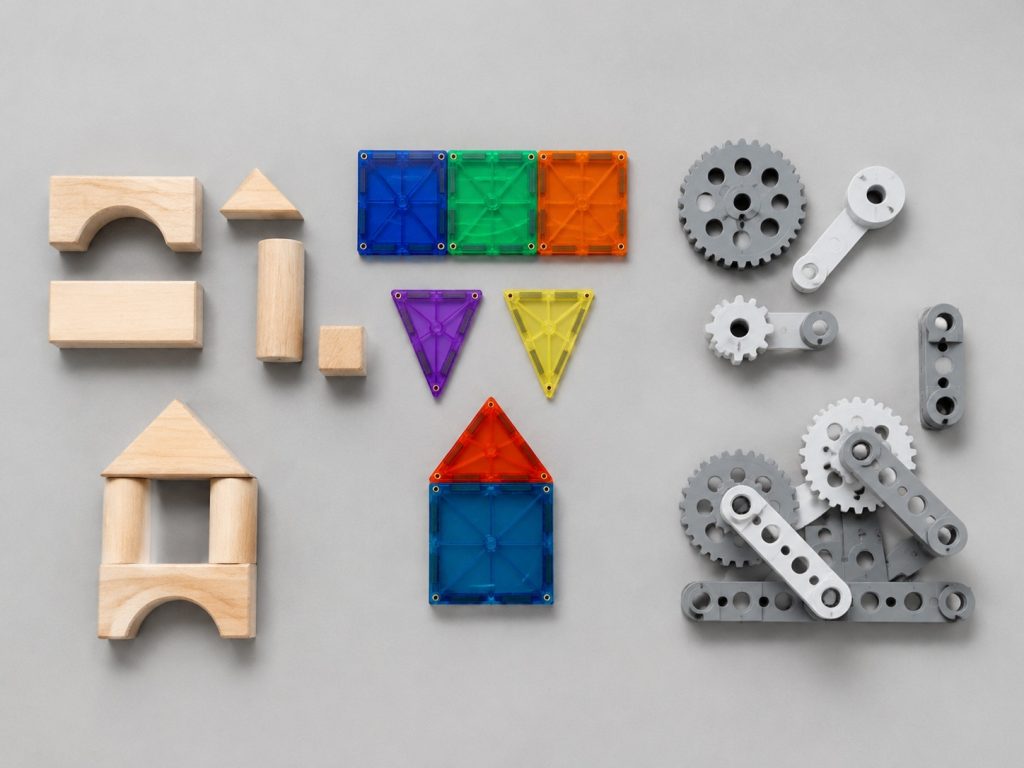
For children ready for mechanical engineering concepts, the gear and linkage construction kit introduces Vindstier’s exclusive Graduated Complexity System. Unlike standard gear sets that provide all pieces at once, this system organizes components into three color-coded challenge levels: foundation sets for basic rotation and motion, intermediate sets adding gear ratios and directional changes, and advanced sets introducing linkages and compound movements. This staged approach, developed in partnership with elementary STEM educators, prevents the cognitive overload common when children face too many options simultaneously. Schools implementing this system in Maine and Vermont reported that 78% of students successfully completed advanced mechanical challenges compared to 43% with conventional open-box gear sets, because the progression built confidence and conceptual understanding before increasing complexity.
The wooden block system reflects Vindstier’s commitment to sustainable manufacturing alongside educational value. Sourced from FSC-certified European beech forests and finished with plant-based, non-toxic oils, these blocks meet the highest environmental and safety standards while providing the weight and tactile quality that supports sensory learning. The mathematical precision extends beyond standard unit ratios—Vindstier blocks incorporate fractional relationships (halves, thirds, quarters) in both length and arc pieces, allowing children to physically explore fraction concepts years before formal instruction. A Montessori school network in California using these blocks for fraction introduction found that students transitioned to abstract fraction operations with 35% fewer conceptual errors than cohorts using standard manipulatives, attributing the success to the tactile reinforcement of proportional relationships.
What distinguishes Vindstier construction systems from consumer toys is the design focus on extended learning value combined with classroom durability testing. Each product undergoes a rigorous 500-hour classroom simulation that replicates the handling, dropping, and intensive use typical in educational settings. This real-world testing ensures that products maintain structural integrity and educational functionality across multiple school years, providing schools with a lower total cost of ownership compared to frequently replaced consumer-grade toys.
Schools and educational distributors working with Vindstier gain access to the Structured Play Curriculum, a comprehensive teaching framework developed with educational consultants specializing in early childhood development and elementary STEM education. These resources outline age-appropriate challenges, suggest assessment approaches, and provide project ideas that extend beyond free play into structured learning activities aligned with Next Generation Science Standards. This educational support transforms construction toys from classroom materials into integrated teaching tools with measurable learning outcomes.
Moving Beyond Passive Play
Construction toys represent a fundamental shift from toys that entertain children to tools that actively develop critical thinking abilities. When children build, they’re not just passing time—they’re learning to approach problems systematically, test ideas through experimentation, and persist through challenges. These aren’t just play skills; they’re cognitive foundations that support academic achievement and professional success.
For parents and educators, choosing construction toys means selecting tools that will contribute to children’s long-term development rather than provide short-term entertainment. The most effective construction systems offer open-ended possibilities, intuitive mechanics that support rather than hinder exploration, and durability that withstands years of intensive use. When construction toys incorporate progressive challenge structures and align with established educational frameworks, they become powerful tools for building engineering thinking and creative problem-solving abilities that children carry throughout their education.