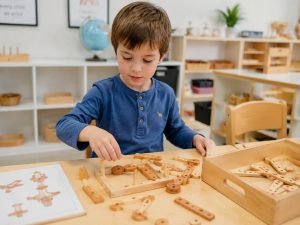
Children who struggle to sit still in class, who seem overwhelmed by noise, or who can’t focus long enough to complete a task often aren’t being difficult — they’re under-stimulated or over-stimulated, and their environment isn’t giving them what their nervous system needs. This is one of the most persistent challenges teachers face, particularly in early childhood classrooms and special education settings.
Sensory toys have moved well beyond therapy centers and specialist clinics. Today, they’re a mainstream classroom resource — and for good reason. When children can regulate their sensory input, their ability to learn, communicate, and engage improves significantly. For schools and educational buyers, understanding how these tools work — and which ones deliver real classroom value — matters more than ever.
Why Sensory Processing Matters in the Classroom
Every child processes sensory information differently. Some children need more input to feel alert and focused — they seek movement, touch, and sound. Others become easily overwhelmed by the same stimuli — loud environments, unexpected textures, or visual clutter can shut them down completely. Both groups face real learning barriers, and a standard classroom environment often fails to accommodate either.
Sensory processing difficulties are not limited to children with diagnosed conditions. According to a study published in the American Journal of Occupational Therapy (Ahn, Miller, Milberger & McIntosh, 2004), approximately 1 in 6 children experience sensory symptoms significant enough to affect their daily functioning. A broader review by the STAR Institute for Sensory Processing indicates that sensory processing differences affect children across the full developmental spectrum — not only those with formal diagnoses such as autism spectrum disorder or ADHD.
These differences affect attention, emotional control, and social interaction in measurable ways. Teachers working with mixed classrooms see this daily: the child who can’t stop touching everything, the one who avoids messy activities entirely, or the one who melts down when transitions happen too quickly.
Sensory toys work by giving children controlled sensory experiences. They allow children to seek or reduce input in ways that support self-regulation — the neurological capacity to manage attention, emotions, and behavior in response to environmental demands. When self-regulation improves, access to learning follows.
What Sensory Toys Actually Are
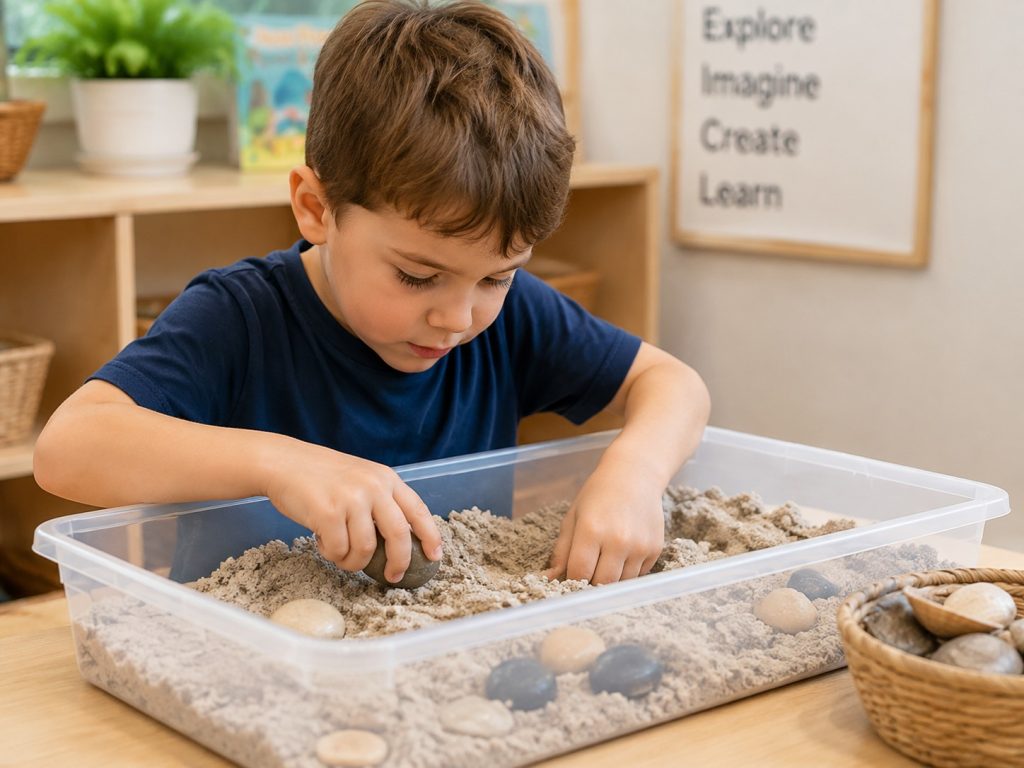
Sensory toys are specifically designed to engage one or more of the senses — touch, sight, sound, movement, and proprioception (the sense of body position and pressure) — in ways that are predictable, safe, and developmentally appropriate.
The category is broad, and that breadth is part of what makes it educationally useful. A single classroom may need multiple types depending on the age group, learning context, and the individual needs of the children in it.
Understanding the core types matters — not just for product selection, but for matching the right tool to the right child:
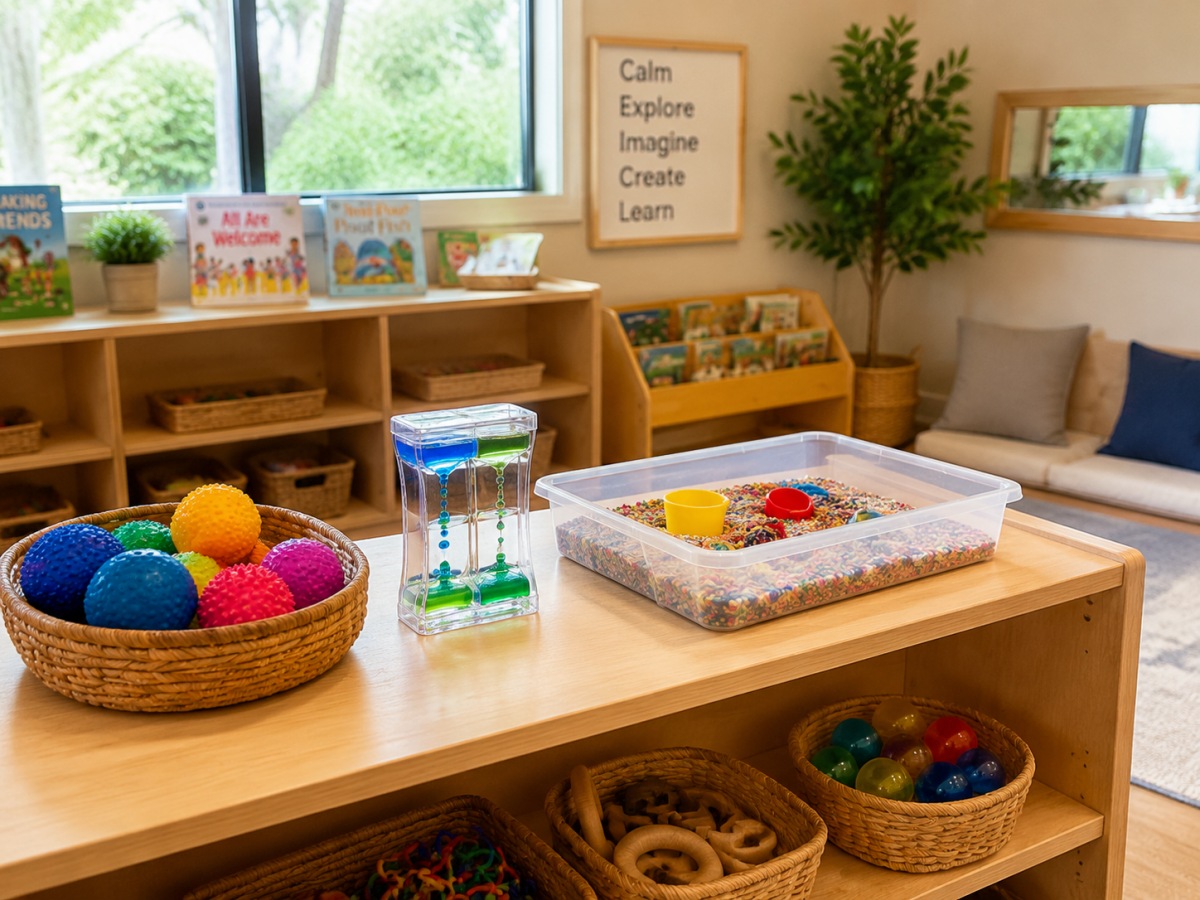
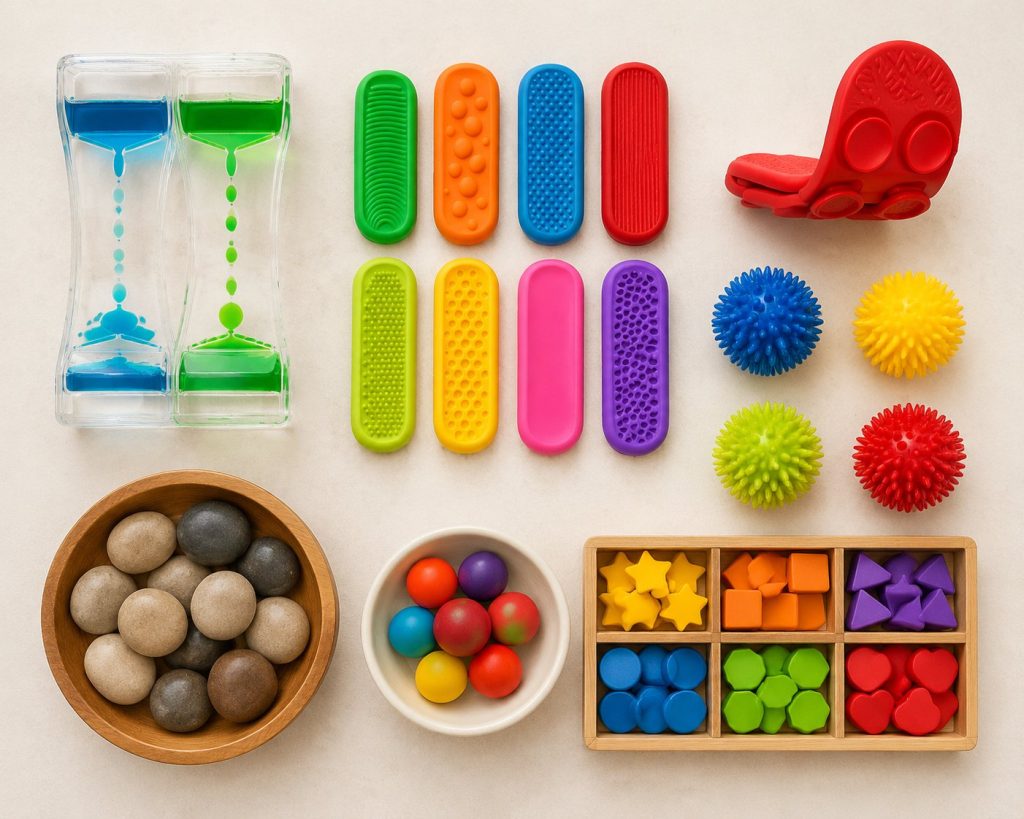
Tactile toys engage the sense of touch through varied textures, temperatures, and resistance. Textured balls, sensory bins filled with sand or kinetic material, and fidget tools fall into this category. For children who actively seek tactile input, these provide an acceptable and structured outlet. For children who are tactile-defensive, gradual exposure through safe tactile play can reduce hypersensitivity over time — but this process should be guided by an occupational therapist where sensitivity is significant.
Visual stimulation toys use light, color, and movement to engage attention. Liquid motion timers, color-mixing tools, and light-up toys are common examples. These can be calming for over-stimulated children or alerting for under-stimulated ones — which effect is needed depends on the child’s specific sensory profile, not on the toy category alone.
Proprioceptive and vestibular toys address the body’s need for movement and deep pressure. Wobble cushions, balance boards, and resistance-based tools fall into this group. For children who need to move to learn — a genuine neurological need, not a behavioral choice — these tools provide a structured outlet during seated activities.
Auditory sensory toys use controlled sound to engage or calm. Musical instruments, rain sticks, and rhythm-based tools support children who regulate through sound.
Cause-and-effect toys are often underestimated as sensory tools. Their value lies in predictability: a child who can reliably produce a specific sensory outcome gains a sense of control over their environment, which is itself regulating — particularly for children on the autism spectrum who may find unpredictability distressing.
Matching Tools to Sensory Profiles: Calming vs. Alerting
One distinction that significantly affects how sensory toys perform in the classroom is the difference between tools that calm and tools that alert. This isn’t a product feature listed on packaging — it requires understanding the child’s sensory profile.
Over-stimulated children — those who are hypersensitive to input — are easily overwhelmed. For these children, the goal is to reduce arousal. Tools that work well include weighted lap pads, slow-moving liquid timers, deep-pressure squeeze toys, and tactile tools with smooth, predictable textures. Environments matter too: a calming corner with dim lighting and minimal visual clutter supports this group more than a busy sensory station.
Under-stimulated children — those who seek input to maintain alertness — need tools that increase arousal without disrupting the classroom. Textured fidget tools, wobble cushions, resistance bands on chair legs, and sensory bins with varied materials serve this group well. These children often appear inattentive or restless, not because they lack engagement, but because their nervous system requires more input to reach an optimal learning state.
A classroom with a range of sensory toys covering both ends of this spectrum — and a teacher who understands the difference — is far better equipped to serve diverse learners than one with a single type of tool applied uniformly.
How Sensory Toys Support Specific Developmental Areas
Used intentionally, sensory toys support several interconnected areas of child development that have direct classroom relevance.
Fine Motor Development
Many sensory toys require squeezing, pinching, threading, or manipulating small objects — all of which build the hand strength and coordination children need for writing, drawing, and self-care. A child who regularly engages with textured putty, lacing toys, or small assembly activities is simultaneously building the pre-writing skills that formal handwriting instruction depends on. This is a practical argument for sensory toys that many school buyers overlook: a single tool can serve both a regulatory and a developmental function.
Language and Communication
Play is the primary vehicle for language development in young children. Sensory play provides a low-pressure, engaging context in which children naturally narrate, describe, and communicate. Children exploring a sensory bin will describe textures, compare materials, and narrate their actions — without being formally prompted to practice language.
For children with speech delays or social communication challenges, sensory play frequently creates more natural communication opportunities than structured language drills. Practitioners working with children on the autism spectrum commonly use sensory play as a foundation for joint attention and reciprocal interaction, areas where structured instruction alone often produces limited generalization.
Emotional Regulation
This is where sensory toys have the most visible classroom impact. A child who is dysregulated — anxious, overwhelmed, or physiologically over-aroused — cannot effectively access learning. Neurologically, a threat response actively suppresses the prefrontal cortex functions needed for attention, working memory, and problem-solving.
Sensory tools that provide deep pressure, rhythmic movement, or focused tactile input can help shift a child’s physiological state toward regulation without requiring adult intervention every time. A 2021 review published in Frontiers in Psychology examining self-regulation interventions in early childhood settings found that sensory-based strategies were among the most accessible and consistently effective tools for supporting emotional regulation in classroom contexts, particularly when integrated into daily routines rather than applied reactively.
For teachers, effective sensory tool use translates into fewer behavioral interruptions and more uninterrupted instructional time.
Cognitive Development Through Sensory Play
Sensory exploration is one of the earliest forms of scientific thinking. When a child mixes colors in a sensory bin, sorts objects by texture, or experiments with cause-and-effect toys, they engage in observation, hypothesis testing, and pattern recognition — foundational cognitive processes that precede formal academic learning. Well-designed sensory toys create open-ended play opportunities that support this kind of exploratory learning without prescribing a single correct outcome, making them suitable for diverse ability levels within the same classroom.
Sensory Toys in Practice: Three Classroom Scenarios
Understanding the three primary models of classroom sensory toy use — and seeing them applied to specific contexts — helps schools make more informed procurement decisions.
Scenario 1: The Sensory Regulation Corner (Ages 4–7)
A kindergarten teacher sets up a small regulation corner with a weighted lap pad, a slow-moving liquid timer, two tactile fidget tools, and a bin of kinetic sand. Children are taught — as part of the classroom routine — that this space is for when they feel overwhelmed or can’t settle. A child who becomes dysregulated during a transition can go independently, use a tool for five minutes, and return to the group. Over the course of a term, this teacher reports a measurable reduction in transition-related meltdowns and fewer whole-class disruptions. The key is that the corner is available to all children, not designated for specific students, which removes stigma and normalizes self-regulation as a skill.
Scenario 2: Embedded Tools for Sensory-Seeking Learners (Ages 6–9)
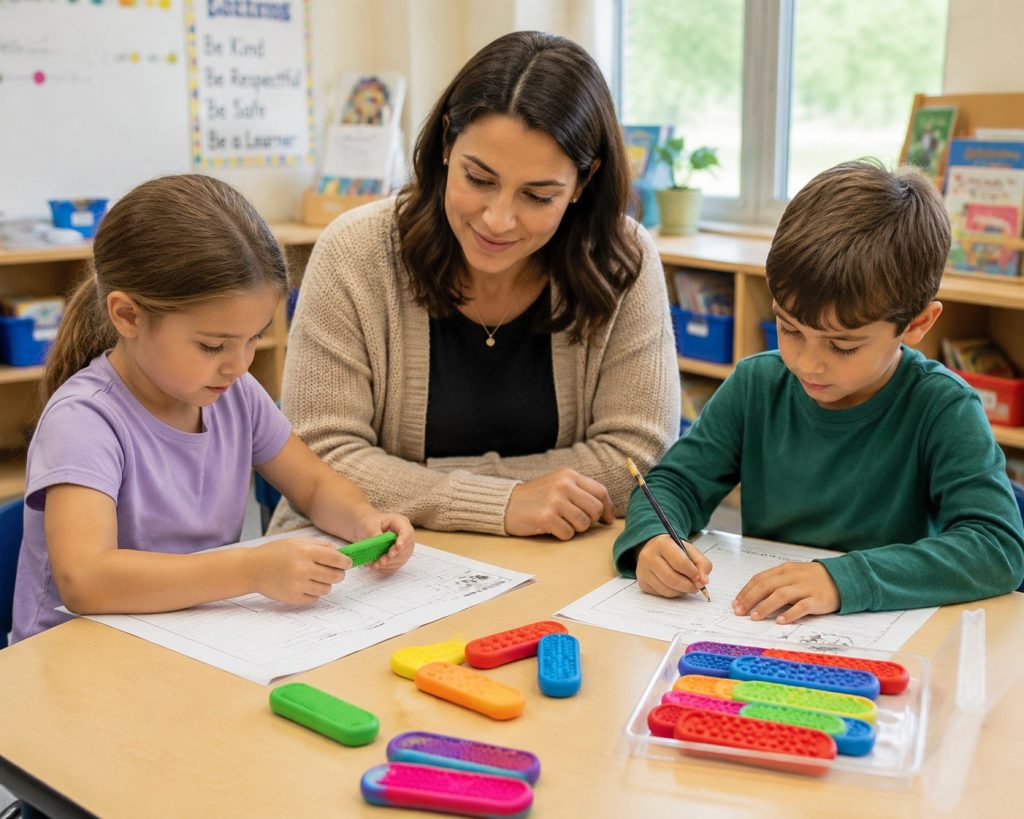
A primary school identifies three children in a Year 2 class who consistently display sensory-seeking behaviors: frequent movement, difficulty staying seated, and tactile-seeking during focused tasks. Rather than removing them from activities, the teacher introduces wobble cushions for all children (a universal provision), and gives two specific children access to a textured fidget tool kept in their pencil tray. These adjustments cost almost nothing to maintain and require minimal teacher intervention. By the end of the first month, all three children show improved task completion and reduced peer disruption.
Scenario 3: Structured Sensory Play for Mixed Needs (Ages 3–5)
In a preschool setting with two children on the autism spectrum, one child with a known tactile aversion, and a group of typically developing peers, the teacher builds two 20-minute sensory play sessions per week into the class schedule. Different stations offer different sensory experiences: dry rice bins, water play, playdough, and smooth sorting objects. Children choose their own station, which allows both sensory-seeking and sensory-avoidant children to participate at their own comfort level. Over time, the child with a tactile aversion begins to approach the playdough station with minimal prompting — a progression that would be difficult to achieve through directive instruction alone.
What Schools and Buyers Should Look for in Sensory Toys
Not all sensory toys perform equally in educational settings. Classroom environments impose demands that home-use products are rarely designed for.
Safety and material quality are baseline requirements. Sensory toys are handled extensively, often by children who mouth objects or play intensively. Materials must be non-toxic, free of small parts hazards appropriate to the age group, and durable enough to withstand repeated use without degrading in ways that create new risks. Buyers sourcing for schools should require documentation of material safety testing as standard, not as an optional extra.
Classroom durability is separate from safety. A sensory toy that works well for one child at home may not survive a full academic year in a classroom where twenty children use it daily. Construction quality — the robustness of seams on sensory bags, the integrity of plastic components, the material composition of tactile tools — directly affects total cost of ownership. Low-cost products that require frequent replacement are rarely the economical choice for institutional buyers.
Developmental alignment affects both safety and outcome. A sensory tool designed for toddlers may not provide sufficient regulatory benefit for a seven-year-old, and tools for older children may present hazards for younger ones. Buyers should look for age guidance backed by developmental reasoning — not simply regulatory minimums — and should be able to connect each product to the sensory profile and learning stage it is designed to address.
Range and versatility matter at the institutional level. A school building out sensory resources benefits from a coordinated product range covering multiple sensory modalities and developmental stages, sourced from a supplier who understands educational application — not just retail appeal.
Understanding the Limits: What Sensory Toys Cannot Do
A balanced view of sensory toys requires acknowledging where they are effective and where they are not.
Sensory toys are classroom support tools. They are not therapeutic interventions, and they should not be positioned as a substitute for professional assessment or treatment. For children with significant sensory processing disorder, autism spectrum conditions, or other complex developmental needs, sensory toys may be a useful adjunct to occupational therapy or other specialist support — but they do not replace it. Schools using sensory tools with children who have identified special educational needs should do so in coordination with the relevant specialists involved in those children’s support plans.
There is also a meaningful difference between sensory toys used with intention and sensory toys used as a generic classroom addition. Without teacher understanding of how and why these tools work, sensory toys can become sources of distraction rather than regulation. A fidget tool given to a child without guidance may be used as a projectile or a novelty rather than a regulatory aid. A sensory corner without clear expectations may become a place to avoid work rather than a genuine regulation space.
This is why teacher training matters. Schools investing in sensory toy resources should also invest in at least a basic level of professional development around sensory processing, so that staff can use these tools with enough understanding to be effective. Many occupational therapists offer school-based training for exactly this purpose, and the return on that investment is visible in how consistently and confidently teachers are able to apply the tools.
Finally, sensory toys work best as part of a broader, thoughtfully designed learning environment — not as an isolated purchase. The physical environment, daily routine structure, teacher-student relationships, and classroom culture all interact with how sensory tools perform. A sensory bin in a chaotic, overstimulating classroom may provide less benefit than it would in a calmer, more organized space.
The Market Reality: Why Product Quality Varies
The sensory toy market has expanded rapidly over the past decade, driven by growing awareness of sensory processing needs and the mainstreaming of occupational therapy concepts into early childhood education. This growth has attracted a large number of manufacturers, and the quality range is significant.
At one end are products designed with input from occupational therapists, developmental psychologists, and experienced educators — with clear age guidance, documented safety testing, and design choices grounded in genuine developmental frameworks. At the other end are products that use sensory language as marketing copy while offering little beyond novelty value, with no connection to the educational and therapeutic principles that make sensory toys effective.
For schools and educational buyers, this distinction matters both educationally and commercially. Products that underperform in classroom conditions need to be replaced, increasing total cost. Products not grounded in developmental frameworks may not deliver the outcomes they promise — and in some cases, the wrong tool applied to the wrong child may produce the opposite of the intended effect.
Buyers working with educational toy manufacturers or distributors should ask direct questions: What developmental frameworks informed this product’s design? What age ranges and sensory profiles is it designed to serve? How has it been tested for classroom durability? What safety certifications does it carry?
Suppliers who can answer these questions with specifics — rather than general claims — are the ones worth building sourcing relationships with.
Sensory Toys and Inclusive Education
One of the strongest arguments for sensory toys as a core classroom resource — rather than a supplementary or special-needs-only provision — is their role in inclusive education.
Inclusive classrooms bring together children with a wide range of learning profiles: children with autism spectrum conditions, ADHD, sensory processing differences, developmental delays, and anxiety disorders alongside typically developing peers. Meeting the full range of needs within a single environment is one of the central practical challenges of modern early childhood and primary education.
Sensory tools support inclusivity in a way that many other classroom interventions do not: they meet individual needs without isolating children. A wobble cushion doesn’t label a child as different. A regulation corner is available to everyone. A fidget tool on a desk is increasingly normalized across many classrooms. These tools help close the gap between what a child’s nervous system needs to access learning and what a standard classroom environment provides — without requiring a separate room, a specialist teacher, or a formal diagnosis.
For schools investing in inclusive education, sensory toys offer a high-value, relatively accessible entry point — particularly when sourced thoughtfully, matched to the children in the room, and integrated with enough teacher understanding to be used well.
Conclusion
Sensory toys reflect a growing, evidence-supported understanding of how children’s nervous systems actually function — and what those systems need to support learning, regulation, and development. For teachers, they address real classroom problems. For schools, they support inclusive education goals and reduce behavioral disruption. For buyers and distributors, they represent a category with sustained and growing demand rooted in educational and therapeutic practice.
The difference between sensory toys that deliver results and those that don’t comes down to design intent, material quality, developmental grounding, and — critically — how they are used. A well-chosen sensory toy, applied with teacher understanding and integrated into a coherent classroom approach, is a meaningful educational tool. The same toy purchased without that context may sit unused or, worse, create new problems.
For schools and brands looking to source sensory toys that hold up to real classroom conditions and deliver genuine developmental value, the right conversation starts with a manufacturer who can speak to both the educational science and the production standards behind what they make.