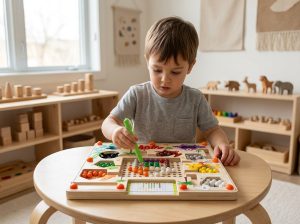
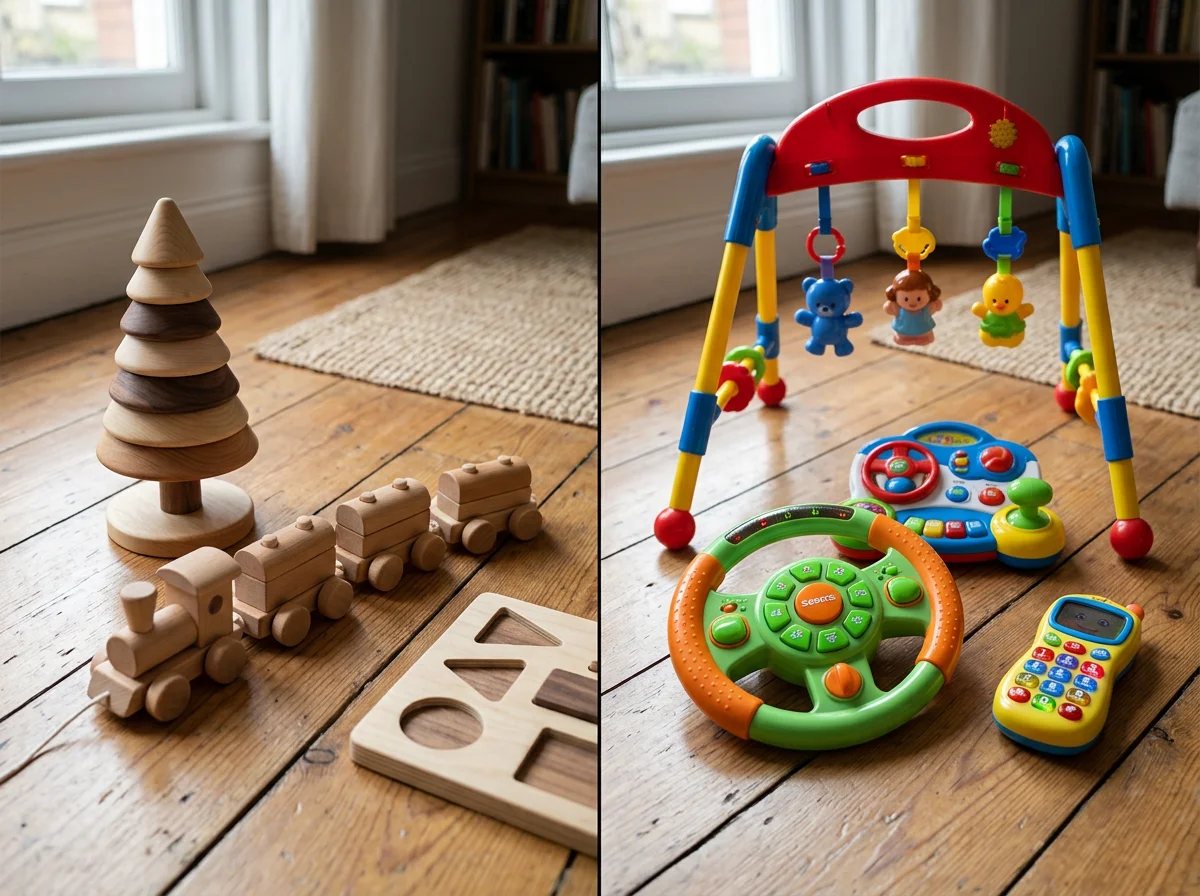
Walk into any toy store and you’ll face the same overwhelming question: wooden or plastic? Both fill entire aisles, both come in every color and theme imaginable, and both are marketed as “great for kids.” But when parents start looking beyond the packaging — at longevity, safety data, and what research actually says about child development — the picture becomes a lot more interesting.
This isn’t about declaring one category universally superior. It’s about giving you the kind of specific, evidence-based information that helps you make a confident decision for your child’s age, interests, and learning stage.
What the Research Says About Toy Materials and Child Development
Cognitive Stimulation and Open-Ended Play
A 2017 study published in the journal Infant Behavior and Development found that children playing with electronic toys — most of which are plastic — produced fewer vocalizations and showed less parent-child verbal interaction compared to children playing with traditional wooden toys or books. The researchers noted that open-ended toys, which don’t dictate a specific outcome, tend to encourage more creative and language-rich play.
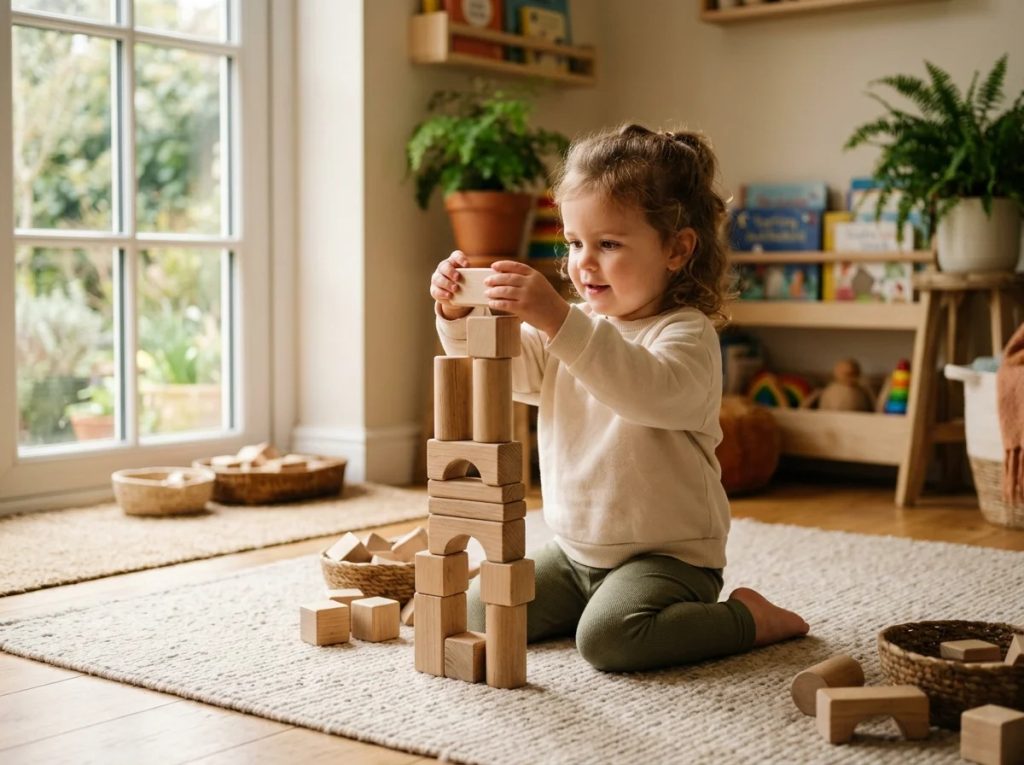
Wooden toys by design offer fewer predetermined functions. A set of wooden blocks can become a castle, a bridge, a market stall, or simply a tower to knock down — the narrative is entirely child-driven. This flexibility is linked to stronger divergent thinking skills in early childhood.
Fine Motor Development by Age Group
The physical properties of materials matter more than most parents realize:
- Ages 1–2: Heavier, smooth-surfaced wooden pieces help toddlers develop grip strength and hand-eye coordination. Research from the American Journal of Occupational Therapy indicates that tactile variety — different textures and weights — directly supports sensorimotor development in this window.
- Ages 3–5: Interlocking wooden components (like peg puzzles or stacking rings) require more precise finger control than snapping plastic pieces, which often have wider tolerances designed for ease of use.
- Ages 6+: Both materials serve well at this stage, though wooden construction sets tend to demand more spatial reasoning.
Attention Span and Toy Complexity
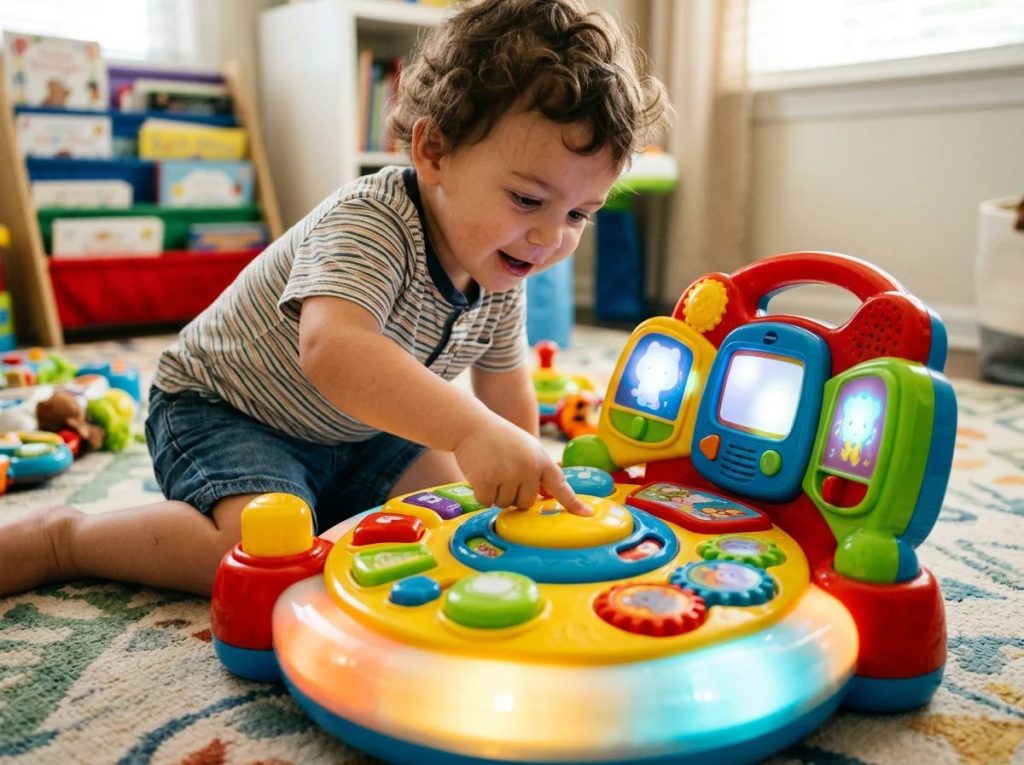
Plastic toys — particularly battery-operated ones — often deliver instant sensory reward: lights, sounds, automatic movement. Developmental psychologists have noted that this reward structure can shorten the tolerance for “slower” play activities. Wooden toys, which require the child to generate the activity, tend to support longer, more focused play sessions.
Safety Standards — The Specific Numbers That Matter
This is where vague reassurances need to be replaced with actual data.
| Standard | What It Covers | Applies To |
| ASTM F963-23 | US toy safety — mechanical, flammability, chemical limits | Both wood and plastic |
| EN 71-3 (Europe) | Migration limits for 19 heavy elements in surface coatings | Both, but particularly relevant to painted wooden toys |
| CPSIA (US) | Lead limit: 90 ppm in surface coatings; 100 ppm total lead content | Both |
| California Prop 65 | Stricter limits on BPA, phthalates, formaldehyde | Critical for plastic toys sold in CA |
The critical distinction: Plastic toys can contain phthalates (used to soften PVC) and BPA. While hard plastics like ABS — used in most major-brand construction toys — are generally phthalate-free, soft plastic toys (squeeze toys, bath toys, teethers) remain an area where parents should specifically request material composition sheets.
Wooden toys carry a different risk profile: the concern is surface coating. A toy finished with water-based, formaldehyde-free lacquer and non-toxic pigments (verifiable via EN 71-3 test reports) poses minimal chemical exposure risk. The key is requesting the actual test documentation, not just a label claim.
Environmental Impact — A Data-Driven Comparison
Carbon Footprint and Material Sourcing
A lifecycle assessment framework (ISO 14040) applied to toy manufacturing reveals notable differences:
- Plastic toys are petroleum-derived. The production of 1 kg of ABS plastic generates approximately 3.5 kg of CO2 equivalent. At end-of-life, most plastic toys are landfilled — global toy plastic recycling rates remain below 10%.
- Wooden toys from FSC-certified managed forests carry a significantly lower carbon footprint. Sustainably harvested beechwood or rubberwood (a byproduct of latex production) sequesters carbon during growth and releases it only at end-of-life decomposition — a cycle that can span 20–50+ years for a well-made product.
Durability and Total Cost of Ownership
This is a practical sustainability argument that often gets overlooked:
A quality wooden toy set purchased for $45–$80 routinely survives two to three children across 8–12 years of use. A comparable plastic toy set in the same price range typically has a functional lifespan of 2–4 years before structural failure or feature degradation (battery compartment corrosion, broken latches, faded decals).
Calculated over 10 years:
- Wooden toy set: $60 one-time investment
- Replacement plastic equivalents: $60 × 2–3 replacement cycles = $120–$180
The math favors wood before you factor in disposal costs.
Where Plastic Toys Genuinely Excel
Balanced analysis requires honesty. There are categories where plastic is the more practical or even superior choice:
Water Play and Outdoor Use
Bath toys, sandbox sets, and water tables work better in plastic. Wood exposed to repeated moisture cycles will warp, crack, and eventually harbor mold — no finishing treatment fully eliminates this vulnerability. For any toy that will regularly get wet, plastic is the more durable and hygienic option.
Complex Mechanism Toys
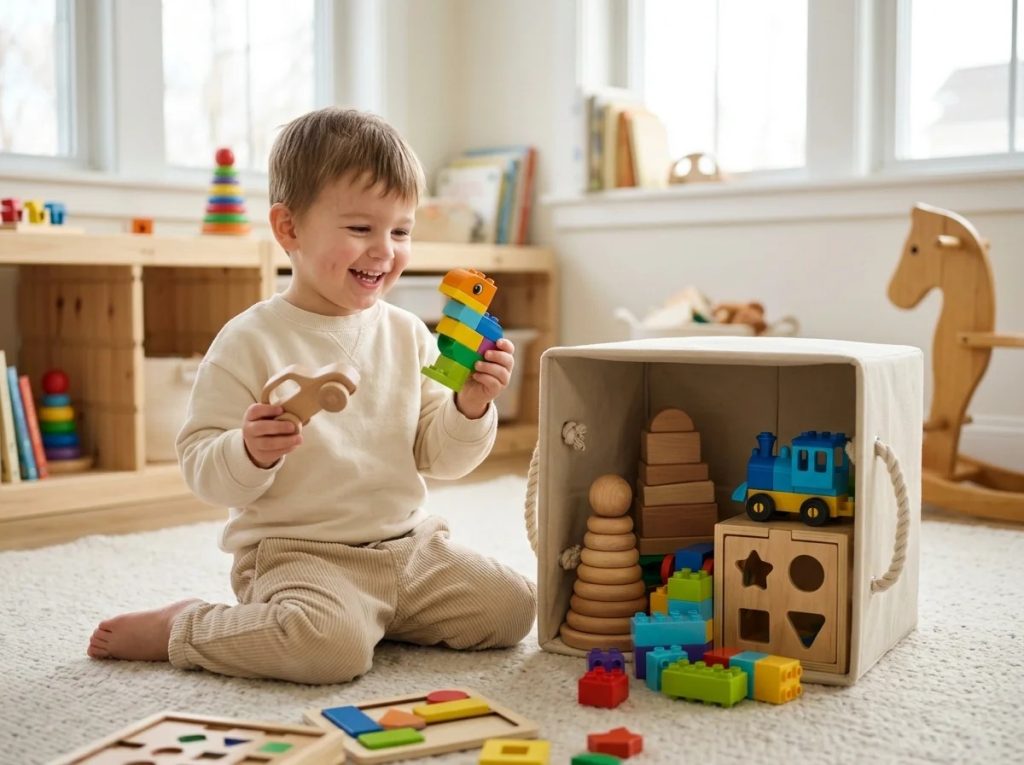
Construction sets requiring precise interlocking tolerances (like LEGO-style brick systems), toy vehicles with working axles, and science kits with moving parts genuinely benefit from injection-molded plastic’s dimensional consistency. Wood’s natural variation in grain and density makes achieving the same mechanical precision far more expensive to manufacture.
Budget-Constrained Situations
Quality wooden toys cost more to produce. At the entry-level price point (under $15), plastic toys typically offer more play features per dollar. For families where budget is a primary constraint, a well-chosen plastic toy that gets used is objectively better than a wooden toy that sits on a wishlist.
How Wooden Toys Support Language and Social Development
The Role of Symbolic Play
Research from the University of Virginia’s Play Lab found that children engaged in symbolic play — using objects to represent other things — demonstrated stronger narrative language skills at age 5. Wooden toys, due to their abstracted forms (a wooden figure doesn’t look like any specific character; a wooden block doesn’t look like any specific building), are particularly effective at triggering symbolic play.
Plastic toys, especially licensed character toys, often come pre-loaded with an identity and a pre-existing story. This isn’t inherently negative, but it does tend to channel play into a predefined narrative rather than an invented one.
Cooperative Play and Social Learning
A wooden train set or a set of building blocks naturally accommodates multiple children without a “correct” way to play — this creates more negotiation, more collaborative storytelling, and more peer interaction than single-player electronic toys. Studies measuring peer interaction quality consistently find higher rates of cooperative play with open-ended, material-neutral toys.
Making the Decision — A Practical Framework for Parents
Rather than a binary choice, most child development specialists now recommend a mixed-material toy environment, with the balance shifting based on developmental stage:
| Age Range | Recommended Ratio (Wood:Plastic) | Priority Toy Types |
| 0–18 months | 70:30 | Wooden rattles, stacking rings, soft plastic teethers |
| 18 months–3 years | 65:35 | Wooden shape sorters, push toys; plastic bath toys |
| 3–6 years | 60:40 | Wooden blocks, puzzles, pretend play sets; plastic vehicles, outdoor toys |
| 6–10 years | 50:50 | Wooden construction sets; plastic building systems, science kits |
Questions Worth Asking Before You Buy
Before adding any toy to your cart — wooden or plastic — these are the questions that actually filter out poor-quality options:
- Can you obtain the EN 71-3 or ASTM F963 test report (not just the logo)?
- For wooden toys: what finishing process was used, and is it formaldehyde-free?
- For plastic toys: is the plastic ABS or PVC? What phthalate testing was conducted?
- Does the toy require the child to generate the activity, or does it generate the activity for the child?
- Can this toy grow with the child for at least 2–3 years?
Conclusion
The wooden toys vs plastic toys debate doesn’t have a single answer — but the data does point in a clear direction for the early childhood years. Wooden toys consistently outperform plastic alternatives in measures of cognitive stimulation, language development, fine motor precision, and long-term material safety for children under 6. They carry a lower environmental footprint when sourced responsibly and a lower total cost when you calculate across a full decade of use.
Plastic toys aren’t the enemy — they fill genuine gaps in water play, complex mechanical toys, and budget-conscious purchasing. The sharpest parents aren’t choosing sides; they’re choosing intentionally, with specific criteria rather than category assumptions.