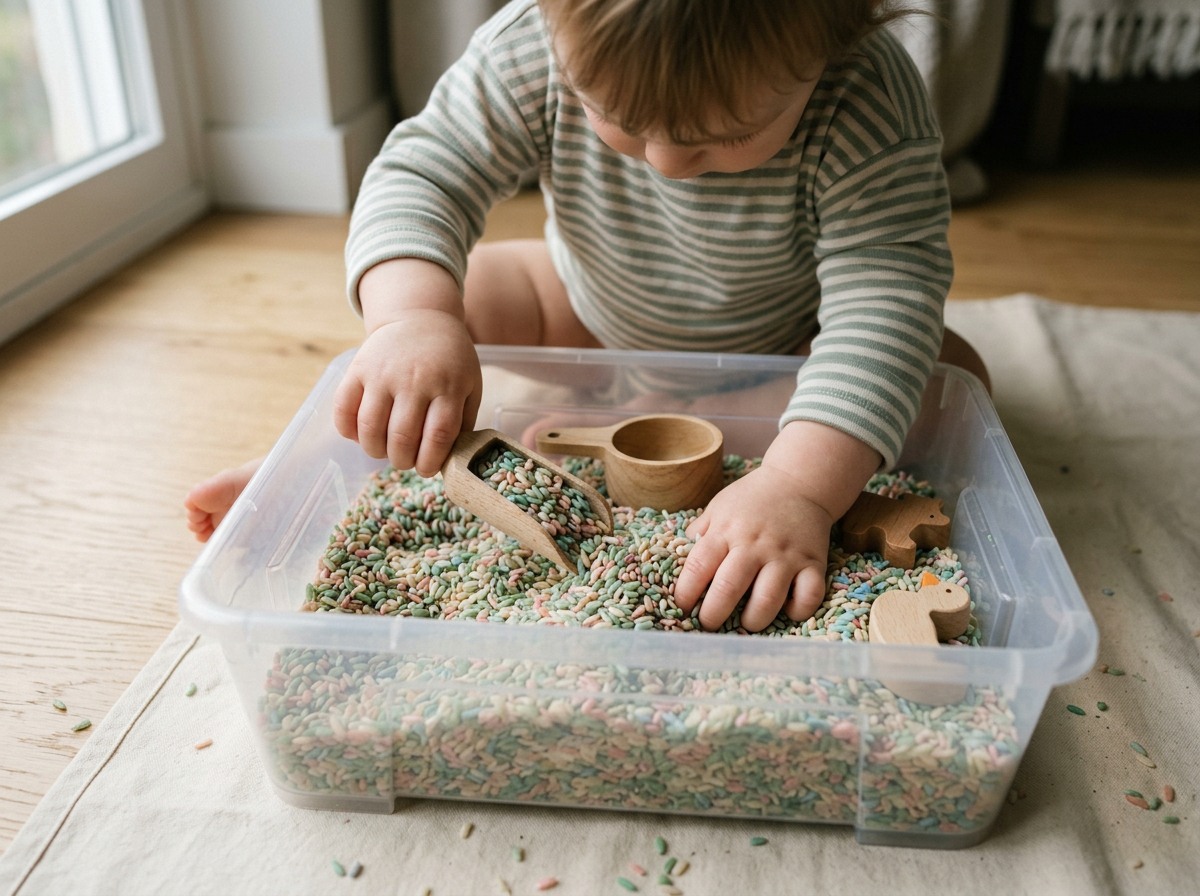
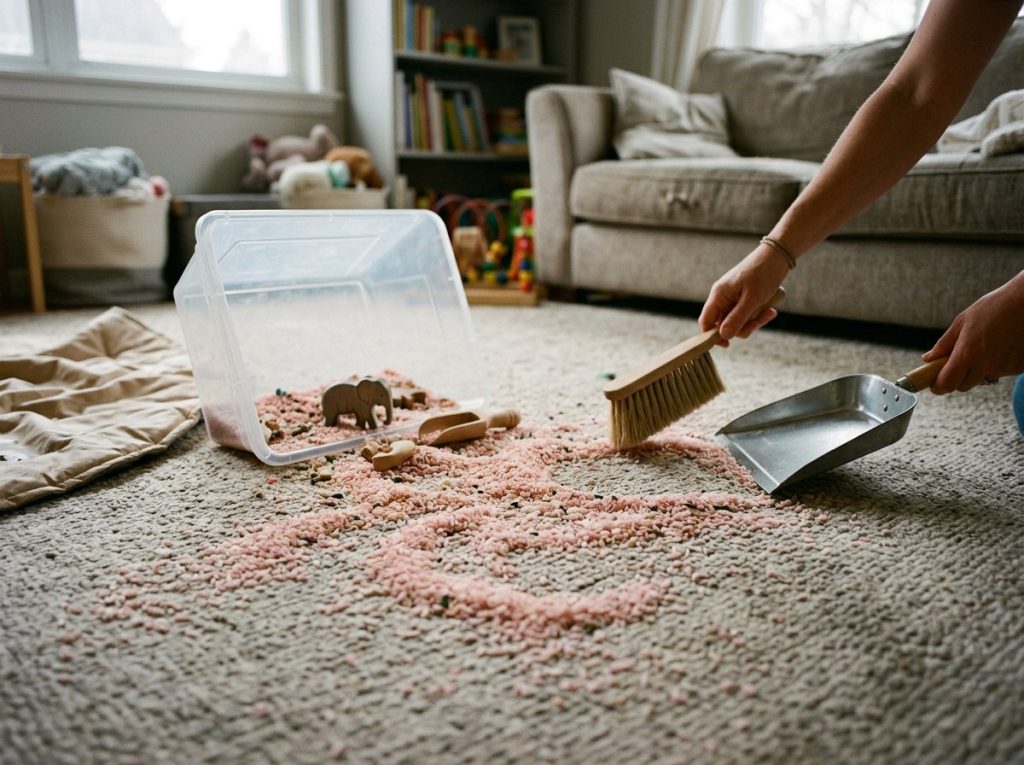
A parent clears the coffee table, pours three cups of dyed rice into a plastic tub, and hides six wooden animals inside. Ninety seconds later the rice is on the carpet, the toddler is gone, and the afternoon activity is over. Most sensory bins fail in the first week for reasons that have nothing to do with the child.
The fix is rarely a prettier theme or a bigger container. Sensory bins for toddlers work when three decisions line up: filler, tools, and timing. The filler must match the child’s mouthing stage, the tools must match the child’s grip, and the session needs a clear beginning and end. This guide walks through each decision with the research behind it, then builds a first-week plan that survives contact with a real two-year-old.
What Twenty Minutes in a Bin Actually Builds
The bin looks like mess, and the mess is doing specific work. Two research threads explain what that work is, and both come with boundaries worth knowing before anyone cites them.
The Multi-Sensory Advantage
A 2024 review and pilot study in Frontiers in Education compared multi-sensory materials with traditional toys in children aged three to six. The multi-sensory materials held attention longer and produced stronger engagement and learning measures (Fan, Chong, and Li, 2024). Materials that feed several senses at once give a short attention span more reasons to stay.
That finding covers a category, not any single product. The developmental logic behind sensory toys and child development runs through the same channel. Touch, sound, and sight arriving together give a growing brain more raw material than a picture card does.
Fine Motor and Pre-Writing Foundations
Scooping, pouring, and pinching are pre-writing practice in disguise. A 2025 scoping review in Frontiers in Psychology examined 58 studies on visual-motor integration. It found the skill family predicts handwriting performance and tracks with early math outcomes, while no single assessment tool has become a gold standard (Zhang, Lin, and Li, 2025).
A toddler gripping a scoop is rehearsing the same hand architecture a pencil will need two years later. The same grip family powers the activities in these fine motor skills toys for toddlers, which is why a tub of rice belongs in any writing-readiness conversation. For adults weighing whether sensory bins for toddlers justify the daily cleanup, the motor evidence is the strongest single argument.
Two Limits and One Common Mistake
The first limit is scale. The 2024 multi-sensory study was a pilot, and its authors call for larger samples before strong claims hold. The second limit is measurement. With no gold-standard assessment across 58 studies, any promise of guaranteed writing gains from bin play runs past the evidence.
The common mistake is treating the bin as a babysitter. The research measures short, adult-guided sessions, not permanent access. A bin parked in a corner all day becomes background noise within a week, and the developmental value lives in brief, repeated, supervised play.
Setting Up Sensory Bins for Toddlers the Right Way
A working setup needs four parts: container, filler, tools, and a defined play zone. Each part carries one decision that determines whether a session lasts two minutes or twenty. Together these small choices decide whether sensory bins for toddlers become a weekly habit or a one-time mess.
Choosing the Container and Fill Level
Shallow and wide beats deep and narrow. A tub about two hand-widths deep lets a toddler see the whole field and reach the bottom without shoulder-deep digging. Under-bed storage boxes work well, and a lid turns cleanup into storage.
Fill the container to one-third, never to the brim. Overfilled bins spill by design, and adults who spend the session saying “keep it in” stop offering sensory bins for toddlers within a month. A cheap shower curtain or old sheet under the tub defines the play zone and folds the stray filler back in.
Matching Fillers to Age and Mouthing Stage
The filler decision is a safety decision first and a sensory decision second. Toddlers who still mouth objects need fillers that are taste-safe or too large to swallow. The table below maps common options to stages, and local safety guidance should override it whenever the two disagree.
| Filler | Suggested stage | Main watch-out |
| Water with cups and spoons | From around 12 months | Constant arm’s-reach supervision |
| Cooked pasta or rolled oats | 12-24 months, mouthing stage | Replace after each session |
| Large pom-poms or shredded paper | 18 months and up | Low taste appeal; check for loose fibers |
| Dyed rice or dry lentils | Around 2.5 years and up | Choking size; mouthing stage must be over |
| Kinetic sand | 3 years and up | Fine grains; brand quality varies |
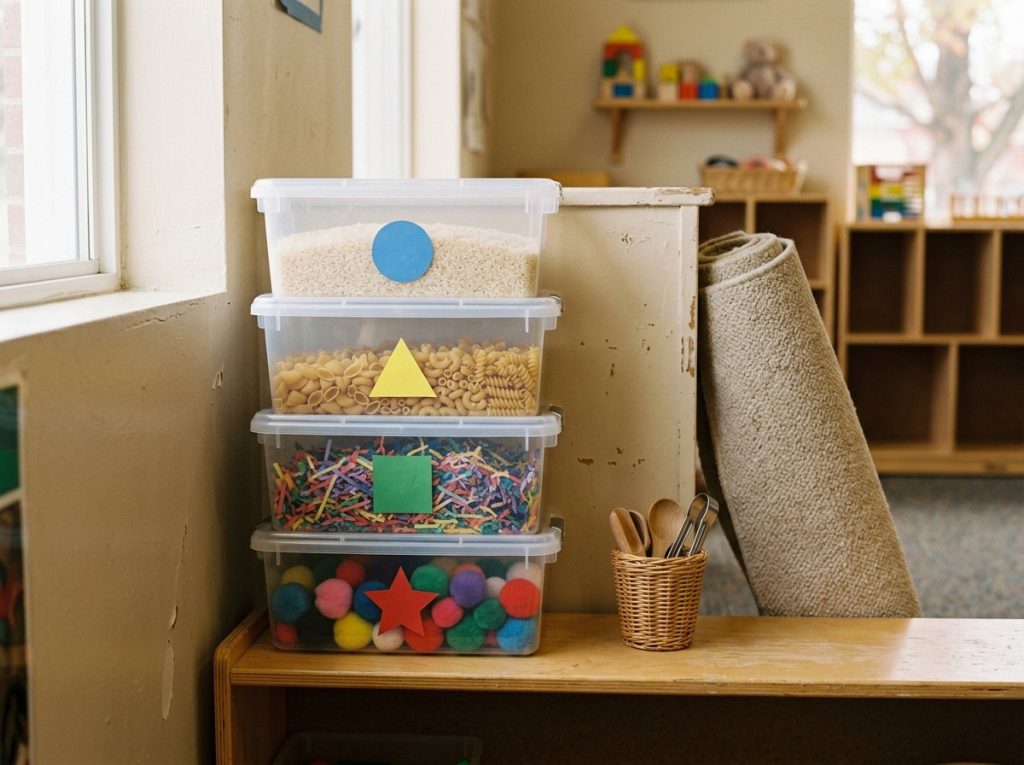
The safest bin is the one matched to this child’s mouth, not the one with the cleverest theme. A program serving mixed ages stocks at least two filler tiers and labels the tubs, so toddler sensory play tubs stay matched to each group as children move up.
Letting the Tools Do the Teaching
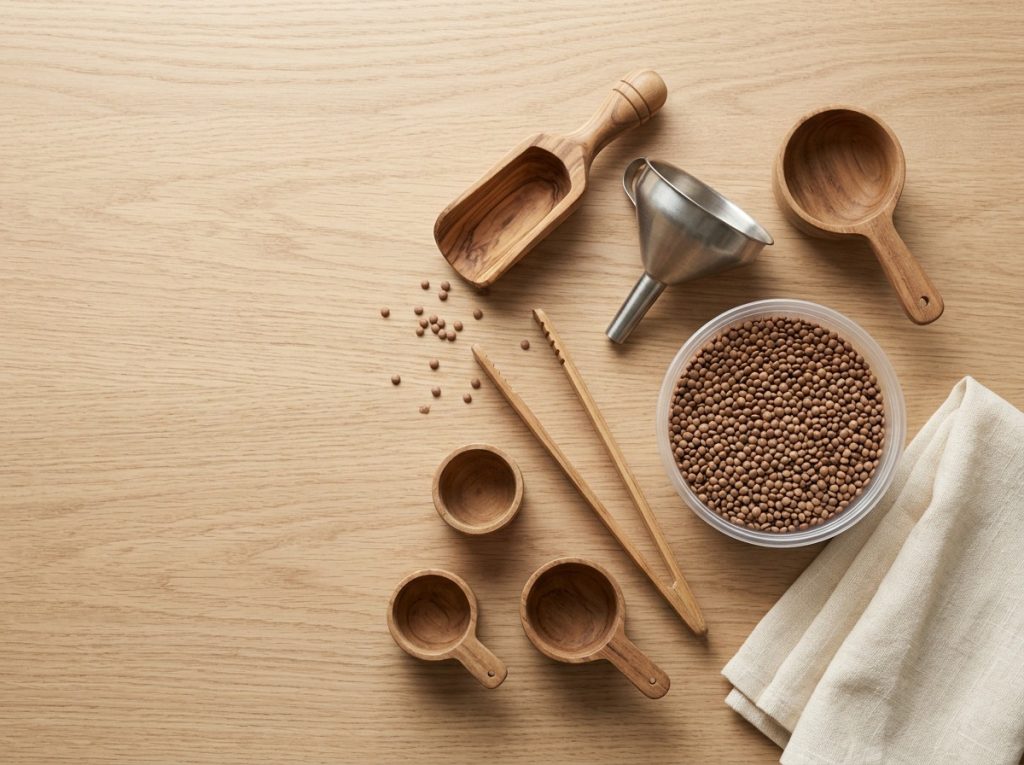
Tools convert random patting into skill work. Scoops build the palmar grasp, tongs build the pincer grip, and funnels teach cause and effect with every pour. Wooden scoops and cups tolerate drops and daily washing in ways thin plastic rarely does, which matters for any toddler sensory activity kit in daily rotation.
Two or three tools per session are enough. Swapping the tool set weekly renews interest in the same filler, which is the cheapest way to keep sensory bins for toddlers fresh without rebuilding the whole tub.
A First-Week Progression That Holds Attention
New bins fail when everything arrives at once. A five-day progression rations the novelty, and each day adds exactly one new demand. This pacing turns sensory bins for toddlers from a weekend project into a repeatable routine.
Days One and Two: Free Scooping Only
Offer the bin with one scoop and one cup, nothing hidden and nothing themed. The toddler’s job is filling and dumping, which is precisely the repetition the hands need. Free scooping is not a warm-up to skip, because it is the core activity these first days protect. End the session after ten to fifteen minutes, while the child still wants more.
Short sessions feel stingy and work anyway. Stopping early leaves the bin’s pull intact for tomorrow, and it teaches the adult that engagement, not duration, is the metric that counts.
Days Three and Four: Hiding and Finding
Bury three large objects in the filler and let the digging begin. Naming each find as it surfaces ties vocabulary to texture, weight, and shape in a single moment. Adults who narrate the child’s actions in simple words, a technique therapists call sportscasting, multiply the language yield without turning play into a quiz.
The adult’s job in this phase is commentary, not instruction. Questions with one right answer shut down the digging, while plain observations keep it going.
Day Five and Beyond: Pouring, Sorting, and Early Math
Add a second container and pouring becomes volume work. Sorting finds by color or size lays the classification groundwork that early math builds on. This is where sensory bins for toddlers start paying compound interest, because the same tub now trains comparison, counting, and category language.
The progression does not end at day five. It repeats with a new filler or a new tool set, and each cycle restarts at free scooping before the demands layer back on.
Keeping Sensory Bins for Toddlers Safe, Clean, and Calm
Safety rules fail when they are many and abstract. They hold when they are few, physical, and tied to the setup itself. For sensory bins for toddlers, supervision is not a disclaimer at the bottom of the page but the feature that makes everything else possible.
Supervision Rules That Actually Get Followed
Four rules cover nearly every incident pattern, and each one maps to something the adult controls.
- The bin lives on its mat, and play that leaves the mat pauses the session.
- Fillers stay in the bin; throwing ends the session calmly, every time.
- Hands stay out of mouths during play and get washed right after.
- An adult stays within arm’s reach for any child under three.
Consistency matters more than the specific rules. A toddler who learns the pattern in week one stops testing it by week three.
A Cleaning and Storage Routine
Dry fillers last for weeks in a lidded tub, while wet or edible fillers get replaced after each session. Tools get washed on the same schedule as dishes. Households running toddler sensory play tubs two or three times a week usually need less than ten minutes of upkeep to keep the rotation hygienic.
Settings that run sensory play bins for preschool groups face the stricter standard. The risk-based approach behind sanitizing toys in daycare applies directly, because a classroom bin concentrates hand contact exactly the way shared toys do. A latched tub on a high shelf keeps fillers out of reach between sessions, and it protects the bin’s novelty as a side effect.
Knowing When a Texture Is Too Much
Some children are tactile defensive, and a forced hand is a setback rather than a shortcut. Occupational therapy guidance consistently recommends graded entry: a tool first, then one finger, then the whole hand, at the child’s pace. A towel within reach lowers the stakes, because a child who can wipe off at any moment dares to touch more.
Refusal is information, not defiance. A child who rejects wet sand for a month may accept dry rice happily, and both responses tell the adult which door to keep open.
Running Sensory Play Bins for Preschool Groups and Classrooms
Group settings raise the stakes and the payoff at once. Sensory bins for toddlers in a classroom reach a dozen children with the same material cost as one home setup. One bin per three children prevents most grabbing conflicts, and lidded tubs on a low shelf let children carry their own station to the mat.
Rotation Management for Toddler Sensory Play Tubs
A weekly filler rotation keeps a classroom set of tubs interesting without daily rebuilds. Programs often run one dry bin, one wet bin, and one themed bin, cycling the themes monthly. Labels with pictures let non-readers return tools to the right tub, and the shelf stays orderly without adult policing.
The rotation schedule is the curriculum. Predictable change keeps engagement high, while constant novelty teaches children to wait for the next bin instead of working with this one.
Sourcing Toddler Sensory Activity Kits for Programs and Brands
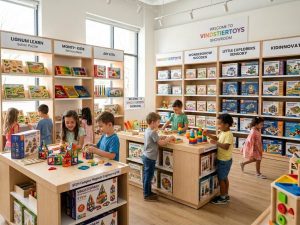
The evaluation lens shifts when one classroom becomes twenty. Home setups tolerate a mixed drawer of thrift-store spoons; programs need identical kits that survive daily disinfection, pass safety audits, and restock without a scavenger hunt. A sensory kit at that scale is a cross-material product: wooden scoops, molded cups, printed activity cards, and the storage tub itself each carry a different compliance trail.
One integrated quality system beats four suppliers. Vindstier runs wood CNC machining, child-safe plastics molding, magnetic components, and printed packaging under a single ISO 9001 system. Material testing covers EN71 and ASTM F963, with SKU-level CPC and CE documentation for export programs. Brands and distributors developing own-brand sensory play kits move from design brief to prototype in 7-14 days, leaving one accountable partner instead of a purchasing relay race.
For program buyers, sensory bins for toddlers scale well precisely because the concept is simple and the compliance load is not. The kit that survives a classroom year is the one whose materials, testing, and restocking were designed together from the start.
Making Sensory Bins for Toddlers a Weekly Habit
The long game is measured in months, not afternoons. Two sessions a week beat an ambitious daily plan that collapses by Friday. Anchoring the bin to an existing transition, such as the lull before lunch or the hour after nap, gives sensory bins for toddlers a slot they can keep.
A Rhythm That Survives Real Schedules
Keep one of these toddler sensory play tubs lidded and ready at all times. A ready bin removes the setup excuse on hard days, and a five-minute session still counts. Rotate the tool set on Sundays, refresh the filler monthly, and the system runs on minutes of maintenance.
The goal is a routine the adult can sustain, because the child’s gains compound only across months. A strong first week followed by abandonment loses to modest consistency every time.
What to Check After a Month
A month of sessions produces enough signal for a real evaluation. Four questions cover the ground:
- Does the child stay engaged past ten minutes without adult prompting?
- Has the grip on the scoop moved from fist toward fingers?
- Does the child name textures, actions, or finds during play?
- Does cleanup fit inside the routine, or does it quietly get skipped?
A filler that stays untouched after three sessions gets swapped without guilt. The bin earns its shelf space when the child asks for it, and that request is the metric no checklist can replace.
Sensory bins for toddlers succeed as a system, not a one-afternoon project. The right filler for the child’s stage, a few durable tools, short supervised sessions, and a rotation that rations novelty add up to the calmer focus and stronger hands the research describes. Families and programs that treat setup, safety, and review as one routine get there one scoop at a time.