School procurement teams face a recurring dilemma each budget cycle: three suppliers submit quotes for the same product category, price differences reach 40%, yet safety certificates look identical on paper. Two months after purchase, cheaper options show paint chipping and small parts loosening. Teachers spend classroom time inspecting toys instead of guiding learning, while warranty claims go unanswered. This pattern costs institutions both money and educational quality, raising a fundamental question: which educational toys brands deliver verifiable safety, sustained durability, and measurable classroom value?
This analysis examines five brands with strong institutional market presence—selected by prevalence in educational settings rather than ranked performance—explaining what separates surface-level compliance from genuine quality, and how procurement decisions impact long-term cost structures and daily teaching effectiveness.
Why Brand Selection Matters More Than Price in Educational Procurement
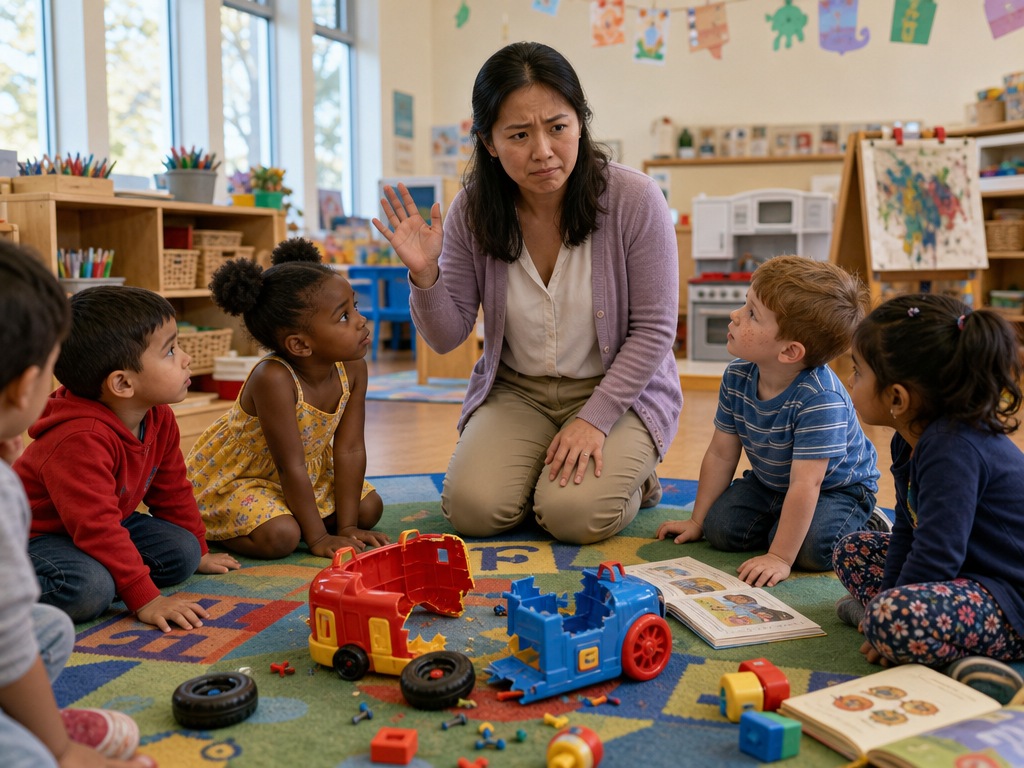
Educational toy failures manifest differently than consumer product failures. When a classroom manipulative fails during a lesson, 20 students lose structured learning time while teachers improvise alternatives. A 2024 survey of 340 preschool directors revealed that 67% experienced classroom disruptions from toy failures, with an average of 8.3 hours per month spent managing defective materials—time reallocated from curriculum planning and teacher development.
Brand accountability determines post-purchase outcomes. Established educational toys brands maintain dedicated institutional support teams, replacement part inventories, and documented safety testing beyond minimum certification. The cost difference between a $180 set from a verified brand and a $110 generic alternative evaporates when the latter requires full replacement within 18 months, while the former functions for 4-5 years across multiple cohorts.
Safety certification depth varies dramatically. All products claim ASTM F963 or EN71 compliance, but testing rigor differs. Premium brands conduct quarterly batch testing with third-party labs and publish detailed test reports. Budget alternatives typically test only initial production runs, switch suppliers without retesting, and provide generic certificates. For institutions serving children under 36 months, this distinction directly impacts liability exposure and regulatory compliance.
Five Critical Evaluation Dimensions for Educational Toys Brands
Safety Certification Depth Beyond Standard Compliance
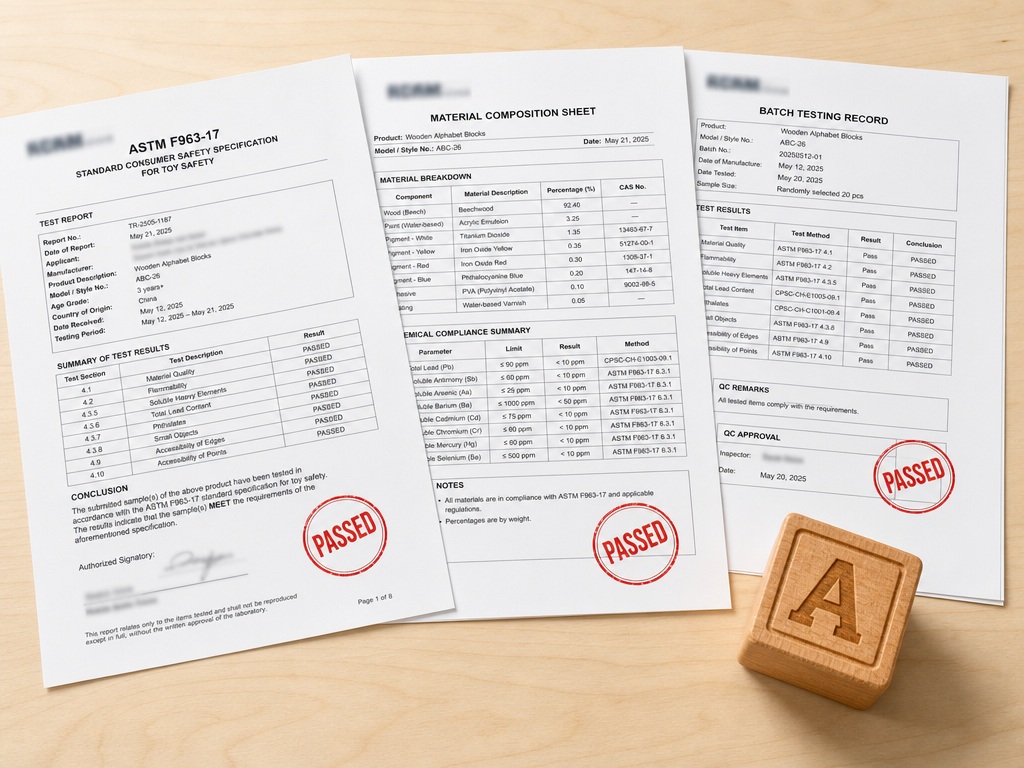
Look for brands publishing specific test report numbers rather than certificate images alone. Verify whether testing covers every production batch or only samples. Premium educational toys brands invest $40,000-$80,000 annually in ongoing safety testing. Check if the brand maintains a public database of material compositions—transparent brands list every pigment, polymer, and adhesive by chemical name. For wooden toys, confirm FSC certification and whether finishes meet food-safe grades.
Educational Design Philosophy and Pedagogical Foundation
Effective educational toys brands employ child development specialists who design around specific skill progressions. Review whether the brand publishes age-stage alignment guides, offers differentiated challenge levels, or provides evidence of classroom testing before release. Brands lacking pedagogical foundation typically copy popular designs without understanding developmental appropriateness.
Durability Assessment Through Construction and Warranty
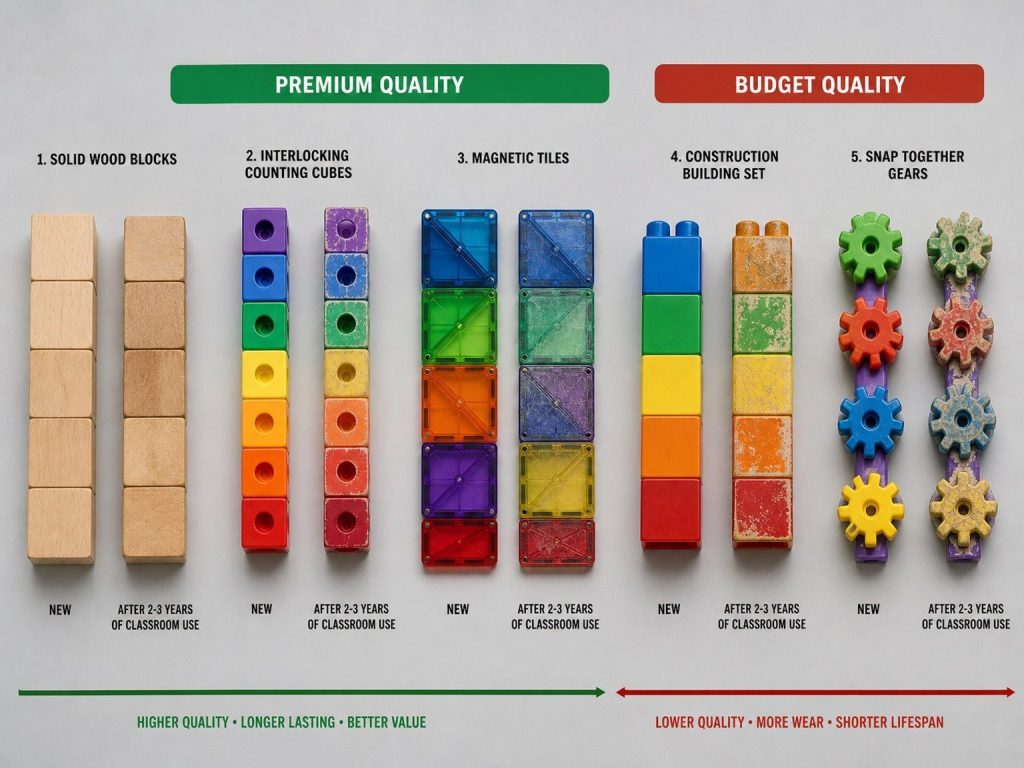
High-quality brands specify material grades—food-grade ABS plastic rather than generic plastic, solid hardwood species rather than composite wood. Connection mechanisms reveal engineering priorities: reinforced joints, metal axles in high-stress points, and replaceable components indicate institutional-grade design. Warranty scope matters more than length; brands confident in durability cover breakage from normal classroom use, not just manufacturing defects.
Educator Support Resources and Implementation Guidance
Leading educational toys brands provide classroom implementation guides, skill progression charts, activity libraries, and teacher training resources. These materials reduce teacher prep time and increase activity effectiveness. For bulk purchasers, assess whether the brand offers direct account management, priority replacement shipping, and institutional pricing tiers.
Transparency and Institutional Accountability
Research how brands respond to safety issues: do they maintain public recall databases and provide proactive customer notifications? Examine business longevity—brands operating 15+ years demonstrate financial stability. Check whether physical headquarters and manufacturing facilities are verifiable. For international procurement, confirm whether the brand maintains regional support infrastructure.
Top 5 Educational Toys Brands Analysis
Melissa & Doug – Traditional Craftsmanship with Modern Safety Standards
Melissa & Doug built its reputation on wooden toys combining traditional construction with contemporary safety protocols. The brand maintains in-house safety labs testing every production batch for lead, phthalates, and 87 restricted substances—exceeding CPSIA requirements by 34 compounds. Wooden puzzles use Baltic birch with water-based, food-safe finishes, verified through published COAs available by product SKU.
Teachers value the brand’s durability in high-rotation environments. Wooden blocks and manipulatives survive 4-6 years of daily classroom use, with connection points reinforced by hardwood dowels. The institutional catalog offers replacement part programs—critical for maintaining complete sets. Price points position 25-40% above mass-market alternatives, making the brand well-suited for adequately-funded programs seeking long-term investments.
The educational design leans traditional, emphasizing open-ended play over structured curriculum integration. This approach aligns strongly with Montessori and play-based programs. Product lines focus on fine motor development, pattern recognition, and symbolic play.
LEGO Education – Curriculum-Aligned System for Structured Learning
LEGO Education differentiates from consumer LEGO through curriculum-aligned sets and institutional support infrastructure. Products map directly to learning standards—the Early Learning sets target specific pre-K competencies in spatial reasoning, storytelling, and collaborative problem-solving. Each set includes detailed lesson plans, assessment rubrics, and differentiation strategies, reducing teacher preparation time by an estimated 2-3 hours per unit.
Build quality reflects institutional specifications. Education sets use thicker bricks, reinforced baseplates, and storage systems designed for classroom volume. Durability testing simulates 10,000 connection cycles. The brand’s global service network provides direct institutional support, replacement part ordering within 72 hours, and regional training workshops.
Entry sets begin at $280-$400, with comprehensive classroom solutions reaching $1,200-$2,500. This pricing targets well-funded school districts and specialized STEM programs. The system’s interconnected building across age levels requires programs to maintain consistent presence across grades for optimal skill progression.
Learning Resources – Classroom-Focused Design at Accessible Price Points
Learning Resources specializes in products engineered specifically for institutional environments. Manipulatives feature large-grip designs accommodating diverse fine motor abilities, high-contrast colors supporting visual processing differences, and storage systems reducing setup-transition time. Teachers managing 22 students can distribute, use, and collect a complete math manipulative set in under 4 minutes.
Safety certifications meet standard ASTM and CPSIA requirements, providing adequate safety assurance for mainstream educational settings. The brand’s value proposition centers on cost-effectiveness for volume purchases. Bulk pricing structures and classroom pack configurations reduce per-student costs 30-45% compared to premium educational toys brands.
Product durability delivers 3-4 year lifespans under normal classroom use—making total cost of ownership competitive through accessible initial pricing. The brand suits budget-conscious programs prioritizing broad material access and proven classroom functionality.
Hape – Sustainable Materials with European Safety Standards
Hape positions at the intersection of environmental sustainability and European safety stringency. Products use FSC-certified wood, water-based paints, and bamboo components. The brand meets both EN71 (European) and ASTM standards, with manufacturing facilities maintaining ISO 9001 certification—quality management practices ensuring consistent production standards.
European safety protocols require more extensive chemical testing than U.S. standards, particularly for heavy metals and organic compounds. Hape’s compliance with German DIN standards provides additional safety assurance. Documentation quality surpasses most competitors, with detailed material breakdowns and test results accessible through product registration systems.
Design aesthetics lean contemporary-minimalist, attracting programs emphasizing modern learning environments. Educational content ranges from solid developmental toys with clear skill targets to items prioritizing appearance. Pricing falls between Learning Resources and Melissa & Doug, offering a middle-ground option for programs seeking quality above entry-tier without premium budget allocation.
Guidecraft – Premium Engineering for Institutional Environments
Guidecraft designs exclusively for educational institutions, creating products built to institutional specifications. Block sets use kiln-dried hardwoods with precision tolerances ensuring consistent dimensions across thousands of pieces. Furniture-grade construction techniques, including mortise-tenon joints and steel hardware, deliver 8-10 year product lifespans under heavy classroom use.
The brand’s mirror-block and hollow-block lines demonstrate engineering focused on specific learning objectives. Mirror blocks incorporate shatter-resistant acrylic in hardwood frames, supporting spatial awareness and perspective-taking skills. Design choices—like blocks sized for collaborative building requiring 2-3 children to lift—intentionally encourage social interaction and cooperative planning.
Classroom sets typically cost 60-90% more than mass-market equivalents, positioning Guidecraft for well-funded Montessori schools, university lab schools, and affluent district flagship programs. The specialized product focus means schools typically need supplementary educational toys brands for comprehensive material coverage—the brand excels in construction and dramatic play areas with more limited offerings in math manipulatives, literacy tools, or science materials.
Brand Comparison Matrix
| Evaluation Dimension | Melissa & Doug | LEGO Education | Learning Resources | Hape | Guidecraft |
|---|---|---|---|---|---|
| Safety Certification Depth | Exceptional (87+ substances tested, batch testing) | High (meets institutional standards) | Standard (ASTM/CPSIA compliant) | Exceptional (EN71 + German DIN standards) | High (institutional-grade testing) |
| Educational Design Strength | Traditional/open-ended focus | Curriculum-aligned with learning outcomes | Classroom-practical focus | Developmental focus with aesthetic emphasis | Specialized for collaborative learning |
| Product Lifespan | 4-6 years | 5-7 years | 3-4 years | 4-5 years | 8-10 years |
| Institutional Support Level | Strong (replacement parts, documentation) | Exceptional (global network, training) | Moderate (bulk pricing focus) | Limited (consumer-oriented) | Moderate (institutional sales) |
| Price Range | Mid-high ($25-40 above market) | Premium ($280-$2,500 sets) | Value ($30-45% below premium) | Mid-range (between value and premium) | Premium ($60-90% above market) |
How to Match Brand Choice to Your Procurement Context
Budget Tier Alignment
Programs allocating $15-$25 per student for manipulatives should prioritize Learning Resources, supplemented selectively with Melissa & Doug items for high-use categories. Mid-tier budgets ($30-$50 per student) support mixed procurement—Learning Resources for consumables, Melissa & Doug or Hape for foundational materials expecting 4+ year service. Premium budgets ($60+ per student) enable Guidecraft and LEGO Education integration, where superior durability and educational design justify higher initial costs through extended lifecycles.
Age Group Specialization
Infant-toddler programs require brands excelling in safety documentation and large-part construction—Melissa & Doug and Hape strong performers. Preschool programs benefit from diverse options, with Learning Resources covering curriculum breadth and specialized brands adding depth. Pre-K and kindergarten settings increasingly value LEGO Education’s structured learning integration and Guidecraft’s collaborative building opportunities.
Institutional Scale Considerations
Home-based care providers serving 6 children achieve adequate performance from mid-tier brands at consumer price points. A 120-student childcare center managing 15-20 children per classroom requires institutional-grade durability—cost differences between brands diminish when factoring 3-year versus 8-year replacement cycles. Multi-site operators benefit from standardizing around educational toys brands offering centralized account management and streamlined ordering.
Common Pitfalls in Brand Selection
Over-Reliance on Marketing Claims
Phrases like “educational expert-designed” or “developmental psychologist-approved” require verification. Effective evaluation demands specific evidence: published test report numbers, named safety labs, detailed material specifications, and documented classroom trial results. Educational toys brands unwilling to provide this documentation reveal their actual commitment to quality and safety.
Ignoring Certification Details
All legitimate brands claim ASTM certification, but depth varies. Examine whether certificates cover specific SKUs or product categories, identify actual testing labs, and include test dates within the past 18 months. Generic certificates displaying company names rather than specific products suggest limited testing scope.
Mismatching Brand Strengths to Institutional Needs
Purchasing LEGO Education for free-play centers ignores curriculum integration advantages while overpaying for unneeded structure. Selecting Guidecraft for budget-conscious programs creates financial strain. Choosing Learning Resources for programs requiring maximum longevity leads to excessive replacement cycles. Effective brand selection requires honest assessment of actual priorities—curriculum structure, budget constraints, durability demands, and educational philosophy.
Conclusion
Educational toys brands selection extends beyond initial purchase transactions to impact long-term institutional outcomes. Premium brands justify higher costs through extended product lifecycles, comprehensive educator support, and measurable classroom efficiency gains—advantages translating to 30-40% lower total cost of ownership over 4-6 year planning horizons. Mid-tier options balance quality, safety depth, and cost-effectiveness for mainstream programs. Value-focused brands enable broad material access for budget-constrained settings, accepting shorter lifecycles as tradeoffs for immediate affordability.
Effective brand evaluation depends on three core principles: examining verifiable evidence over marketing assertions, matching institutional contexts to brand specializations, and calculating long-term value rather than immediate costs. Procurement teams should prioritize safety certification depth for liability-sensitive age groups, durability engineering for high-volume environments, and pedagogical design quality for curriculum-driven programs. Schools investing time in rigorous brand assessment reduce hidden costs from product failures, safety incidents, and teaching disruptions while improving educational outcomes through materials genuinely designed for their specific institutional needs and educational objectives.