Fun Dinosaur Maze often looks deceptively simple to adults at first.
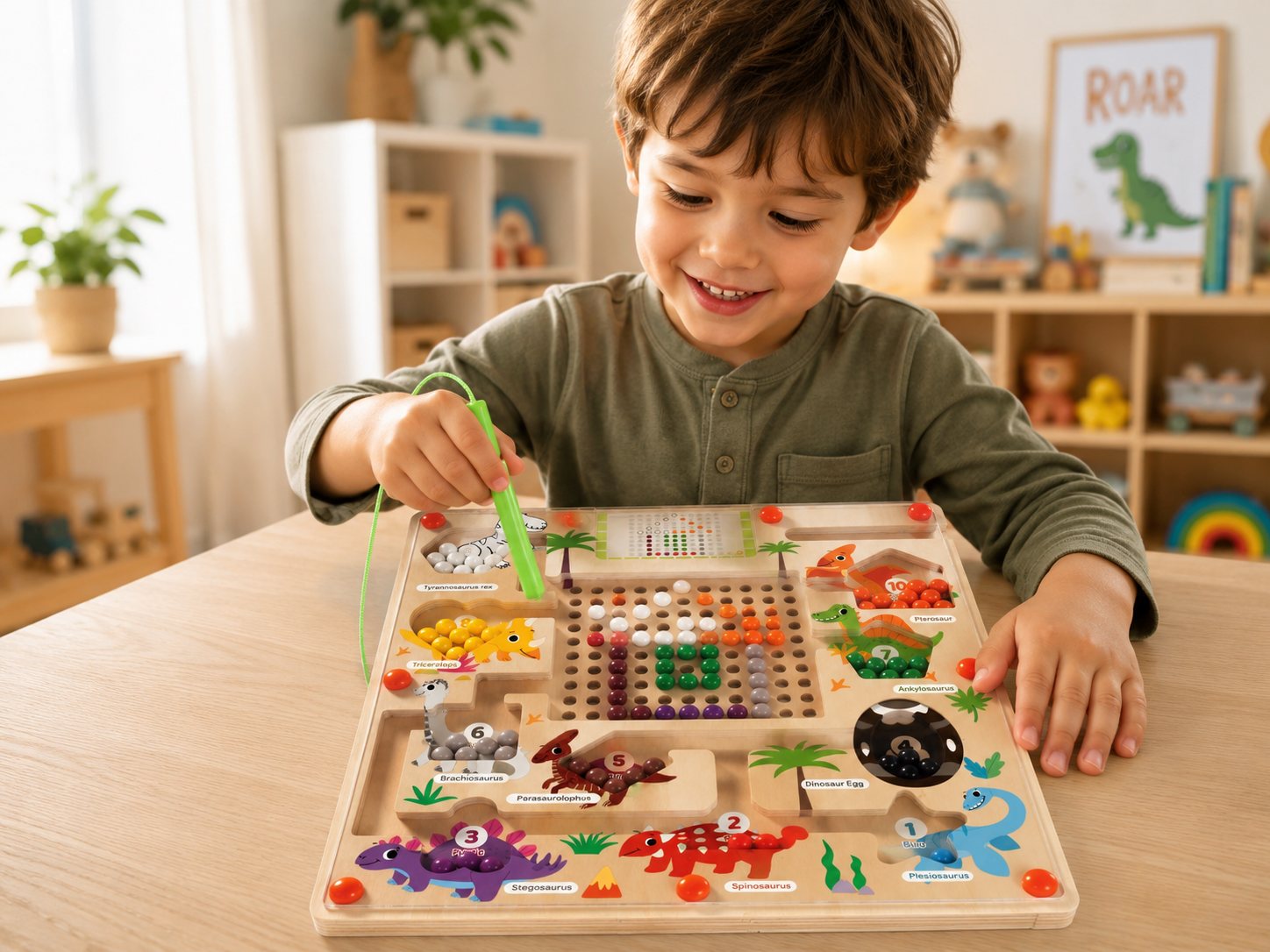
A child moves colorful beads with a magnetic pen. The dinosaur graphics feel playful. The activity seems quiet compared to flashing electronic toys nearby.
But after watching preschoolers interact with it for more than a few minutes, something else becomes noticeable.
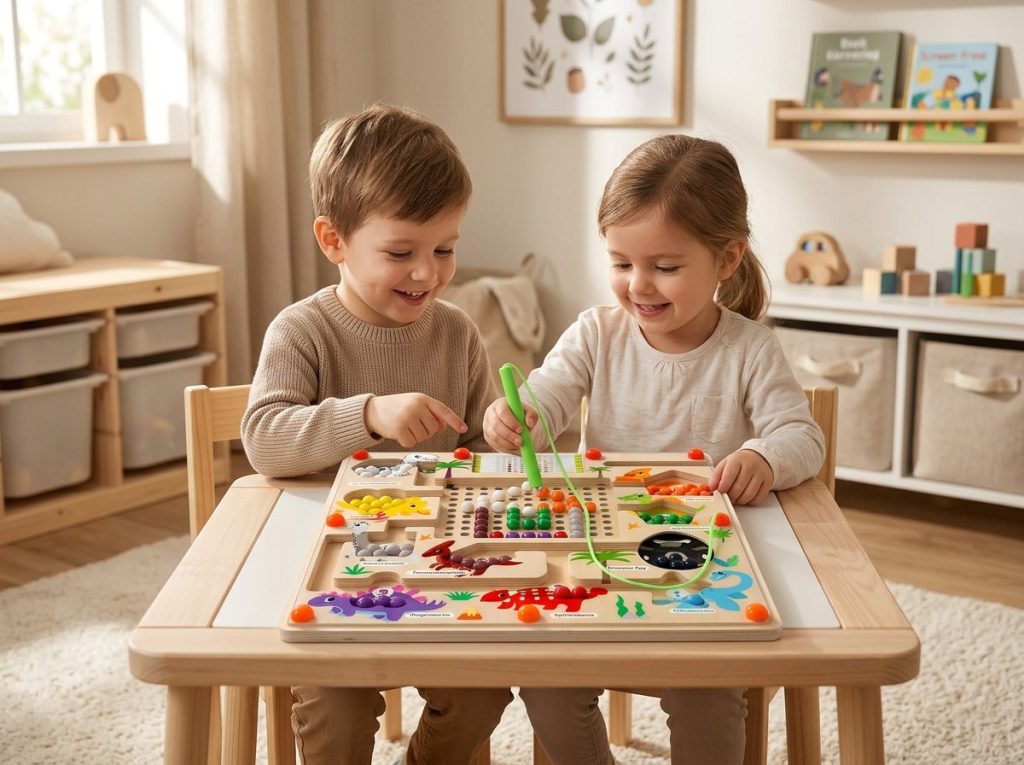
Some children begin slowing their movements carefully before entering tighter maze paths. Others quietly restart entire color sequences after making one mistake. A few become surprisingly focused on guiding every bead into the correct dinosaur nest without asking for help at all.
For many parents and preschool teachers, those moments matter because fine motor development rarely improves through direct instruction alone. Young children build control gradually through repetition, experimentation, and movement they actually enjoy repeating.
That shift partly explains why search interest around phrases like fine motor toys for preschoolers, Montessori magnetic maze, sensory learning activities, and hand-eye coordination toys has continued growing over recent years. More families are trying to reduce passive screen time while still keeping children meaningfully engaged during quieter parts of the day.
Researchers in early childhood development have long connected fine motor control with later classroom readiness, especially in areas like handwriting, concentration, and task independence. But in real preschool environments, children usually strengthen those abilities through hands-on interaction rather than structured drills.
And this is where Fun Dinosaur Maze feels different from many traditional sorting toys.
The activity combines magnetic movement, visual tracking, number recognition, and pattern sequencing into one continuous experience that naturally encourages children to stay engaged longer than adults often expect.
Why Fun Dinosaur Maze Keeps Fine Motor Practice from Feeling Repetitive
One challenge with preschool fine motor activities is that children recognize repetition very quickly.
The moment an activity starts feeling like “practice,” attention often disappears.
That happens with tracing sheets. It happens with simple stacking exercises. Even some threading toys lose momentum after only a few rounds.
Fun Dinosaur Maze approaches repetition differently because movement always feels connected to a goal.
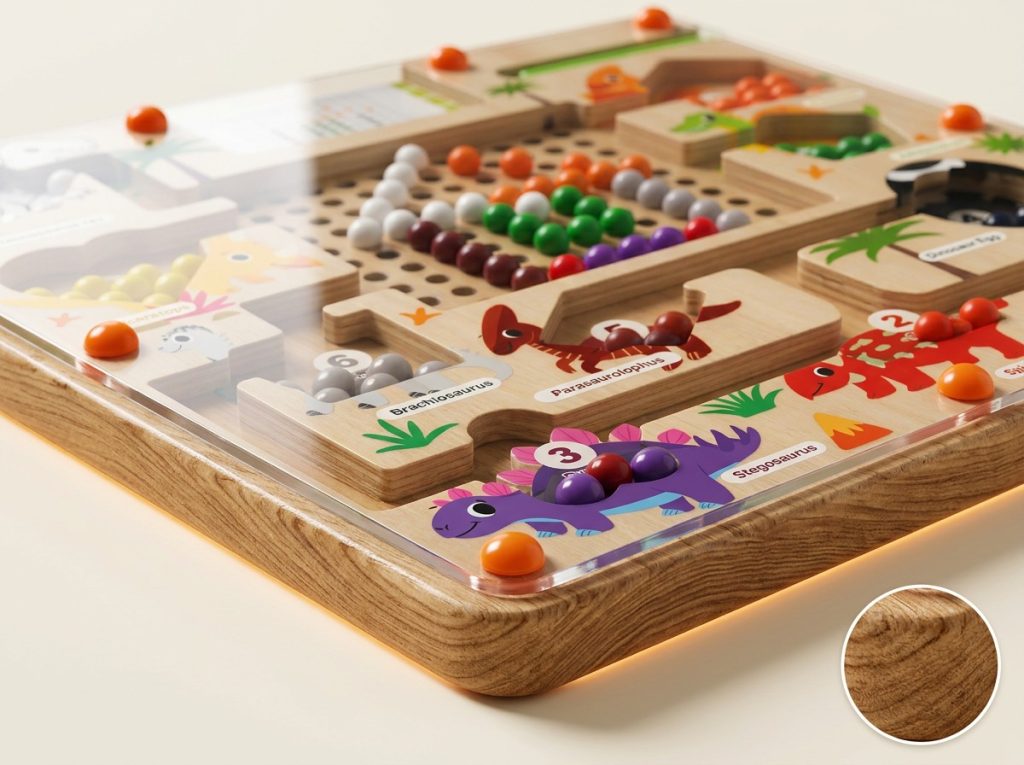
Children guide magnetic beads through winding paths while matching colors, numbers, and dinosaur nests. They are not simply repeating motions for the sake of repetition. They are trying to complete something visually satisfying.
And because the maze paths vary in direction and spacing, the hand movements themselves constantly change.
Sometimes children move quickly and overshoot turns. Sometimes they slow down instinctively before entering narrow sections. Those tiny adjustments quietly strengthen:
- wrist rotation
- grip stability
- directional planning
- visual coordination
Most preschoolers never realize they are practicing these skills repeatedly.
They simply want to finish the dinosaur challenge correctly.
That distinction matters more than many adults realize.
Many preschool teachers notice that children who resist pencil exercises will still spend surprisingly long periods concentrating on magnetic maze activities because the pressure of “getting it right” feels lower.
Why the Magnetic Stylus Supports Early Writing Control
Some preschoolers avoid drawing or tracing activities not because they dislike learning, but because maintaining controlled movement becomes tiring very quickly.
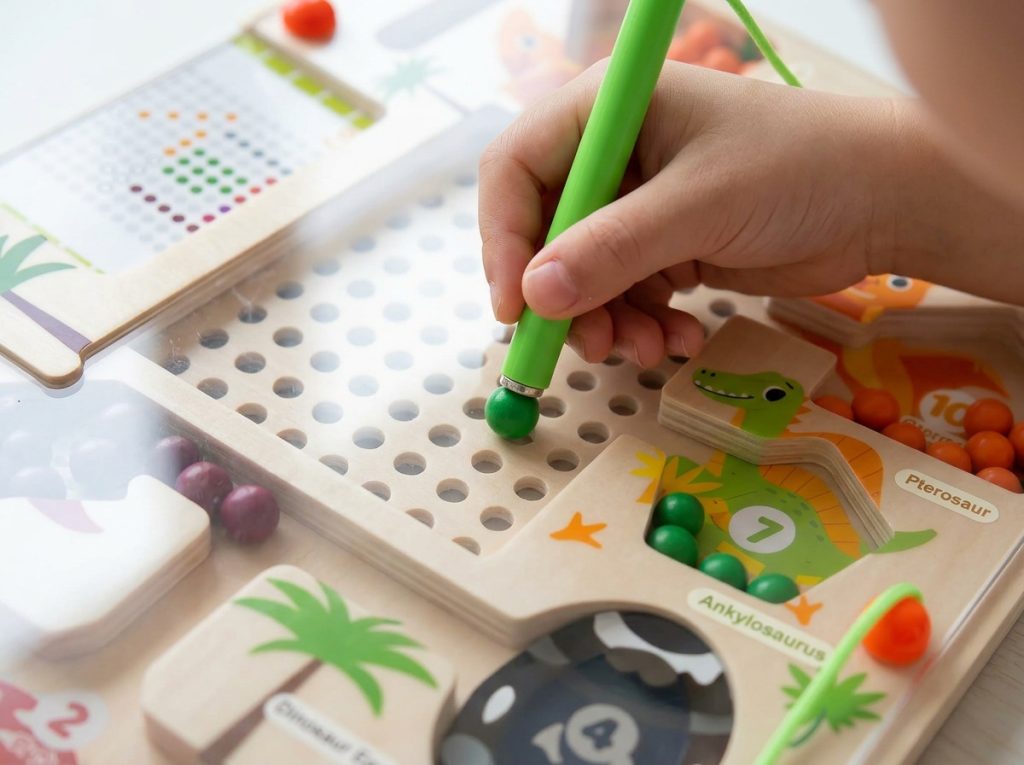
The magnetic stylus inside Fun Dinosaur Maze creates a gentler introduction to similar muscle coordination.
Instead of gripping a pencil tightly against paper, children guide movement across a smooth acrylic surface while focusing on visual outcomes rather than handwriting precision itself.
Over time, many of the same foundational abilities begin strengthening naturally:
- hand steadiness
- controlled directional movement
- finger coordination
- visual tracking
And because the beads remain sealed beneath the acrylic cover, children can focus entirely on movement without simultaneously managing loose pieces scattered across the table.
For children who become frustrated easily, that small difference often changes how long independent play continues.
How Fun Dinosaur Maze Combines Pattern Recognition with Motor Development
Many preschool toys isolate developmental skills into separate activities.
Counting appears in one toy. Color matching appears in another. Pattern sequencing becomes a completely different exercise elsewhere.
Fun Dinosaur Maze blends these experiences together more naturally during play.
The included double-sided activity cards introduce twenty different visual challenges, gradually moving from simple bead matching toward more detailed arrangements involving shapes, objects, and directional sequences.
As children begin following those patterns, something interesting happens.
The activity stops becoming random movement.
Children start planning ahead.
They pause before moving beads into crowded sections. Some compare colors carefully before starting. Others mentally trace movement paths before touching the stylus at all.
Those moments quietly introduce early executive functioning skills alongside fine motor coordination.
And unlike many preschool exercises, the correction process itself becomes part of the learning.
A bead enters the wrong section. A child reverses direction slowly. Another attempt begins.
Sometimes children restart the entire pattern voluntarily even when adults would probably consider it “good enough.”
That kind of self-correction matters.
Many educators observe that preschoolers develop persistence more naturally when mistakes remain part of play instead of feeling like failure.
Why Slower Activities Sometimes Hold Attention Longer
Fast-paced digital entertainment conditions children to expect constant stimulation.
Magnetic maze activities create the opposite rhythm.
Children slow down. They follow pathways carefully. They pause before tight turns. They repeat movements without realizing repetition is happening.
At first, some adults assume quieter toys will lose attention quickly.
But many parents notice the opposite after a few sessions: calmer concentration often lasts longer once children become immersed in completing visual goals independently.
And for preschool-aged children, sustained focus itself becomes an important developmental milestone.
Why Fun Dinosaur Maze Works Especially Well During Travel and Quiet Transitions
Travel tends to interrupt preschool routines completely.
Long flights, restaurant waiting periods, hotel rooms, and car rides often remove opportunities for movement while simultaneously increasing boredom and restlessness.
That usually leads to a familiar pattern.
Children become overstimulated, adults become exhausted, and screens gradually become the easiest solution available.
Portable sensory activities help partly because they redirect attention back toward physical interaction.
Fun Dinosaur Maze works especially well in these situations because every bead stays permanently enclosed inside the board. Parents do not need to search for missing toy pieces under airplane seats or restaurant tables halfway through the activity.
The compact square layout also changes how children engage with the toy during travel.
Instead of spreading materials across large surfaces, children stay visually focused within a smaller play area that feels easier to manage independently.
Some parents are surprised by how quiet the activity becomes after the first ten minutes.
Once children begin concentrating on guiding beads through the maze carefully, the surrounding environment often fades into the background.
Why Mess-Free Design Changes Independent Play
Many educational toys work well at home but become impractical outside controlled environments.
Loose pieces disappear quickly. Cleanup interrupts the activity. Adults end up managing the toy more than the child does.
Because Fun Dinosaur Maze keeps every bead enclosed beneath a thick acrylic panel and stores the magnetic stylus directly inside the board itself, independent play becomes much more realistic during busy routines.
That convenience sounds minor initially.
But during travel days or long waiting periods, it changes whether educational play actually feels sustainable in real life.
How Visual Feedback Inside Fun Dinosaur Maze Strengthens Preschool Learning
Young children rely heavily on visual feedback while developing movement control.
They improve faster when they can immediately see whether an action worked successfully.
Fun Dinosaur Maze creates that feedback continuously.
A bead reaches the correct dinosaur nest. Colors align correctly. Number paths finally match the pattern card. Each movement produces an immediate visible result children can recognize without adult explanation.
That immediate reinforcement helps sustain engagement naturally.
For some preschoolers, the dinosaur illustrations themselves also reduce resistance toward structured learning activities. The experience feels more like exploration than instruction.
And that difference changes how children approach repetition.
Instead of asking whether the activity is “finished,” many children continue experimenting voluntarily:
- rearranging color paths
- repeating number sequences
- testing alternative movement routes
The learning continues partly because the activity still feels playful rather than performance-driven.
Why Physical Manipulation Still Matters in Early Childhood Learning
Digital learning tools continue expanding inside preschool education.
At the same time, many educators still prioritize tactile learning experiences during early developmental stages because young children often understand movement physically before they process abstract verbal explanations fully.
Fun Dinosaur Maze supports that style of learning naturally.
Children touch, guide, adjust, compare, and experiment continuously while building coordination skills at the same time.
Not every preschooler interacts with the maze identically, and that flexibility becomes part of its value in both classrooms and home environments.
Some children focus primarily on numbers. Others become absorbed by color organization. Some simply enjoy mastering the physical challenge of controlled movement itself.
And for many preschool-aged learners, that combination of curiosity and movement becomes far more engaging than passive entertainment alone.
Conclusion
Fine motor development rarely grows through isolated practice by itself.
Preschoolers strengthen coordination most effectively when movement, sensory feedback, curiosity, and problem-solving happen together inside meaningful play experiences.
That is one reason activities like Fun Dinosaur Maze continue attracting attention from parents and educators searching for alternatives to passive screen-heavy entertainment.
The combination of magnetic movement, visual pattern building, enclosed mess-free design, and progressive challenge levels supports much more than simple color sorting. Children quietly practice concentration, movement planning, directional control, and independent problem-solving while remaining engaged through play rather than instruction alone.
And for many preschoolers, that learning starts with something as small as slowly guiding one colorful bead toward the right dinosaur nest.