Early childhood is one of the most influential stages of human development. Between the ages of 3 and 6, children build the foundations for language, logical thinking, creativity, emotional regulation, and social interaction. According to Harvard University’s Center on the Developing Child, experiences during these early years help shape the brain’s architecture, making everyday learning opportunities especially valuable. This is why educators increasingly emphasize learning through play rather than relying solely on traditional instruction.
Against this backdrop, Preschool Learning Toys have become much more than classroom accessories or birthday gifts. Well-designed learning toys encourage children to explore ideas, test solutions, and discover relationships through hands-on activities. Instead of simply receiving information, children become active participants in the learning process, developing confidence alongside new knowledge.
Growing awareness of early childhood education has also changed consumer expectations. Parents are no longer looking only for toys that keep children busy; they want products that encourage independent learning, strengthen fine motor skills, and support kindergarten readiness. Schools and educational organizations have adopted a similar approach, increasingly selecting learning materials that balance educational value with long-term engagement.
For manufacturers and educational brands, this shift presents an important opportunity. Companies that develop thoughtfully designed Preschool Learning Toys can offer genuine educational value while building long-term trust with distributors, retailers, and families. Rather than competing on novelty alone, successful brands are now competing on learning outcomes, product versatility, and educational expertise.
What Makes Preschool Learning Toys Different From Regular Toys?
Although many toys can entertain children, Preschool Learning Toys are created with a specific educational purpose. Every activity is designed to encourage children to think, observe, compare, build, and solve problems while enjoying the learning process. Instead of relying on passive entertainment, these toys create opportunities for children to actively engage with ideas through movement and exploration.
The American Academy of Pediatrics emphasizes that play is essential for healthy brain development because it strengthens executive function, communication, emotional resilience, and problem-solving abilities. When children manipulate physical objects rather than simply watching or listening, they develop a deeper understanding of concepts while strengthening memory and concentration.
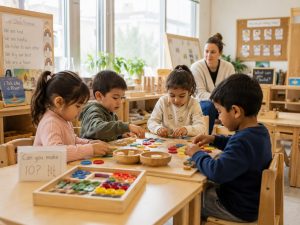
This explains why hands-on learning remains one of the core teaching methods in preschool classrooms around the world. Whether children are balancing blocks, matching shapes, sorting colors, or constructing simple structures, they are developing several essential skills simultaneously.
Research Insight
The American Academy of Pediatrics notes that play-based learning supports healthy brain development by encouraging creativity, communication, collaboration, and executive function. These skills form the foundation for future academic success and lifelong learning.
Another important difference is flexibility. Many traditional toys provide one fixed way to play, while high-quality Preschool Learning Toys encourage children to discover new challenges as their abilities develop. This adaptability helps maintain interest and creates more meaningful educational experiences over time.
Learning Through Play Encourages Deeper Understanding
Research consistently suggests that children remember concepts more effectively when they experience them directly. Instead of memorizing numbers from a worksheet, children understand quantity by physically counting objects. Instead of hearing explanations about balance, they discover it while stacking wooden blocks.
Teachers often observe that children remain engaged much longer when they can explore materials freely rather than simply following instructions. In many preschool classrooms, the same educational toy may be used for counting activities one day, storytelling the next, and cooperative games later in the week. This flexibility encourages independent learning while allowing children to revisit familiar materials in new ways.
For manufacturers, designing products that support multiple educational activities has become increasingly important because both parents and educators are looking for toys that continue providing value as children’s skills grow.
How Preschool Learning Toys Support Early Childhood Development

One reason Preschool Learning Toys continue to gain popularity is their ability to support multiple developmental areas within a single activity. Rather than focusing on one isolated skill, they encourage children to think, communicate, experiment, and create at the same time.
According to UNICEF, play provides children with opportunities to explore their environment, solve problems, express emotions, and develop relationships with others. These experiences help strengthen both cognitive and social development while making learning enjoyable and meaningful.
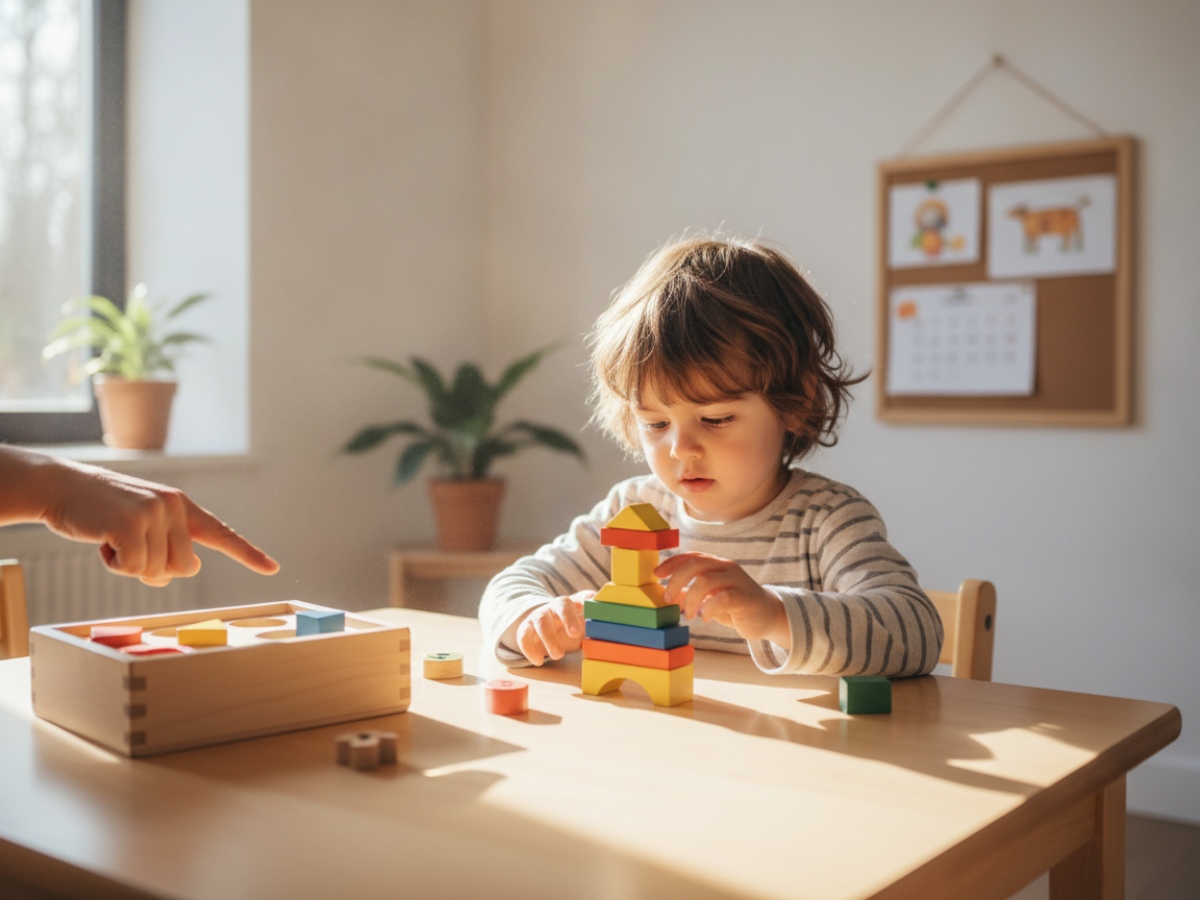
For example, when children build towers using wooden blocks, they are practicing far more than construction. They compare sizes, estimate balance, improve hand-eye coordination, communicate with classmates, and develop patience when structures collapse and must be rebuilt. Similarly, sorting activities strengthen early math skills while introducing concepts such as classification, sequencing, and visual discrimination.
The table below illustrates how different developmental areas benefit from thoughtfully designed Preschool Learning Toys.
| Development Area | Learning Benefits |
|---|---|
| Cognitive Development | Improves logical thinking, memory, reasoning, and pattern recognition |
| Fine Motor Skills | Strengthens grip, finger control, and hand-eye coordination |
| Language Development | Encourages vocabulary growth through conversation and storytelling |
| Social Development | Builds communication, cooperation, sharing, and teamwork |
| Emotional Development | Develops confidence through exploration and independent problem-solving |
Instead of separating these abilities into different educational activities, preschool learning toys allow children to develop them naturally through everyday play.
Real Learning Happens Through Hands-On Exploration
Educational researchers have long emphasized that children understand concepts more deeply when they can manipulate learning materials themselves. This is one reason why hands-on learning remains central to Montessori-inspired education and many modern preschool teaching approaches.
Consider the way children learn fractions. Reading numbers on a page introduces vocabulary, but physically combining fraction pieces into a complete circle allows children to visualize mathematical relationships immediately.
For example, Vindstier’s Magnetic Fraction Teaching Set encourages children to compare colorful fraction pieces, combine different sections into complete shapes, and explore equivalent fractions through direct manipulation. Instead of memorizing mathematical rules, children discover patterns through observation and experimentation. Teachers frequently use this type of activity to introduce early math skills because visual learning often makes abstract concepts easier to understand.
The same principle applies to sorting toys, magnetic mazes, and wooden building blocks. When children learn by doing rather than simply listening, they are more likely to remain engaged, ask questions, and remember what they have discovered.
How to Choose the Best Preschool Learning Toys
As parents and educators become more knowledgeable about child development, choosing educational toys has become less about appearance and more about learning outcomes. Attractive colors may capture a child’s attention initially, but long-term educational value depends on thoughtful product design.
Research suggests that children benefit most from toys that offer multiple ways to play instead of a single fixed activity. Educational products that grow alongside children’s abilities encourage repeated exploration and provide greater long-term value for both families and schools.
When evaluating Preschool Learning Toys, experienced buyers often consider how effectively a product supports independent learning, classroom activities, and everyday family interaction rather than focusing on entertainment alone.
| Evaluation Factor | Why It Matters |
|---|---|
| Multiple learning activities | Keeps children engaged while extending educational value |
| Age-specific design (3–6 years) | Supports appropriate developmental milestones |
| Progressive challenges | Encourages continuous skill development |
| Parent-child interaction | Strengthens communication and emotional connection |
| Preschool classroom adaptability | Suitable for individual learning and group educational activities |
From a manufacturing perspective, versatility has also become a competitive advantage. Instead of producing separate toys for counting, balancing, construction, and logical thinking, many educational brands now develop multifunctional products that integrate several learning objectives into one design.
Brands like Vindstier increasingly focus on creating Preschool Learning Toys that combine mathematics, creativity, fine motor development, and problem-solving into engaging hands-on learning experiences. This approach not only supports children’s development but also provides distributors and retailers with products that offer stronger educational value and broader market appeal.
Why Wooden Preschool Learning Toys Continue to Gain Popularity

Market research continues to show strong global demand for wooden educational toys, particularly among parents, preschools, and early learning centers. While digital products have become increasingly common, educators still recognize the value of physical learning materials that encourage children to touch, build, compare, and experiment. For young learners, these hands-on experiences often create a deeper understanding than passive observation alone.
Unlike electronic toys that may guide children toward predetermined actions, wooden Preschool Learning Toys encourage open-ended exploration. A simple set of blocks can become a counting activity, a balancing challenge, a storytelling prop, or the foundation of a miniature city. Because there is no single “correct” way to play, children naturally develop creativity, logical thinking, and independent learning skills.
This flexibility is one reason many preschool classrooms continue to use wooden educational toys as part of their daily educational activities. Teachers appreciate products that can be adapted to different lessons, while parents value toys that remain engaging long after the first day of use.
One Toy, Multiple Learning Experiences
The educational value of a toy often depends on how many different skills it can develop rather than how many features it includes. Multifunctional Preschool Learning Toys encourage children to revisit familiar materials while discovering increasingly challenging ways to play.
For example, Vindstier Wooden Number Blocks combine several educational activities within one set. Younger children may begin by recognizing numbers and colors, while older preschoolers gradually explore stacking, balancing, simple addition, and creative construction. Instead of replacing the toy as children’s abilities improve, parents and teachers can introduce new challenges using the same learning materials.
Similarly, the Vindstier Number Flip Dice Box transforms early mathematics into an engaging family game. Children practice addition, subtraction, number recognition, and strategic thinking while interacting with parents or classmates. Because learning takes place through enjoyable gameplay, children often remain focused for much longer than they would during traditional practice exercises.
These examples demonstrate why many educational experts recommend choosing versatile learning toys over products designed for only one activity.
Early Childhood Learning at a Glance
Research from leading educational organizations consistently highlights the importance of meaningful play during the preschool years. Rather than replacing teachers or parents, Preschool Learning Toys create opportunities for children to apply what they are learning through exploration and interaction.
| Research Finding | Educational Insight |
|---|---|
| Harvard University’s Center on the Developing Child reports that early experiences help shape the brain’s architecture. | High-quality learning experiences during the preschool years support long-term cognitive development. |
| The American Academy of Pediatrics emphasizes that play strengthens executive function, creativity, and emotional well-being. | Play-based educational activities support both academic and social development. |
| UNICEF highlights play as an essential part of learning, communication, and problem-solving. | Hands-on learning encourages confidence, curiosity, and independent exploration. |
These findings help explain why educators increasingly recommend learning materials that encourage children to manipulate objects, ask questions, and discover solutions on their own. Educational toys become most effective when they support active participation rather than passive observation.
Research Insight
Children are more likely to retain knowledge when they can connect ideas with physical experiences. Activities involving sorting, building, balancing, and experimenting activate multiple learning pathways, helping children understand concepts more naturally.
How Manufacturers Develop High-Quality Preschool Learning Toys

Developing successful Preschool Learning Toys requires more than creative product design. Educational toy manufacturers must understand how children learn, how teachers use learning materials in preschool classrooms, and how parents evaluate educational value at home.
Most high-quality educational toys begin with a specific learning objective. Designers identify the developmental skills a product should support—such as early math skills, logical reasoning, language development, or fine motor coordination—and then create activities that allow children to practice those skills through play. As children’s abilities improve, the same toy should continue offering new challenges rather than becoming obsolete after a few uses.
Manufacturers also need to consider practical factors such as classroom usability, storage, packaging, and durability. Products that work equally well during individual learning, parent-child interaction, and group educational activities are often more attractive to schools and distributors because they can serve multiple learning environments.
At Vindstier, product development follows this educational philosophy. Instead of designing toys with only one fixed function, many products combine mathematics, construction, classification, balancing, and creative thinking within a single learning experience. This allows children to continue discovering new ways to play while reinforcing previously learned concepts.
For international buyers, manufacturing flexibility is equally important. Many retailers and educational brands look for suppliers capable of supporting OEM and ODM services, private-label production, logo customization, customized packaging, and wholesale supply. Working with a manufacturer that understands both educational design and international market requirements can simplify product development while creating stronger opportunities for long-term cooperation.
Why Educational Value Builds Long-Term Customer Trust
Parents today spend far more time researching educational products before making purchasing decisions. They compare learning objectives, read customer reviews, and evaluate how well different toys support children’s development. As a result, trust has become one of the most valuable assets an educational toy brand can build.
Rather than relying on broad promotional claims, successful manufacturers explain exactly what children can learn from each activity. Clearly describing recommended age ranges, developmental goals, and practical classroom applications helps parents understand why a product is worth choosing.
Experience from educators also supports this approach. Many preschool teachers observe that children remain engaged longer when one toy can be used in several different ways instead of completing a single repetitive task. A versatile educational toy encourages children to experiment, cooperate with classmates, and return to familiar materials with new ideas. This repeated exploration often creates deeper learning than activities with only one correct answer.
For distributors and retailers, these educational advantages become meaningful selling points. Customers increasingly appreciate products that deliver measurable learning value instead of temporary entertainment, making educational quality an important competitive advantage in today’s market.
FAQs
At what age should children start using Preschool Learning Toys?
Most Preschool Learning Toys are designed for children between 3 and 6 years old, a period when language development, fine motor skills, logical thinking, and social interaction develop rapidly. Selecting toys that match children’s developmental stage helps maximize both engagement and learning outcomes.
Are wooden Preschool Learning Toys better than plastic alternatives?
Both materials can support learning when thoughtfully designed. However, wooden educational toys are particularly effective for activities involving stacking, balancing, sorting, construction, and hands-on learning because they encourage children to manipulate real objects and explore ideas through direct experience.
Can Preschool Learning Toys improve kindergarten readiness?
Yes. Many Preschool Learning Toys help children develop foundational skills needed before entering kindergarten, including early math skills, language development, problem-solving, concentration, communication, and independent learning. These experiences help children transition more confidently into structured educational environments.
How many Preschool Learning Toys does a child actually need?
Educational specialists generally recommend choosing a smaller number of versatile, high-quality learning toys rather than purchasing many single-purpose products. Toys that support multiple educational activities typically remain useful for longer and provide greater value throughout early childhood.
Looking for Reliable Preschool Learning Toys?
Whether you are expanding your educational toy collection, sourcing products for wholesale distribution, or developing a private-label brand, selecting the right manufacturing partner is just as important as choosing the right product.
At Vindstier, we specialize in developing multifunctional Preschool Learning Toys that combine educational research with engaging hands-on learning experiences. Our product portfolio includes magnetic learning games, wooden number blocks, fraction teaching aids, sorting toys, building sets, and other educational solutions designed for children aged 3+ years.
We also support global business partners with flexible manufacturing services, including:
- OEM and ODM product development
- Private-label and logo customization
- Customized packaging solutions
- Wholesale supply for distributors and retailers
- Product development support based on market trends
By combining educational expertise with manufacturing experience, we help partners deliver meaningful learning experiences while building stronger educational toy brands.
Conclusion
Early childhood is a unique stage of development when curiosity, creativity, and foundational learning skills grow rapidly. Research from Harvard University’s Center on the Developing Child, the American Academy of Pediatrics, and UNICEF consistently demonstrates that meaningful play supports healthy brain development, communication, problem-solving, and emotional growth during these formative years.
This is why Preschool Learning Toys continue to play an increasingly important role in homes, preschools, and educational organizations around the world. High-quality educational toys encourage children to learn through exploration, strengthen fine motor skills, develop early math abilities, improve logical thinking, and build confidence through independent discovery. More importantly, they transform everyday play into meaningful educational experiences that children genuinely enjoy.
For manufacturers, distributors, and retailers, investing in thoughtfully designed Preschool Learning Toys is not only an opportunity to meet growing market demand but also a way to provide lasting educational value. By combining research-based learning principles, multifunctional product design, and flexible manufacturing solutions, brands like Vindstier help families, educators, and business partners create better learning experiences for the next generation.