
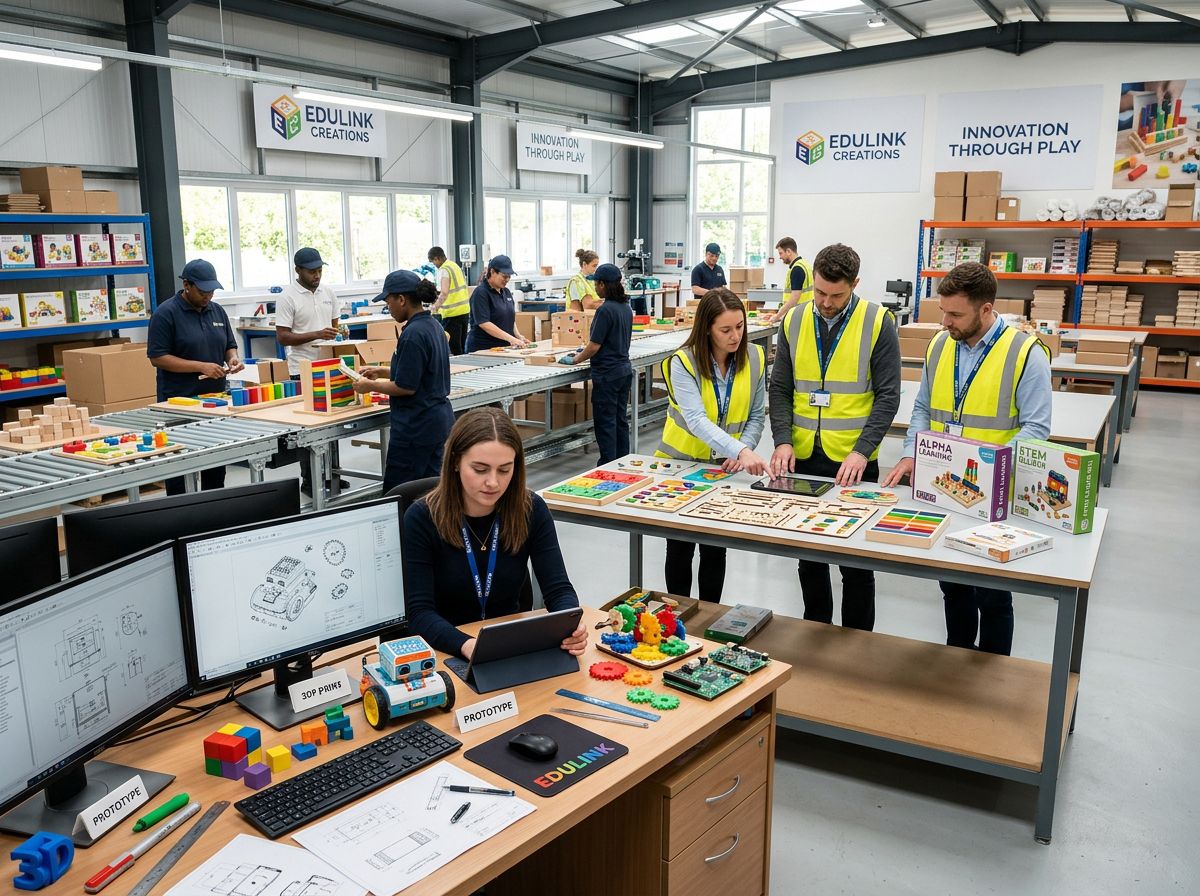
The educational toy industry has evolved far beyond traditional puzzles and building blocks. Today, parents, schools, educational institutions, and retailers are increasingly seeking products that combine entertainment with measurable learning outcomes. As STEM education, Montessori learning methods, and early childhood development programs continue to gain global attention, demand for innovative educational products continues to rise.
For brands looking to enter or expand within this market, selecting the right Educational Toy Manufacturer is one of the most important decisions in the product development process. The manufacturer you choose will influence product quality, compliance readiness, product innovation, delivery performance, and ultimately customer satisfaction.
While pricing often attracts the most attention during supplier evaluation, experienced buyers understand that long-term success depends on a much broader set of factors. Understanding how to assess an Educational Toy Manufacturer objectively can help businesses reduce sourcing risks and build stronger product portfolios.
Why Your Choice of Educational Toy Manufacturer Matters
According to industry research, the global educational toy market is expected to maintain steady growth over the coming years, driven by increasing investment in STEM education, early childhood learning programs, and hands-on teaching methods. Educational products are no longer viewed simply as toys; they are increasingly considered tools that support skill development, creativity, and learning engagement.
As purchasing decisions become more education-focused, retailers and distributors are placing greater emphasis on product functionality, safety compliance, and long-term durability. This shift has elevated the role of the Educational Toy Manufacturer from a production supplier to a strategic development partner.
An experienced manufacturer understands how learning objectives influence product design and production decisions. Whether developing a STEM building kit, a Montessori-inspired learning tool, or a sensory education product, manufacturing expertise can directly affect the final user experience.
Industry studies suggest that educational products designed around clear developmental goals often achieve stronger customer engagement and higher repeat purchase rates than products focused solely on entertainment.
What to Look for in an Educational Toy Manufacturer
Finding a reliable manufacturing partner requires more than reviewing a company profile or comparing quotations. The most successful supplier relationships are built on a combination of technical expertise, communication efficiency, and product development capabilities.
Product Development Experience
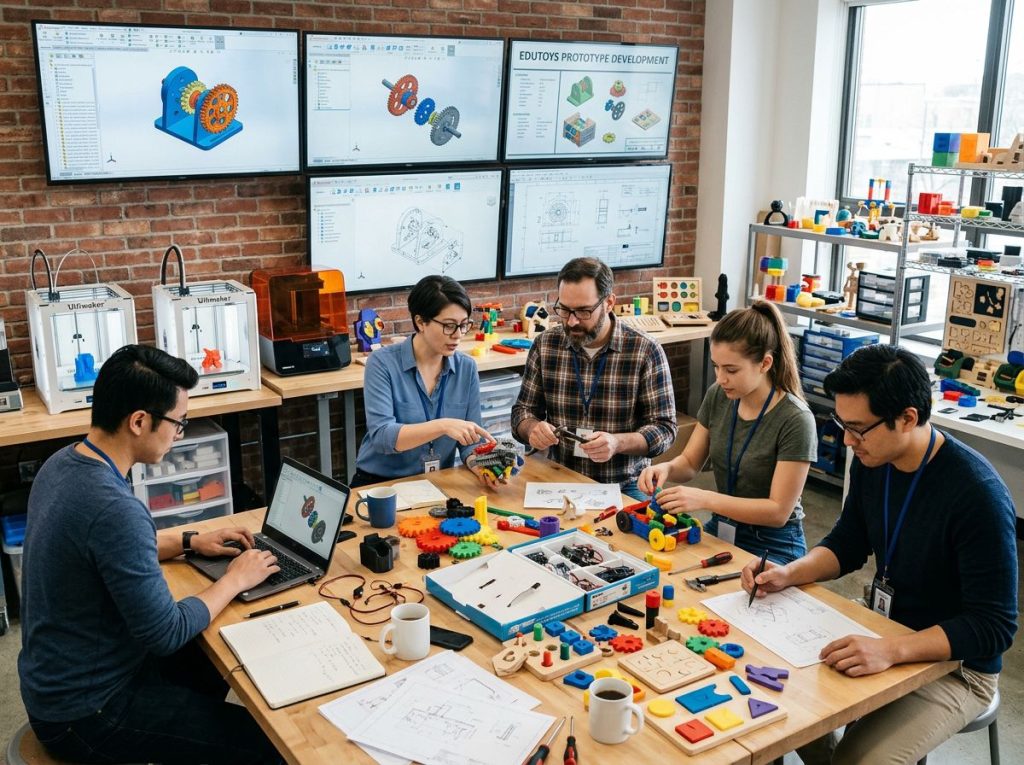
A qualified Educational Toy Manufacturer should contribute more than manufacturing capacity. During the development phase, the supplier often becomes a strategic partner capable of improving product functionality, reducing production complexity, and identifying potential design challenges before mass production begins.
Consider a startup preparing to launch its first STEM construction kit. Without engineering support during prototyping, minor structural issues may remain unnoticed until production begins, resulting in expensive redesigns and delayed market entry. Manufacturers with extensive educational toy experience can often identify these issues early, helping brands save both time and development costs.
Rather than simply asking whether a supplier can manufacture a product, buyers should review previous projects, prototype samples, and development case studies. These examples often provide a clearer picture of a manufacturer’s actual capabilities.
OEM and ODM Development Support
Many buyers begin their search for an Educational Toy Manufacturer with a product idea but without a finalized design. This is where OEM and ODM services become particularly valuable.
In an OEM (Original Equipment Manufacturer) model, the buyer provides product specifications, drawings, or technical requirements while the factory focuses on production execution. In an ODM (Original Design Manufacturer) model, the manufacturer contributes product design, engineering expertise, structural optimization, and development support.
Consider a retailer planning to launch a private-label STEM toy collection. Building products entirely from the ground up often requires significant investment in design, testing, and prototyping. An Educational Toy Manufacturer with ODM capabilities can shorten development timelines by offering proven product platforms that can be customized through branding, packaging, and feature enhancements.
For growing brands, access to OEM educational toys, ODM educational toys, and private-label educational toy solutions through a single supplier can simplify product development while accelerating time to market.
Understanding Educational Product Trends
Educational toy markets continue to evolve alongside changes in learning methodologies and consumer preferences. Manufacturers that actively follow industry developments are generally better positioned to support product innovation.
Current growth categories include STEM learning kits, Montessori educational toys, sensory learning products, coding toys, robotics kits, and interactive early-learning resources. Manufacturers with experience in these segments often provide valuable insights that help brands align product development with emerging market demand.
Evaluating Manufacturing Quality Standards
Imagine a company preparing to launch its first educational building kit. During prototyping, a small dimensional inconsistency causes several pieces to fit poorly together. While the issue may seem minor initially, it can quickly lead to customer complaints, increased return rates, and negative product reviews once thousands of units reach the market.
This example illustrates why manufacturing quality should never be evaluated solely through product samples. A reliable Educational Toy Manufacturer must demonstrate consistent quality control processes throughout the entire production cycle, ensuring that every production batch meets the same standards established during development.
Rather than relying on broad marketing statements, buyers should focus on measurable manufacturing indicators. For example, some factories maintain dimensional tolerances within ±0.2 mm, conduct 100% inspections on critical components, or perform durability tests that simulate thousands of usage cycles. These operational details often reveal more about manufacturing capability than generalized quality claims.
| Quality Evaluation Area | What Buyers Should Verify |
| Material Consistency | Material specifications and traceability |
| Production Control | Inspection procedures throughout manufacturing |
| Durability Testing | Simulated long-term usage testing |
| Assembly Accuracy | Component fit and dimensional precision |
| Packaging Quality | Product protection during transportation |
Research consistently shows that preventing quality issues during production is significantly less costly than resolving customer complaints after products reach the market.
Educational Toy Manufacturer Compliance and Certification Requirements
Compliance requirements have become increasingly important as educational toy brands expand into international markets. A product that meets the requirements of one region may require additional testing or documentation before entering another.
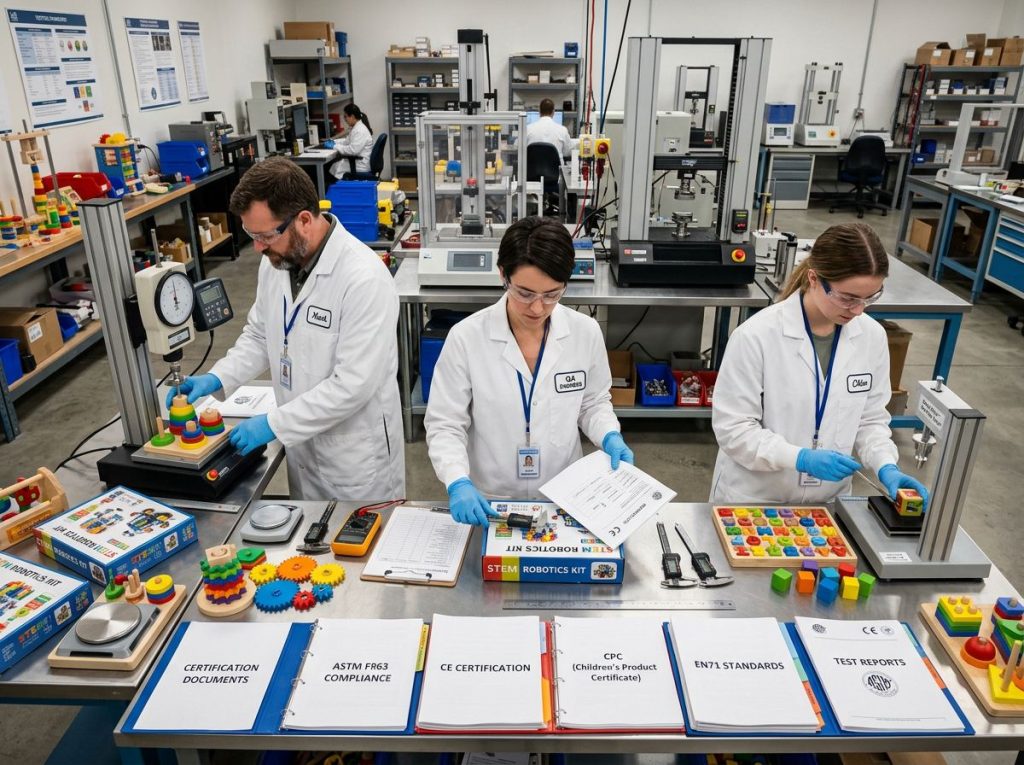
For example, educational toys sold in the United States commonly require ASTM F963 compliance, CPSIA conformity, and CPC (Children’s Product Certificate) documentation. Products entering European markets typically require CE marking and EN71 testing. Manufacturers that routinely support global brands are usually familiar with these processes and can provide guidance throughout product development and certification preparation.
Rather than asking whether a manufacturer complies with regulations, businesses should request recent testing reports, certification records, and documentation associated with similar products. Reviewing actual records provides a clearer understanding of the supplier’s compliance experience and readiness to support international expansion.
| Market | Common Certification Requirements |
| United States | CPC, ASTM F963, CPSIA |
| European Union | CE, EN71 |
| United Kingdom | UKCA |
| Canada | CCPSA Compliance |
| Australia | AS/NZS Safety Standards |
Industry reports suggest that addressing compliance requirements during the design phase can significantly reduce certification delays and avoid costly redesigns later in production.
Production Capacity and Supply Chain Reliability
As educational toy brands grow, manufacturing requirements often change rapidly. A supplier that meets today’s production needs may struggle to support future expansion if adequate capacity and supply chain management systems are not in place.
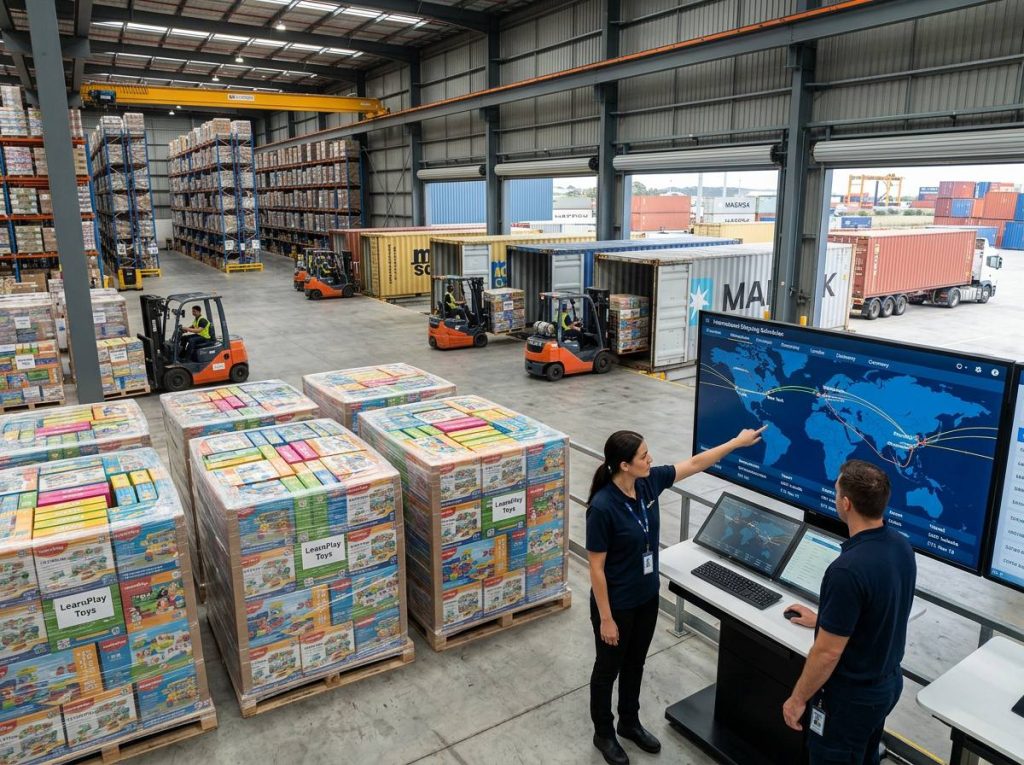
When evaluating an Educational Toy Manufacturer, it is important to understand how production resources are managed throughout the year. Seasonal demand fluctuations, raw material availability, and global logistics disruptions can all affect delivery performance.
A reliable manufacturer should be able to explain how production schedules are planned, how inventory risks are managed, and how alternative sourcing strategies are implemented when disruptions occur. These discussions often reveal operational maturity more effectively than production capacity figures alone.
For businesses planning long-term growth, scalability should also be considered. Transitioning to a new supplier after achieving market success can introduce significant operational risks, making it beneficial to select a manufacturing partner capable of supporting future expansion from the outset.
Looking Beyond Price When Comparing Suppliers
Consider two manufacturers quoting similar educational toy projects. The lower-cost supplier may appear attractive initially, but if product defects increase by even a small percentage, the resulting costs associated with replacements, logistics, customer service, and reputation management can quickly outweigh the initial savings.
For this reason, experienced buyers often evaluate suppliers based on overall business value rather than production cost alone. Factors such as engineering support, quality consistency, certification experience, and communication efficiency frequently have a greater impact on long-term profitability than minor pricing differences.
| Evaluation Factor | Recommended Weight |
| Product Quality | 30% |
| Manufacturing Capability | 25% |
| Compliance Support | 15% |
| Delivery Reliability | 15% |
| Product Development Expertise | 10% |
| Price Competitiveness | 5% |
Interestingly, sourcing studies frequently show that quality-related issues generate higher overall costs than modest differences in manufacturing quotations. This explains why many established brands prioritize supplier reliability over minimal unit-cost reductions.
Questions to Ask Before Choosing an Educational Toy Manufacturer
The supplier selection process becomes much more effective when conversations focus on operational capabilities rather than marketing claims.
When speaking with potential suppliers, buyers should explore how product revisions are managed, how prototypes are evaluated before mass production, and how quality issues are tracked throughout manufacturing. Discussions regarding lead times, certification support, project management systems, and previous educational toy projects often reveal more about a manufacturer’s expertise than promotional materials.
A manufacturer that responds with detailed explanations, supporting documentation, and practical examples typically demonstrates a higher level of professionalism and transparency. Over time, these qualities become essential foundations for successful long-term partnerships.
Ready to Evaluate Your Next Educational Toy Manufacturer?
Selecting an Educational Toy Manufacturer is rarely a short-term decision. In many cases, the supplier becomes an extension of a brand’s product development and supply chain strategy. The right partner can help improve product quality, accelerate development cycles, support certification requirements, and provide the scalability needed for future growth.
Whether you are developing custom educational toys, launching a new STEM learning product, expanding a Montessori toy collection, or creating a private-label educational toy brand, investing time in supplier evaluation can significantly reduce risk and improve market performance.
Businesses that focus on manufacturing expertise, compliance support, quality control systems, and communication transparency are often better positioned to build long-term success in the increasingly competitive educational toy market.
Conclusion
Choosing the right Educational Toy Manufacturer requires balancing multiple considerations, including product development expertise, manufacturing quality, compliance capabilities, production scalability, and long-term business value. While pricing remains an important factor, industry experience consistently shows that reliable manufacturing partnerships contribute more significantly to sustainable growth than short-term cost savings.
By carefully evaluating a supplier’s experience with educational products, reviewing certification capabilities such as CPC, CE, EN71, and ASTM compliance, and assessing operational reliability, businesses can make more informed sourcing decisions. Ultimately, the most successful Educational Toy Manufacturer partnerships are built on transparency, technical expertise, and a shared commitment to creating products that support meaningful learning experiences for children worldwide.