Starting school is a major transition for young children. Beyond learning letters and numbers, children entering kindergarten need to develop attention control, communication skills, independence, emotional regulation, and the ability to cooperate with others. These foundational abilities often determine how comfortably children adapt to classroom routines and new learning environments.
So, how do Preschool Learning Toys prepare children for school? The answer lies in how children learn before formal education begins. Research in early childhood development shows that purposeful play helps children strengthen cognitive skills, language abilities, fine motor coordination, and social confidence. When children build, sort, create, imagine, and solve problems through play, they are practicing many of the same skills required in a classroom setting.
According to the Harvard Center on the Developing Child, early experiences that support executive function—including working memory, flexible thinking, and self-control—play an important role in children’s future learning success. The National Association for the Education of Young Children (NAEYC) also emphasizes that play-based learning allows children to actively explore concepts, develop curiosity, and build meaningful understanding.
Unlike traditional entertainment products that focus mainly on short-term engagement, well-designed Preschool Learning Toys are created around developmental goals. They encourage children to ask questions, experiment with solutions, and interact with others. For parents, educators, childcare centers, and educational product buyers, selecting the right learning toys can support school readiness while creating more valuable learning experiences.
This article explores the relationship between Preschool Learning Toys and early childhood development, explains the skills children build before kindergarten, and provides practical guidance for choosing educational products that support long-term growth.
Why Preschool Learning Toys Are Important for Kindergarten Readiness
School readiness is a combination of academic, physical, social, and emotional abilities. While early literacy and numeracy skills are important, children also need to know how to listen, communicate, concentrate, manage frustration, and participate in group activities.
Research from early childhood education organizations suggests that children develop these abilities most effectively when they actively participate in meaningful experiences. This is why Preschool Learning Toys have become an important part of many preschool environments. They provide opportunities for children to practice essential skills through hands-on exploration rather than passive observation.
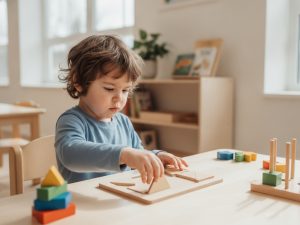
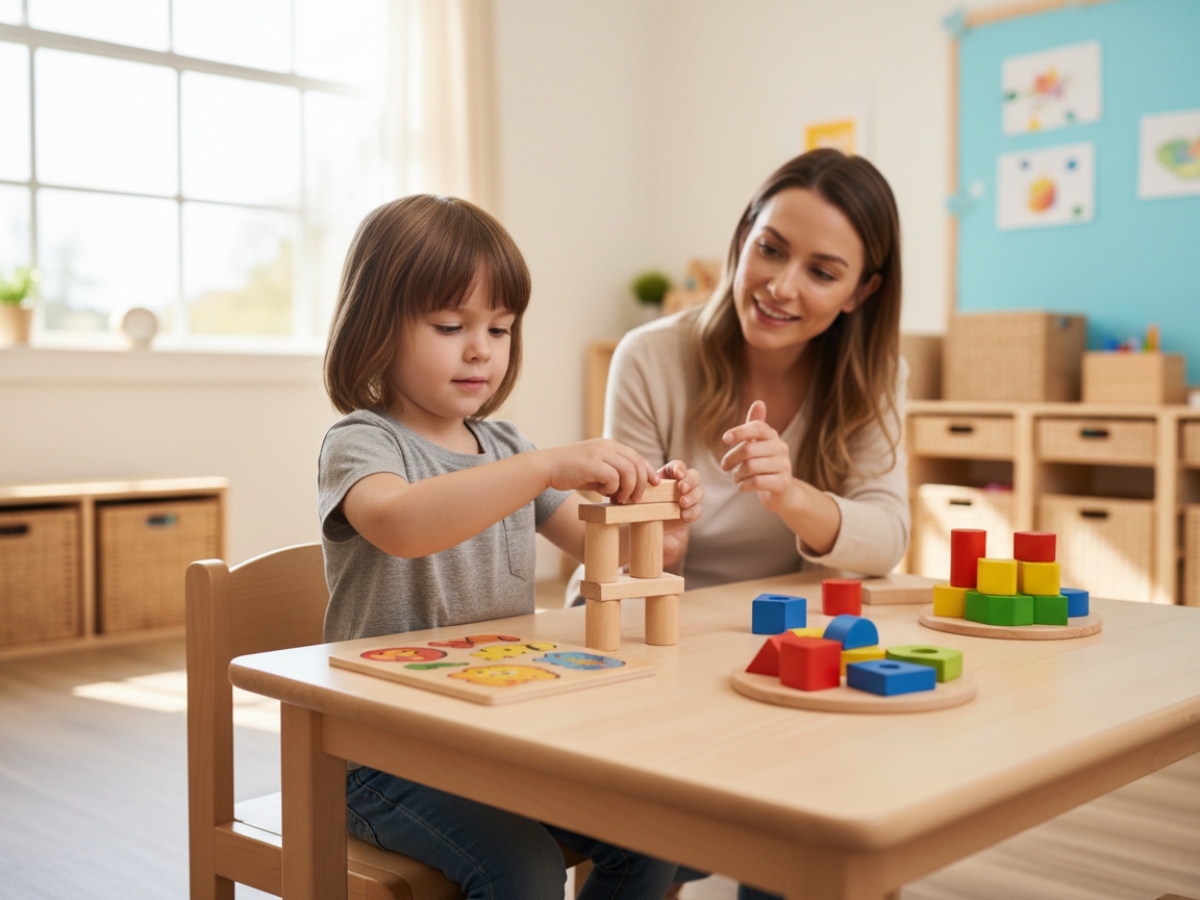
For example, a child using building blocks is not simply stacking objects. The activity involves planning, spatial reasoning, balance, and problem-solving. When a structure collapses, the child learns to adjust the design and try again. This process develops persistence and flexible thinking, two abilities closely connected with classroom learning.
Similarly, pretend-play materials such as role-play kitchens, doctor sets, and storytelling tools allow children to recreate real-life situations. During these activities, children practice communication, cooperation, and emotional understanding. They learn how to express ideas, negotiate with peers, and consider different perspectives.
The Connection Between Play and School Success
Modern early childhood education increasingly focuses on play-based learning, an approach where children acquire knowledge through exploration and interaction. According to NAEYC, effective play experiences encourage children to make decisions, solve problems, and connect new information with existing knowledge.
The importance of these experiences extends beyond preschool. The Harvard Center on the Developing Child identifies executive function as a critical foundation for learning because it influences attention, memory, and self-regulation. Activities involving sorting, sequencing, construction, and creative problem-solving naturally strengthen these mental skills.
While no single educational product can determine a child’s academic future, carefully designed learning materials can create more opportunities for children to practice the abilities they will rely on throughout their school years.
How Preschool Learning Toys Develop Essential Skills Before School
Children entering kindergarten need a wide range of abilities that develop gradually through daily experiences. Preschool Learning Toys support this process by transforming abstract concepts into practical activities that children can understand through touch, movement, and interaction.
Cognitive Development and Problem-Solving Skills
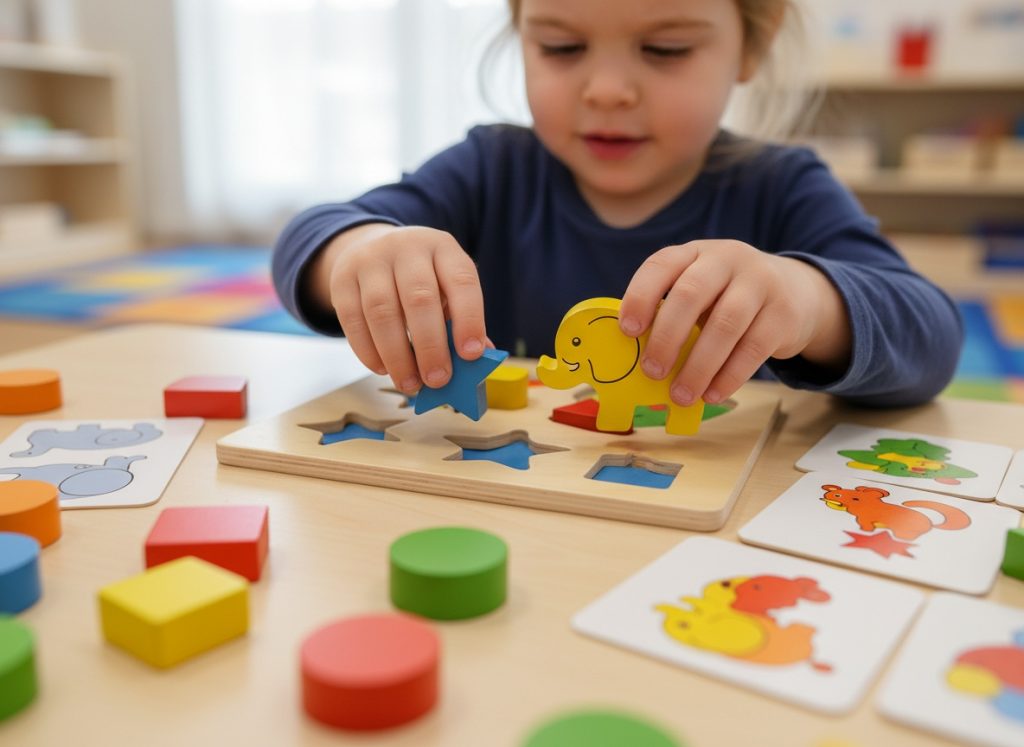
Cognitive development involves how children think, remember, analyze information, and solve problems. Educational toys that involve puzzles, construction, matching, and sequencing encourage children to observe patterns and make decisions.
For example, completing a puzzle requires children to compare shapes, remember previous attempts, and adjust their strategy when a piece does not fit. These simple actions build cognitive flexibility—the ability to adapt thinking when facing new challenges.
Building toys provide similar benefits. Children who experiment with different structures learn about cause and effect, balance, and planning. These experiences create early STEM learning opportunities by introducing concepts related to engineering, mathematics, and scientific thinking.
Research in child development indicates that children who regularly engage in problem-solving activities often demonstrate stronger concentration and greater confidence when approaching unfamiliar tasks. This makes educational play a valuable preparation tool before entering structured classroom environments.
Early Literacy and Language Development
Language skills are another essential component of school readiness. Before children begin reading independently, they need opportunities to develop vocabulary, listening ability, and communication confidence.
Many Preschool Learning Toys support early literacy by encouraging children to connect sounds, symbols, and meanings. Alphabet puzzles, storytelling cards, magnetic letters, and word games allow children to explore language concepts through interactive experiences.
The role of conversation is equally important. When parents or teachers discuss a toy activity with children, they introduce new vocabulary and encourage children to explain their thoughts. For example, while playing with a farm set, children may describe animals, create stories, and practice sentence structures naturally.
According to UNICEF, early language interaction between children and caregivers plays a significant role in literacy development. This demonstrates why educational toys that encourage communication can provide benefits beyond the activity itself.
Preschool Learning Toys and the Development of Fine Motor Skills

Fine motor development is often overlooked when discussing school preparation, yet it directly affects children’s ability to complete classroom tasks. Writing, drawing, cutting, turning pages, and organizing materials all require controlled hand movements.
Activities involving Preschool Learning Toys can strengthen these abilities through repeated practice. Threading beads, assembling puzzles, using peg boards, and building with small construction pieces require children to coordinate their fingers and eyes while maintaining focus.
The benefits extend beyond physical coordination. Completing a challenging hands-on activity also encourages patience and confidence. When children successfully solve a problem after several attempts, they learn that effort and persistence can lead to improvement.
Fine Motor Skills Supported by Different Toy Activities
| Toy Activity | Development Focus | Future Classroom Benefit |
|---|---|---|
| Threading beads | Finger coordination | Better pencil control |
| Wooden puzzles | Hand-eye coordination | Improved classroom task performance |
| Building blocks | Grip strength and spatial awareness | Writing preparation and creative thinking |
| Sorting games | Precision movement | Organization and concentration |
Educational specialists often recommend providing children with varied hands-on experiences because physical development and cognitive learning are closely connected. A child who improves hand coordination while building a structure is also practicing attention, planning, and problem-solving.
Research Findings on Preschool Learning and School Readiness
Growing evidence from early childhood research highlights the importance of meaningful play experiences before formal education begins. Several leading organizations have examined how early learning environments influence children’s development.
| Research Organization | Key Finding |
|---|---|
| Harvard Center on the Developing Child | Executive function skills support attention, self-control, and future learning abilities |
| National Association for the Education of Young Children (NAEYC) | Play-based learning helps children develop cognitive, social, and emotional skills |
| UNICEF | Early language interaction contributes to communication and literacy development |
| American Academy of Pediatrics (AAP) | Play supports healthy brain development and strengthens relationships between children and caregivers |
| OECD | Early childhood education quality influences children’s long-term learning outcomes |
These findings show that effective learning is not limited to traditional academic instruction. Instead, children benefit from environments where exploration, creativity, and interaction are encouraged.
For this reason, many educators view Preschool Learning Toys as supportive learning resources that connect play with important developmental goals.
Traditional Toys vs Preschool Learning Toys: Understanding the Difference
The educational value of a toy depends largely on how it engages children’s thinking and interaction. While traditional toys can provide entertainment and creative opportunities, purpose-designed educational products often include features that support specific developmental goals.
This does not mean traditional toys lack value. Open-ended play has always been an important part of childhood. However, Preschool Learning Toys are usually designed with clearer learning objectives, helping children practice skills related to literacy, mathematics, problem-solving, communication, and classroom behavior.
The following comparison highlights some common differences:
| Feature | Traditional Toys | Preschool Learning Toys |
|---|---|---|
| Main Purpose | Entertainment and general play | Learning through purposeful play |
| Problem-Solving Opportunities | Depends on the toy design | Usually encourages exploration and decision-making |
| Skill Development | Often broad and flexible | Often connected with developmental goals |
| Classroom Application | Limited in many cases | Can support preschool curriculum activities |
| Social Interaction | Varies by activity | Frequently designed for cooperation and communication |
| Learning Progression | May remain the same over time | Often includes increasing levels of challenge |
The key difference is not whether a toy is fun, but whether it encourages children to think, communicate, and develop new abilities during play. The most effective learning experiences often combine enjoyment with meaningful skill-building.
How to Choose Preschool Learning Toys for Early Learning
Choosing the right educational products requires understanding children’s developmental needs rather than focusing only on appearance, packaging, or short-term popularity. For parents, schools, and professional buyers, the strongest products are those that provide continuous learning opportunities while remaining engaging over time.
High-quality Preschool Learning Toys generally share several important characteristics.
First, they encourage open-ended play. Toys with multiple possible outcomes allow children to create, experiment, and develop their own solutions. A set of wooden blocks, for example, can become a bridge, a house, or a city depending on the child’s imagination. This flexibility supports creativity and cognitive flexibility.
Second, effective learning toys provide an appropriate level of challenge. Products that are too simple may quickly lose children’s interest, while overly complex activities can create frustration. The ideal toy encourages children to make progress while still allowing them to experience achievement.
Third, product design affects usability. For preschool environments, components should be easy for small hands to handle. Puzzle pieces larger than approximately 3.5 cm across, for example, are generally easier for young children to grasp and manipulate. Wooden construction blocks measuring around 4–5 cm per side provide comfortable handling during building activities.
Durability is also an important consideration for schools and childcare centers. Products frequently used by multiple children need reliable construction, such as solid beech wood with smooth water-based finishes or impact-resistant ABS plastic components designed for repeated handling.
Signs of a Valuable Educational Toy
A well-designed educational product usually:
- Encourages children to explore instead of simply follow instructions.
- Supports interaction between children and adults.
- Can be used in different learning activities.
- Develops more than one skill area.
- Remains engaging as children’s abilities improve.
These qualities explain why many educators prefer learning materials that support curiosity and discovery rather than products focused only on entertainment features.
How Preschool Learning Toys Support Home and Classroom Learning
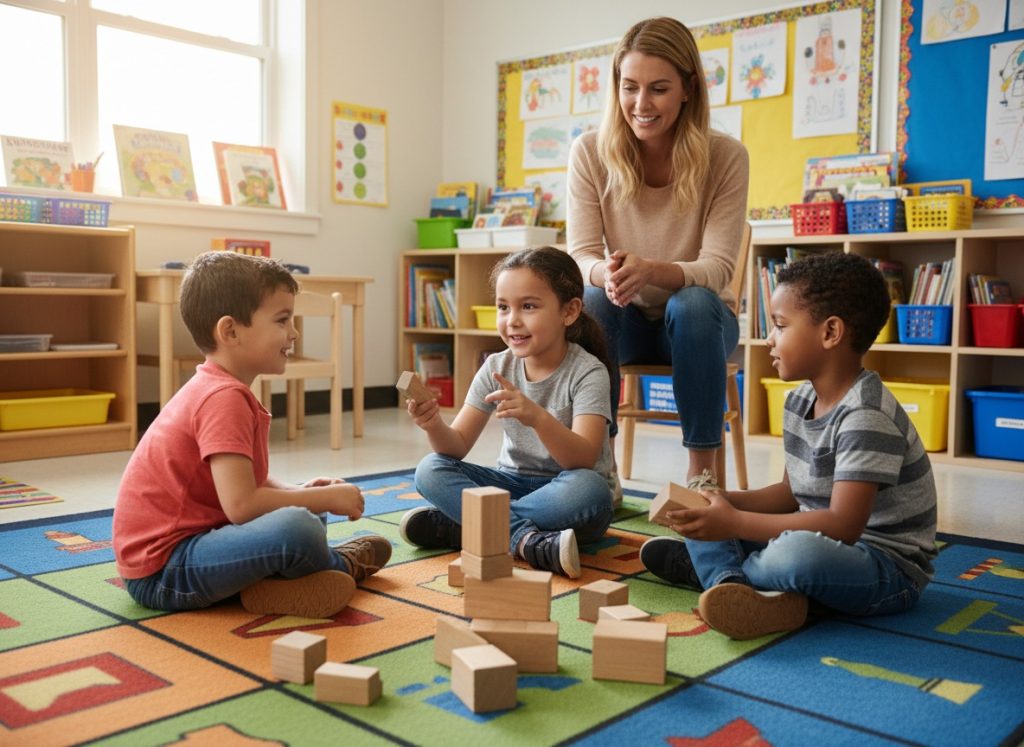
The environment surrounding a toy greatly influences its educational impact. A learning activity becomes more meaningful when children receive encouragement, questions, and guidance from adults.
At home, parents can use Preschool Learning Toys as opportunities for conversation and exploration. A counting activity can become a discussion about numbers, colors, and daily objects. A construction project can introduce concepts such as size, balance, and planning. Story-based toys can encourage children to describe experiences and develop imagination.
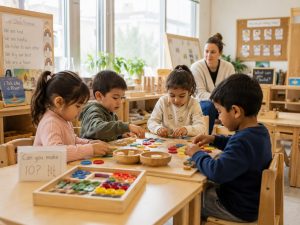
In preschool classrooms, teachers often integrate educational toys into structured learning plans. Rather than replacing instruction, toys become practical tools that help children apply concepts through hands-on experiences.
For example, a teacher introducing basic mathematics may use counting manipulatives to demonstrate quantities, while a STEM activity may involve building challenges that encourage children to test different designs. This combination of guidance and exploration reflects the principles of inquiry-based learning, where children actively investigate ideas instead of simply receiving information.
Classroom Applications of Preschool Learning Toys
| Learning Area | Example Preschool Learning Toys | Development Goal |
|---|---|---|
| Literacy Center | Alphabet puzzles and storytelling cards | Vocabulary growth and early reading skills |
| Mathematics Area | Counting blocks and sorting games | Number recognition and logical thinking |
| STEM Activities | Magnetic construction sets and building toys | Engineering concepts and problem-solving |
| Sensory Learning | Texture boards and exploration materials | Observation and concentration |
| Social Learning | Pretend-play sets and cooperative games | Communication and emotional skills |
Research suggests that children often develop deeper understanding when they can physically interact with learning materials. This is why many modern preschool programs combine teacher guidance with hands-on educational resources.
Evaluating the Educational Value of Preschool Learning Toys
The growing demand for educational products has also created a market filled with different claims about learning benefits. For buyers, evaluating educational value requires looking beyond marketing messages and examining how a product supports children’s actual development.
One important factor is whether the toy promotes active participation. Children learn more effectively when they make decisions, test ideas, and adjust their actions. A construction set that allows multiple designs, for example, creates more learning opportunities than a toy with only one fixed result.
Another factor is interaction. Research in early childhood education consistently shows that communication between children and adults plays an important role in language and cognitive development. Toys that encourage discussion, cooperation, and storytelling often provide broader developmental benefits.
Educational value can also be measured by long-term usability. A product that supports different activities at different developmental stages often provides greater value than a toy that is quickly outgrown.
Looking Beyond Marketing Claims
When assessing Preschool Learning Toys, professional buyers and educators may consider:
Learning Purpose:
Does the toy connect with specific developmental skills such as early literacy, numeracy, creativity, or social learning?
Engagement Level:
Does it encourage children to actively participate, explore, and create?
Classroom Flexibility:
Can teachers adapt the toy for different activities and learning objectives?
Developmental Value:
Will children continue discovering new ways to use the product as their abilities improve?
These questions help identify educational products that provide meaningful experiences rather than temporary excitement.
FAQs
How Do Preschool Learning Toys Prepare Children for Kindergarten?
Preschool Learning Toys prepare children for kindergarten by helping them develop skills required in classroom environments, including communication, concentration, problem-solving, fine motor control, and cooperation. Through hands-on activities, children practice following instructions, completing challenges, and interacting with others before entering formal education.
What Are the Best Preschool Learning Toys for Classroom Use?
The best classroom learning toys are those that support multiple learning objectives while encouraging participation. Products such as building blocks, puzzles, counting materials, role-play sets, and STEM-focused activities are commonly used because they support cognitive development, creativity, teamwork, and early academic skills.
Can Preschool Learning Toys Improve Early Literacy and Math Skills?
Yes. Educational toys can support early literacy and numeracy skills by allowing children to interact with letters, sounds, numbers, patterns, and problem-solving activities. For example, alphabet games introduce symbol recognition, while counting toys help children understand quantities and basic mathematical concepts through practical experiences.
How Should Schools Select Preschool Learning Toys?
Schools should evaluate educational goals, durability, classroom suitability, and developmental relevance when selecting learning materials. Products that encourage open-ended play, collaboration, and repeated exploration often provide stronger long-term value because they can be adapted to different teaching activities.
Conclusion
Preschool Learning Toys play an important role in preparing children for school by connecting play with essential developmental experiences. Research from organizations such as Harvard Center on the Developing Child, NAEYC, UNICEF, the American Academy of Pediatrics, and OECD demonstrates that early learning environments influence children’s cognitive, social, and emotional development.
The most valuable educational products are not simply those that teach letters or numbers. They are the ones that encourage children to explore, communicate, solve problems, and build confidence through meaningful interaction. By supporting executive function, early literacy, numeracy skills, fine motor development, and social learning, well-designed learning toys help create a stronger foundation for kindergarten readiness.
As demand for quality early childhood education continues to grow, schools, childcare providers, retailers, and distributors are increasingly looking for reliable educational resources that combine developmental value with practical usability. Working with experienced manufacturers that understand product design, safety requirements, and curriculum trends can help businesses provide learning solutions that meet the changing needs of families and educational markets worldwide.