
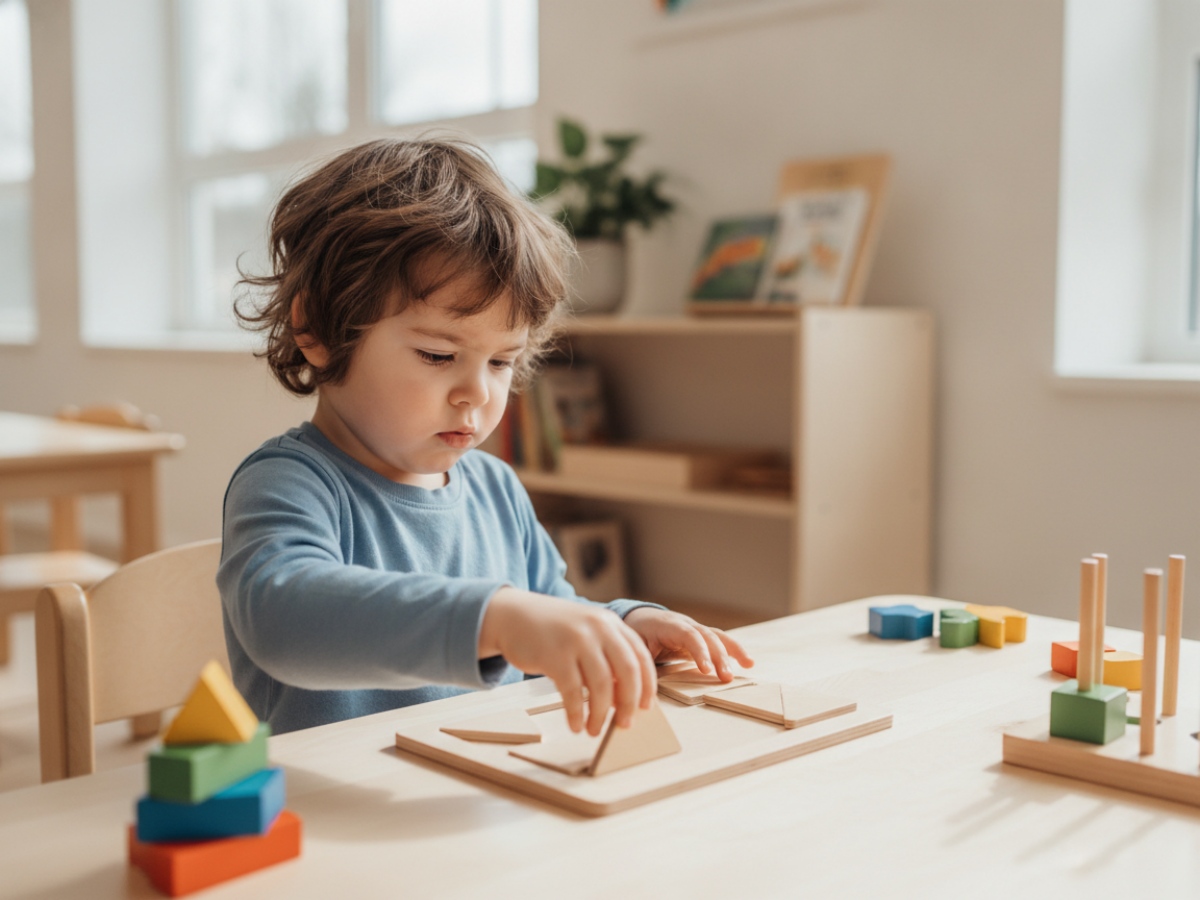
Choosing educational products for preschool environments is becoming more strategic than simply selecting toys that keep children busy. Schools, early education centers, retailers, and educational toy distributors increasingly evaluate whether a product can support meaningful learning outcomes, encourage independent thinking, and provide long-term value through repeated use.
For educational toy brands, understanding how preschool learning toys contribute to children’s development has become an important part of product selection. Products that encourage children to observe, experiment, and discover solutions independently are more likely to gain recognition from teachers, parents, and retailers.
In practical learning environments, preschool learning toys encourage problem-solving by allowing children to test ideas, recognize patterns, adjust strategies, and learn from mistakes through hands-on experiences. Studies in early childhood education suggest that these activities support the development of executive function, cognitive flexibility, logical thinking, and decision-making abilities.
Unlike passive learning methods, well-designed educational toys allow children to actively participate in the learning process. This article explains how preschool learning toys build problem-solving skills, what features make them effective, and why they are becoming increasingly valuable for educational brands and buyers worldwide.
Why Are Preschool Learning Toys Important for Problem-Solving?
Children between the ages of three and six experience rapid cognitive development. According to Harvard University’s Center on the Developing Child, executive function skills—including working memory, cognitive flexibility, and self-control—develop significantly during early childhood.
These abilities are not built only through direct instruction. Children strengthen them when they have opportunities to make decisions, test different approaches, and solve challenges independently. This is why preschool learning toys are widely used in homes and classrooms as tools for encouraging active learning.
A wooden maze, for example, requires children to observe possible routes, predict outcomes, and adjust their movements when a path does not work. A building block activity requires children to consider balance, structure, and stability before creating a successful design. Through these simple experiences, children learn how to analyze problems and search for solutions.
Research in early childhood classrooms has found that children often develop deeper understanding when they interact directly with learning materials rather than only watching demonstrations. The process of trying, adjusting, and improving helps transform play into meaningful cognitive practice.
Hands-on learning experiences provide children with valuable opportunities to develop flexible thinking, planning ability, and problem-solving confidence.
Why Hands-On Activities Improve Memory
Physical interaction plays an important role in early childhood learning. When children touch, move, compare, and organize objects, they connect concepts with real experiences.
For example, when a child completes a shape-matching activity, they are not only identifying colors and forms. They are comparing differences, remembering previous attempts, and developing visual recognition skills. These repeated interactions help children understand concepts more naturally and apply them in new situations.
Which Preschool Learning Toys Best Encourage Problem-Solving Skills?
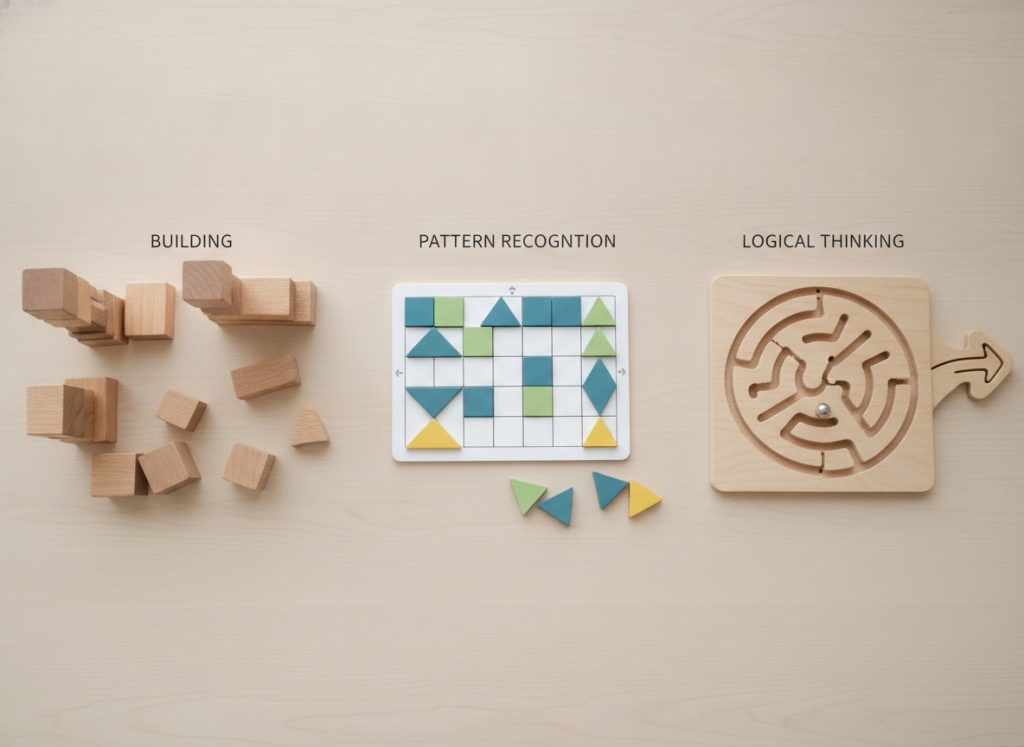
Different educational toys develop different types of reasoning. While one product cannot cover every learning goal, toys that encourage exploration, decision-making, and experimentation often provide stronger educational value.
| Toy Category | Problem-Solving Skills Developed | Learning Experience |
|---|---|---|
| Building Blocks | Spatial reasoning and creativity | Creating structures and testing balance |
| Magnetic Pattern Toys | Pattern recognition and visual thinking | Reproducing or designing patterns |
| Wooden Mazes | Planning and logical reasoning | Finding routes and adjusting strategies |
| Fraction Learning Sets | Mathematical thinking | Comparing quantities and relationships |
| Sorting & Stacking Toys | Classification skills | Grouping objects by different features |
| Number Games | Early strategy and calculation | Counting, matching, and decision-making |
As shown above, different preschool learning toys support different aspects of problem-solving. Building activities encourage children to think about structure, while sorting activities strengthen observation and classification. Pattern-based toys improve visual reasoning, and number games introduce early mathematical concepts through practical exploration.
For educators and buyers, choosing a balanced product portfolio can create broader learning opportunities than focusing on a single toy category.
Why Open-Ended Play Makes a Difference
Open-ended play gives children more than one possible solution. Instead of following a fixed answer, children can experiment with different methods and discover what works best.
For example, when using magnetic pattern blocks, one child may recreate a sample design, while another may create a completely new pattern. Both approaches encourage creativity, observation, and independent decision-making.
This flexibility is one reason many educators prefer learning materials that can be reused in different ways across multiple activities.
Learning Through Trial and Error
Problem-solving develops through practice. When children encounter manageable challenges, they gradually learn how to analyze situations instead of immediately looking for answers.
A child who cannot complete a puzzle on the first attempt may rotate pieces, compare shapes, and try different solutions. Each attempt improves patience, reasoning ability, and confidence.
How Do Preschool Learning Toys Support Cognitive Development?
Many families initially choose educational products to support early mathematics, language, or school readiness. However, the value of preschool learning toys extends beyond academic preparation.
A single activity can involve several skills at the same time. Children may need to plan their actions, remember previous steps, coordinate hand movements, and explain their ideas while completing a challenge.
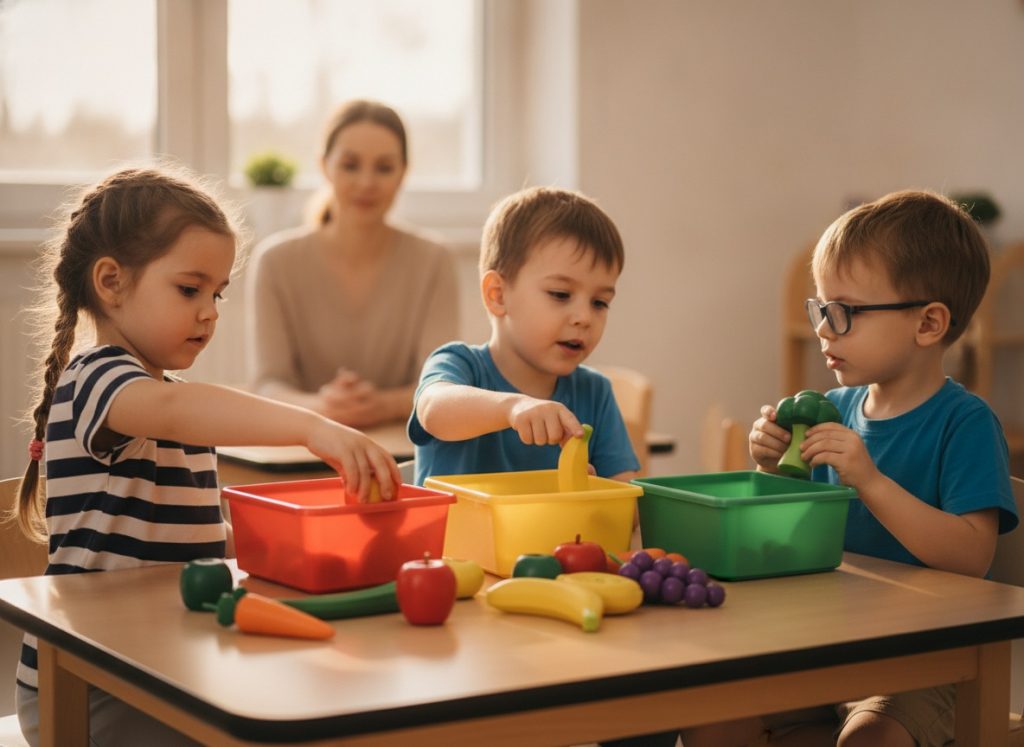
For example, in a preschool classroom, a teacher may introduce a fruit sorting toy during a small-group activity. At the beginning, children sort pieces according to color. Later, the teacher may encourage them to create new sorting rules based on size, category, or quantity. During discussion, children explain why certain pieces belong together.
Through this one activity, children practice classification, communication, observation, and logical reasoning.
| Development Area | How Educational Toys Support Growth |
|---|---|
| Executive Function | Encourages planning, focus, and decision-making |
| Fine Motor Skills | Improves hand control through object manipulation |
| Working Memory | Helps children remember sequences and steps |
| Visual Perception | Strengthens recognition of patterns and shapes |
| Language Development | Encourages children to explain their thinking |
| Social Skills | Supports cooperation during group activities |
Rather than developing these abilities separately, preschool learning toys allow children to practice multiple skills within one meaningful learning experience.
How to Choose Preschool Learning Toys That Build Problem-Solving Skills?
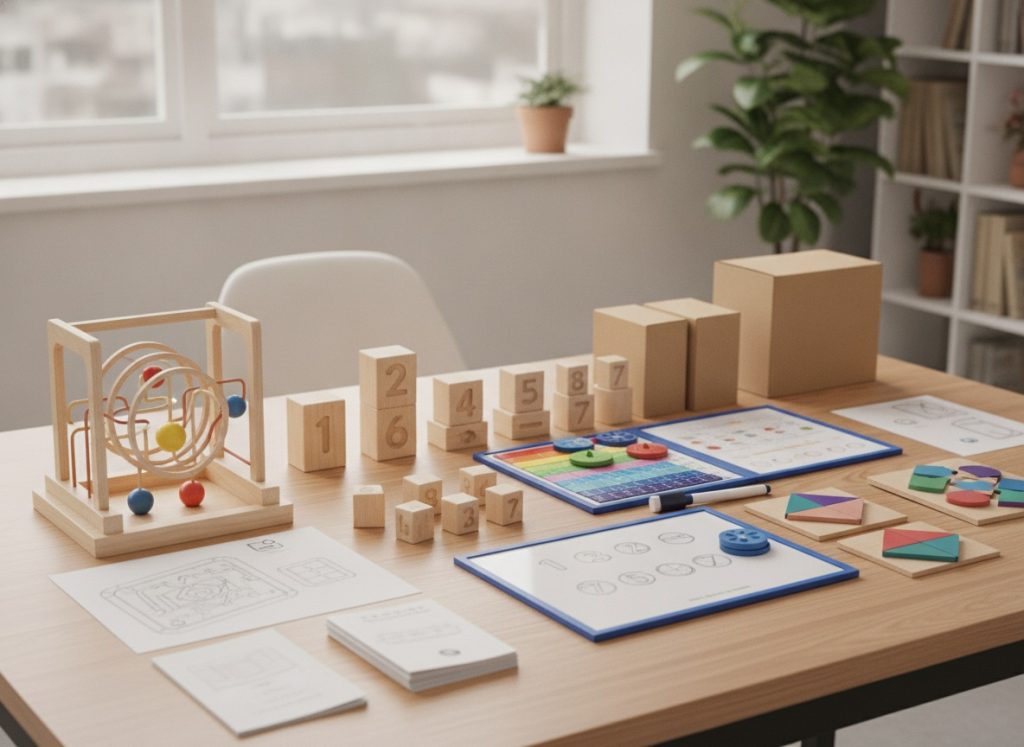
For schools, distributors, and educational toy brands, selecting the right products requires more than considering appearance or entertainment value. Buyers increasingly look for toys that provide clear educational benefits, support classroom activities, and maintain children’s interest over time.
Effective preschool learning toys usually include several important characteristics:
- Opportunities for independent exploration
- Different levels of challenge as children improve
- Activities that encourage creativity instead of only repetition
- Designs suitable for individual and group learning
- Clear educational purposes connected with child development
Educational toy manufacturers such as Vindstier focus on combining developmental goals with practical classroom usability. Products including magnetic fraction teaching aids, wooden number blocks, magnetic pattern blocks, and sorting toys are designed to help children explore concepts through hands-on experiences.
From a sourcing perspective, buyers also value detailed product information. Specifications such as recommended age (3+ years), product dimensions, material details, surface finishing methods, and compliance with CE and CPC safety requirements provide clearer evaluation criteria than general descriptions.
Choosing Toys for Different Development Stages
Children’s problem-solving abilities change quickly during preschool years. Younger children often benefit from simple sorting, matching, and construction activities, while older preschoolers may enjoy more complex challenges involving numbers, patterns, and planning.
Selecting products that match developmental stages helps educators maintain engagement while gradually increasing learning difficulty.
Why Are Preschool Learning Toys Becoming More Popular Worldwide?
Growing awareness of early childhood development continues to influence purchasing decisions in both consumer and educational markets. Families increasingly look for products that combine learning with enjoyment, while schools and retailers prefer educational materials with clear developmental value.
At the same time, educational brands are expanding product categories that support STEM learning, logical thinking, and fine motor development. Wooden number blocks, magnetic fraction teaching aids, pattern block sets, fruit sorting toys, dinosaur maze boards, and number games are becoming popular because they encourage children to think actively rather than simply follow instructions.
While digital learning applications can introduce basic concepts, many educators believe physical preschool learning toys provide stronger opportunities for sensory exploration, cooperation, and hands-on problem-solving. Instead of replacing traditional learning materials, many classrooms combine digital resources with physical educational toys to create a more balanced learning environment.
Manufacturers such as Vindstier are responding to this demand by developing customizable educational toy solutions for brands, retailers, and educational organizations. By combining product design with clear learning objectives, these solutions help partners create engaging products for preschool children aged 3+.
Conclusion
Evidence from early childhood education studies suggests that preschool learning toys play an important role in developing problem-solving abilities. Through building, sorting, matching, balancing, and experimenting, children gradually improve logical thinking, creativity, persistence, and independent decision-making.
For educators, retailers, and educational toy brands, products that encourage exploration and provide measurable learning value can create stronger long-term opportunities. Toys designed with clear developmental goals are more likely to gain trust from schools and families while supporting children’s growth through meaningful play.
For businesses searching for customizable preschool learning toys, choosing products with strong educational functions, reliable specifications, and classroom usability can create greater market value. Vindstier provides OEM and ODM educational toy solutions, helping global partners develop engaging learning products designed for preschool children aged 3+.