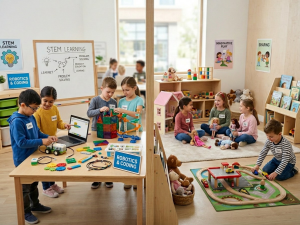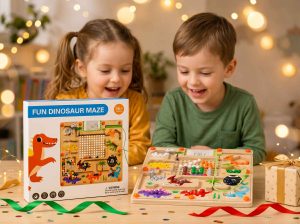
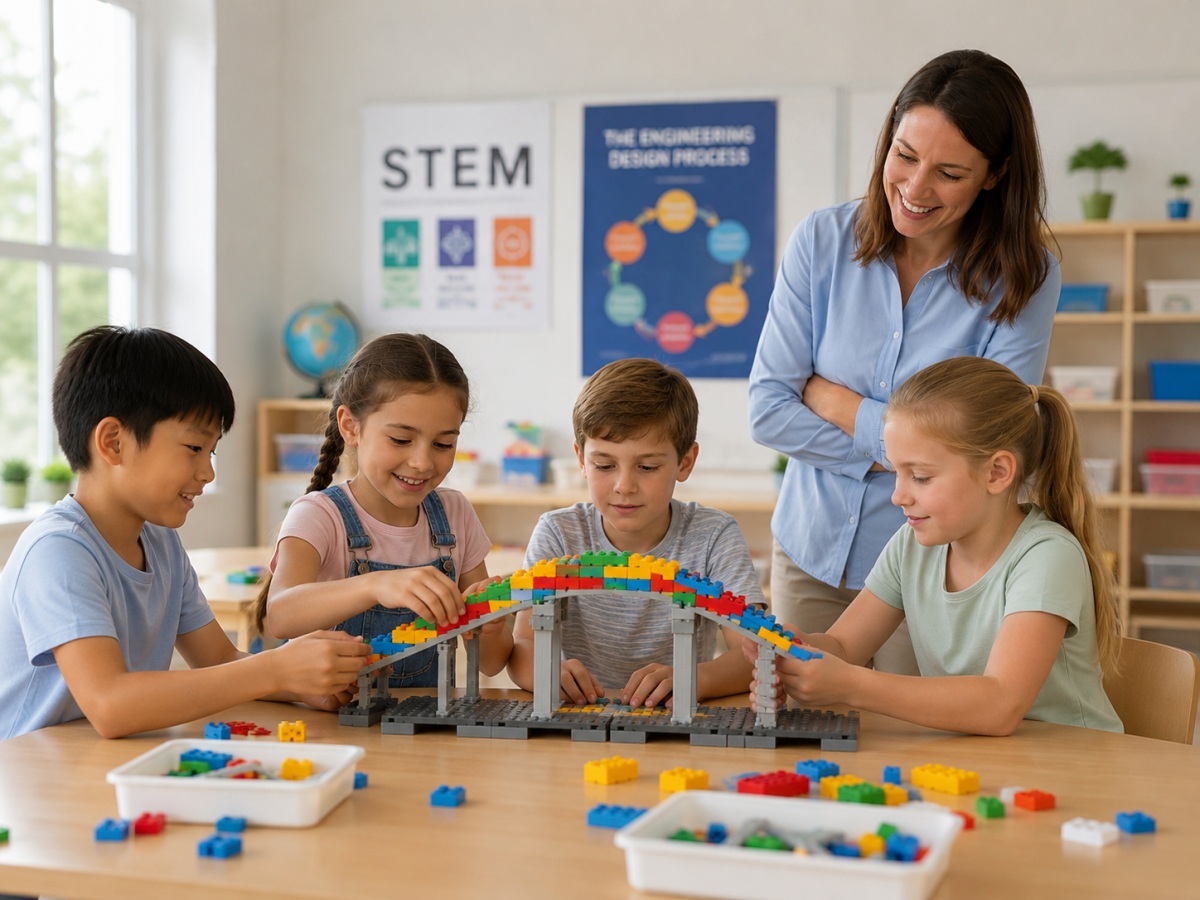
Walk into a STEM classroom today, and you’ll probably find Building Blocks alongside robotics kits, coding tools, and science equipment. What was once considered a traditional construction toy has become an important educational resource that helps learners explore engineering, mathematics, science, and creative design through hands-on learning.
As schools continue shifting from passive instruction toward inquiry-based learning, Building Blocks are increasingly being used to transform abstract theories into practical experiences. Instead of simply reading about balance, force, or geometry, learners build structures, test their ideas, identify weaknesses, and improve their designs. This process reflects how engineers solve real-world problems and helps learners develop critical thinking in an engaging way.
Evidence supporting this approach continues to grow. According to the International Journal of STEM Education, project-based learning significantly improves student engagement and knowledge retention because learners actively participate in solving meaningful challenges. UNESCO has also emphasized that experiential learning plays an important role in developing problem-solving, collaboration, and innovation—three competencies widely recognized as essential for future careers.
For educators, distributors, and educational brands, Building Blocks for STEM education offer more than an enjoyable classroom activity. They provide a flexible teaching resource that combines engineering activities, mathematical reasoning, spatial awareness, and creative thinking while supporting modern teaching methods.
If you’re exploring additional classroom resources, you may also be interested in our STEM Toys, Educational Toys, and Construction Toys collections.
Why Building Blocks Are Essential for STEM Learning
STEM education aims to connect science, technology, engineering, and mathematics through practical applications rather than isolated subjects. While digital technologies continue to reshape education, numerous studies indicate that hands-on learning remains one of the most effective ways to improve conceptual understanding.
Building Blocks naturally support this educational approach because every construction challenge encourages learners to observe, predict, test, and improve. Whether constructing a bridge, designing a vehicle, or building a stable tower, learners apply scientific reasoning without feeling constrained by traditional classroom instruction.
Learning Through Iteration Builds Engineering Thinking
Engineering is rarely about finding the perfect solution immediately. Instead, engineers develop prototypes, evaluate performance, and refine their designs based on testing results. Building Blocks introduce this same mindset in an accessible learning environment.
Researchers from the University of Delaware found that iterative engineering activities help learners develop stronger analytical thinking because each redesign is supported by observation rather than memorization. Instead of viewing mistakes as setbacks, learners begin to recognize them as valuable feedback that leads to better solutions.
This process also develops resilience. As structures become more complex, learners gain confidence in experimenting with new ideas and adapting their designs when unexpected challenges appear.
Before exploring mathematics, it is important to recognize that engineering challenges depend heavily on scientific observation. Building Blocks therefore create a natural bridge between science and engineering.
How Building Blocks Improve Science and Engineering Skills
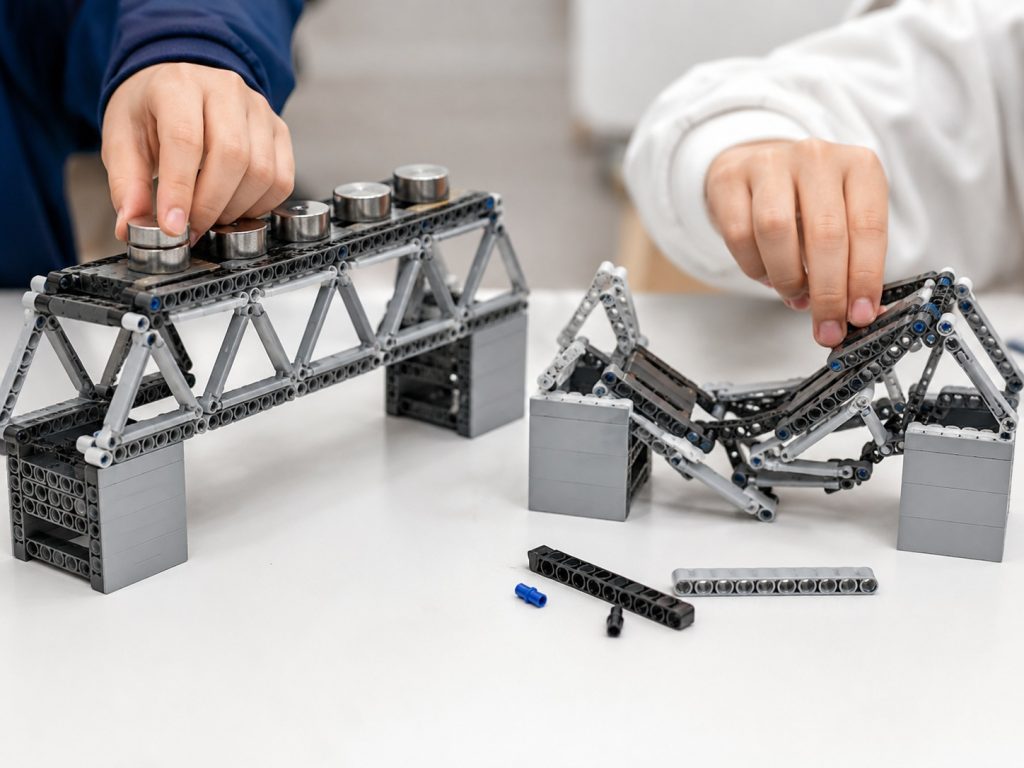
Science encourages learners to ask questions about how the world works, while engineering focuses on applying those discoveries to solve practical problems. Educational Building Blocks combine these disciplines by allowing learners to investigate physical principles through experimentation.
Consider a simple bridge-building challenge. Two bridges may appear similar, yet one supports considerably more weight because its structure distributes force more efficiently. Rather than explaining this concept through diagrams alone, Building Blocks allow learners to observe these differences directly and modify their designs based on the results.
| STEM Concept | Building Blocks Activity | Learning Outcome |
| Gravity | Building tall towers | Understanding balance and center of gravity |
| Force | Testing bridge strength | Learning load distribution and structural support |
| Geometry | Creating different structures | Exploring angles, symmetry, and spatial reasoning |
| Measurement | Comparing model dimensions | Improving accuracy and mathematical estimation |
From Observation to Engineering Design
The engineering design process generally follows several stages: identifying a problem, proposing a solution, building a prototype, testing performance, and refining the design. Building Blocks allow learners to experience every stage through practical activities instead of theoretical instruction.
A study published in the Journal of Engineering Education found that iterative design projects strengthen critical thinking because learners evaluate evidence before making improvements. This approach also encourages collaboration, as learners discuss alternative solutions and compare different design strategies.
A Real Classroom Example
An elementary STEM program in Singapore introduced weekly Building Blocks engineering challenges for students aged 7–10. Instead of following fixed building instructions, students worked in small groups to design earthquake-resistant towers using the same number of components.
Teachers observed that the discussions gradually shifted from “Which tower looks better?” to “Which design distributes weight more effectively?” By the end of the project, students were using engineering vocabulary such as stability, support, and load distribution naturally during classroom conversations. While the activity focused on a simple construction task, it successfully integrated science, mathematics, teamwork, and communication within a single lesson.
This example illustrates why Building Blocks continue to be adopted in project-based STEM classrooms around the world.
How Building Blocks Strengthen Mathematical Thinking
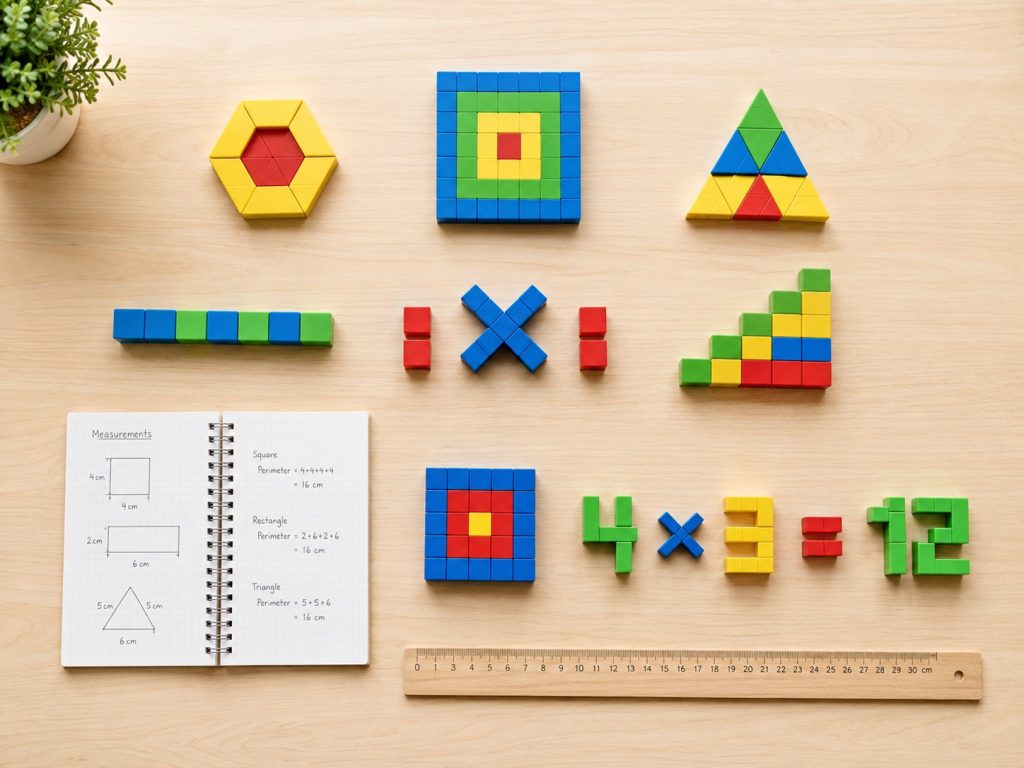
Mathematics often appears abstract until learners can visualize and manipulate concepts themselves. Building Blocks provide a tangible way to explore numbers, proportions, geometry, and measurement through meaningful construction activities.
Rather than solving isolated equations, learners apply mathematics while making practical decisions. They estimate dimensions before building, compare the height of different structures, identify symmetrical patterns, and calculate how additional components may influence stability. These mathematical experiences emerge naturally during construction instead of being introduced separately.
According to the National Council of Teachers of Mathematics (NCTM), combining visual models with physical manipulation helps learners develop a deeper conceptual understanding because mathematical relationships become immediately observable.
As projects become more sophisticated, learners begin connecting mathematical reasoning with engineering performance. They discover that accurate measurements improve structural stability, proportional design affects balance, and geometric principles influence the strength of bridges and buildings.
This combination of mathematics and engineering also prepares learners for more advanced STEM topics such as robotics, coding, and mechanical design.
To see how these skills connect with broader hands-on learning activities, explore our related resources on Educational Toys and STEM Learning Solutions.
How Building Blocks Encourage Creativity While Supporting STEM Goals
Creativity and STEM are sometimes presented as separate areas of learning. In reality, innovation depends on combining imaginative thinking with analytical reasoning. Building Blocks provide an open-ended environment where learners are encouraged to explore multiple solutions instead of searching for one predetermined answer.
Given the same engineering challenge, different teams often develop completely different designs. One group may prioritize stability, another efficiency, and another visual appearance. Comparing these approaches encourages discussion, evaluation, and continuous improvement while reinforcing scientific reasoning.
Open-Ended Exploration Encourages Innovation
Unlike construction kits designed to create one finished model, open-ended Building Blocks support continuous experimentation. Existing structures can be modified, expanded, or redesigned to solve new challenges, allowing learning to continue long after the original project is completed.
Research published by the LEGO Foundation highlights that playful learning environments combining creativity and experimentation help strengthen both creative confidence and problem-solving abilities. These findings explain why educational Building Blocks continue to play an increasingly important role in maker spaces, STEM laboratories, after-school programs, and collaborative classroom environments.
While creative teaching methods are essential, educational outcomes also depend on the quality of the Building Blocks themselves. The next section examines which product features schools and educational buyers typically evaluate when selecting Building Blocks for long-term classroom use.
Choosing High-Quality Building Blocks for Educational Use
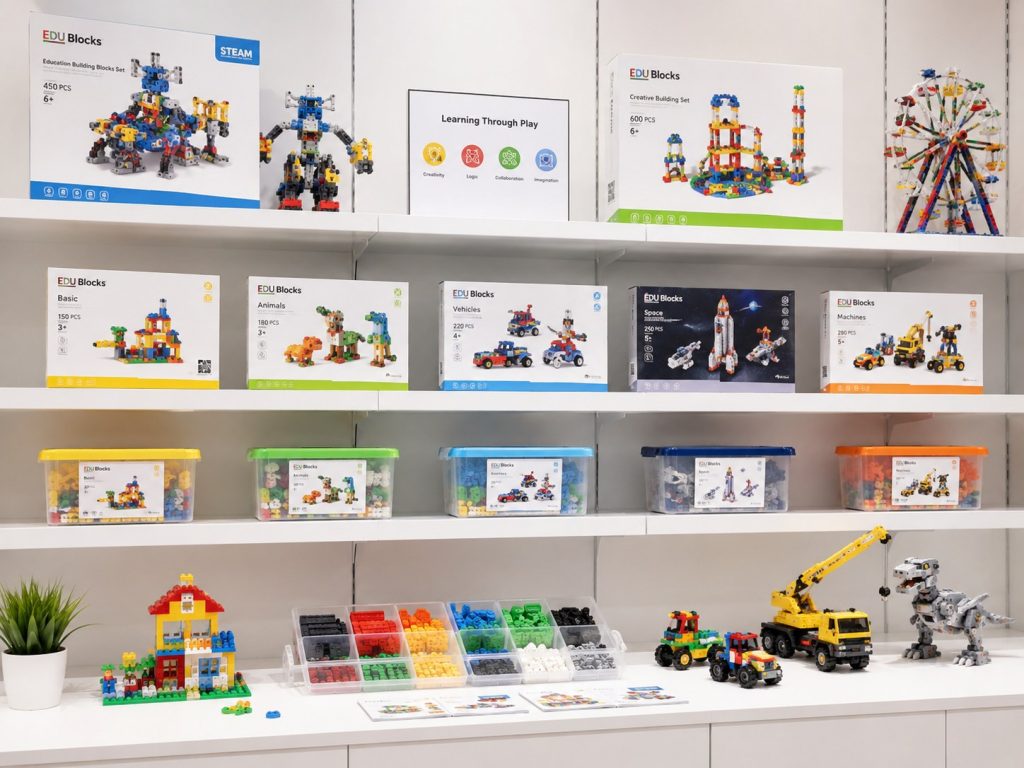
The educational value of Building Blocks depends not only on classroom activities but also on product quality. Schools, educational distributors, and procurement teams increasingly evaluate measurable product specifications instead of relying on broad marketing claims.
Precision manufacturing, consistent dimensions, and durable materials help ensure that classroom projects remain stable even after thousands of assembly cycles. Equally important, a wide variety of compatible components gives teachers greater flexibility when designing STEM challenges that become progressively more advanced.
The following specifications are commonly considered when selecting educational Building Blocks for schools and learning centers.
| Feature | Why It Matters in the Classroom |
| ABS plastic with approximately 2.0–2.5 mm wall thickness | Supports repeated daily use in classroom environments |
| Precision molding tolerance within ±0.02 mm | Creates reliable connections for engineering activities |
| More than 300 compatible building elements | Expands opportunities for creative STEM projects |
| Recommended for learners aged 6–12 years | Matches developing cognitive and fine motor skills |
| Average connection cycle exceeding 5,000 assemblies | Reduces replacement frequency for schools |
| Compliance with EN71, ASTM F963, and CPSIA requirements (where applicable) | Supports procurement requirements in major international markets |
Rather than focusing on a single feature, experienced educational buyers usually evaluate how these specifications work together to improve classroom performance, durability, and long-term value.
If you’re comparing classroom resources, you may also want to explore our Construction Toys and Educational Toys collections to see how different learning tools complement one another.
Building Blocks in Real Classroom Applications
The educational benefits of Building Blocks become even clearer when they are integrated into structured classroom projects.
One example comes from a primary school STEM program in Finland, where teachers incorporated weekly engineering challenges into science lessons over the course of one semester. Students worked in small teams to design bridges capable of supporting progressively heavier loads while using a fixed number of Building Blocks.
Instead of providing step-by-step instructions, teachers encouraged students to document each design, record testing results, and explain why one structure performed better than another. As the projects became more challenging, learners naturally began discussing concepts such as load distribution, triangular reinforcement, symmetry, and material efficiency.
According to the teachers involved in the program, students demonstrated noticeable improvements not only in engineering vocabulary but also in collaboration, communication, and confidence when presenting design ideas. The activity also created opportunities to connect mathematics, science, and engineering within a single lesson, making classroom learning more cohesive and engaging.
Although every school follows its own curriculum, similar project-based activities have become increasingly common because they encourage learners to apply knowledge rather than simply remember it.
This practical application explains why Building Blocks continue to be recommended for STEM classrooms, maker spaces, libraries, museums, and after-school learning programs.
Partner with a Reliable Building Blocks Manufacturer
Growing demand for STEM education has also increased expectations for educational product suppliers. Schools, distributors, wholesalers, and private-label brands are no longer looking only for standard products—they often need manufacturing partners capable of supporting customized educational solutions.
For OEM and ODM projects, experienced manufacturers may provide services such as custom color development, branded packaging, logo printing, instruction manual design, and exclusive product configurations. These services help educational brands build differentiated product lines while maintaining consistent quality across large production runs.
Beyond customization, procurement teams frequently evaluate production consistency, quality control systems, delivery reliability, and communication efficiency. Reliable suppliers typically implement inspection procedures throughout molding, assembly, packaging, and final shipment to help ensure that products meet agreed specifications before delivery.
Choosing a manufacturing partner therefore involves more than comparing prices. Long-term cooperation often depends on whether a supplier understands educational applications as well as manufacturing requirements.
If your business is developing a private-label educational toy collection, our OEM Toy Manufacturing services and Custom Educational Toys solutions may provide additional support throughout product development and production.
Why Building Blocks Continue to Gain Attention in STEM Education
Global investment in STEM education continues to expand as governments, schools, and educational organizations place greater emphasis on future-ready skills. Reports published by the OECD and UNESCO consistently highlight the importance of critical thinking, collaboration, creativity, and problem-solving in preparing learners for an increasingly technology-driven world.
Building Blocks align closely with these educational priorities because they encourage learners to investigate problems, test ideas, communicate with peers, and improve solutions through repeated experimentation. Unlike many single-purpose learning tools, Building Blocks can be adapted for science lessons, engineering challenges, mathematical investigations, and collaborative classroom projects.
This flexibility also explains why educational Building Blocks are increasingly used outside traditional classrooms. Museums, STEM learning centers, libraries, maker spaces, and after-school programs continue to integrate construction-based learning into their educational activities because it supports a wide range of learning objectives while remaining engaging and adaptable.
For educational distributors and brands, this growing demand creates opportunities to develop Building Blocks that meet specific curriculum requirements, regional market preferences, and private-label strategies.
Frequently Asked Questions About Building Blocks and STEM Learning
Can Building Blocks be used in STEM classrooms?
Yes. Building Blocks are widely used in STEM classrooms because they encourage learners to apply scientific and mathematical concepts through hands-on engineering activities. They are equally suitable for individual exploration, collaborative group projects, and inquiry-based learning.
What age range is commonly recommended for educational Building Blocks?
Different products are designed for different developmental stages. Many classroom Building Blocks are recommended for learners aged 6–12 years, while larger-format blocks are often introduced in early childhood education. The most appropriate choice depends on curriculum objectives, classroom activities, and motor skill development.
What should schools consider when purchasing Building Blocks?
Educational buyers generally compare durability, dimensional accuracy, compatibility, component variety, replacement part availability, and compliance with applicable market standards. Many schools also value suppliers that can provide curriculum support, classroom sets, or customized packaging for institutional purchasing.
Can Building Blocks be customized for educational brands?
Yes. Many manufacturers support OEM and ODM services, including custom colors, branded packaging, logo printing, instruction manuals, and exclusive product configurations. These services help distributors and educational brands develop products tailored to different markets and customer needs.
Conclusion
Building Blocks have evolved into one of the most versatile resources for modern STEM education. By combining engineering design, mathematical reasoning, scientific investigation, and creative exploration, they transform abstract concepts into meaningful learning experiences that encourage curiosity and continuous improvement.
Research from organizations such as UNESCO, the OECD, and leading educational journals continues to demonstrate the value of experiential learning in developing critical thinking, communication, and problem-solving skills. Building Blocks support these objectives by allowing learners to explore, test, and refine their ideas through practical activities that can be adapted to different educational settings.
For schools, distributors, and educational brands, selecting high-quality Building Blocks means considering not only durability and manufacturing consistency but also how effectively a product supports long-term classroom learning. Well-designed educational Building Blocks can become an integral part of STEM programs while offering flexibility for different age groups, teaching methods, and curriculum goals.
Whether you are expanding a classroom resource library, developing a private-label educational toy collection, or sourcing reliable OEM manufacturing, choosing the right partner is an important step toward delivering engaging STEM learning experiences. To learn more about our OEM Toy Manufacturing, Educational Toys, and Construction Toys solutions, or to discuss a customized project, feel free to contact our team. We would be happy to explore solutions that fit your educational objectives and market requirements.