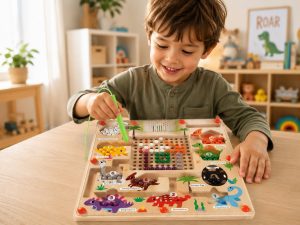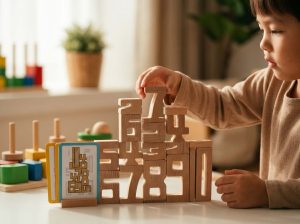
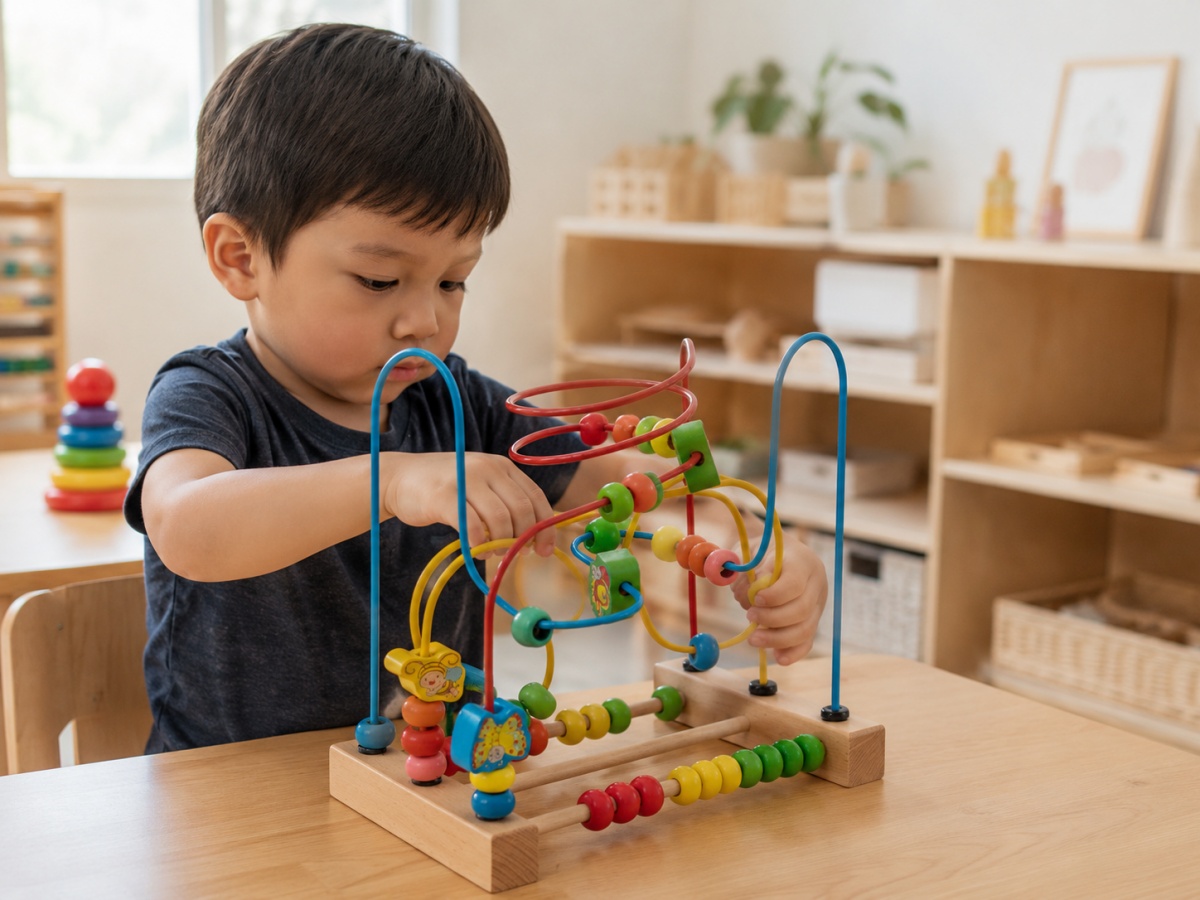
As parents and educators increasingly prioritize meaningful, screen-free learning experiences, Maze Toys have become one of the most popular categories of educational toys. Unlike passive entertainment, maze toys encourage children to observe, plan, experiment, and solve problems through hands-on play. These activities naturally combine cognitive challenges with physical movement, making them valuable tools in many homes, preschools, and early learning centers.
The growing interest in Maze Toys has also raised an important question: Are Maze Toys Good for Cognitive Development? Research in developmental psychology suggests that puzzle-based play can positively influence executive function, spatial reasoning, attention, and fine motor skills. At the same time, experts agree that the educational value depends on thoughtful product design, appropriate difficulty progression, and regular interaction rather than on any single toy alone.
This article objectively examines the evidence behind Maze Toys, explains the developmental benefits supported by current research, and discusses what manufacturers, educational brands, distributors, and retailers should consider when selecting high-quality educational maze toys.
Why Maze Toys Support Cognitive Development
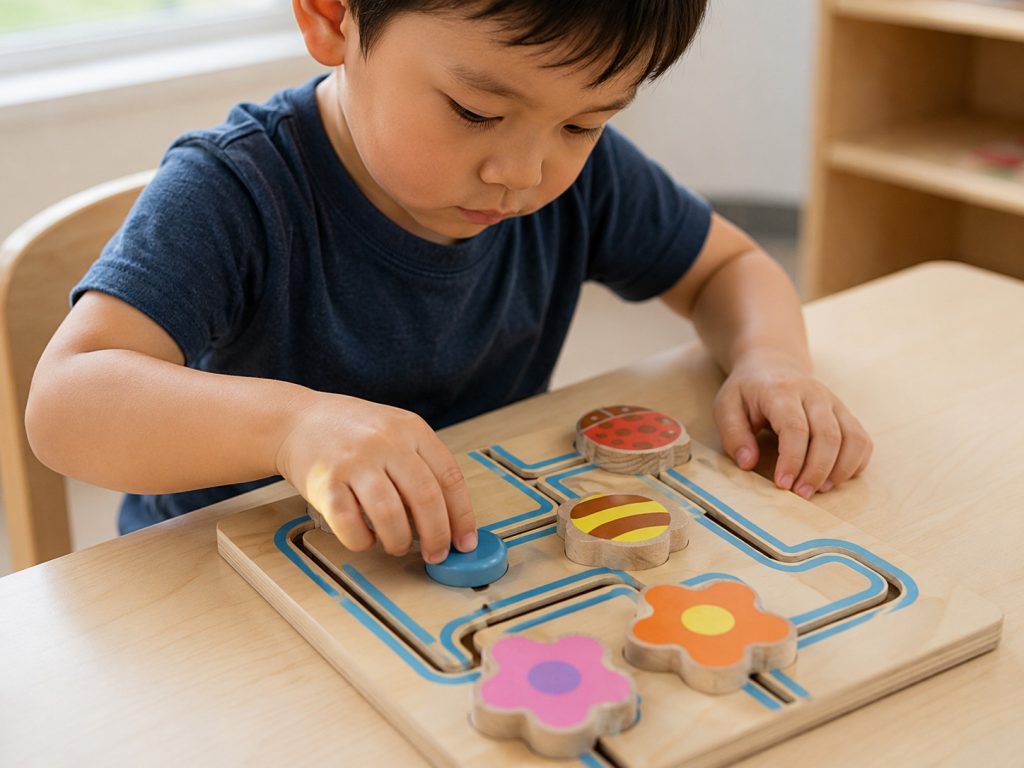
Unlike many toys that provide immediate visual or sound feedback, Maze Toys require children to think before taking action. Every movement involves evaluating possible routes, predicting outcomes, and adjusting strategies after encountering obstacles. This continuous decision-making process encourages active learning rather than passive observation.
Research suggests that children benefit from activities requiring repeated planning and self-correction because these experiences strengthen executive function, which includes working memory, flexible thinking, and self-control. A 2019 study published in Frontiers in Psychology also reported that puzzle play was associated with improvements in preschool children’s spatial transformation abilities, highlighting the connection between hands-on puzzles and cognitive growth.
Executive Function Develops Through Repeated Decision-Making
Every successful maze solution is built upon multiple small decisions. Children remember previous attempts, compare different routes, and gradually improve their strategy. These repeated adjustments strengthen planning skills while encouraging persistence instead of immediate success.
Spatial Reasoning Becomes Part of Everyday Play
Before moving a bead or guiding a ball through a pathway, children often visualize the route in advance. This process helps develop spatial awareness, directional understanding, and object relationships. Studies have consistently found that stronger spatial reasoning in early childhood is positively associated with later performance in mathematics, engineering, and other STEM-related disciplines.
How Maze Toys Improve Problem-Solving Skills
One of the greatest strengths of Maze Toys is that they encourage children to become active problem solvers. Rather than following fixed instructions, children discover solutions through observation, experimentation, and gradual improvement.
Researchers have found that trial-and-error learning encourages children to evaluate mistakes as part of the learning process instead of treating them as failure. Each unsuccessful attempt provides new information that helps children modify their strategy and continue exploring.
Concentration Improves During Structured Play
Completing a maze often requires sustained attention for several minutes without interruption. Compared with activities that offer constant stimulation, maze puzzles reward patience and careful observation. Many educators therefore include educational maze toys in classroom learning centers to encourage longer periods of focused engagement.
Independent Learning Builds Confidence
As children solve increasingly challenging maze puzzle toys without constant adult assistance, they gradually develop confidence in their own thinking. This independent exploration encourages curiosity while reducing reliance on direct instruction, making maze activities suitable for both classroom and home learning environments.
How Maze Toys Strengthen Fine Motor Skills and Early Learning
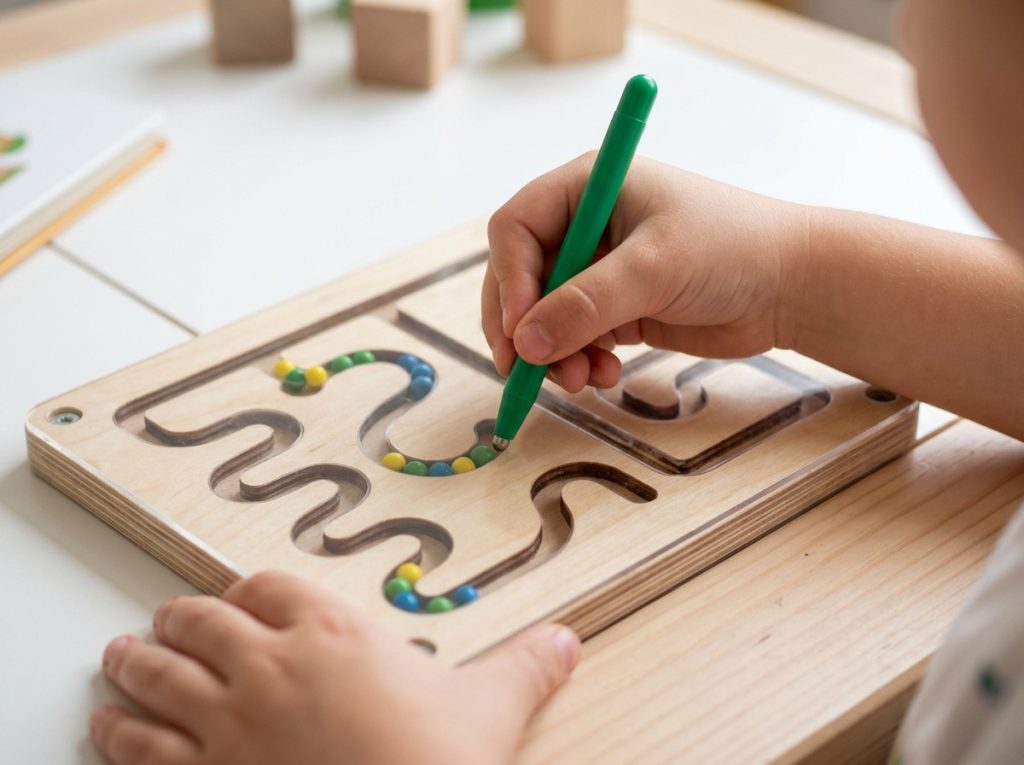
Cognitive development and physical coordination often develop together during early childhood. While solving a maze, children must coordinate eye movements with precise finger or wrist control. These repeated actions strengthen the small muscles required for handwriting, drawing, and many daily classroom activities.
The American Academy of Pediatrics has consistently emphasized the importance of hands-on play in supporting healthy child development. Activities combining visual attention with physical manipulation encourage children to actively explore their environment instead of simply consuming digital content.
Wooden maze toys, magnetic maze boards, and ball labyrinth puzzles each promote slightly different developmental skills while maintaining the same principle of active learning.
| Maze Toy Type | Recommended Age | Primary Development Focus |
| Wooden bead maze | 12–36 months | Hand-eye coordination and visual tracking |
| Magnetic maze board | 3–6 years | Pencil control, concentration, and early learning |
| Ball labyrinth puzzle | 5+ years | Spatial reasoning and logical planning |
| Logic maze games | 6+ years | Sequential thinking and problem-solving |
Rather than replacing reading, construction toys, or creative activities, Maze Toys work best as part of a balanced learning environment where children experience different types of cognitive challenges.
What Makes High-Quality Maze Toys More Effective?
Although many educational maze toys appear similar, manufacturing quality significantly influences both durability and learning effectiveness. Well-designed products maintain children’s interest by providing smooth movement, progressive difficulty, and comfortable handling.
Instead of relying on general marketing descriptions, experienced manufacturers increasingly provide measurable product specifications. For example, maze toys designed for children under three years old commonly use components larger than 32 mm to reduce choking risks. Quality wooden products often maintain a wood moisture content between 8% and 12%, helping minimize cracking and deformation during long-term use. Rounded corners with an approximate R3–R5 mm radius improve handling comfort, while precision CNC machining creates smoother maze pathways that reduce unnecessary friction during play.
These objective specifications allow buyers to compare products using clear standards rather than broad promotional language.
| Cognitive Skill | How Maze Toys Help | Research Findings |
| Executive function | Planning routes and adapting strategies | Developmental psychology research supports improvements in planning and self-regulation. |
| Spatial reasoning | Visualizing movement and direction | Preschool studies associate puzzle play with stronger spatial abilities. |
| Fine motor skills | Guiding beads, balls, or magnetic pieces | Occupational therapy research links repetitive precision movement with improved hand control. |
| Attention | Completing increasingly complex paths | Early learning studies suggest structured puzzles promote sustained concentration. |
How to Choose Maze Toys for Different Learning Environments
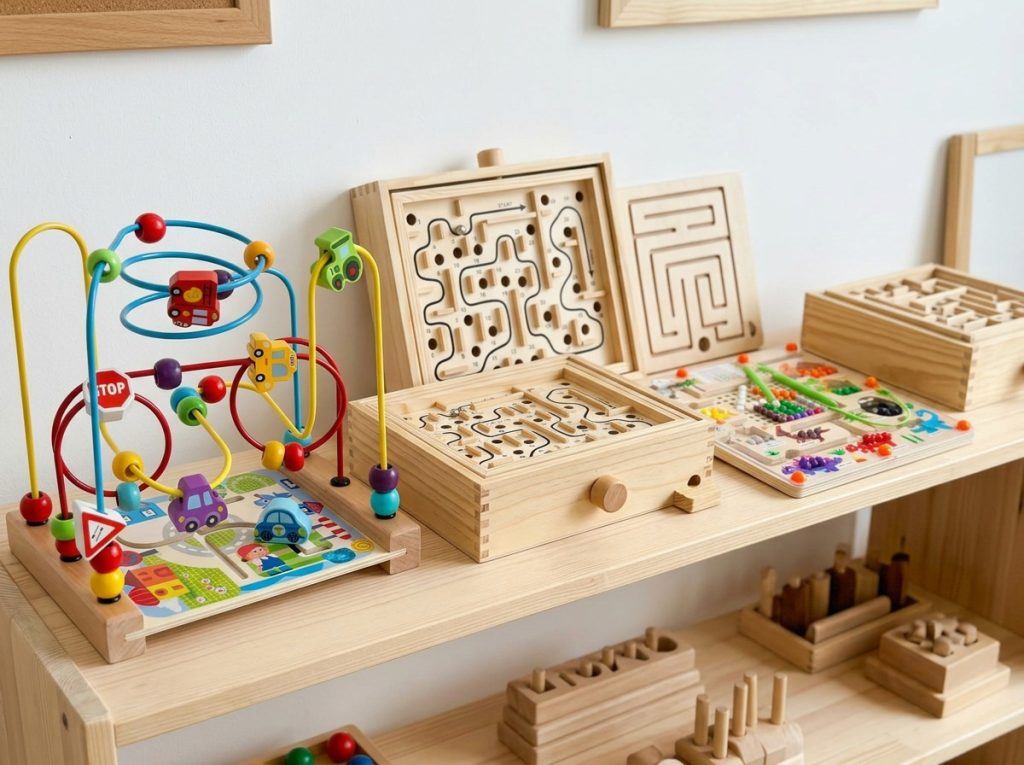
Selecting suitable Maze Toys involves more than choosing an attractive appearance. Parents may focus on developmental value, while schools and distributors often evaluate durability, consistency, and long-term educational performance.
Products featuring progressive levels of difficulty generally remain engaging for longer because children continue developing new skills as challenges increase. Clear visual layouts, comfortable manipulation, and durable construction also contribute to a better learning experience.
For educational brands and private-label customers, manufacturing capability is equally important. Reliable suppliers often provide customized colors, branding, packaging, and difficulty configurations to meet different market requirements while maintaining consistent production quality. These capabilities support stronger brand positioning and improve customer confidence across retail and educational markets.
Are Maze Toys Worth Adding to Educational Toy Collections?
Current research does not suggest that Maze Toys alone determine a child’s cognitive development. Healthy development depends on a combination of guided learning, physical activity, creative play, social interaction, and family involvement.
However, existing evidence consistently indicates that maze-based activities contribute to executive function, attention, problem-solving, spatial reasoning, and fine motor development. Because these skills are practiced simultaneously through enjoyable, hands-on activities, educational maze toys continue to be recommended by many teachers and early childhood practitioners as valuable learning resources.
For manufacturers, wholesalers, and educational brands, Maze Toys also represent a product category with lasting market demand. Their combination of educational value, repeat play potential, and customization opportunities makes them well suited for today’s growing educational toy industry.
FAQs
At what age can children start using Maze Toys?
Many simple wooden maze toys are designed for children from around 12 months of age, provided the components are appropriately sized for that developmental stage. More complex maze puzzle toys are generally introduced as children’s planning and motor skills continue to improve.
Are wooden Maze Toys better than plastic Maze Toys?
Neither material is inherently better. High-quality wooden maze toys are often selected for their durability and tactile experience, while well-designed plastic products may offer lightweight construction and more complex internal maze designs. Product quality, safety design, and educational value are more important than the material alone.
How do Maze Toys improve concentration?
Maze activities encourage children to remain focused while evaluating different paths and correcting mistakes. Because success depends on careful observation rather than speed, children naturally practice sustained attention throughout the activity.
Can Maze Toys support Montessori-inspired learning?
Many educational maze toys align well with Montessori-inspired learning principles because they encourage independent exploration, self-correction, hands-on interaction, and repeated practice. Their open-ended nature allows children to learn through experience instead of relying solely on adult instruction.
Conclusion
So, are Maze Toys good for cognitive development? Current research suggests they can play a meaningful role in supporting children’s cognitive growth when their design matches a child’s developmental stage and offers appropriate levels of challenge. Studies have associated puzzle-based play with improvements in executive function, spatial reasoning, attention, problem-solving, and fine motor skills, while emphasizing that these benefits are strongest when maze activities are combined with a broad range of learning experiences.
When evaluating Maze Toys, parents, educators, distributors, and educational brands should look beyond appearance alone. Progressive challenge levels, durable manufacturing, consistent product quality, and evidence-based educational design all contribute to long-term learning value. As demand for educational wooden toys, STEM toys, and early learning products continues to grow, well-designed Maze Toys remain an effective solution for supporting child development while creating lasting value for educational toy businesses.