
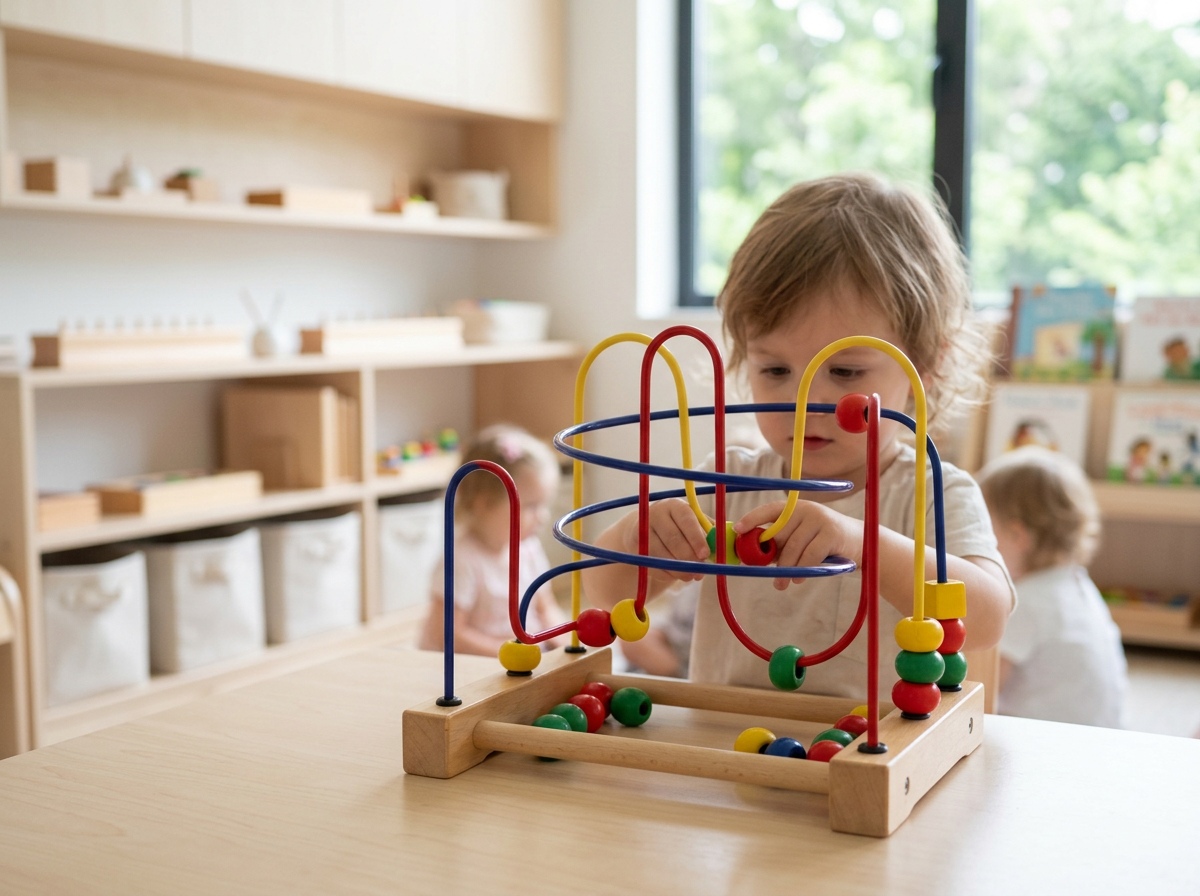
Maze toys have become a lasting category in the educational toy industry because they combine play with purposeful learning. From preschool classrooms to home learning environments, Maze Toys encourage children to solve problems through observation, movement, and repeated practice. Unlike toys that provide immediate answers, maze-based activities invite children to explore different solutions, helping them develop thinking skills at their own pace.
Educational researchers have long emphasized the value of hands-on learning during early childhood. According to the Harvard Center on the Developing Child, activities that require children to focus attention, remember information, and adjust their actions help strengthen executive function—an essential foundation for learning, behavior, and social development. Maze-based activities naturally support these processes because children must plan each movement while responding to changing situations.
At the same time, demand for educational maze toys has expanded beyond family purchases. Schools, Montessori classrooms, therapy centers, museums, and children’s activity spaces increasingly incorporate wooden maze toys and magnetic maze toys into their learning programs because they offer long-term educational value and high replayability. For educational brands, distributors, and retailers, Maze Toys have become an important product category that combines developmental benefits with broad market appeal.
This article explores the skills children can learn from Maze Toys, explains why these products continue to perform well in educational settings, and discusses the key factors buyers should evaluate when selecting high-quality maze toys for different markets.
Why Maze Toys Play an Important Role in Early Childhood Learning
At first glance, Maze Toys appear to be simple puzzles. In reality, every movement requires children to observe, predict, and make decisions before taking action. This combination of physical interaction and mental processing is one reason educators continue to recommend maze-based activities during the early years of development.
Unlike passive forms of entertainment, Maze Toys encourage active participation. Children receive immediate feedback from every decision they make. If a chosen path leads to a dead end, they naturally pause, reconsider the situation, and try another solution. This process strengthens independent thinking while keeping children engaged through curiosity rather than instruction.
Research published in Frontiers in Psychology has shown that puzzle-based learning activities can positively influence attention, cognitive flexibility, and problem-solving ability, particularly during preschool and early primary education. These findings help explain why maze activities remain widely used across different educational settings.
Today, manufacturers offer a wide variety of educational maze toys, each designed to support different stages of child development.
| Maze Toy Type | Primary Learning Focus | Common Educational Applications |
| Wooden Bead Maze | Hand-eye coordination and early motor development | Preschools, daycare centers, home learning |
| Magnetic Maze Toys | Pencil control and concentration | Montessori classrooms, occupational therapy |
| Ball Balance Maze | Logical thinking and patience | STEM activities and family learning |
| Three-Dimensional Maze Puzzle | Spatial reasoning and planning | Primary education and enrichment programs |
| Number or Alphabet Maze | Early literacy and numeracy | Kindergarten classrooms |
The growing popularity of Montessori maze toys also reflects a broader educational trend. Montessori learning encourages children to explore independently through carefully designed materials, and maze activities align naturally with this philosophy by allowing children to discover solutions through experience instead of direct instruction.
According to the Harvard Center on the Developing Child, experiences that encourage children to plan, focus attention, and adapt to challenges contribute to the development of executive function skills that support lifelong learning.
As educational expectations continue to evolve, Maze Toys remain relevant because they combine learning objectives with enjoyable play instead of treating them as separate experiences.
How Maze Toys Support Children’s Cognitive Development
Among the many educational toys available today, Maze Toys stand out because they encourage children to think before they act. Every challenge requires observation, planning, memory, and logical reasoning, allowing multiple cognitive skills to develop simultaneously through repeated play.
Children rarely complete a new maze immediately. Instead, they gradually learn to compare possible routes, recognize patterns, and remember previous attempts. This ongoing process exercises working memory while strengthening the ability to evaluate different solutions before making decisions.
Educational psychologists often describe these abilities as executive function skills, which include working memory, cognitive flexibility, and self-control. Research suggests that children who regularly participate in structured problem-solving activities often demonstrate stronger learning readiness during their early school years.
Instead of relying on trial and error alone, many children begin predicting outcomes before moving each piece. As they gain experience, they become more confident in evaluating situations and selecting efficient paths, demonstrating gradual improvement in analytical thinking.
Cognitive Skills Developed Through Maze Toys
Rather than teaching a single academic subject, Maze Toys help strengthen several interconnected thinking abilities that children continue using throughout school and daily life.
| Cognitive Skill | How Maze Toys Support Development |
| Logical reasoning | Children compare different pathways before making decisions. |
| Working memory | Previous attempts help guide future choices. |
| Spatial awareness | Children understand direction, position, and movement relationships. |
| Attention control | Completing a maze requires sustained concentration over time. |
| Cognitive flexibility | Children learn to adjust strategies when obstacles appear. |
These skills extend well beyond puzzle solving. The same abilities support mathematics, reading comprehension, scientific inquiry, and independent learning as children progress through school.
Another important advantage is that educational maze toys encourage children to become active participants in their own learning. Because the solution is discovered rather than explained, the learning experience often becomes more memorable.
Educators have also observed that children naturally increase the complexity of their thinking when they revisit familiar mazes. What initially requires careful experimentation gradually becomes an opportunity to improve speed, accuracy, and planning. This repeated engagement increases the long-term educational value of the toy while maintaining children’s interest over time.
How Maze Toys Improve Fine Motor Skills and Hand-Eye Coordination
While cognitive development receives considerable attention, the physical learning benefits of Maze Toys are equally significant. Every movement requires children to coordinate visual information with precise hand actions, creating opportunities to strengthen the small muscles needed for many everyday tasks.
When children guide beads along curved wires, control steel balls with a magnetic pen, or balance objects through narrow pathways, they continuously refine finger strength, wrist stability, and movement accuracy. These actions may appear simple, yet they contribute to the gradual development of fine motor coordination that supports handwriting, drawing, buttoning clothing, and using classroom tools.
The American Academy of Pediatrics has consistently emphasized the importance of active, hands-on play for healthy childhood development. Activities that combine movement with focused attention provide valuable opportunities for children to practice physical control while remaining mentally engaged.
For this reason, wooden maze toys and magnetic maze toys are frequently used by occupational therapists, early learning centers, and special education professionals. Instead of repetitive exercises, children experience motor practice within an enjoyable activity that encourages continuous participation.
Why Repeated Practice Makes a Difference
Fine motor development does not happen overnight. It improves gradually through consistent opportunities to perform small, controlled movements.
Maze activities naturally provide this repetition without becoming monotonous. As children complete increasingly challenging paths, they refine their movements almost without realizing they are practicing.
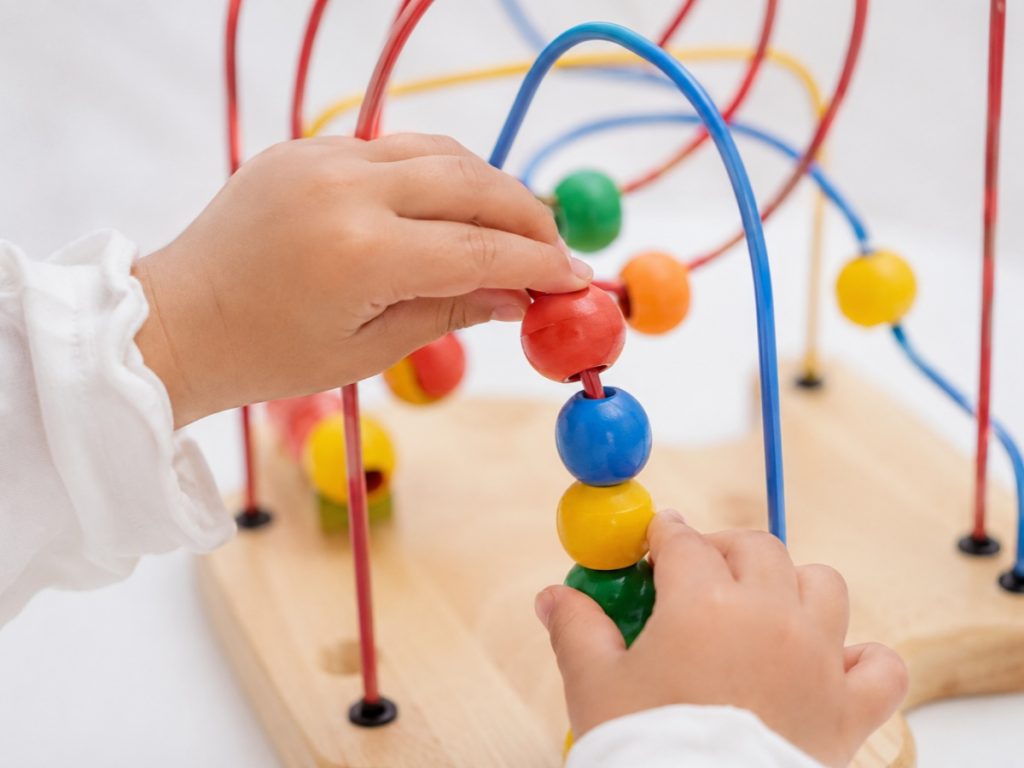
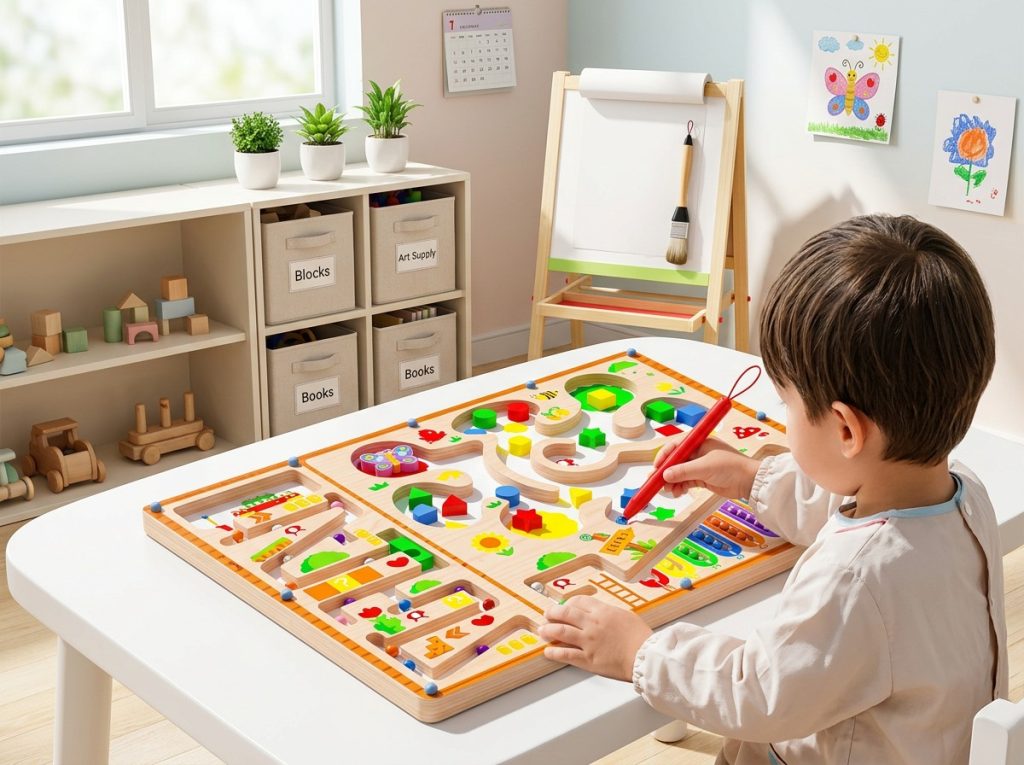
For example, a toddler using a wooden bead maze repeatedly adjusts hand position while following curved metal tracks. A preschool child using a magnetic maze board learns to maintain steady pressure with a magnetic stylus while carefully guiding steel balls through narrow channels. Although the activities differ, both encourage smoother, more coordinated movements over time.
Product design also plays an important role in the learning experience. A high-quality wooden maze toy intended for toddlers may feature beech wood panels measuring approximately 220 × 180 mm, with colorful beads exceeding 35 mm in diameter for easier grasping and safer manipulation. A magnetic maze toy designed for preschool learners may include an enclosed acrylic panel with 5 mm steel balls and a securely attached magnetic stylus, allowing repeated classroom use while minimizing loose components.
These measurable design characteristics provide schools, distributors, and educational brands with more meaningful evaluation criteria than general promotional claims. They also demonstrate how thoughtful engineering can directly support children’s developmental needs.
As demand for fine motor skill toys and STEM learning toys continues to grow worldwide, Maze Toys remain one of the few educational products capable of developing both physical coordination and cognitive abilities through the same engaging activity.
Why Maze Toys Help Children Build Problem-Solving Skills
Problem-solving is one of the most valuable abilities children develop during their early years, and Maze Toys provide an engaging way to practice it. Every maze presents a small challenge that encourages children to observe, think ahead, and make decisions based on the information available. Over time, they become more comfortable analyzing situations instead of relying on immediate guidance.
Researchers in early childhood education have found that inquiry-based learning encourages children to retain knowledge more effectively because they actively participate in discovering solutions. Maze activities reflect this learning approach by allowing children to test ideas, recognize mistakes, and refine their strategies through experience.
Children also begin to understand that reaching the correct solution is often a gradual process. Encountering an obstacle simply means that another route needs to be explored. This mindset encourages perseverance and helps children develop confidence when facing unfamiliar challenges in both academic and everyday situations.
Learning Through Exploration Instead of Memorization
The educational value of Maze Toys comes from the thinking process rather than the final result. Every attempt provides new information that helps children improve their next decision.
For example, when navigating a magnetic maze, a child may initially choose the shortest-looking path only to discover it leads to a dead end. On the next attempt, the child remembers that experience, compares alternative routes, and reaches the destination more efficiently. This continuous cycle of observation, reflection, and adjustment strengthens independent thinking far more effectively than simply being shown the correct answer.
Because children can revisit the same maze multiple times, they also begin experimenting with different strategies, improving planning skills while becoming more confident in making decisions independently.
How to Choose High-Quality Maze Toys for Educational and Commercial Value
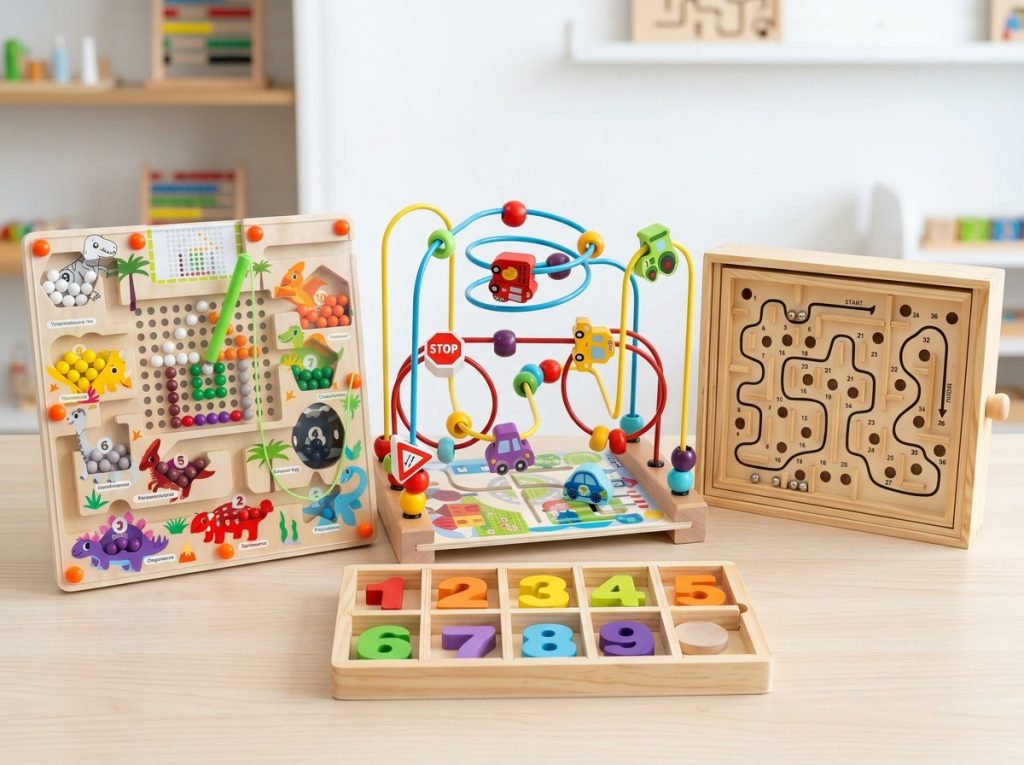
As the global educational toy market continues to expand, buyers are placing greater emphasis on learning outcomes, product durability, and long-term value. Whether purchasing for a classroom, retail collection, or educational brand, selecting well-designed Maze Toys requires more than comparing colors or packaging.
High-quality educational maze toys are typically designed around specific developmental objectives. Smooth movement, progressive difficulty, and durable construction allow children to stay engaged while gradually building new skills. A maze that is too simple may quickly lose its appeal, while one that is overly complex can discourage continued exploration.
For distributors and retailers, product consistency is equally important. Reliable manufacturing quality reduces after-sales issues and helps establish trust with schools, educational institutions, and family consumers.
| Evaluation Factor | Why It Matters |
| Progressive difficulty | Encourages long-term engagement as children’s abilities improve. |
| Durable construction | Supports repeated daily use in classrooms and play areas. |
| Age-appropriate dimensions | Makes manipulation easier for different developmental stages. |
| Smooth-moving components | Creates a more enjoyable learning experience. |
| Clear educational purpose | Helps teachers and parents select suitable learning materials. |
Many educational buyers also pay close attention to product specifications. For example, information such as panel dimensions, bead diameter, enclosed magnetic structures, or recommended age range provides practical guidance that is more valuable than broad marketing descriptions.
For businesses sourcing wooden maze toys, consistency in craftsmanship, stable material quality, and production reliability often become key purchasing considerations. Buyers looking for custom maze toys may also evaluate whether a manufacturer can support OEM or ODM development, customized colors, educational themes, bilingual packaging, or private-label branding for different international markets.
As demand for Montessori learning materials and STEM learning toys continues to grow, manufacturers that combine thoughtful educational design with dependable production capabilities are increasingly favored by distributors and educational brands.
Why Educational Brands Continue to Invest in Maze Toys
The popularity of Maze Toys is not simply driven by consumer trends. Their continued presence in schools, childcare centers, museums, and educational retail stores reflects their ability to deliver measurable learning value while remaining highly versatile.
Many educational institutions prefer products that encourage repeated use instead of one-time entertainment. Because children revisit maze activities as their skills improve, the same product can remain relevant for months or even years. This long-term usability makes maze products an attractive investment for classrooms with limited educational budgets.
Educational retailers have also observed growing interest in products that combine multiple developmental benefits within a single activity. Maze Toys meet this expectation by supporting cognitive development, fine motor coordination, concentration, and problem-solving without requiring screens or batteries.
For educational brands, choosing an experienced maze toy manufacturer can also create additional market opportunities. Many international buyers now seek suppliers capable of offering:
- OEM and ODM product development
- Private-label manufacturing
- Customized educational themes
- Market-specific packaging and multilingual instructions
- Consistent production quality for long-term cooperation
These services allow distributors and retailers to differentiate their product lines while responding more effectively to regional educational preferences.
As schools increasingly emphasize hands-on learning, and parents continue looking for meaningful alternatives to digital entertainment, the long-term market outlook for educational maze toys remains positive.
Frequently Asked Questions About Maze Toys
What age are Maze Toys suitable for?
Different Maze Toys are designed for different stages of child development. Simple wooden bead mazes are commonly introduced from around 18 months, while magnetic mazes, number mazes, and more complex labyrinth puzzles are typically designed for preschool and primary school children. Buyers should always refer to the manufacturer’s recommended age range and product specifications.
How do Maze Toys improve fine motor skills?
Maze activities encourage children to perform small, controlled hand movements while visually tracking objects through different pathways. Repeated practice strengthens finger dexterity, hand-eye coordination, wrist stability, and grip control, all of which contribute to everyday tasks such as writing, drawing, and using classroom tools.
Are wooden maze toys better than plastic maze toys?
Both materials can provide excellent learning experiences when thoughtfully designed. Many educational institutions choose wooden maze toys because of their durability and long service life, while some magnetic maze toys use transparent acrylic structures that allow enclosed gameplay and easy classroom maintenance. The overall educational design is usually more important than the material alone.
Can Maze Toys be used in Montessori classrooms?
Yes. Many Montessori maze toys align well with Montessori teaching principles because they encourage self-directed exploration, concentration, and independent problem-solving. Children learn through direct interaction with the materials while receiving immediate feedback from their own actions.
Conclusion
Maze Toys continue to demonstrate that effective learning does not need to be complicated. Through simple but carefully designed challenges, children develop logical reasoning, concentration, fine motor coordination, spatial awareness, and independent problem-solving skills while remaining actively engaged in play. Research from leading child development organizations continues to support the value of hands-on learning experiences that strengthen executive function during early childhood.
As demand for educational maze toys, wooden maze toys, and Montessori learning materials continues to grow worldwide, buyers are placing greater emphasis on products that combine meaningful educational outcomes with reliable manufacturing quality. Product specifications, thoughtful design, durability, and progressive learning features have become more important purchasing factors than general marketing claims.
For educational brands, distributors, and retailers, partnering with an experienced maze toy manufacturer offers opportunities to develop products that meet the needs of different markets through OEM, ODM, and customized solutions. By combining child-centered design with consistent production standards, high-quality Maze Toys continue to deliver lasting value for both young learners and the businesses that serve the global educational toy industry.