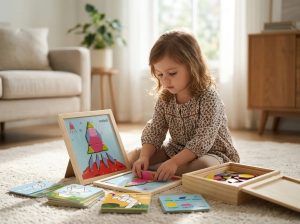
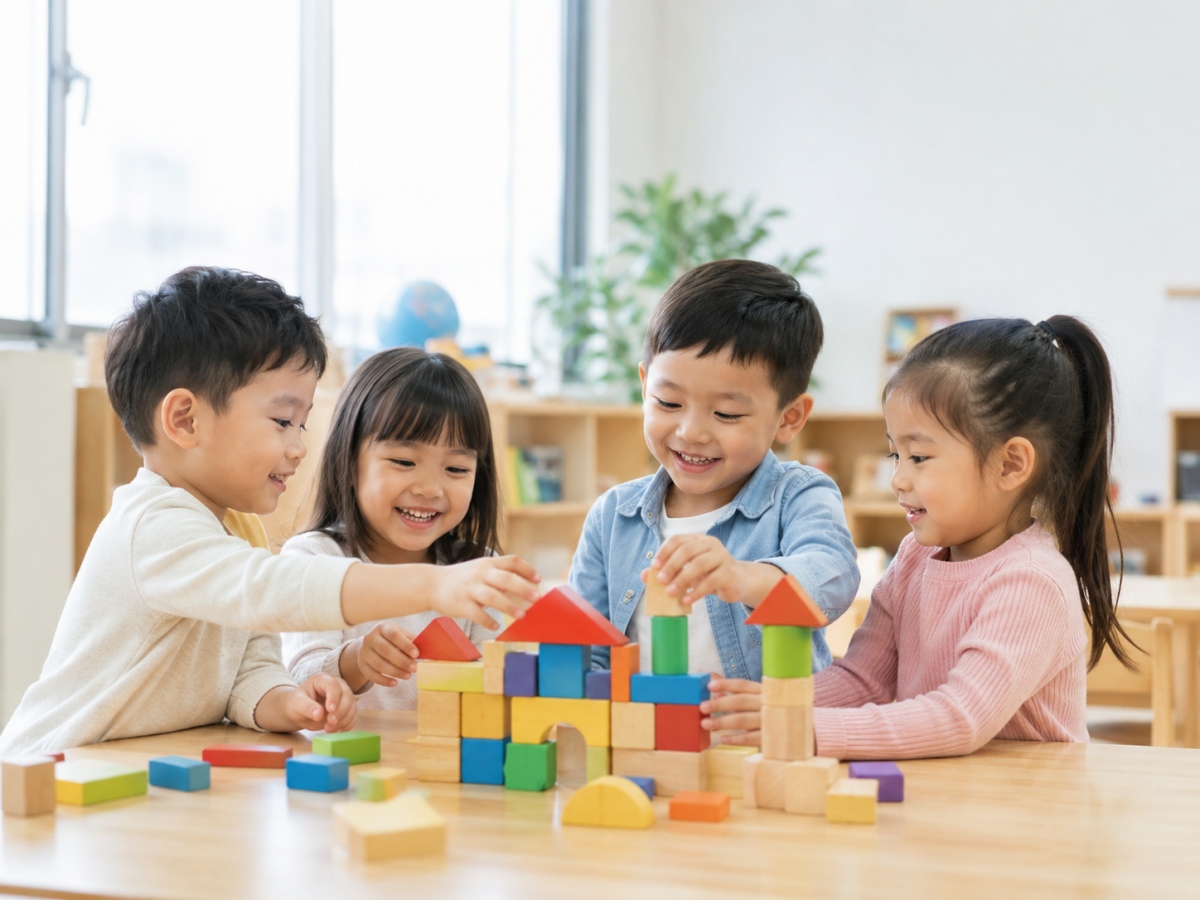
Educational toys have evolved rapidly over the past decade, yet Building Blocks continue to play a central role in early childhood education. While digital learning products have become increasingly common, educators and parents continue to choose traditional construction toys because of their proven educational value and long-term developmental benefits.
Many educators and parents ask why Building Blocks have remained one of the most recommended educational toys despite the growing variety of interactive learning products. The answer lies in their ability to combine creativity, exploration, and practical learning within a single activity. Instead of passively receiving information, children actively build, test, adjust, and solve problems, creating meaningful learning experiences that can be applied across multiple developmental stages.
According to the National Association for the Education of Young Children (NAEYC), block play supports children’s development in areas such as mathematical thinking, language acquisition, social interaction, and executive function. Similarly, the Harvard Center on the Developing Child highlights that hands-on, play-based experiences strengthen brain architecture during early childhood by encouraging active exploration and responsive learning environments. These findings help explain why Building Blocks, including wooden building blocks and STEM building blocks, continue to be widely adopted in homes, classrooms, and educational programs around the world.
For schools, educational institutions, retailers, and distributors, Building Blocks also remain one of the most reliable product categories because they combine educational value with stable market demand and long-term usability.
How Building Blocks Improve Cognitive Development
Researchers have long recognized that children understand abstract concepts more effectively when they can manipulate physical objects. According to research published by the National Association for the Education of Young Children (NAEYC), constructive block play strengthens spatial reasoning, mathematical thinking, and early problem-solving by encouraging children to explore relationships between shape, size, balance, and structure.
While building, children continuously observe, predict outcomes, test ideas, and modify their designs when something does not work as expected. This process develops logical thinking while encouraging creativity and independent decision-making. Longitudinal studies in early childhood education have also found that strong spatial skills developed through block play are associated with later achievement in mathematics and engineering-related subjects.
Hands-on Learning Creates Better Knowledge Retention
The Harvard Center on the Developing Child emphasizes that young children learn most effectively through active experiences that engage multiple senses. Building with Building Blocks combines observation, movement, communication, and problem-solving within one activity, helping children develop deeper understanding while remaining actively involved throughout the learning process.
How Building Blocks Support STEM Learning
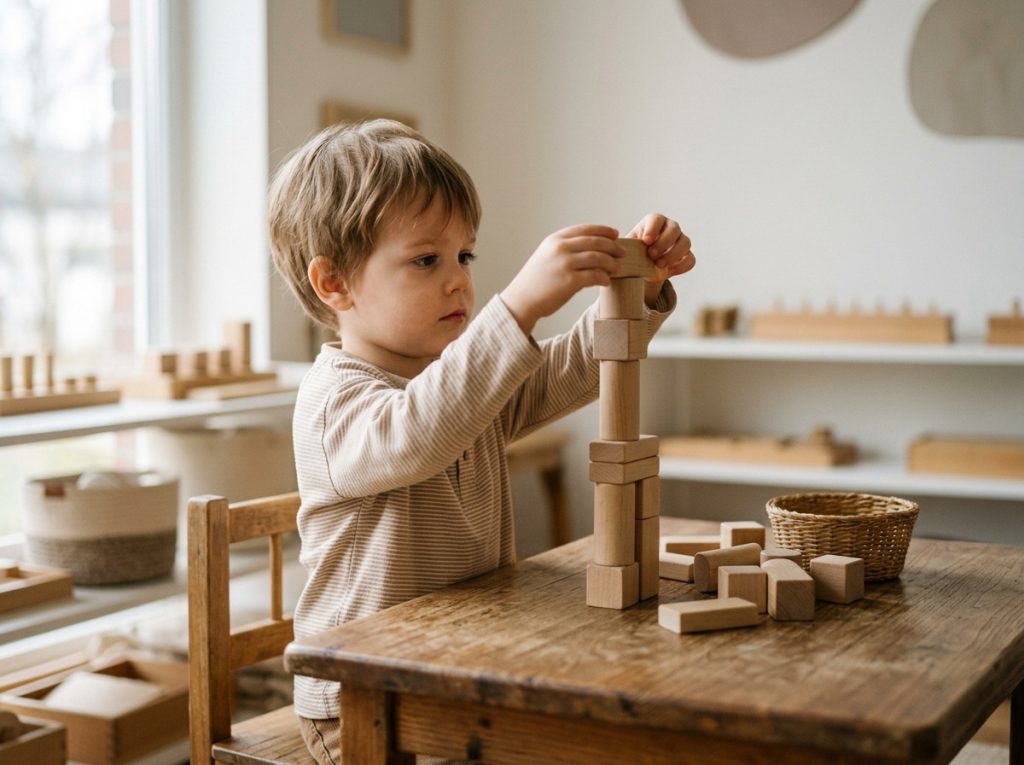
As STEM education receives increasing attention worldwide, many educators introduce engineering concepts during the preschool years. Building Blocks provide an effective starting point because they encourage children to investigate stability, balance, measurement, symmetry, and structural design through practical exploration rather than memorization.
Unlike many single-purpose toys, construction toys allow children to experiment with different solutions for the same challenge. This open-ended learning process closely reflects the engineering design cycle of planning, testing, evaluating, and improving ideas. As a result, STEM building blocks have become common learning materials in classrooms, childcare centers, maker spaces, and after-school programs.
Educational research consistently suggests that children develop stronger confidence when they are encouraged to solve problems independently rather than simply following fixed instructions. This flexibility makes Building Blocks valuable learning tools that can adapt to different teaching methods and educational philosophies.
How Building Blocks Support Physical and Social Development
The educational benefits of Building Blocks extend beyond cognitive growth. Repeatedly grasping, rotating, aligning, and stacking blocks helps strengthen fine motor control and hand-eye coordination, both of which contribute to later handwriting and everyday practical skills.
Collaborative construction activities also encourage meaningful communication. When children work together to complete larger projects, they naturally exchange ideas, negotiate solutions, and share responsibilities. These experiences help develop teamwork, confidence, and communication skills while maintaining high levels of engagement.
Because of these advantages, preschool learning toys that encourage cooperative construction continue to play an important role in classrooms, learning centers, and home education environments.
How to Choose High-Quality Building Blocks for Educational Use
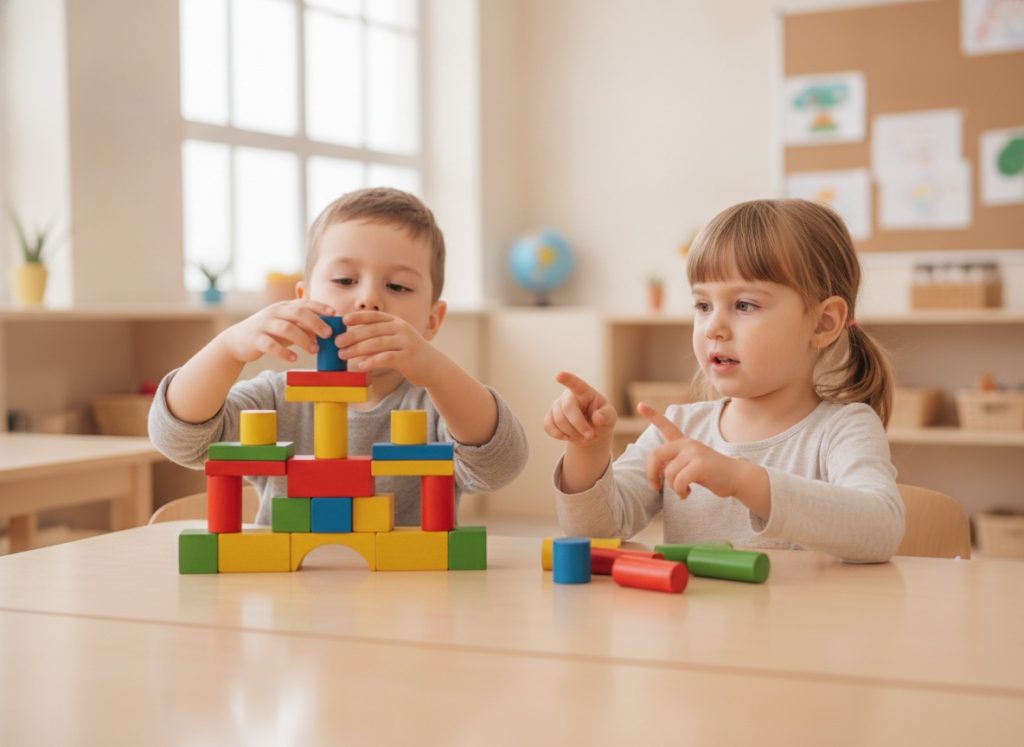
Selecting suitable educational building blocks involves more than comparing appearance or price. Schools, retailers, and distributors increasingly evaluate measurable product specifications because they directly influence durability, user experience, and long-term educational value.
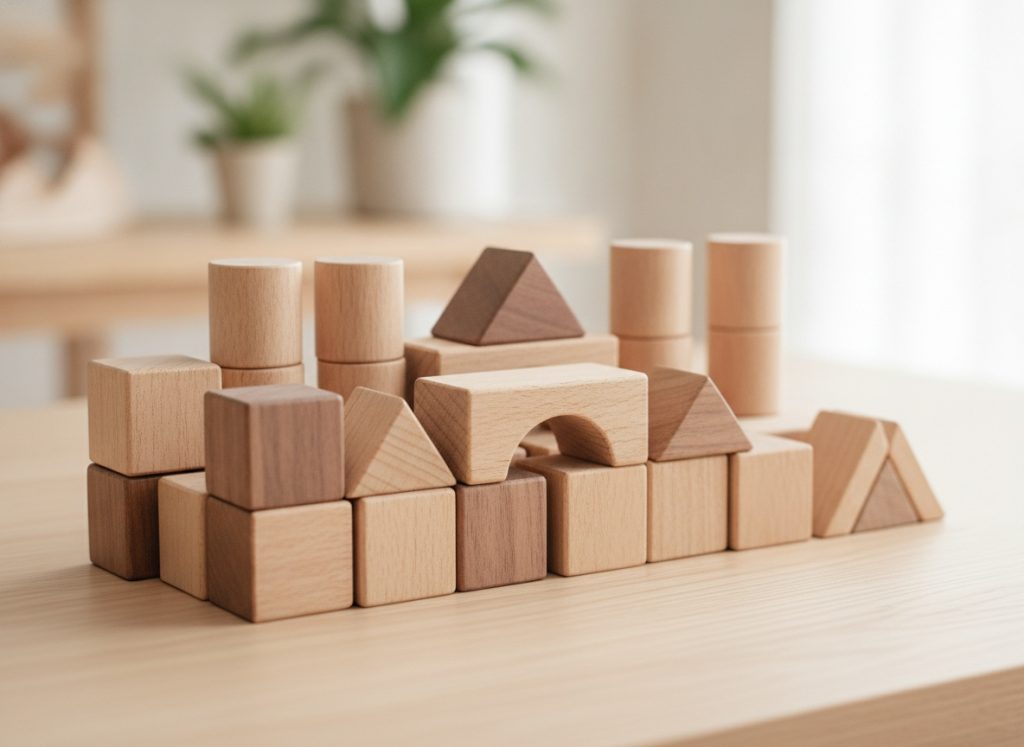
For example, classroom sets containing approximately 100–300 pieces generally provide greater flexibility for group activities and creative construction. Solid hardwood blocks with a thickness of around 20–30 mm are commonly selected for frequent educational use because they withstand repeated handling, while precision-cut dimensions help improve stacking stability. Smooth polished edges also provide a more comfortable experience during daily classroom activities.
Professional buyers also pay close attention to manufacturing capability. A reliable supplier should be able to maintain consistent product dimensions across production batches, implement standardized quality inspections, and provide stable lead times for international orders. For brands developing their own product lines, flexible OEM and ODM services, customized packaging, logo printing, and product configuration options are increasingly important for meeting different market requirements.
As an experienced manufacturer of wooden educational toys, we support OEM and ODM projects for educational brands, distributors, wholesalers, and retailers. Our production team works closely with customers on product development, packaging customization, and quality consistency, helping partners create educational toy collections that align with their brand positioning and procurement objectives.
Why Building Blocks Continue to Generate Strong Market Demand
Industry data indicates that demand for Building Blocks remains steady across schools, childcare centers, educational retailers, and therapy organizations. One important reason is their versatility. A single set can support creative play, language development, mathematics, collaborative learning, and STEM education, allowing educators to use the same product in a variety of teaching scenarios.
Growing consumer interest in early learning toys has also contributed to sustained market demand. Parents increasingly value products that encourage independent thinking and active participation rather than passive entertainment, while educational institutions continue to prioritize learning materials that can be integrated into multiple classroom activities over many years of use.
For educational brands and importers, this stable demand creates long-term business opportunities. Manufacturers capable of delivering consistent quality, flexible customization, and dependable production schedules are better positioned to support customers seeking reliable supply partners instead of short-term purchasing options.
Conclusion
Building Blocks remain one of the most valuable educational toys because they combine cognitive development, STEM learning, creativity, communication, and fine motor practice within meaningful hands-on activities. Findings from organizations such as NAEYC and the Harvard Center on the Developing Child continue to reinforce the educational value of constructive play, making Building Blocks an important resource for both classrooms and home learning environments.
For educational brands, distributors, retailers, and institutional buyers, investing in high-quality Building Blocks is about more than expanding a product range. It is an opportunity to provide learning materials with proven educational value, reliable performance, and lasting market appeal. If you are looking for a manufacturing partner with experience in wooden building blocks, flexible OEM/ODM services, customized packaging solutions, and consistent production quality, working with an experienced supplier can help your business respond to growing global demand while building long-term customer trust.