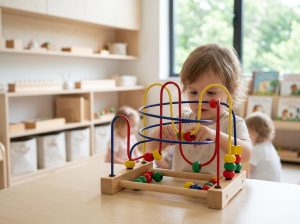
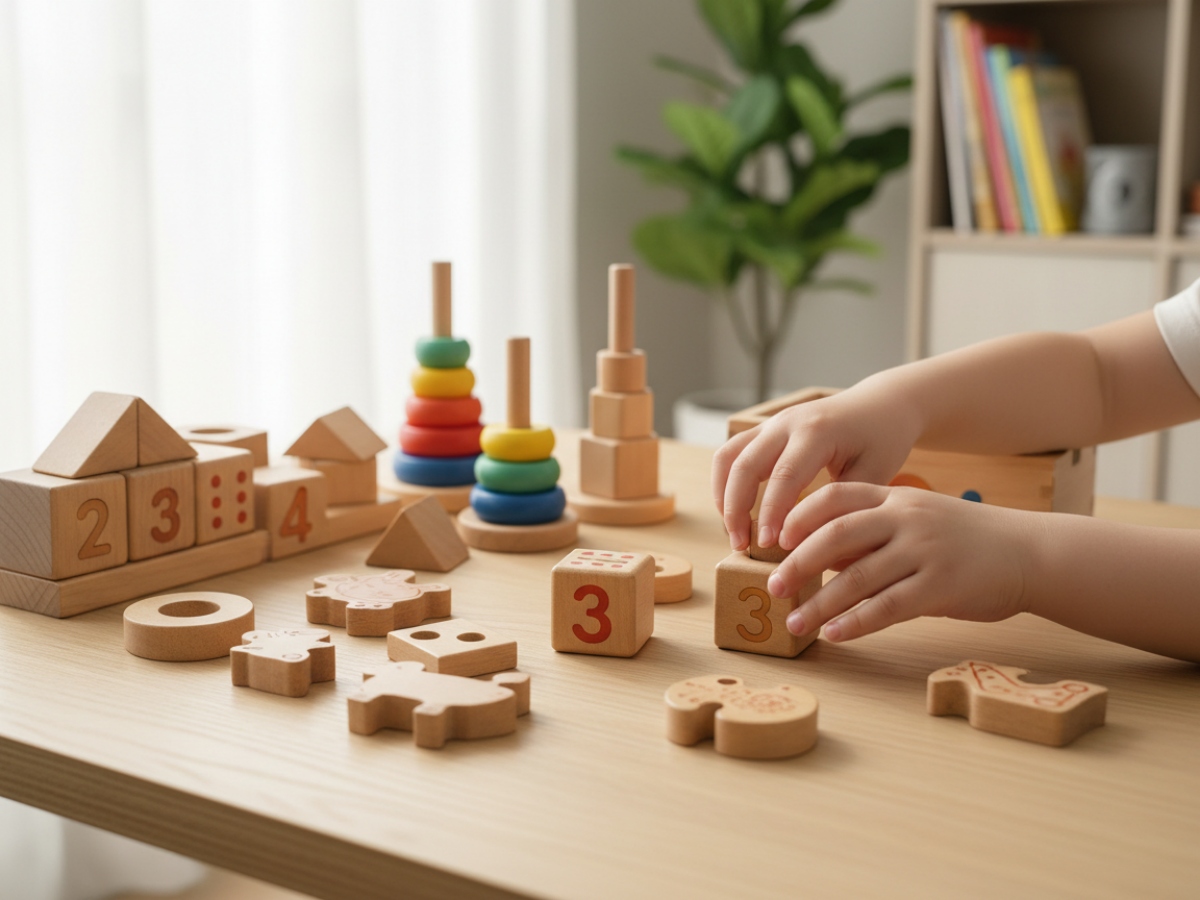
Choosing the right educational toy is becoming increasingly important for parents, educators, and toy brands. Many buyers are now asking a practical question: Are wooden educational toys better for sensory development compared with traditional plastic learning products?
During early childhood, children do not learn only through observation or instruction. They build understanding by touching objects, moving pieces, testing ideas, and discovering relationships between different elements.
Unlike electronic toys that often provide fixed responses, well-designed wooden learning products encourage children to participate actively. Activities such as stacking, sorting, matching, building, and problem-solving allow children to explore concepts through hands-on experiences.
Research in early childhood education indicates that active manipulation of objects can support important developmental processes, including fine motor coordination, spatial awareness, and problem-solving ability. However, the educational value of a toy depends on its design, learning purpose, and interaction method rather than the material alone.
This article explores how wooden educational toys support sensory development, why they are increasingly used in preschool learning environments, and how educational brands can evaluate these products when developing their own toy collections.
How Wooden Educational Toys Support Sensory Development
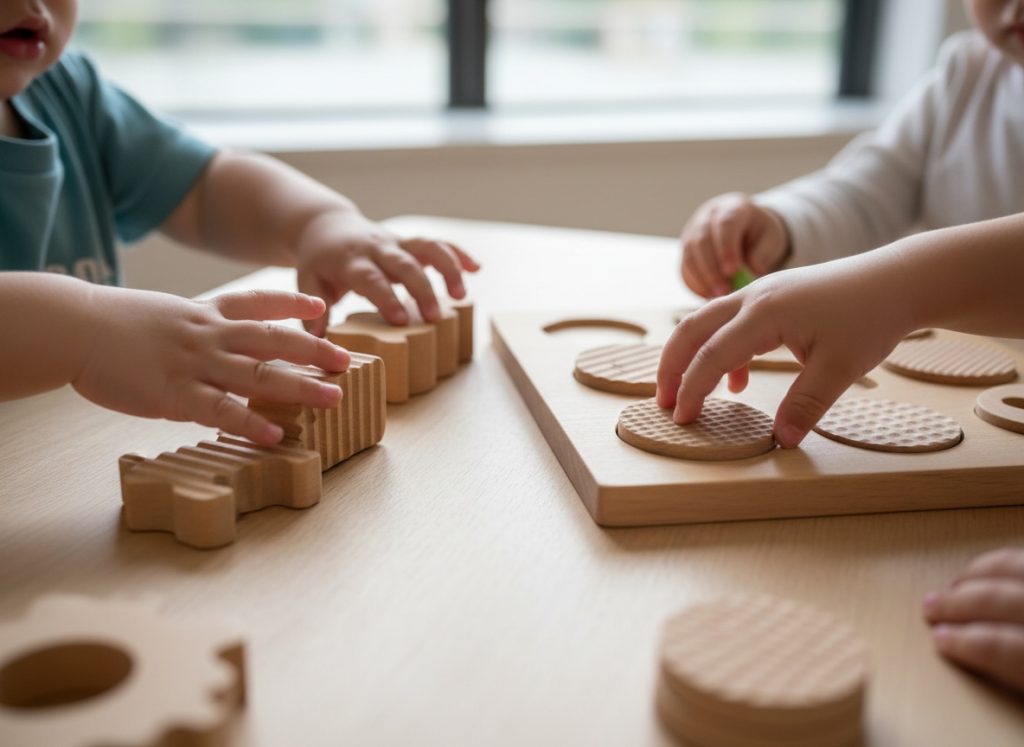
Sensory development refers to how children receive and process information through touch, sight, movement, sound, and body awareness.
During the preschool stage, children naturally learn through exploration. They observe differences, test possibilities, and gradually build understanding through repeated interaction with objects around them.
Tactile Learning Through Physical Interaction
One of the key advantages of wooden educational toys is the tactile experience they provide.
When children hold wooden blocks, move puzzle pieces, or arrange sorting objects, they experience differences in shape, weight, texture, and resistance. These physical signals encourage children to adjust their movements and understand how objects respond.
For example, building with wooden blocks requires children to consider balance and structure. Completing a wooden puzzle involves recognizing shapes and controlling hand movements. Sorting activities require children to compare characteristics and organize objects according to specific rules.
Studies on child development suggest that these hands-on activities can strengthen the connection between sensory input and cognitive processing because children actively participate in creating solutions.
Multi-Sensory Experiences Encourage Active Learning
Children often understand abstract ideas more easily when they can interact with physical materials.
A wooden number block set, for instance, allows children to combine visual recognition with physical counting activities. A magnetic pattern block set enables children to create shapes while developing spatial awareness. Sorting toys connect colors, categories, and movement through practical play.
This type of learning experience transforms toys from simple entertainment products into tools that encourage exploration.
Educational researchers have highlighted that active learning environments can improve engagement because children are involved in discovering answers rather than simply receiving information.
For this reason, many preschool educators include wooden educational toys in classroom activities designed around mathematics, creativity, and problem-solving.
Wooden Educational Toys and Fine Motor Skill Development

Fine motor skills involve precise movements of the hands and fingers. These abilities influence many everyday activities, including writing, drawing, using tools, and completing practical tasks.
Many educational toys are designed around repeated hand movements that gradually improve control and coordination.
Building Hand-Eye Coordination Through Play
Activities such as placing, connecting, arranging, and balancing require children to coordinate what they see with how they move.
A wooden maze toy requires controlled movement while following a pathway. Building blocks require children to adjust positions and maintain balance. Puzzle activities encourage children to analyze shapes before selecting the correct placement.
Although these actions appear simple, they involve multiple learning processes, including attention, planning, and movement control.
Research in early childhood education shows that manipulative play activities can contribute to stronger hand-eye coordination because children repeatedly practice responding to visual information through physical actions.
Open-Ended Play Creates Long-Term Learning Value
Another reason wooden educational toys remain popular among families and educators is their open-ended design.
Many toys provide a fixed method of play. Once children understand the operation, the learning experience may become limited. Open-ended wooden toys create more possibilities because children can decide how to use them.
A set of wooden blocks can become a counting exercise, a construction challenge, or a storytelling activity. Magnetic pattern blocks can be used to copy designs or create completely new combinations.
This flexibility encourages creativity and independent thinking while allowing children to revisit the same product with different learning goals.
Why Educational Brands Are Investing in Wooden Learning Products
The educational toy market is shifting toward products that provide clearer learning value. Retailers, schools, and toy companies are increasingly looking for products that combine play experiences with recognizable developmental benefits.
For educational brands, wooden educational toys offer opportunities to build product collections around specific learning themes, including mathematics, logic, creativity, and sensory exploration.
Connecting Toy Design With Learning Objectives
Successful educational products usually begin with a clear learning purpose.
A wooden sorting toy is not simply a colorful activity. Its design can support classification skills, color recognition, and hand coordination. A wooden math toy can help children visualize numbers instead of only memorizing concepts.
For example, different educational toy categories can support different learning goals:
| Product Category | Learning Focus |
|---|---|
| Wooden number blocks | Counting, early mathematics, pattern recognition |
| Magnetic fraction teaching aids | Visual understanding of mathematical relationships |
| Magnetic pattern blocks | Creativity, spatial awareness, logical thinking |
| Wooden maze toys | Concentration, planning, hand control |
For brands developing preschool product lines, this educational positioning creates stronger communication with parents, schools, and retailers because the purpose of each product is clear.
Wooden Educational Toys vs Plastic Toys: Understanding Their Learning Differences
When comparing educational toys, the most important question is not simply whether one material is better than another. The real difference comes from how a product encourages children to interact, explore, and develop skills through play.
Both wooden and plastic toys can provide learning value when they are designed with clear educational goals. However, wooden educational toys often focus more on physical interaction, problem-solving, and open-ended exploration.
Wooden toys usually provide direct sensory feedback during play. Children can feel the weight of a block, adjust the position of a puzzle piece, or understand how different shapes fit together. These experiences encourage children to connect physical actions with thinking processes.
Plastic toys may include more complex functions, electronic elements, or interactive features. However, many wooden learning products are designed around active participation, allowing children to create solutions rather than simply follow programmed instructions.
| Comparison Area | Wooden Educational Toys | Plastic Educational Toys |
|---|---|---|
| Interaction style | Encourages building, sorting, matching, and exploration | Often focuses on specific functions or structured activities |
| Sensory experience | Provides physical feedback through texture, weight, and movement | Depends on product structure and additional features |
| Learning approach | Often supports open-ended discovery | Commonly follows predefined play patterns |
| Product positioning | Frequently connected with hands-on and Montessori-inspired learning | Often emphasizes technology or entertainment functions |
Studies in early childhood education indicate that meaningful interaction plays an important role in learning development. Toys that encourage children to test ideas, adjust actions, and discover solutions can create stronger engagement.
Therefore, the educational value of a toy should be evaluated through its design and learning purpose rather than material alone.
How to Choose Effective Wooden Educational Toys for Learning Development
With the increasing demand for educational products, parents, schools, and retailers are paying more attention to product design, learning objectives, and long-term play value.
A successful educational toy should not only attract children’s attention but also encourage meaningful interaction.
Evaluate the Learning Purpose Behind the Design
A well-designed toy usually has a clear developmental purpose.
For example, a wooden puzzle is not only a matching activity. It encourages children to recognize shapes, analyze relationships, and improve concentration. A sorting toy can introduce early classification concepts by allowing children to compare colors, sizes, and categories.
For educational brands, products with clear learning functions are easier to position in the market because customers can understand the educational value behind each product.
Balance Challenge and Independent Exploration
Effective learning products provide enough challenge to encourage progress while remaining accessible during play.
A building toy may begin with simple stacking activities and gradually develop into more complex construction tasks. A mathematics learning toy may introduce basic counting before supporting more advanced concepts.
This gradual progression helps children experience achievement through exploration.
Research on child learning environments suggests that activities requiring children to make decisions and solve problems can support independent thinking and engagement.
Why Wooden Educational Toys Create Opportunities for Educational Brands
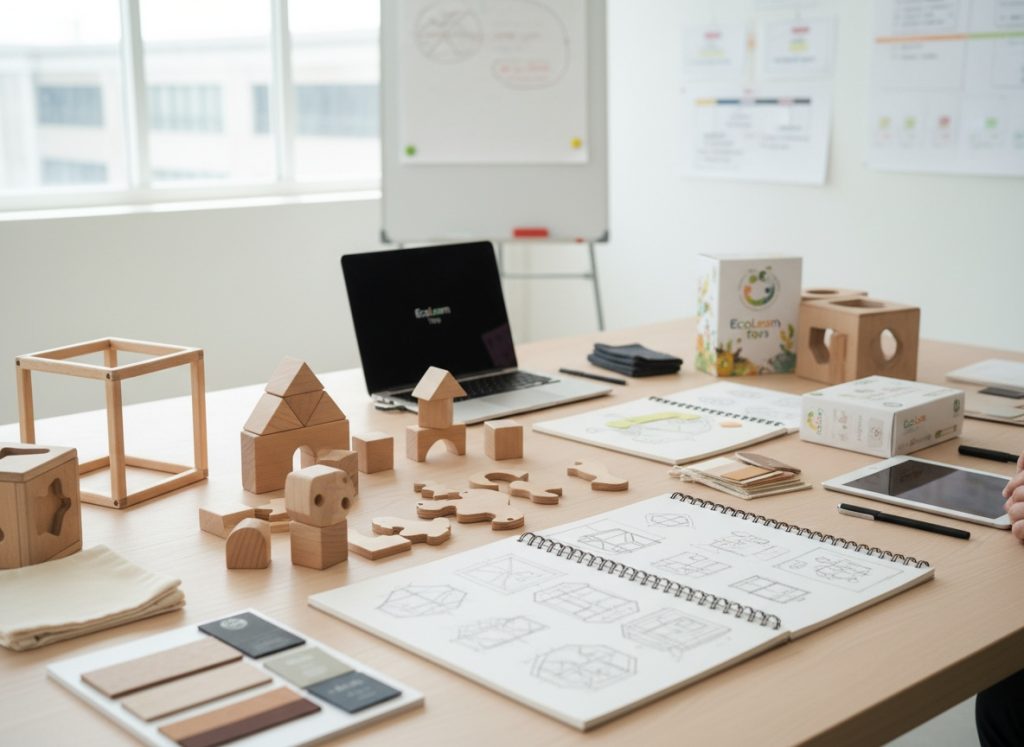
The global educational toy market continues to develop as parents, schools, and retailers seek products that combine learning value with engaging play experiences.
For companies operating in the educational toy industry, wooden educational toys provide opportunities to create product collections around specific educational themes, including mathematics, creativity, logic, and sensory exploration.
Developing Products With Clear Market Positioning
A strong educational product is easier to market when its purpose is clear.
For example, wooden number blocks can be positioned around early mathematics learning. Magnetic pattern blocks can support creativity and spatial awareness. Wooden maze toys can focus on concentration and problem-solving.
This type of product positioning helps brands communicate meaningful benefits instead of competing only through appearance or price.
For retailers and distributors, educational categories with clear learning functions can also create stronger product differentiation.
Custom Development Supports Brand Growth
As competition increases in the toy industry, many companies are looking for unique products rather than standard items available from multiple suppliers.
Working with an experienced wooden educational toys supplier allows brands to develop products based on specific market requirements, including design concepts, educational functions, packaging, and product combinations.
A professional educational toy manufacturer can support the complete development process, from initial idea evaluation to production preparation.
For example, vindstier develops educational products designed around specific learning objectives, including mathematics, creativity, sensory exploration, and problem-solving.
Its product range includes magnetic fraction teaching aids, magnetic pattern blocks, wooden number blocks, fruit sorting stacking toys, wooden maze toys, magnetic parking games, and wooden falling ball games.
These products represent different educational categories, allowing retailers and educational brands to create more complete preschool learning collections.
What Should B2B Buyers Consider When Selecting a Wooden Educational Toys Supplier?
For wholesalers, distributors, and educational product companies, supplier selection plays an important role in product quality, market response, and long-term cooperation.
A suitable supplier should provide more than finished products. The ability to understand educational trends and support product development can significantly influence business growth.
| Evaluation Factor | Why It Matters |
|---|---|
| Product development capability | Helps create differentiated educational products |
| Manufacturing experience | Supports stable production and consistent quality |
| Customization service | Allows brands to develop unique collections |
| Understanding of learning concepts | Helps align products with customer expectations |
| Supply capability | Supports wholesale and retail business requirements |
For businesses searching for wooden educational toys wholesale solutions, choosing a supplier with experience across different educational categories can simplify sourcing and product planning.
A supplier that understands both manufacturing and educational value can become a long-term development partner rather than only a production provider.
FAQs
What skills can wooden educational toys help develop?
Depending on the product design, wooden learning toys can support various developmental areas, including fine motor skills, hand-eye coordination, logical thinking, creativity, and early mathematics understanding.
For example, wooden number blocks can support counting practice, while maze toys can encourage planning and controlled movement.
Why are wooden educational toys popular in preschool learning?
Many preschool educators prefer hands-on learning materials because they encourage children to participate actively.
Products such as puzzles, blocks, sorting toys, and mathematics learning tools can be integrated into classroom activities because they support exploration and independent learning.
Are wooden educational toys suitable for Montessori-inspired learning?
Many Montessori-inspired activities focus on hands-on exploration, independence, and practical learning experiences.
Wooden products such as blocks, sorting activities, and matching games often align with these principles because children can interact directly with materials and discover solutions through practice.
What makes wooden educational toys different from regular toys?
The main difference is the learning purpose behind the design.
Educational wooden toys are typically created to encourage specific skills, such as problem-solving, coordination, creativity, or early academic concepts, rather than focusing only on entertainment.
Conclusion
The increasing interest in wooden educational toys reflects a broader movement toward hands-on and meaningful learning experiences.
Research and educational practices suggest that toys encouraging physical interaction, exploration, and problem-solving can support sensory development and early learning skills.
Compared with many conventional toys, thoughtfully designed wooden products provide unique advantages through tactile experiences, open-ended play opportunities, and clear educational purposes.
For parents and educators, the most valuable choice comes from selecting toys that encourage active participation and meaningful exploration. For retailers, distributors, and educational brands, the growing demand for learning-focused products creates new opportunities in the global educational toy market.
Partnering with an experienced wooden educational toys supplier can help businesses transform educational concepts into market-ready products while building differentiated product collections for modern learning environments.
If you are looking for a partner for custom wooden educational toys development or wholesale educational toy solutions, working with an experienced educational toy manufacturer can help turn product ideas into successful market offerings.