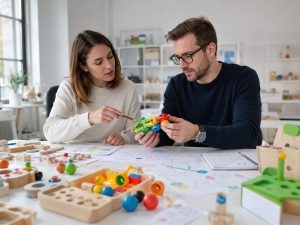
A teacher hands a student a toy with buttons, lights, and a single correct way to play. The child presses the buttons a few times, the lights flash, and within minutes the toy sits untouched in the corner. This pattern repeats across classrooms and living rooms every day: engagement peaks fast and fades faster, because the toy has already told the child everything it can do.
This is the quiet frustration behind a lot of toy purchasing decisions, whether it’s a parent restocking a playroom or a school procurement team choosing materials for a new term. The toy itself isn’t broken. The design is. A toy built around one fixed outcome runs out of things to offer almost as soon as a child figures it out.
Open-ended toys solve this differently. Instead of dictating one correct use, they leave room for a child to decide what happens next — building blocks, loose parts, art materials, and manipulatives that can become a hundred different things depending on the child holding them. Understanding why that distinction matters, and how it plays out in real classrooms, is the difference between buying a toy that gets used once and one that earns its shelf space for years.
What Makes Open-Ended Toys Different
The term gets used loosely, so it helps to be precise about what actually separates open-ended materials from everything else on a toy shelf.
A closed-ended toy has a defined endpoint. A puzzle is complete once every piece is placed. An electronic toy with pre-programmed responses has a fixed set of outcomes the child can trigger but not alter. These toys aren’t without value — they build specific, narrow skills like shape recognition or cause-and-effect understanding — but the play stops once the goal is reached.
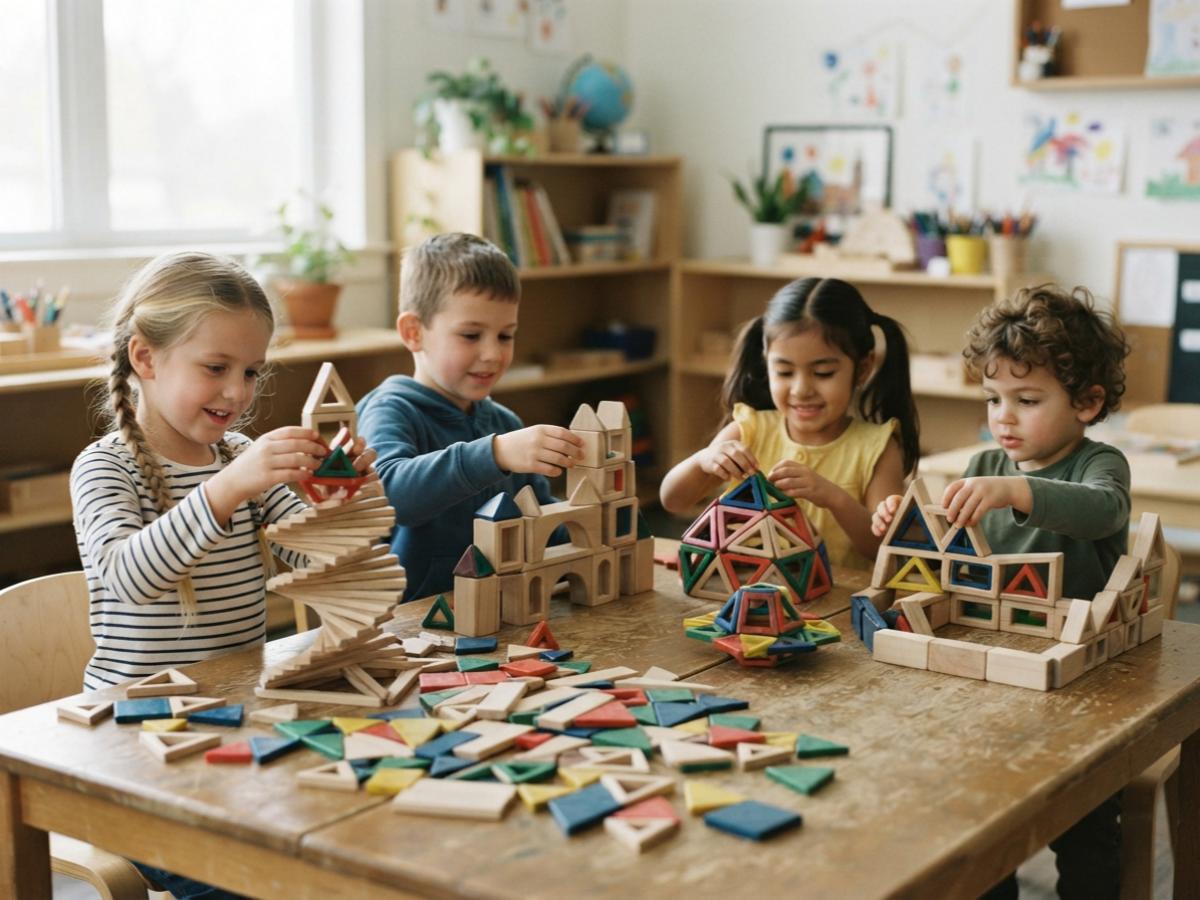
An open-ended toy has no fixed endpoint. Wooden blocks can become a tower, a bridge, a spaceship, or a fence for a toy farm, and the “correct” outcome is whatever the child imagines. Magnetic tiles, art supplies, sand, water, and role-play materials all share this same quality: the toy provides a set of possibilities, and the child supplies the direction.
This isn’t a stylistic preference. It reflects a real difference in how children engage with material over time. A closed-ended toy answers a question. An open-ended toy asks one — and keeps asking a new one every time a child returns to it.
Why Children Are Drawn to Them
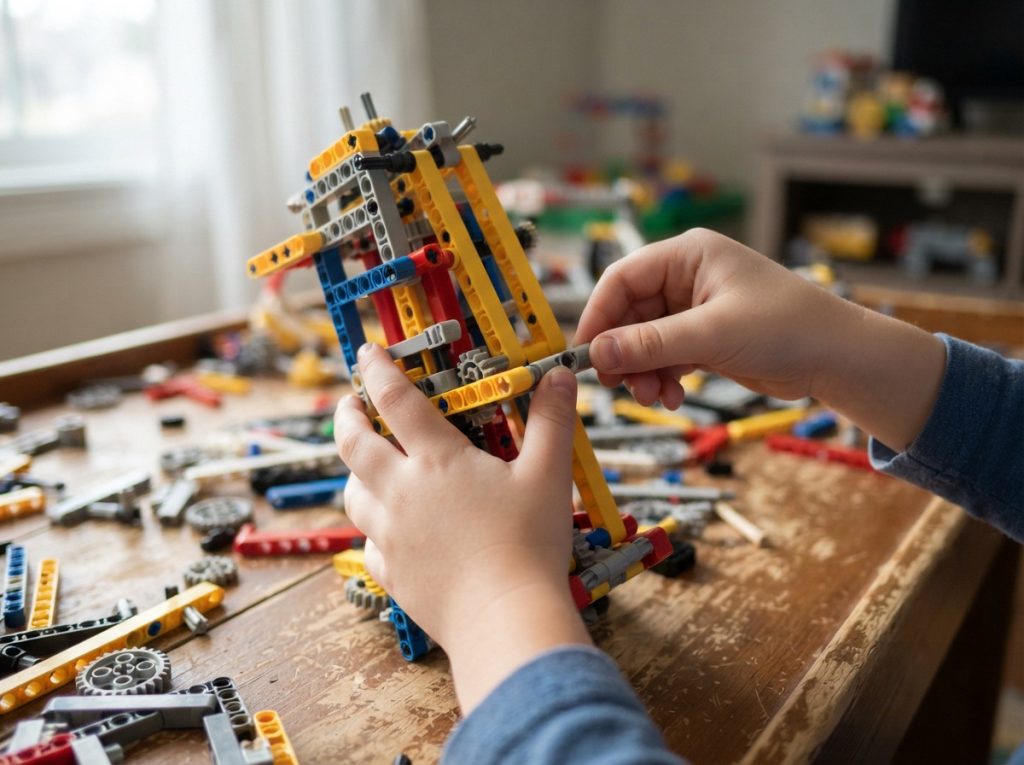
Children gravitate toward open-ended toys for reasons that have less to do with entertainment and more to do with how they’re wired to learn. Play, for a young child, is not a break from learning — it is largely how learning happens, and open-ended toys give that process the most room to work.
Unstructured problem-solving is a large part of it. When a set of blocks won’t stand the way a child wants, there’s no manual to consult — the child has to test, fail, adjust, and try again. That loop of experimentation is exactly the kind of thinking schools try to build through structured lessons, except here it happens because the child wants to see the tower stand, not because an assignment requires it.
There’s also a social dimension that closed-ended toys rarely offer. Two children building with the same set of magnetic tiles will often construct entirely different things side by side, then negotiate, combine ideas, or take turns leading the design. That negotiation — whose idea wins, how to merge two visions into one structure — is where a surprising amount of early collaboration and language development actually takes place.
And because there’s no single correct outcome, there’s also no way to “finish” the toy. A child who mastered a puzzle has nothing left to do with it. A child working with open-ended toys can return to the same set of blocks a week later and build something they hadn’t thought of before. That built-in renewability is what keeps a toy in active rotation long after most toys have been packed away.
How This Plays Out in the Classroom
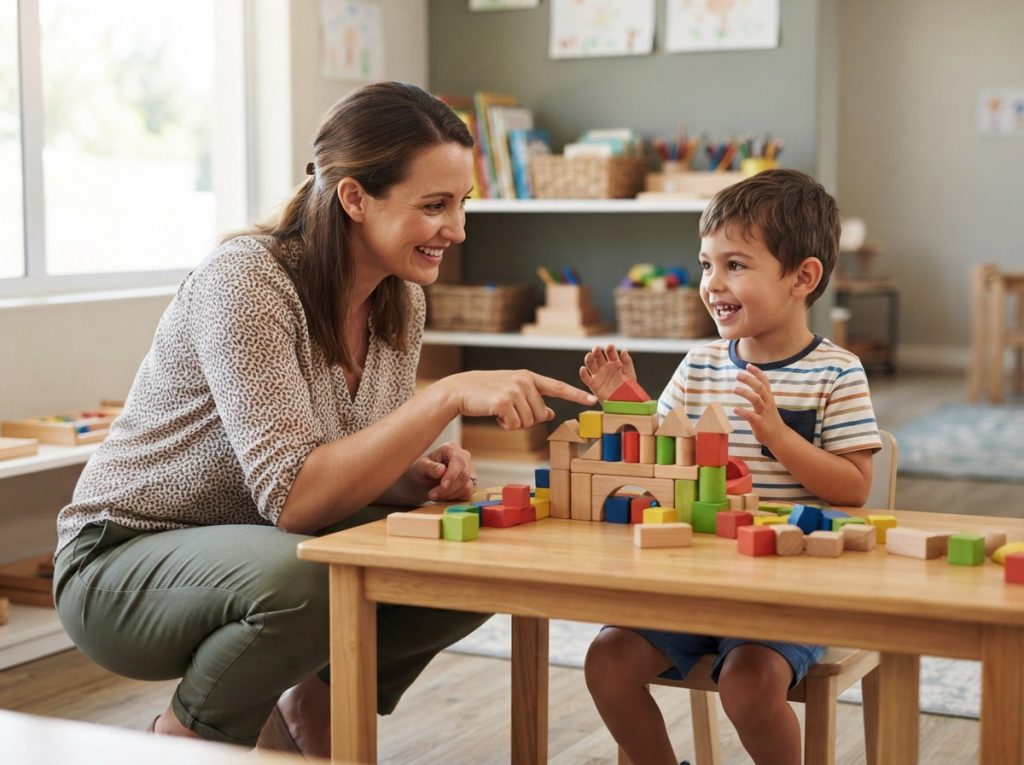
The case for open-ended toys holds up well in a real classroom setting, where the constraints are different from a home playroom: limited time, mixed ability levels, and a need to justify how play time connects to learning goals.
Background. A kindergarten teacher working with a class of five-year-olds needed a way to introduce early geometry — shapes, symmetry, and spatial reasoning — without relying on worksheets that some students found tedious and others found too abstract to grasp.
Application process. She introduced a set of open-ended geometric building tiles during free-choice time, without instructions beyond “build something.” Over several weeks, she began asking targeted questions during play: “What shape did you use to make that roof?” “Can you build something with a line of symmetry down the middle?” The materials didn’t change; the framing did, shifting free play gradually toward guided exploration without ever making it feel like a lesson.
Problem solved. Students who struggled with the abstraction of shape names on a worksheet could point to a triangle they had physically placed and explain why it worked as a roof but not as a wheel. The concept stopped being something to memorize and became something they had already tested with their hands.
Practical value. For the students, geometry became something they encountered through their own decisions rather than through instruction. For the teacher, one set of materials served multiple ability levels simultaneously — advanced students built increasingly complex symmetrical structures while others focused on basic stability — without needing separate worksheets for each group. For the school, a single durable material set replaced what would otherwise have been recurring paper-based consumables across multiple classes and years.
Open-Ended Toys vs. Closed-Ended Toys: A Practical Comparison
| Aspect | Open-Ended Toys | Closed-Ended Toys |
|---|---|---|
| Play outcome | Determined by the child, varies each time | Fixed, reaches a defined end point |
| Longevity of engagement | Extends across ages and repeated use | Diminishes once the goal is achieved |
| Skill focus | Broad — problem-solving, creativity, collaboration | Narrow — specific skill or fact recognition |
| Classroom flexibility | Adaptable to mixed ability levels | Usually suited to one level or age group |
| Long-term cost per use | Lower, given repeated use over years | Higher, given shorter usable lifespan |
Neither category is inherently superior for every purpose. A closed-ended toy remains the right tool when the goal is a specific, well-defined skill taught quickly and checked for mastery. An open-ended toy is the better tool when the goal is sustained engagement, flexible thinking, or cooperative play. The two aren’t competing for the same job — which is why most strong classroom setups end up using both rather than choosing one over the other.
A Complementary Teaching Approach: Combining Open-Ended and Closed-Ended Toys
Framing this as an either-or choice misses how classrooms actually work. A curriculum built entirely on open-ended play can leave gaps in specific, measurable skills — letter recognition, number sequencing, a named vocabulary term a curriculum requires by a certain week. A curriculum built entirely on closed-ended materials produces students who can complete a defined task but struggle when a problem doesn’t come with an obvious right answer. The two categories are better understood as complementary tools, each covering a gap the other leaves open.
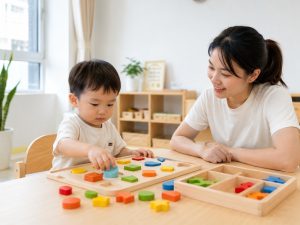
A practical way to sequence them is to use closed-ended toys to introduce a concept and open-ended toys to let students apply it. A shape-sorting puzzle, for example, is an efficient way to teach a five-year-old to name and recognize a triangle, a square, and a circle in isolation — it has one correct answer, and that’s exactly what makes it fast at building that specific recognition skill. Once that recognition is in place, open-ended building tiles let the same child use those shapes to solve a problem of their own choosing, like figuring out which shape makes a stable roof. The closed-ended toy builds the vocabulary; the open-ended toy tests whether the student can actually apply it.
The same logic holds for classroom scheduling rather than just skill sequencing. Many teachers use closed-ended activities for short, structured segments — a ten-minute counting exercise at the start of a math block — and reserve open-ended materials for longer free-choice or center-based periods later in the day. This keeps required curriculum benchmarks on track while still giving students meaningful stretches of self-directed play.
For school buyers, this points toward a mixed-materials strategy rather than a single-category purchase. A classroom stocked only with closed-ended toys will need frequent replacement as students age out of each toy’s single use case. A classroom stocked only with open-ended toys may need supplementary structured materials to meet specific curriculum checkpoints. A balanced set — a core rotation of durable, open-ended toys supplemented by a smaller number of targeted closed-ended tools — tends to cover both the measurable benchmarks a school is accountable for and the flexible thinking that benchmarks alone don’t capture.
Where Vindstier Fits Into This
Within the open-ended category specifically, a lot of educational toy design still under-delivers on the promise. Materials get labeled “open-ended” in marketing copy while the actual design offers only one or two realistic configurations before a child exhausts what the pieces can do — closer to closed-ended play with open-ended packaging.
Vindstier’s approach to open-ended toys is built to hold up to that distinction — designing materials with intentionally minimal built-in instruction, so the play is generated by the child rather than by the toy. A set of Vindstier building or manipulative pieces is engineered to combine in enough physical configurations that a five-year-old and a ten-year-old can use the identical set for entirely different purposes, at entirely different levels of complexity.
That matters commercially as much as pedagogically. A school buying materials for a classroom isn’t just buying for this year’s students — the same set needs to hold up across multiple age groups and multiple years of use, which is where cheaper, single-purpose toys create ongoing replacement costs. Vindstier’s construction quality and modular design are built around that reality: fewer restocks, broader age applicability, and materials that keep generating new play rather than exhausting their possibilities within a semester.
What This Means for Teachers, Buyers, and Partners
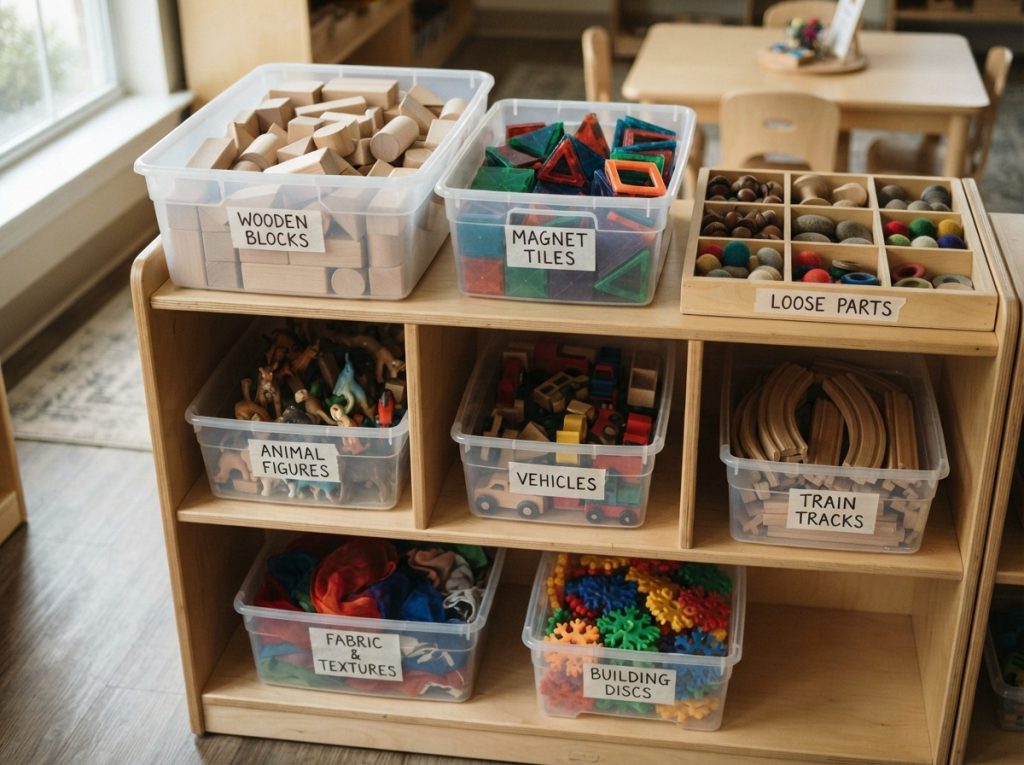
For teachers, the practical question isn’t whether open-ended toys are good in theory — it’s whether they fit into an already packed school day. The classroom example above shows how they can: the material does the heavy lifting during free play, and the teacher’s role shifts to asking better questions rather than running an entirely separate lesson.
For school buyers, durability and cross-grade usability drive the actual return on a purchase of open-ended toys. A material that only works for one grade level, or that breaks down after a term of daily handling, ends up costing more over time than a slightly higher upfront price for something built to last across several cohorts.
For brand and distribution partners, the relevant question is production capability — whether a manufacturer can maintain consistent quality across large orders, and whether it can adapt existing open-ended product lines to a partner’s branding or market-specific requirements. That’s a different conversation than product features, but it’s the one that ultimately decides supplier relationships.
An Industry Trend Worth Watching
Closed-ended toys aren’t the source of the problem — a well-designed, narrowly focused toy still does its specific job well, and no classroom needs to phase them out. The issue is a segment of the market where products are differentiated mainly by color schemes and packaging claims rather than genuine design, and where “open-ended” is used as a marketing label more than an accurate description of how the toy actually plays.
Teachers and buyers are increasingly comparing what a toy promises on the box against what it actually offers after a term of daily classroom use. That scrutiny is pushing demand toward manufacturers, on both sides of the category, who can show real design reasoning behind their open-ended toys rather than a rebranded version of something already common on the shelf.
Conclusion
Open-ended toys hold a child’s attention longer, adapt to more ages, and support the kind of flexible, self-directed thinking that a single-purpose toy isn’t designed to offer. That doesn’t make closed-ended toys obsolete — it makes them a different tool for a different job, best used alongside open-ended toys rather than in place of them. The strongest classrooms tend to use closed-ended toys to introduce a specific skill and open-ended toys to let students apply it on their own terms.
For anyone making purchasing decisions — a teacher balancing free play with curriculum checkpoints, a school buyer planning a multi-year budget, or a distributor evaluating suppliers — the useful question isn’t which category wins, but what mix of both actually holds up across a full school year.