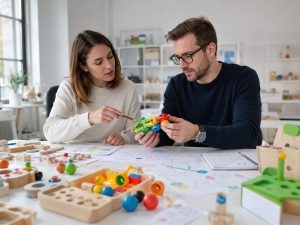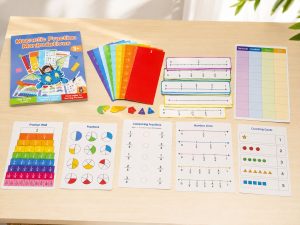
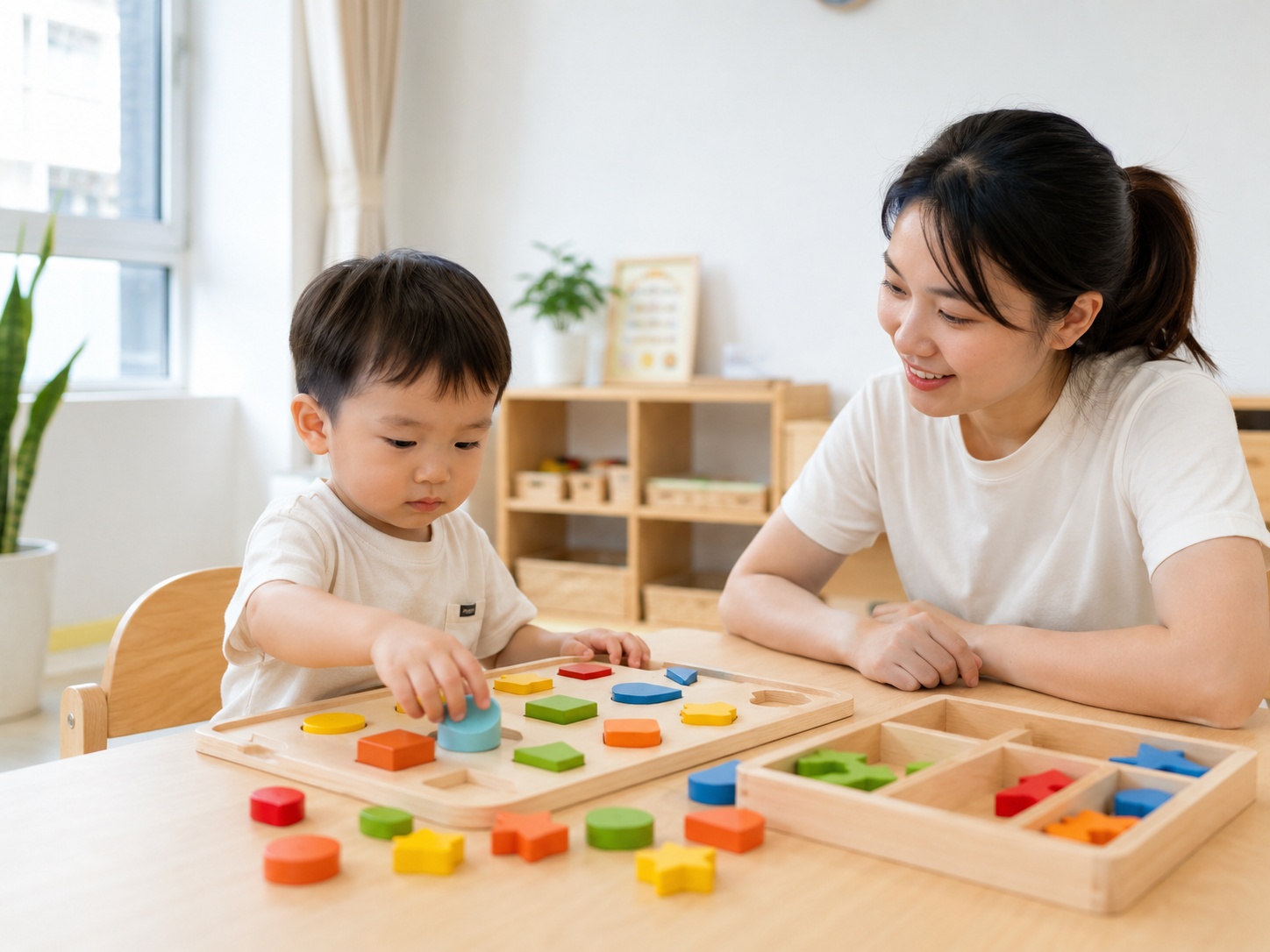
Sorting Toys have become an essential part of early childhood education because they transform simple play into meaningful learning experiences. Instead of passively watching or listening, toddlers and preschoolers actively explore, compare, classify, and solve problems through hands-on interaction. Educational researchers have long recognized that these practical experiences help children develop stronger cognitive abilities while building confidence through independent discovery.
Today, the expectations for educational toys are higher than ever. Parents want products that remain engaging beyond the first few weeks of use, while kindergartens and daycare centers need durable classroom resources capable of supporting daily learning activities. At the same time, retailers and educational product distributors are looking for products that combine educational value with consistent manufacturing quality. These changing expectations explain why wooden sorting toys, Montessori sorting toys, and multifunctional educational sorting toys continue to attract growing attention across international markets.
Rather than focusing only on appearance, experienced educators often evaluate a sorting toy according to its learning progression. In many preschool classrooms, teachers observe that children quickly master simple color matching before naturally progressing to more complex activities such as grouping objects by size, quantity, patterns, or multiple characteristics. A well-designed sorting toy therefore continues supporting children’s development instead of becoming obsolete after a single learning stage.
This guide explores the different types of Sorting Toys, explains how they contribute to children’s development, highlights common buying mistakes, and provides practical recommendations for parents, schools, educational brands, and wholesale buyers seeking reliable learning toy solutions.
Why Are Sorting Toys Important for Early Childhood Development?
The first five years of life represent one of the most important stages of brain development. During this period, children continuously build new neural connections through repeated experiences, making everyday play an essential part of learning. Research published in early childhood education journals suggests that classification activities such as sorting, matching, sequencing, and comparing objects help strengthen executive functioning, visual discrimination, memory, and problem-solving skills.
Studies also show that children learn concepts more effectively when they manipulate physical objects rather than relying solely on passive observation. Unlike electronic games that often provide immediate answers, Sorting Toys encourage children to experiment, make mistakes, and discover solutions independently. This process strengthens confidence while developing logical thinking and decision-making abilities.
According to the American Academy of Pediatrics, play-based learning contributes significantly to children’s cognitive, language, and social development, reinforcing the importance of educational toys that encourage active exploration rather than passive entertainment. For this reason, sorting activities remain a core component of many preschool education and Montessori learning programs.
Beyond supporting academic readiness, Sorting Toys also encourage meaningful interaction between children and adults. While playing together, parents and teachers naturally introduce vocabulary related to colors, shapes, numbers, sizes, and patterns. These conversations help children strengthen communication skills while making learning more enjoyable.
Research suggests that children retain concepts longer when they physically manipulate learning materials instead of simply watching demonstrations.
Skills Developed Through Sorting Toys
Instead of targeting only one developmental milestone, quality Sorting Toys support several areas of early learning simultaneously.
| Development Area | Educational Benefits |
|---|---|
| Cognitive development | Encourages classification, comparison, and logical reasoning |
| Fine motor skills | Improves grasp strength, finger control, and object manipulation |
| Hand-eye coordination | Develops placement accuracy through repeated practice |
| Language development | Expands vocabulary through guided conversations |
| Early mathematics | Introduces counting, grouping, sequencing, and simple patterns |
| Independent learning | Builds confidence through exploration and self-correction |
These combined learning outcomes explain why educational sorting toys continue to be recommended for homes, daycare centers, kindergartens, and early education programs.
Best Types of Sorting Toys for Toddlers and Preschoolers
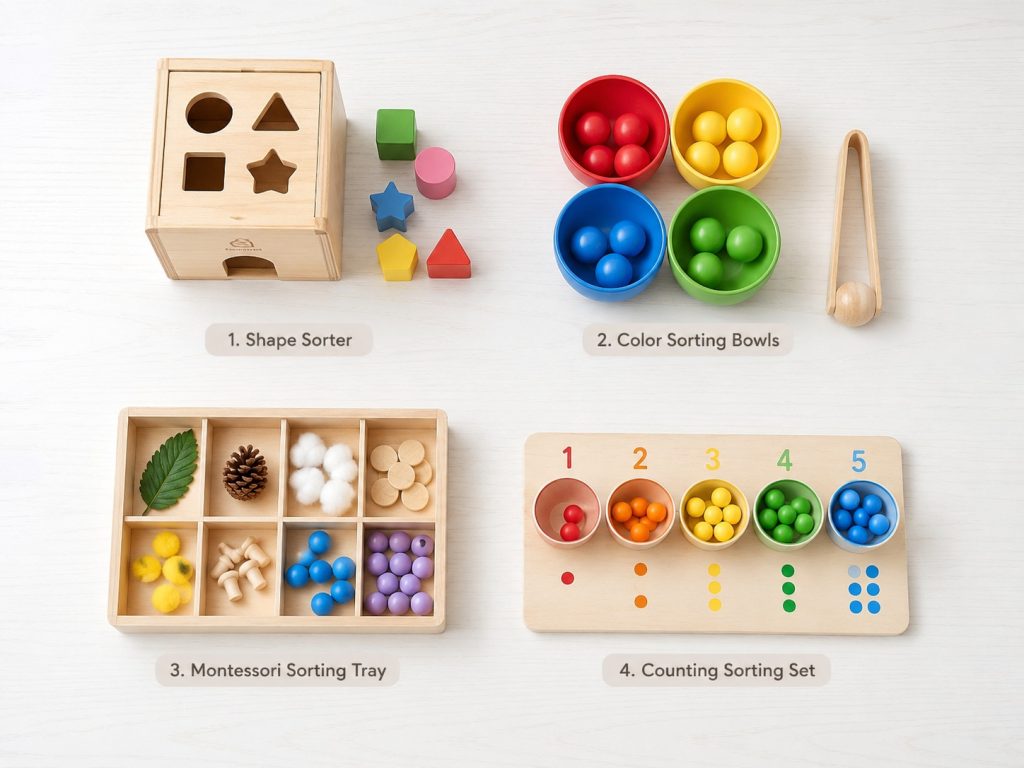
Every child develops at a unique pace, so selecting Sorting Toys according to developmental stage is generally more effective than choosing the most complicated product. The best educational toys gradually increase in difficulty, allowing children to build upon skills they have already mastered instead of introducing multiple unfamiliar concepts at once.
The comparison below illustrates how different categories of Sorting Toys support different learning objectives.
| Type of Sorting Toys | Recommended Age | Primary Learning Goal | Typical Learning Focus |
|---|---|---|---|
| Shape Sorting Toys | 12–24 months | Shape recognition | Spatial awareness |
| Color Sorting Toys | 18–36 months | Color identification | Visual discrimination |
| Peg Sorting Boards | 2–4 years | Fine motor development | Hand control |
| Counting & Sorting Sets | 3–5 years | Early mathematics | Counting and grouping |
| Montessori Sorting Toys | 2–6 years | Independent exploration | Self-directed learning |
| Multi-Function Sorting Toys | 3–6 years | Comprehensive development | Logical thinking and STEM learning |
Research indicates that children remain engaged longer when a sorting toy supports more than one activity. After mastering simple matching exercises, many preschoolers naturally begin inventing their own sorting games by grouping objects according to color, size, quantity, or patterns. This progression keeps learning fresh while encouraging creativity and problem-solving.
Shape Sorting Toys
Shape sorter toys are often among the first educational products introduced during toddlerhood. Matching geometric blocks with corresponding openings helps children recognize differences between circles, squares, rectangles, triangles, and other basic shapes while improving hand-eye coordination.
Many educational toy manufacturers recommend block dimensions of approximately 45–60 mm, as larger components are easier for toddlers to grasp and manipulate during repeated practice. Combined with rounded edges and smooth surface finishing, these design details create a more comfortable learning experience.
Color Sorting Toys
Color sorting toys encourage children to distinguish visual differences while developing observation skills and concentration. Activities usually begin with primary colors before gradually introducing secondary colors, multiple categories, or combinations of color and size.
Teachers frequently expand these activities into collaborative sorting games where children work together to organize objects according to different rules. These simple classroom exercises help develop communication skills while reinforcing cognitive learning.
Montessori Sorting Toys
Montessori sorting toys emphasize independent exploration instead of step-by-step instruction. Rather than providing immediate answers, these products encourage children to experiment until they discover solutions through repeated observation and self-correction.
Because Montessori education values concentration and purposeful repetition, many preschool classrooms integrate wooden sorting toys into daily learning routines. Teachers often report that children remain focused longer when educational activities encourage independent thinking instead of relying on constant adult guidance.
How to Choose the Right Sorting Toys
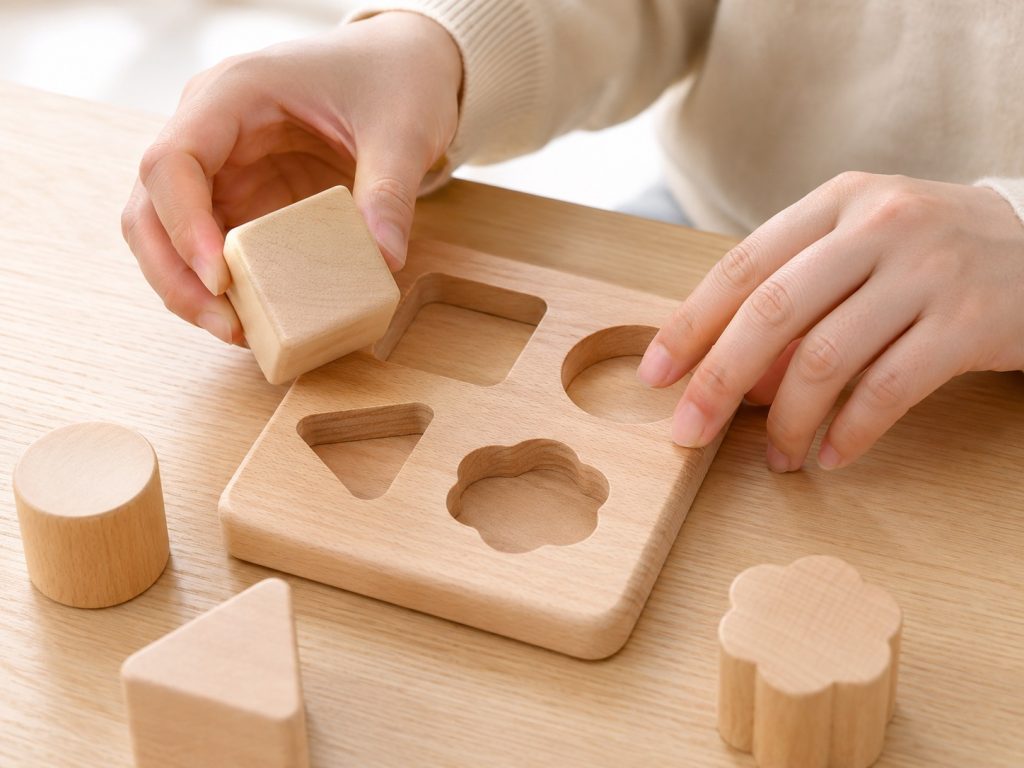
Selecting the right Sorting Toys involves much more than comparing prices or attractive packaging. Parents may focus on colorful designs, while schools often prioritize durability and classroom usability. Educational distributors and retailers, meanwhile, need products that combine consistent manufacturing quality with strong market demand.
Experienced educators generally recommend evaluating a toy according to its long-term learning progression rather than its initial level of difficulty. A sorting toy that encourages children to recognize colors today should ideally continue supporting counting, sequencing, pattern recognition, matching activities, and early STEM learning as children’s abilities develop.
For this reason, buyers increasingly compare measurable product specifications instead of relying on broad promotional descriptions.
| Evaluation Factor | Why It Matters |
|---|---|
| Block size | Components larger than 40 mm are easier for toddlers to handle comfortably. |
| Number of pieces | Sets containing approximately 20–60 pieces provide room for progressive learning. |
| Surface finishing | Smooth polishing improves comfort during repeated use. |
| Rounded edges | Rounded corners help create a more comfortable handling experience. |
| Learning progression | Multiple sorting methods extend educational value. |
| Storage solution | Organized storage encourages children to develop responsibility after play. |
Professional educational toy suppliers increasingly provide detailed specifications to help customers evaluate product quality objectively. For example, a wooden sorting toy may be manufactured from beech wood with a density of approximately 720 kg/m³, feature water-based coatings applied at 20–30 μm, and include rounded edges with a radius exceeding 2 mm. Compared with generalized descriptions, these measurable specifications provide buyers with clearer information when comparing products from different manufacturers.
Buying Tips for Parents, Schools, and Wholesale Buyers
Although parents, teachers, and distributors often have different purchasing priorities, they all benefit from selecting products that remain useful over multiple stages of development. Instead of replacing educational toys every year, choosing versatile sorting sets allows children to continue discovering new ways to classify, compare, and organize objects as their skills improve.
For educational institutions, classroom durability deserves particular attention. Preschool learning toys are frequently shared among multiple children throughout the day, making stable construction, smooth finishing, and well-designed storage systems valuable considerations. Retailers and wholesale buyers also tend to favor products with broad educational appeal because they can serve both home learning and classroom environments, increasing their long-term market potential.
Industry experience further suggests that buyers who evaluate learning progression, durability, and manufacturer support together are more satisfied with their purchases than those who focus primarily on price. A thoughtfully designed educational sorting toy often delivers better long-term value by supporting children’s development across several years instead of only one learning stage.
Common Mistakes When Choosing Sorting Toys
With so many educational products available, selecting the right Sorting Toys can feel overwhelming. Attractive packaging, colorful designs, and low prices often influence purchasing decisions, but these factors rarely determine whether a toy will continue supporting children’s learning over time.
One common mistake is choosing a toy based solely on its appearance. Bright colors may attract children’s attention initially, but if the activity is too simple, their interest often fades after only a few play sessions. Educational specialists generally recommend selecting sorting toys that offer multiple ways to play, allowing activities to become more challenging as children’s cognitive abilities develop.
Another frequent oversight is ignoring the relationship between component size and usability. Pieces that are too small can be difficult for younger children to manipulate, while oversized components may reduce the variety of sorting activities available. Products designed specifically for toddlers usually balance comfortable handling with appropriate educational challenges.
Some buyers also focus heavily on purchase price while overlooking long-term durability. In preschool classrooms, educational toys are handled repeatedly throughout the day, making construction quality an important consideration. Durable products often provide better value over time because they require less frequent replacement and maintain a consistent learning experience for different groups of children.
Finally, many parents purchase separate toys for every new developmental stage. In practice, educational toy specialists often recommend multifunctional sorting sets that gradually introduce shape recognition, color matching, counting, sequencing, and simple pattern-building. This learning progression allows children to continue discovering new challenges without constantly replacing existing toys.
Sorting Toys Buying Checklist
The following checklist provides a practical reference when comparing different educational sorting toys.
| Feature | Recommended Choice | Why It Matters |
|---|---|---|
| Block size | Larger than 40 mm | Comfortable for toddlers to grasp |
| Learning progression | Multiple sorting methods | Supports long-term development |
| Surface finish | Smooth polished surfaces | Improves everyday handling |
| Edge design | Rounded edges | Comfortable for repeated classroom use |
| Storage solution | Included | Encourages organization after play |
| Material specifications | Clearly stated | Helps buyers compare product quality objectively |
| Age guidance | Clearly identified | Supports age-appropriate learning |
Instead of treating this checklist as a strict standard, buyers can use it to compare products more objectively and identify educational toys that are likely to remain valuable over a longer period.
Why Wooden Sorting Toys Are a Popular Choice for Early Learning
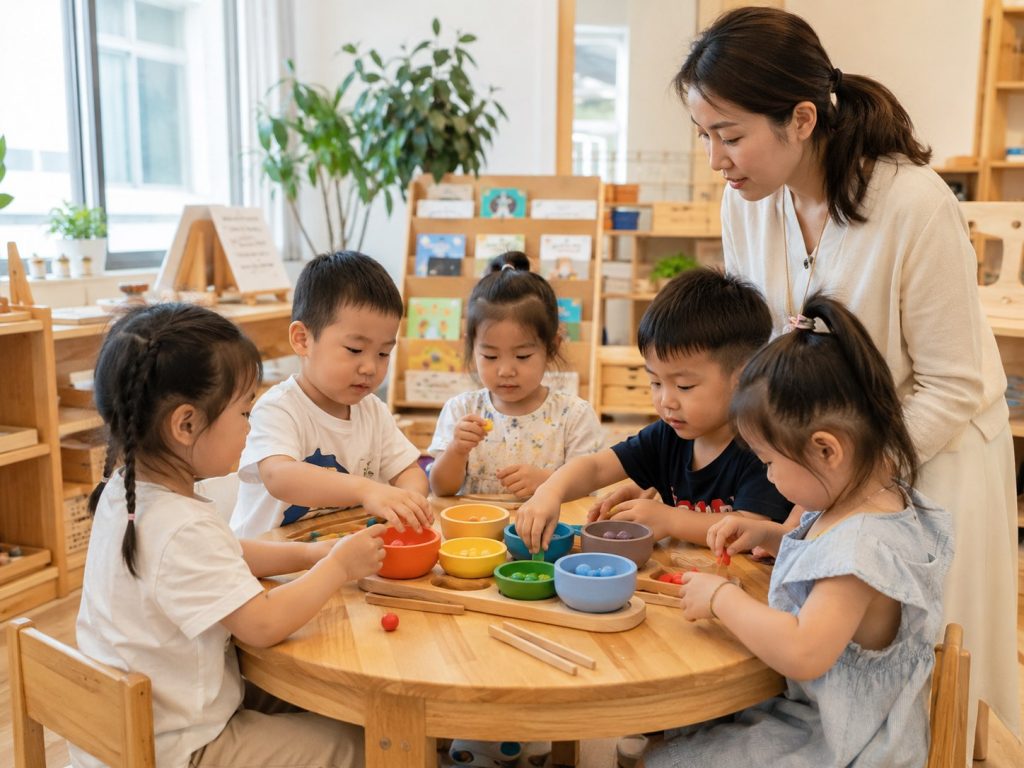
Among today’s educational toys, wooden sorting toys continue to be one of the most trusted choices for early learning environments. Their popularity extends beyond traditional Montessori classrooms and now includes daycare centers, kindergartens, therapy programs, toy retailers, and educational distributors around the world.
One reason for this sustained demand is the learning experience itself. Compared with lighter materials, wooden components typically provide greater stability during sorting activities, making it easier for children to position blocks accurately and develop hand-eye coordination. The natural texture of wood also creates a richer sensory play experience, encouraging children to engage with educational activities for longer periods.
Research into early childhood development has shown that children learn most effectively when visual, tactile, and physical experiences work together. Sorting activities that involve touching, comparing, stacking, matching, and classifying objects encourage children to strengthen multiple cognitive skills simultaneously. For this reason, educational wooden toys remain an important resource in many early learning environments.
Another advantage is long-term durability. Unlike products intended for occasional home use, preschool learning toys are often handled by dozens of children every week. Educational institutions therefore tend to prioritize products that maintain their structure and appearance through repeated classroom activities, cleaning, and transportation.
The Growing Demand for Educational Wooden Toys
Growing awareness of play-based learning has also influenced purchasing decisions across international markets. Instead of viewing toys purely as entertainment, many parents now look for products that combine sensory play, fine motor toys, and early education toys within a single activity.
As a result, categories such as shape sorter, matching toys, sorting games, and sorting activities continue to expand alongside broader demand for educational resources that support children’s independent learning.
Industry data also suggest that educational buyers increasingly prefer products with flexible applications. A wooden sorting toy that can be used for color recognition, counting, sequencing, and simple STEM activities often provides better classroom value than a toy designed for only one learning objective.
How Educational Toy Manufacturers Support Different Markets
Selecting the right educational toy involves more than evaluating the finished product. For retailers, distributors, educational organizations, and importers, the capabilities of the manufacturer play an equally important role.
Experienced educational toy manufacturers understand that different markets require different product solutions. Schools may prioritize classroom durability, while retailers often focus on attractive packaging and consistent product quality. Educational brands may require private-label production, whereas distributors frequently need flexible packaging options and stable supply capacity.
Because of these varying requirements, many professional wooden toy manufacturers now provide a wider range of services beyond standard production. OEM and ODM development, logo printing, customized packaging, instructional materials, and product adaptation for different educational systems have become increasingly common.
Rather than treating customization as an additional feature, many buyers now view it as part of long-term brand development. A customized educational toy collection helps retailers establish a consistent product identity while allowing schools and educational organizations to select learning resources that align with their teaching objectives.
From a purchasing perspective, evaluating manufacturing capabilities alongside product specifications often leads to better long-term business partnerships.
Why Wholesale Buyers Value Manufacturer Expertise
Wholesale buyers generally evaluate suppliers according to several practical factors rather than price alone. Consistent quality, production capacity, communication efficiency, and product development support all influence purchasing decisions.
For example, an experienced educational toy supplier can often assist customers with:
- OEM and ODM product development
- Private-label branding
- Packaging customization
- Product safety documentation
- Sample development
- Long-term production planning
These services enable distributors and retailers to build more competitive product portfolios while responding quickly to changing market demand.
How to Choose Sorting Toys for Home and Preschool Classrooms
Although the educational principles remain the same, choosing Sorting Toys for home learning differs slightly from selecting products for classroom environments.
Families often prefer compact educational toys that encourage interaction between parents and children while remaining easy to store. Products that combine several learning objectives—such as color sorting, shape matching, counting, and simple pattern recognition—usually provide greater value because children continue discovering new activities as they grow.
In preschool classrooms, teachers typically prioritize versatility and group participation. Larger sorting sets allow several children to work together, encouraging communication, cooperation, and collaborative problem-solving in addition to cognitive development. These shared sorting activities also help children practice taking turns, following instructions, and discussing different classification methods.
Experienced preschool educators frequently observe that children become more engaged when learning materials offer multiple levels of challenge. After mastering basic color matching, many naturally progress to grouping objects by quantity, creating repeating patterns, or inventing their own sorting rules. This gradual progression keeps learning enjoyable while encouraging independent thinking.
Rather than asking whether one type of sorting toy is universally better than another, it is often more useful to consider how the toy will be used, who will be using it, and whether it can continue supporting children’s development over time.
FAQs
What age should children start using Sorting Toys?
Most children can begin exploring simple Sorting Toys between 12 and 18 months, starting with large shape sorter toys or basic color matching activities. As fine motor control and cognitive skills improve, more advanced educational sorting toys that introduce counting, sequencing, pattern recognition, and simple STEM concepts become suitable throughout the preschool years.
Rather than moving immediately to more complicated toys, educators generally recommend increasing the level of challenge gradually. This approach helps children build confidence while maintaining interest in learning.
How do Sorting Toys improve fine motor skills?
Fine motor development depends on repeated movements that strengthen the small muscles of the hands and fingers. During sorting activities, children grasp, rotate, align, and place objects with increasing precision. These actions improve finger strength, hand-eye coordination, and bilateral hand control, all of which support later skills such as drawing, writing, cutting with scissors, and self-care activities.
For this reason, fine motor toys remain an essential part of many preschool learning programs and occupational therapy activities.
Are Montessori Sorting Toys suitable for preschool classrooms?
Yes. Although Montessori sorting toys are based on Montessori educational principles, many preschool teachers also use them in traditional classroom settings.
Their simple design encourages children to observe, experiment, and solve problems independently instead of relying on step-by-step instructions. This learning approach supports concentration, confidence, and independent thinking while remaining compatible with many early childhood education programs.
What materials are commonly used for Sorting Toys?
Sorting Toys are commonly manufactured from wood, plastic, silicone, or a combination of materials. Each option offers different advantages depending on the intended learning environment.
For many educational institutions, wooden sorting toys remain a preferred choice because they provide excellent stability during play, a pleasant tactile experience, and reliable durability during frequent classroom use. When comparing products, buyers should pay attention to measurable specifications—such as block dimensions, surface finishing, and construction quality—instead of relying on broad promotional descriptions.
Conclusion
Choosing the best Sorting Toys involves much more than selecting attractive colors or interesting designs. Research consistently demonstrates that hands-on sorting activities contribute to children’s cognitive development, logical thinking, fine motor coordination, hand-eye coordination, and early mathematical understanding during the most important years of learning. At the same time, experienced educators recognize that children benefit most from toys offering progressive challenges rather than single-purpose activities.
For parents, selecting educational sorting toys that grow alongside children’s abilities can provide greater long-term learning value. For schools and daycare centers, durability, classroom usability, and flexible teaching applications are equally important considerations. Retailers, distributors, and educational brands often evaluate these same products from another perspective, looking for consistent manufacturing quality, reliable supply, and opportunities for product differentiation.
As demand for wooden sorting toys, Montessori sorting toys, shape sorter products, and other educational wooden toys continues to grow, buyers are placing greater emphasis on measurable product specifications, thoughtful educational design, and manufacturing expertise. Comparing these factors together provides a clearer picture of overall product quality than focusing solely on price or appearance.
If you are evaluating Sorting Toys for retail, educational projects, or wholesale distribution, comparing product specifications, manufacturing capabilities, and customization options before placing an order can help ensure a better long-term investment. Working with an experienced educational toy manufacturer or wooden toy manufacturer also makes it easier to develop product lines that match your target market, branding strategy, and educational objectives while maintaining consistent product quality over time.