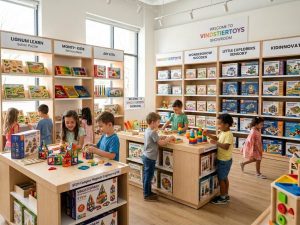

Fractions are one of the most challenging topics in early mathematics education. While many children can memorize symbols such as 1/2, 1/3, or 3/4, understanding what these numbers actually represent is often much more difficult. Students may recognize a fraction on paper but struggle to explain why different fractions can describe the same quantity or how fractions relate to everyday objects.
As schools continue to place greater emphasis on conceptual learning rather than memorization, educators are increasingly adopting hands-on teaching methods that encourage children to explore mathematical ideas through observation, comparison, and experimentation. This shift has also created growing demand for high-quality math manipulatives that support both classroom instruction and home learning.
For educational brands, distributors, and OEM buyers, math manipulatives represent an expanding product category with applications across STEM education, Montessori programs, tutoring centers, and retail learning products. Buyers are no longer looking only for standard teaching aids—they increasingly expect suppliers to provide customized product development, flexible manufacturing solutions, and products that align with different curriculum requirements and market preferences.
Math manipulatives are physical learning tools that help children understand mathematical concepts through direct interaction. Instead of relying solely on numbers printed on a worksheet, students can touch, move, compare, arrange, and combine physical objects to discover mathematical relationships for themselves. This process encourages active learning and helps bridge the gap between concrete experiences and abstract thinking.
Depending on the target market, curriculum objectives, and learning environment, Math manipulatives are available in a wide variety of materials and formats. Common examples include fraction circles, fraction bars, counting cubes, base-ten blocks, geometric shapes, magnetic teaching aids, and multi-activity learning kits. These products may be manufactured from wood, plastic, foam, magnetic components, or mixed materials to meet different classroom, retail, and home learning requirements.
For educational brands, selecting the right product is less about choosing a specific material and more about finding the best balance between educational value, durability, safety, production cost, and market positioning. As a result, experienced manufacturers are expected to provide flexible product development and OEM/ODM solutions rather than a single material option.
How Do Math Manipulatives Make Fraction Concepts Easier to Understand?
Children develop mathematical understanding more effectively when they can interact with real objects before working with symbols and equations. This principle is reflected in the widely adopted Concrete–Pictorial–Abstract (CPA) teaching approach, which encourages learners to build knowledge step by step through physical exploration, visual representation, and abstract reasoning.
Math manipulatives support the first stage of this learning process by allowing children to physically explore mathematical relationships. Using fraction circles, fraction bars, or magnetic teaching aids, students can divide shapes into equal parts, compare different fractions, and observe how multiple pieces combine to form a complete whole. Rather than memorizing mathematical rules, they develop understanding through direct experience.
Students who first explore mathematical concepts with physical learning tools often build stronger conceptual understanding before moving to symbolic calculations.
For children aged approximately 5–9 years, this learning approach is particularly valuable because it transforms abstract fraction concepts into visible and measurable relationships. A student who places two one-quarter pieces beside one one-half piece can immediately recognize that both represent the same quantity without relying solely on verbal explanations or written formulas.
Hands-on exploration also helps teachers identify learning difficulties at an earlier stage. By observing how students arrange and compare fraction pieces, educators can quickly determine whether children understand concepts such as equal partitioning, equivalent fractions, and the relationship between numerators and denominators. This immediate feedback makes classroom instruction more effective and enables teachers to provide targeted support when misconceptions appear.
Why Hands-On Learning Improves Fraction Understanding
The educational value of math manipulatives comes from engaging multiple learning processes at the same time. While solving mathematical problems, children also develop visual perception, spatial reasoning, logical thinking, and fine motor skills. Instead of passively receiving information, they actively construct mathematical knowledge through exploration and experimentation.
Many schools and educational organizations now prefer learning resources that support multiple teaching objectives within a single product. A comprehensive fraction learning kit may include fraction circles, fraction bars, activity cards, and magnetic demonstration pieces, allowing teachers to introduce equivalent fractions, comparison, addition, and subtraction using one integrated solution. This not only improves teaching efficiency but also creates a more engaging learning experience for students.
From a commercial perspective, multifunctional math manipulatives also provide greater value for educational brands and distributors. Products that support different learning stages and classroom activities are more attractive to schools, retailers, and parents because they offer broader educational applications and longer product life cycles. As a result, manufacturers capable of developing flexible, curriculum-oriented learning solutions are becoming increasingly valuable partners for brands serving global education markets.
How Do Different Math Manipulatives Support Fraction Learning?
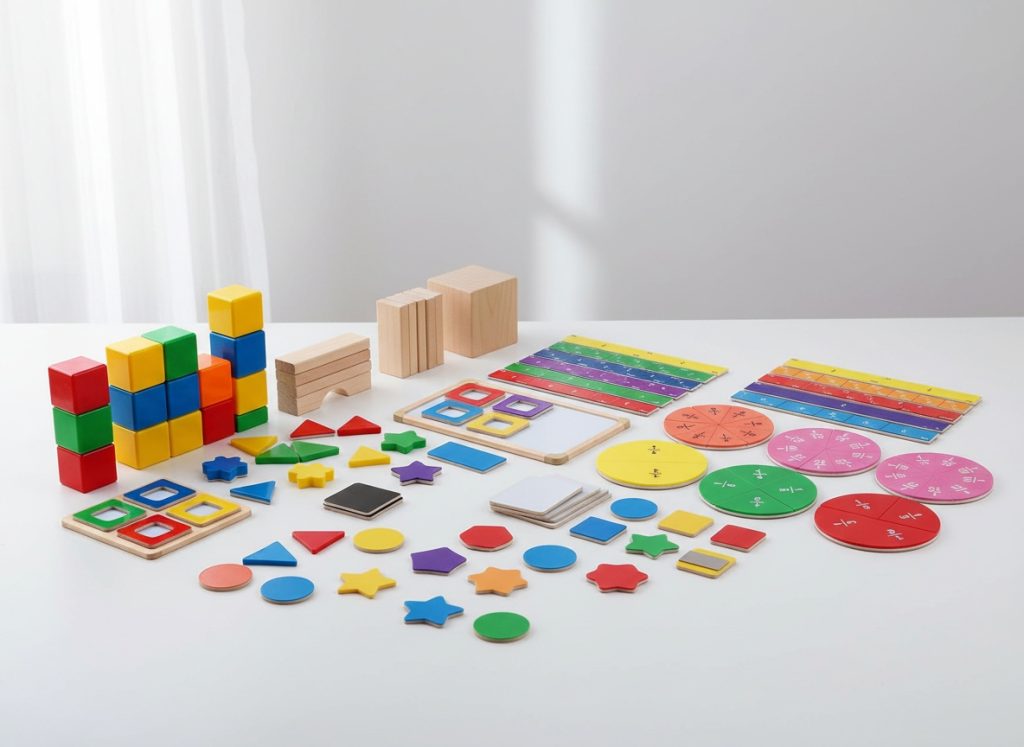
Although all math manipulatives are designed to make mathematics easier to understand, different product types are developed to support different learning objectives. Rather than selecting products based only on material, educators and educational brands usually evaluate how each learning tool performs in real teaching environments and whether it aligns with curriculum goals, classroom activities, and student age groups.
For fraction learning, physical teaching aids allow children to move beyond memorizing symbols and begin exploring mathematical relationships through observation and hands-on practice. Whether students are comparing equal parts, identifying equivalent fractions, or performing simple fraction operations, choosing the right type of manipulative can make lessons more intuitive and engaging.
The following comparison highlights several of the most widely used fraction learning products and their typical classroom applications.
| Product Type | Common Materials | Typical Applications | Customization Potential |
|---|---|---|---|
| Fraction Circles | Wood, plastic | Understanding part-whole relationships and equivalent fractions | Colors, sizes, branding, packaging |
| Fraction Bars | Wood, plastic | Comparing fractions and introducing basic fraction operations | Printing, dimensions, instructional sets |
| Magnetic Fraction Sets | Magnetic components with plastic or wood | Whiteboard demonstrations and interactive classroom activities | Layout, accessories, packaging |
| Multi-Activity Learning Kits | Mixed materials | STEM education, homeschooling, and comprehensive classroom learning | Product configuration, activity cards, private labeling |
Each product category offers unique advantages depending on the teaching environment. Fraction circles help children visualize how a whole can be divided into equal parts, while fraction bars make it easier to compare lengths and recognize equivalent values. Magnetic teaching sets allow teachers to demonstrate mathematical concepts to an entire class, and multi-activity kits combine several learning tools to support progressive instruction across different topics.
As mathematics education continues to emphasize inquiry-based learning, many schools are replacing single-purpose teaching aids with integrated learning solutions. Combining multiple manipulatives within one product set enables teachers to introduce new concepts more efficiently while encouraging students to solve problems through exploration instead of memorization.
Matching Product Design to Different Learning Environments
Different educational settings often require different product configurations. In elementary classrooms, teaching materials are expected to withstand frequent daily use while remaining easy to organize and maintain. Home learning environments usually place greater emphasis on product versatility and parent-child interaction, whereas tutoring centers and STEM programs often look for modular learning tools that can support students as their mathematical skills progress.
For educational brands, developing products that serve multiple learning scenarios has become an important way to differentiate themselves in a competitive market. Instead of offering individual fraction circles or fraction bars separately, many manufacturers now develop complete learning kits that include multiple manipulatives, reusable activity cards, teacher guides, and storage solutions. These integrated products provide greater educational value while improving the overall user experience.
Why Product Design Matters More Than Material Choice
When evaluating math manipulatives, effective product design is often more important than the choice of material itself. A thoughtfully designed learning tool should help children understand mathematical concepts clearly, regardless of whether it is manufactured from wood, plastic, magnetic components, or a combination of different materials.
Good educational products are designed with consistent dimensions, clearly distinguishable colors, age-appropriate sizes, and durable construction. Fraction pieces should fit together accurately, number markings should remain easy to read after repeated use, and the overall design should encourage independent exploration without creating unnecessary complexity.
Equally important is the supporting educational content. Activity cards, lesson suggestions, classroom exercises, and progressive learning guides can significantly increase the value of math manipulatives by helping teachers and parents introduce mathematical concepts in a structured and engaging way. These complementary resources also allow brands to create more differentiated products for schools, retailers, and online education markets.
From a product development perspective, flexibility is becoming a key competitive advantage. Manufacturers with strong OEM and ODM capabilities can adapt product configurations, component combinations, packaging designs, instructional materials, and branding to meet the needs of different customers and regional markets. This allows educational brands to expand their product portfolios more efficiently while responding to changing curriculum trends and customer expectations.
How Do High-Quality Math Manipulatives Meet International Safety Standards?
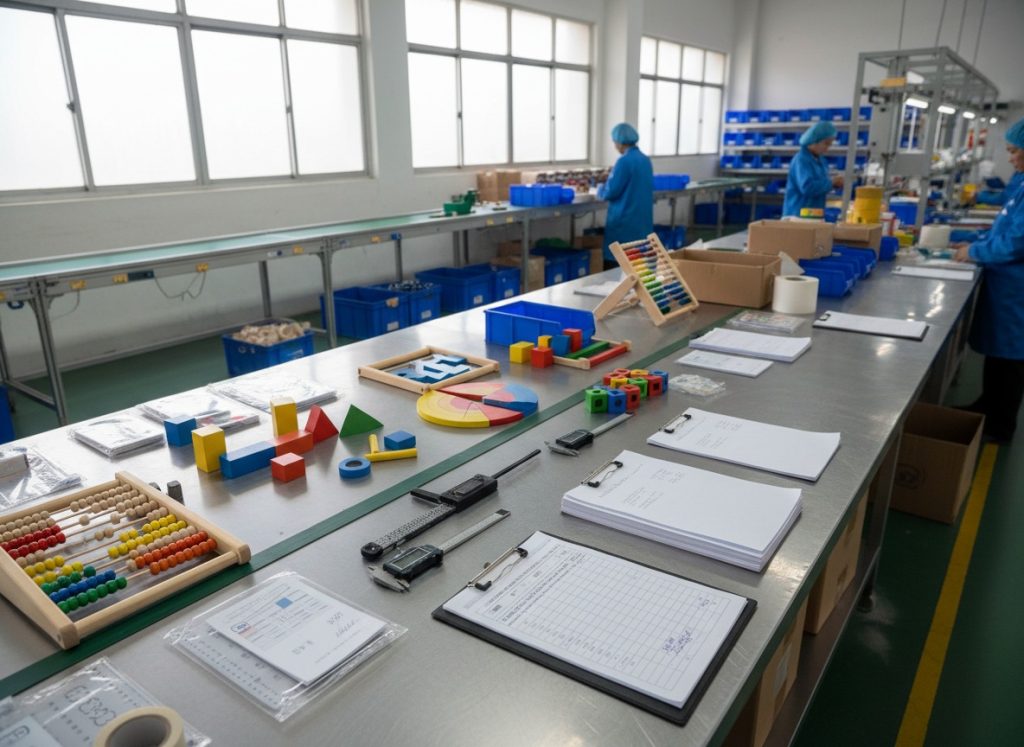
As educational products continue to reach global markets, product quality is evaluated on much more than educational value alone. For brands supplying schools, retailers, and distributors in North America and Europe, consistent manufacturing, regulatory compliance, and reliable quality control are essential factors when selecting a long-term manufacturing partner.
Unlike general consumer products, math manipulatives are designed for repeated classroom and home use. Students handle, sort, assemble, and compare the components every day, which means every part must remain safe, durable, and consistent throughout its service life. Whether the products include fraction circles, fraction bars, counting cubes, base-ten blocks, magnetic teaching aids, or complete learning kits, quality should remain stable across every production batch.
Because math manipulatives are available in different materials and structures, manufacturing requirements vary from one product to another. Wooden components require stable moisture control and precise machining, plastic products depend on consistent molding quality and color stability, while magnetic products require secure magnet encapsulation and reliable structural design. Mixed-material products combine multiple manufacturing processes and therefore require even stricter production management.
For international markets, compliance with recognized safety standards is equally important. Depending on the destination market and product category, manufacturers are commonly expected to comply with EN71 for Europe, ASTM F963 for the United States, and CPSIA requirements where applicable. Products containing magnets, batteries, or electronic functions may also require additional testing based on their construction and intended age grading.
Reliable math manipulatives are built on consistent engineering, verified compliance, and disciplined quality management rather than a single material or manufacturing process.
Manufacturing Consistency Creates Long-Term Product Value
One characteristic shared by experienced educational toy manufacturers is their ability to maintain consistent quality across different product categories and production batches. Whether producing fraction circles, magnetic teaching aids, counting cubes, or complete learning kits, manufacturers should ensure that every component meets the same quality standards established during product development. Consistent dimensions, reliable assembly, and stable material performance all contribute to better learning experiences and higher customer satisfaction.
Quality management typically begins before production starts. Raw materials are evaluated according to the product design and intended market, while prototype samples are reviewed for functionality, appearance, and classroom usability. During mass production, manufacturers monitor critical dimensions, assembly accuracy, printing quality, and color consistency to ensure every batch performs as expected.
Final inspection is equally important. Finished products are generally checked for structural integrity, surface quality, labeling accuracy, packaging consistency, and overall workmanship before shipment. This systematic process helps reduce quality variation, minimizes customer complaints, and supports long-term brand reputation in international markets.
For products incorporating magnetic components, additional testing is usually performed to verify magnet retention, structural safety, and durability after repeated use. Products with moving parts or interlocking structures may also undergo mechanical testing to ensure reliable performance during everyday classroom activities.
How OEM and ODM Capabilities Strengthen Product Development
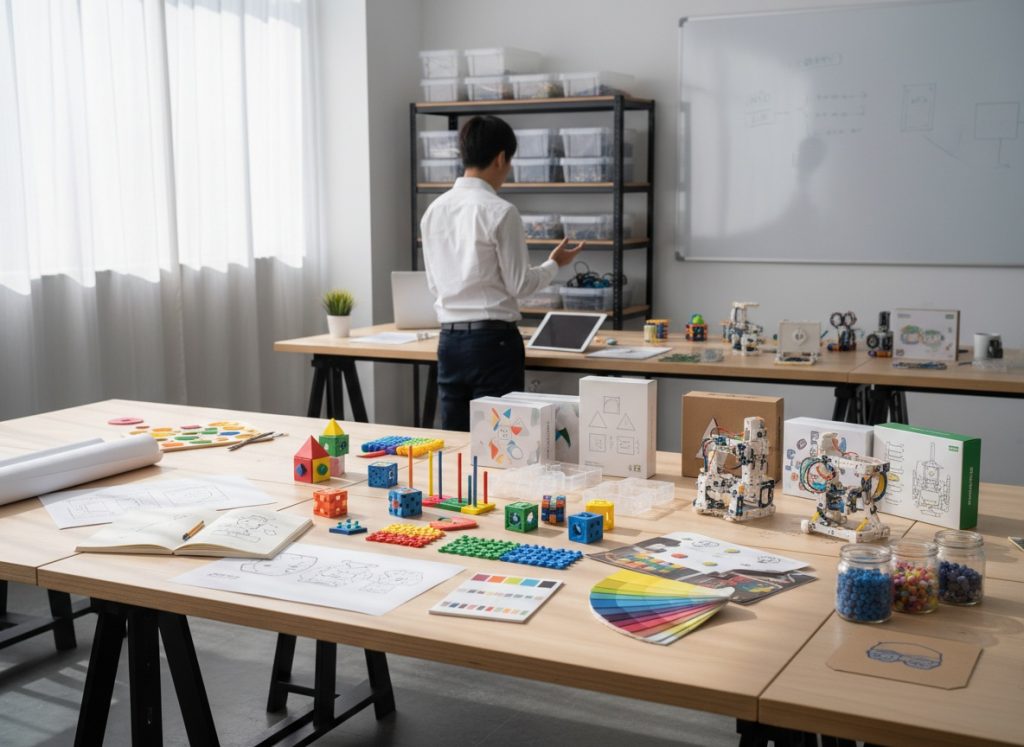
For many educational brands, purchasing math manipulatives is only one part of a broader product development strategy. Instead of selecting standard catalog products, companies increasingly seek manufacturing partners that can support concept development, engineering optimization, and customized production throughout the product life cycle.
An experienced OEM or ODM supplier should be able to adapt products according to different curriculum requirements, market positioning, and customer preferences. This may include adjusting component combinations, developing exclusive learning kits, redesigning packaging, localizing instruction manuals, or creating private-label solutions for retailers and educational brands.
For example, one customer may require a classroom teaching kit with large demonstration components for group instruction, while another may focus on compact learning sets designed for home education or online retail. Although both products teach the same mathematical concepts, their structures, accessories, packaging, and user experience are often completely different. Manufacturers with diversified development capabilities can recommend appropriate product configurations instead of relying on a single standard solution.
From a supply chain perspective, flexibility also improves long-term competitiveness. Manufacturers capable of working with different materials, production technologies, and product structures can respond more efficiently to changing curriculum trends and customer requirements. This enables educational brands to expand their product portfolios without managing multiple suppliers for similar product categories.
As global demand for educational products continues to evolve, successful OEM and ODM partnerships are built on collaboration rather than simple contract manufacturing. A supplier that combines product development expertise, stable quality management, international compliance knowledge, and efficient project communication can help brands shorten development cycles, reduce sourcing risks, and bring innovative math manipulatives to market with greater confidence.
What Should Buyers Evaluate Before Ordering Math Manipulatives?
Choosing a supplier for math manipulatives involves much more than comparing prices. For educational brands, distributors, wholesalers, and OEM procurement teams, long-term success depends on a supplier’s ability to deliver consistent quality, flexible product development, reliable lead times, and professional communication throughout the entire project.
As the educational toy market continues to diversify, buyers are increasingly looking for manufacturers that can support a broad portfolio of learning products rather than a single product category. A capable supplier should be able to develop fraction circles, fraction bars, counting cubes, base-ten blocks, magnetic teaching aids, geometric learning tools, and integrated classroom learning kits based on different curriculum requirements and market positioning.
Customization has also become an important consideration during supplier selection. Depending on the target market, brands may require private-label packaging, multilingual instruction manuals, customized product colors, exclusive product configurations, retail-ready gift boxes, or complete classroom teaching sets. Manufacturers with established OEM and ODM capabilities can usually integrate these requirements into product development, helping customers reduce development time while maintaining consistent product quality.
Quality assurance should be reviewed as part of the sourcing process rather than after production begins. Experienced manufacturers typically establish standardized inspection procedures covering raw materials, in-process production, finished products, packaging, and shipment preparation. Transparent quality management helps ensure that every production batch performs consistently and meets customer expectations.
Production planning is another important factor for international buyers. Educational products are often ordered around school semesters and holiday sales seasons, making reliable lead times essential for inventory management. Suppliers with well-organized production schedules, stable manufacturing capacity, and efficient export experience are generally better positioned to support long-term business growth.
Ultimately, the most successful sourcing partnerships are built on reliability rather than the lowest quotation. A manufacturer that consistently delivers quality products, supports continuous product development, and responds quickly to customer requirements can provide significantly greater value throughout the product life cycle.
Frequently Asked Questions
What are math manipulatives?
Math manipulatives are physical teaching tools that help children understand mathematical concepts through hands-on learning. They include products such as fraction circles, fraction bars, counting cubes, base-ten blocks, geometric shapes, magnetic teaching aids, number tiles, and other interactive learning resources. Depending on the educational objective and product design, these manipulatives may be manufactured from wood, plastic, foam, magnetic components, or a combination of different materials.
Why are math manipulatives effective for teaching fractions?
Fractions become much easier to understand when children can physically explore mathematical relationships instead of relying only on symbols and written exercises. By comparing fraction pieces, building complete shapes, and discovering equivalent values through direct interaction, students develop stronger conceptual understanding and greater confidence in solving mathematical problems.
Can math manipulatives be customized for different markets?
Yes. Most educational brands customize math manipulatives to match their curriculum, branding, and target customers. OEM and ODM services may include product configuration, material selection, color matching, packaging design, instructional materials, multilingual manuals, logo printing, and private-label development. These services help brands create differentiated product collections for schools, retailers, distributors, and online marketplaces.
What safety standards should buyers consider?
Safety requirements vary according to the destination market and product type. Educational products sold internationally commonly need to comply with standards such as EN71, ASTM F963, and CPSIA where applicable. Products containing magnets, electronic components, or other specialized features may also require additional testing based on their construction and intended age range.
Conclusion
As hands-on learning continues to play an increasingly important role in mathematics education, math manipulatives have become an essential product category for schools, educational brands, distributors, and retailers around the world. By transforming abstract mathematical concepts into interactive learning experiences, these products help children develop stronger conceptual understanding while making classroom instruction more engaging and effective.
For B2B buyers, long-term success depends on much more than selecting a single product. Working with a supplier that supports diverse product categories, flexible OEM and ODM development, international compliance, and scalable manufacturing allows brands to build more competitive product portfolios and respond more efficiently to changing educational needs and market trends.
Whether your business is expanding an existing educational product line or launching a new collection of math manipulatives, choosing an experienced manufacturing partner can simplify product development, improve supply chain efficiency, and create greater long-term value for your brand.
If you are looking for a reliable OEM/ODM manufacturer of educational toys and learning materials, we are ready to support your project with customized product development, flexible manufacturing solutions, international compliance support, and professional export services. Contact our team to discuss your requirements, request product samples, or receive a customized quotation for your next project.