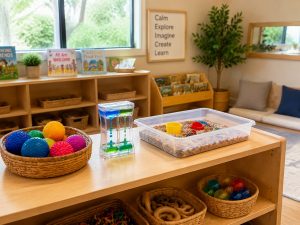
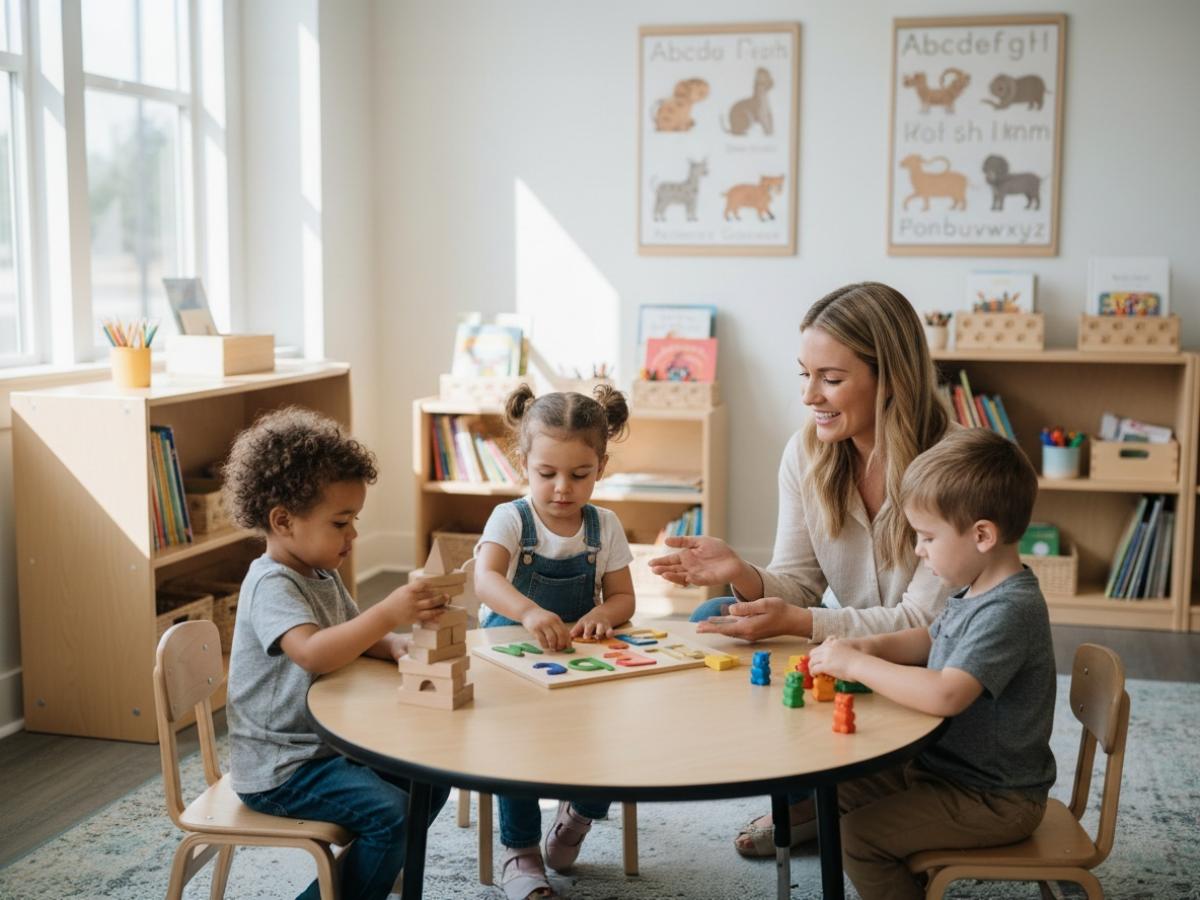
Selecting the right Preschool Learning Toys is no longer just about choosing colorful products that keep children occupied. As early childhood education continues to receive greater attention worldwide, parents, educators, distributors, and educational brands are placing more emphasis on toys that encourage meaningful learning while supporting children’s long-term development.
Research from the Harvard Center on the Developing Child suggests that the years before primary school are critical for building the brain architecture that supports future learning, behavior, and health. Likewise, the American Academy of Pediatrics highlights that playful learning helps children develop language, problem-solving abilities, creativity, and social skills through active interaction rather than passive observation.
These findings have also influenced purchasing decisions across the educational toy industry. Schools are looking for products that fit classroom objectives, retailers want collections with long-term market demand, and educational brands are increasingly seeking manufacturing partners capable of developing products that combine learning value with consistent quality.
From an industry perspective, one noticeable shift over the past few years is that professional buyers are asking more detailed questions before placing an order. Beyond appearance and pricing, discussions now frequently include learning objectives, classroom durability, material specifications, replacement components, packaging options, and product consistency. This reflects a broader trend toward evidence-based purchasing, where educational value is evaluated alongside manufacturing reliability.
Whether you are selecting products for a preschool classroom, expanding a retail product line, or developing a private-label collection, understanding what makes Preschool Learning Toys genuinely effective is the first step toward making informed purchasing decisions.
Why Preschool Learning Toys Improve Early Childhood Development
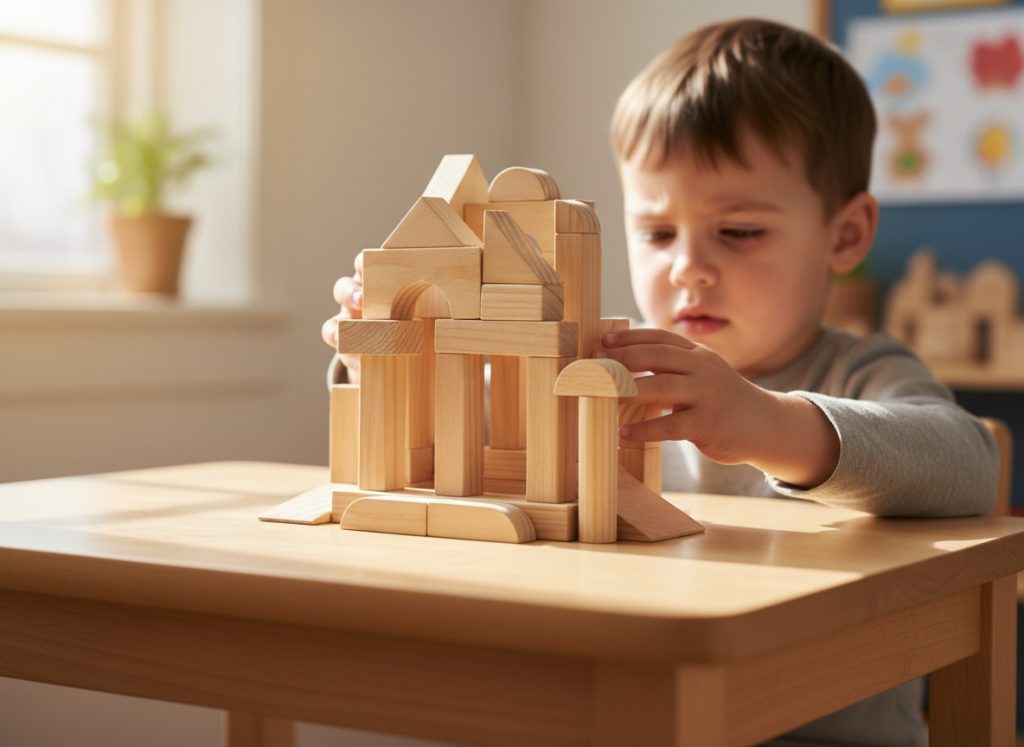
Early childhood represents one of the fastest periods of human development. Neuroscience research indicates that nearly 90% of brain development occurs before the age of five, making everyday learning experiences especially influential during the preschool years. At this stage, children are continuously developing language, memory, attention, emotional regulation, and social communication through interaction with people and their surroundings.
This is where well-designed Preschool Learning Toys become particularly valuable. Unlike toys created mainly for entertainment, educational products encourage children to explore, compare, build, classify, and communicate while gradually developing essential cognitive and physical skills.
Experienced preschool teachers often point out that the learning process becomes significantly richer when adults participate rather than simply supervise. Asking children why they chose a particular shape, encouraging them to describe what they are building, or inviting them to predict the outcome of an activity transforms play into meaningful conversation. These interactions strengthen vocabulary, critical thinking, and confidence while making learning more enjoyable.
Research consistently shows that children retain knowledge more effectively when learning combines hands-on exploration, repetition, and social interaction rather than passive instruction alone.
Another characteristic shared by effective Preschool Learning Toys is their ability to support several developmental goals simultaneously. A simple construction activity may strengthen fine motor coordination, introduce mathematical concepts such as balance and symmetry, encourage teamwork, and improve communication as children explain their ideas to classmates or family members.
From a product development perspective, educational toy designers increasingly focus on creating activities that remain useful as children’s abilities develop. Instead of offering only one fixed way to play, many products are intentionally designed to encourage increasingly complex exploration, allowing the same learning materials to support different stages of early childhood development.
What Makes Preschool Learning Toys More Effective Than Ordinary Toys?
Many toys are described as educational because they include letters, numbers, bright colors, or electronic features. In reality, these characteristics alone do not determine whether a product contributes to meaningful learning. Experienced educators and educational product developers generally evaluate learning toys according to a different set of criteria: whether the activity encourages children to think independently, solve problems, communicate with others, and remain engaged through repeated exploration.
From a product development perspective, educational value begins long before manufacturing. Rather than designing around appearance first, experienced development teams typically define the learning objectives at the earliest stage of product planning. This helps ensure that every activity supports measurable developmental outcomes instead of simply attracting attention for a short period.
Another important consideration is how children naturally interact with a product. During prototype evaluation, developers often observe whether children remain engaged without constant adult direction, whether the activity can be repeated in different ways, and whether it creates opportunities for conversation between children, teachers, and parents. These observations frequently influence decisions about component size, activity complexity, and instructional design before mass production begins.
Purposeful Play Encourages Deeper Learning
Educational specialists generally agree that children learn more effectively when they actively make decisions rather than simply pressing buttons or responding to automatic sounds and lights. Well-designed Preschool Learning Toys therefore encourage children to compare, classify, count, build, match, and communicate throughout the learning process.
A sorting activity provides a useful example. While the objective appears straightforward, children simultaneously practice color recognition, counting, logical classification, finger coordination, and language development when adults encourage them to explain their thinking. One carefully designed activity can therefore support several developmental objectives at the same time.
Construction toys provide another example of purposeful learning. Rather than directing children toward one correct answer, they encourage experimentation, observation, and revision. Children learn through trial and error, gradually developing problem-solving abilities while gaining confidence in their own ideas.
Open-Ended Design Creates Long-Term Educational Value
One characteristic consistently valued by experienced educators is open-ended play. Toys that can be used in multiple ways remain engaging as children’s abilities develop, allowing a single product to support progressively more advanced learning experiences over time.
In many preschool classrooms, the same building blocks are used throughout the academic year for entirely different activities. Younger children may begin by sorting shapes and stacking towers, while older preschoolers later use the same materials to explore storytelling, measurement, pattern recognition, and collaborative problem-solving. This flexibility not only extends the educational value of the product but also improves purchasing efficiency for schools and families.
The following comparison illustrates how different categories of Preschool Learning Toys contribute to children’s development.
| Toy Category | Primary Learning Objective | Developmental Benefits |
|---|---|---|
| Building Blocks | Spatial reasoning | Creativity, problem-solving, hand-eye coordination |
| Alphabet Puzzles | Early literacy | Letter recognition, vocabulary development |
| Counting Manipulatives | Mathematical thinking | Number sense, sequencing, comparison |
| Pretend Play Sets | Social-emotional learning | Communication, imagination, cooperation |
| STEM Activity Kits | Scientific exploration | Observation, reasoning, experimentation |
Rather than relying on electronic stimulation, these products encourage children to think independently, express ideas, and solve problems through hands-on exploration. Research in early childhood education continues to suggest that this type of active participation provides stronger support for executive function, language acquisition, and long-term learning than passive forms of play.
Best Types of Preschool Learning Toys for Different Learning Goals
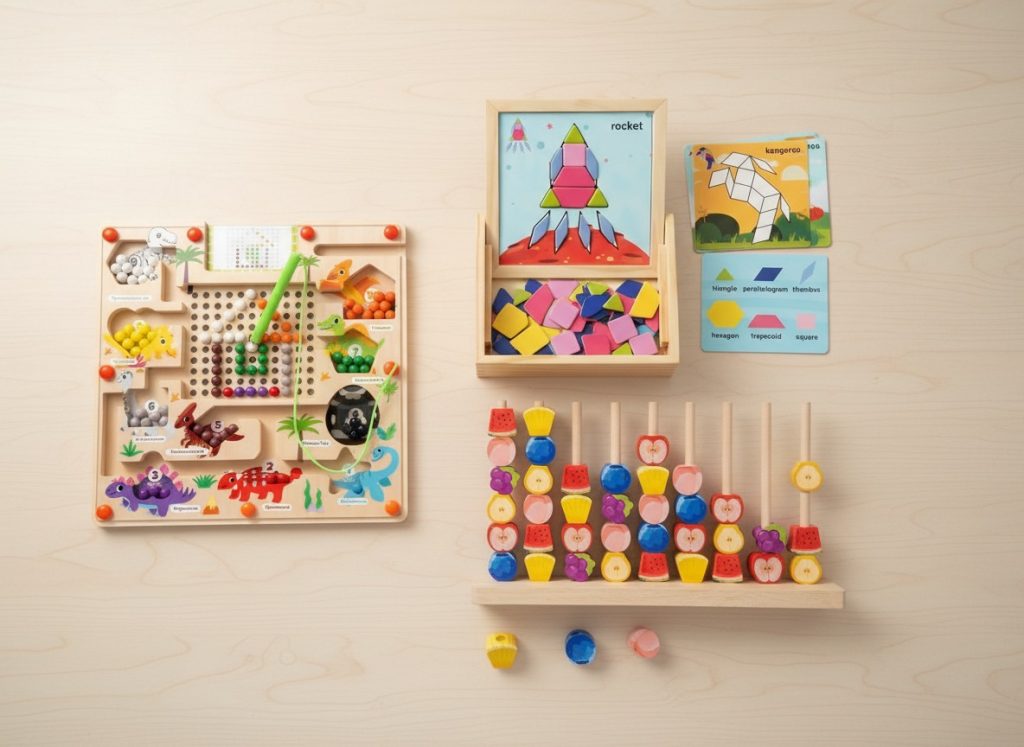
No single toy can support every aspect of early childhood development. Instead, experienced educators typically combine different categories of Preschool Learning Toys to create balanced learning environments that encourage children to develop language, mathematical thinking, creativity, social communication, and fine motor skills simultaneously.
Building and construction toys remain among the most versatile educational resources available. Beyond encouraging creativity, they help children understand spatial relationships, balance, sequencing, and simple engineering concepts. In many preschool classrooms, teachers extend these activities by asking children to explain what they have built or work together on shared projects. This approach transforms a construction exercise into an opportunity to strengthen communication, teamwork, and critical thinking.
Literacy-focused learning toys introduce children to letters, sounds, vocabulary, and storytelling before formal reading instruction begins. Rather than encouraging memorization alone, these products create repeated opportunities for children to recognize patterns, identify sounds, and build confidence through interactive activities with teachers or parents.
Hands-on mathematics materials provide another essential foundation. Counting bears, number rods, sorting trays, and pattern blocks help children understand quantities, sequencing, comparison, and basic mathematical relationships through direct manipulation instead of abstract concepts. Research suggests that children often develop stronger number sense when mathematical ideas are introduced through physical exploration.
Sensory learning materials also continue to play an important role in preschool education. Activities involving textures, movement, sorting, or tactile exploration help strengthen concentration while supporting sensory processing and fine motor coordination. These resources are particularly valuable because they accommodate different learning preferences within the same classroom.
STEM learning has become one of the fastest-growing areas in early childhood education. Although preschool STEM activities remain intentionally simple, they encourage children to ask questions, make predictions, test ideas, and observe results through guided exploration. Instead of teaching complex scientific theories, these products nurture curiosity and logical thinking that support future learning.
The following comparison summarizes how different categories of Preschool Learning Toys contribute to specific developmental objectives.
| Learning Goal | Recommended Preschool Learning Toys | Typical Learning Outcomes |
|---|---|---|
| Language Development | Alphabet puzzles, storytelling cards | Vocabulary, communication, early literacy |
| Fine Motor Skills | Threading toys, peg boards, lacing beads | Finger strength, coordination, pencil readiness |
| Mathematical Thinking | Counting manipulatives, sorting games | Number recognition, sequencing, comparison |
| Scientific Exploration | STEM construction kits, experiment sets | Observation, reasoning, curiosity |
| Social Development | Pretend play sets, role-play materials | Cooperation, communication, emotional expression |
Rather than replacing one another, these categories complement each other by supporting different aspects of child development. For educational brands, distributors, and schools, building a balanced product portfolio often creates greater long-term value than focusing on a single product category.
How to Choose Preschool Learning Toys for Schools, Retailers, and Brands
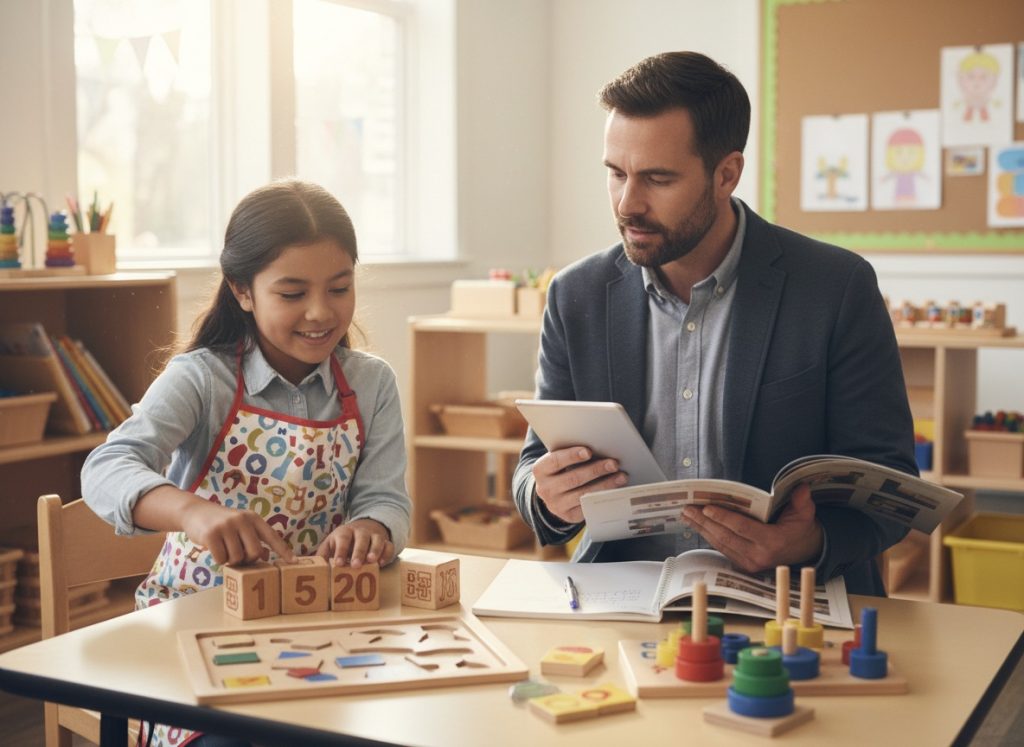
Choosing Preschool Learning Toys requires balancing educational objectives with practical purchasing considerations. While attractive designs may capture initial attention, experienced buyers generally evaluate products according to how well they perform in real educational settings over months or even years of use.
One trend that has become increasingly clear across preschool procurement projects is the growing preference for products that support multiple learning objectives. Instead of purchasing separate toys for every subject, many schools now prioritize versatile learning materials that can be incorporated into language activities, mathematics lessons, collaborative projects, and creative play. This approach improves classroom efficiency while helping maximize the educational value of each product.
Educational Value Should Guide Every Purchasing Decision
Educational consultants often recommend beginning with learning outcomes rather than product categories. Before selecting new learning materials, many schools first identify which developmental skills they want to strengthen, whether that involves language development, fine motor coordination, mathematical thinking, social communication, or problem-solving.
This objective-driven approach also benefits retailers and educational brands. Rather than offering isolated products, they can develop coordinated collections that address multiple developmental stages and provide customers with complete learning solutions instead of individual items.
Another consideration frequently discussed by preschool educators is flexibility. Products that support both teacher-guided instruction and independent exploration tend to remain useful for longer periods, making them a more sustainable investment for classrooms and families alike.
Product Specifications Matter in Professional Procurement
Educational value is only one part of the purchasing process. Professional procurement teams also evaluate technical specifications that influence durability, maintenance, and long-term classroom performance.
For example, building blocks manufactured from solid beech wood with an average density of approximately 720 kg/m³ generally provide greater resistance to repeated daily handling. Educational cards protected with 250–350 μm laminated film are easier to clean and better suited to environments where multiple children use the same materials throughout the school day.
Beyond physical specifications, experienced buyers increasingly request information about production consistency, packaging options, replacement components, quality control procedures, and delivery reliability before committing to large orders. These details help reduce procurement risks while ensuring that products continue to meet classroom expectations over time.
From an industry perspective, suppliers that provide transparent technical information, clearly defined learning objectives, and consistent manufacturing standards are generally better positioned to establish long-term partnerships with schools, distributors, and educational brands. As purchasing decisions become more evidence-driven, this level of transparency has become an important indicator of product quality and supplier reliability.
What Experienced Educational Toy Manufacturers Focus On
Behind every successful collection of Preschool Learning Toys is a development process that balances educational objectives with practical manufacturing considerations. While product appearance plays an important role in attracting attention, experienced manufacturers understand that long-term market success depends on how well a toy performs in real learning environments.
During product development, educational objectives are typically established before visual design begins. Instead of asking only whether a toy looks engaging, development teams define the developmental skills the product should encourage, such as language acquisition, fine motor coordination, logical reasoning, or collaborative problem-solving. This objective-first approach helps ensure that every activity has a clear educational purpose.
Prototype evaluation is another essential stage. Before moving into mass production, manufacturers often assess whether children can understand the activity naturally, whether teachers can integrate it into different lesson plans, and whether the product remains engaging after repeated use. Feedback collected during this stage may lead to adjustments in component size, activity complexity, storage methods, or instruction design.
Experienced manufacturers also consider how products perform throughout their lifecycle. Classrooms require learning materials that can withstand frequent handling, remain easy to organize, and support both individual and group activities. As a result, durability, production consistency, and replacement part availability have become important evaluation criteria alongside educational value.
Material transparency has likewise become increasingly important. Professional buyers often request specifications such as FSC-certified wood, BPA-free plastic components, water-based coatings, recommended cleaning methods, and product dimensions before making purchasing decisions. Providing measurable technical information allows buyers to compare products objectively and supports greater confidence throughout the procurement process.
For educational brands expanding into international markets, manufacturers may also provide OEM and ODM development, customized packaging, multilingual manuals, barcode labeling, and packaging optimization for different retail channels. These services enable brands to build differentiated product collections while maintaining consistent quality across multiple markets.
What Wholesale Buyers Usually Look For When Sourcing Preschool Learning Toys
Wholesale purchasing involves much more than comparing prices. Educational distributors, retailers, and procurement teams evaluate suppliers according to their ability to provide reliable products, stable production capacity, and long-term partnership support.
One factor frequently mentioned during procurement discussions is product consistency. Buyers expect dimensions, colors, instructional materials, and packaging specifications to remain consistent across production batches so customers receive the same experience regardless of order volume or delivery date.
Another priority is product portfolio planning. Suppliers capable of offering coordinated collections—including literacy materials, STEM resources, mathematics manipulatives, sensory learning products, and pretend play sets—allow buyers to create more complete educational solutions while simplifying supplier management.
The following comparison highlights several purchasing considerations commonly used when evaluating suppliers.
| Procurement Factor | Why It Matters |
|---|---|
| Educational objectives | Supports curriculum-based learning |
| Product durability | Extends classroom service life |
| Material specifications | Enables objective product comparison |
| OEM & ODM capability | Supports private-label development |
| Customized packaging | Improves retail presentation |
| Stable production capacity | Ensures reliable long-term supply |
| Replacement components | Helps reduce maintenance costs |
While pricing remains an important consideration, experienced buyers increasingly evaluate total product value. Reliable communication, transparent specifications, consistent quality, and responsive after-sales support often contribute just as much to successful long-term partnerships as competitive pricing.
Latest Trends Shaping the Preschool Learning Toys Market
The market for Preschool Learning Toys continues to develop alongside advances in early childhood education and changing customer expectations. Industry reports consistently indicate growing demand for products that combine educational effectiveness with long-term durability and flexible classroom applications.
One of the strongest trends is the continued growth of STEM learning resources. Rather than introducing advanced scientific concepts, preschool STEM products encourage observation, experimentation, logical thinking, and problem-solving through simple, age-appropriate activities. This approach helps children develop curiosity while preparing them for more structured learning in primary school.
Montessori-inspired learning materials also remain highly popular. Their emphasis on independent exploration, self-directed learning, and hands-on experiences aligns closely with many contemporary preschool teaching approaches. As a result, many educational institutions now combine Montessori principles with traditional classroom instruction.
Purchasing expectations are evolving as well. Schools and distributors increasingly request transparent technical information instead of relying on general marketing descriptions. Material specifications, product dimensions, maintenance requirements, expected service life, and packaging details have become standard evaluation criteria during procurement.
At the same time, many educators continue to recognize the unique value of screen-free learning experiences. While digital tools have an important place in education, physical Preschool Learning Toys continue to provide opportunities for sensory exploration, face-to-face communication, collaborative learning, and hands-on problem-solving that are difficult to replicate through screen-based activities alone.
These trends suggest that future product development will increasingly focus on measurable educational outcomes, practical classroom usability, and sustainable product design rather than short-term novelty.
FAQs
What age are Preschool Learning Toys designed for?
Most Preschool Learning Toys are developed for children between 3 and 5 years old, although individual products may focus on specific developmental milestones. Buyers should evaluate recommended age ranges together with learning objectives rather than relying on age alone.
Why is open-ended play recommended?
Open-ended learning allows children to use the same materials in different ways as their abilities develop. Research suggests that this approach encourages creativity, flexible thinking, and longer engagement compared with activities that have only one predetermined outcome.
What factors should schools consider before purchasing Preschool Learning Toys?
Schools typically evaluate educational value alongside durability, classroom usability, maintenance requirements, replacement component availability, and curriculum compatibility. Considering these factors together helps maximize both learning outcomes and long-term investment value.
How do STEM Preschool Learning Toys support early childhood education?
STEM learning materials encourage children to observe, predict, experiment, and solve problems through hands-on activities. Rather than teaching advanced scientific knowledge, they help develop curiosity, logical thinking, and confidence when exploring new ideas.
Why do professional buyers pay attention to material specifications?
Clear specifications—including FSC-certified wood, BPA-free plastics, product dimensions, and maintenance guidance—allow buyers to compare products using objective criteria instead of relying on general promotional claims. This transparency supports more informed purchasing decisions.
Conclusion
Choosing effective Preschool Learning Toys involves much more than selecting products with attractive designs. The most valuable educational toys combine clearly defined learning objectives, thoughtful product design, durable construction, and opportunities for children to explore, communicate, and solve problems through meaningful play.
For schools, distributors, retailers, and educational brands, purchasing decisions increasingly depend on measurable product information rather than broad marketing claims. Evaluating educational outcomes, material specifications, production consistency, and supplier capabilities helps create stronger purchasing strategies while supporting long-term customer satisfaction.
As the global demand for high-quality early learning resources continues to grow, businesses that invest in well-designed Preschool Learning Toys and collaborate with experienced manufacturing partners will be better positioned to meet the evolving needs of educators, parents, and educational institutions.
Whether you are developing a private-label collection, sourcing products for wholesale distribution, or expanding your educational toy portfolio, selecting products that balance learning value with manufacturing quality can help strengthen your brand while creating lasting value for young learners.