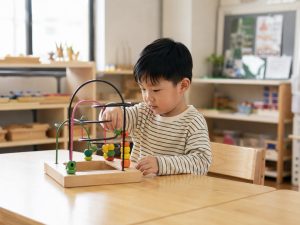
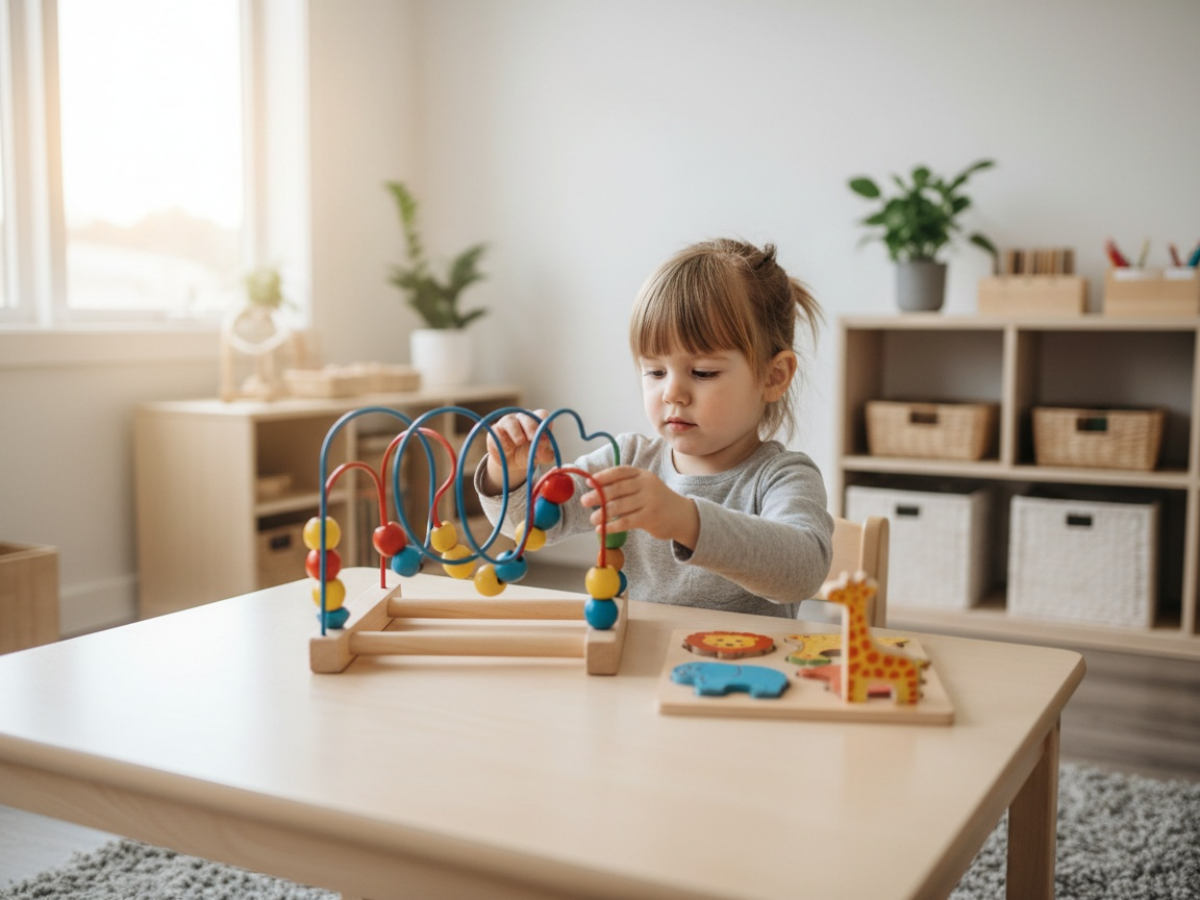
If your goal is to help preschoolers strengthen fine motor skills, concentration, and independent problem-solving, Maze Toys often provide more opportunities for repeated hands-on practice than traditional puzzle toys. That does not mean puzzle toys are less valuable—both categories support early childhood development, but they encourage different types of learning.
Research from the Harvard Center on the Developing Child highlights that repeated hands-on experiences and active exploration play an important role in building the brain architecture that supports future learning. Similarly, the American Academy of Pediatrics (AAP) encourages play-based learning that combines physical interaction with cognitive engagement during the preschool years. These findings help explain why Maze Toys have become increasingly common in preschools, Montessori classrooms, and early learning centers.
This article provides an objective comparison of Maze Toys vs Puzzle Toys, examining their developmental benefits, classroom applications, and purchasing considerations to help educators, distributors, and educational toy brands make informed decisions.
What Makes Maze Toys Different from Puzzle Toys?
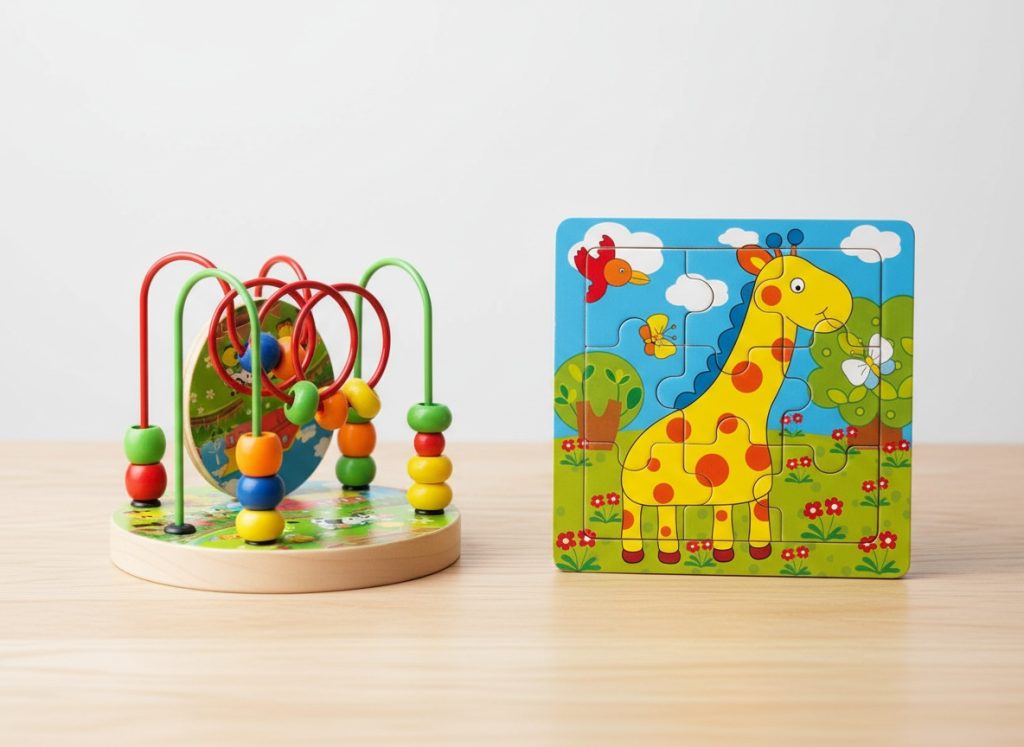
Although both categories support preschool learning, they encourage children to think and interact in different ways. Maze Toys require continuous movement, asking children to guide beads, magnetic pens, or balls through fixed pathways. Throughout the activity, children practice planning, coordination, concentration, and sequential thinking while receiving immediate visual feedback.
Puzzle toys, in contrast, encourage children to recognize shapes, colors, images, or patterns before placing separate pieces into the correct position. Their primary focus is visual recognition and spatial reasoning rather than continuous movement.
Research published by the National Association for the Education of Young Children (NAEYC) suggests that meaningful play experiences are most effective when children actively explore, experiment, and repeat actions independently. Because Maze Toys naturally encourage repeated movement while puzzle toys strengthen visual perception, many preschool programs include both categories to create a balanced learning environment.
How Continuous Movement Supports Learning
Unlike many educational toys that end after a single solution, Maze Toys allow children to repeat the same activity multiple times while experimenting with different movement strategies. This repeated interaction encourages persistence and independent learning—two abilities closely associated with school readiness.
Studies in early childhood development indicate that regular fine motor practice before primary school contributes positively to handwriting readiness, attention control, and classroom independence. Since maze activities can be restarted immediately, children often spend more time practicing without requiring adult intervention.
Why Maze Toys Stand Out in Preschool Learning
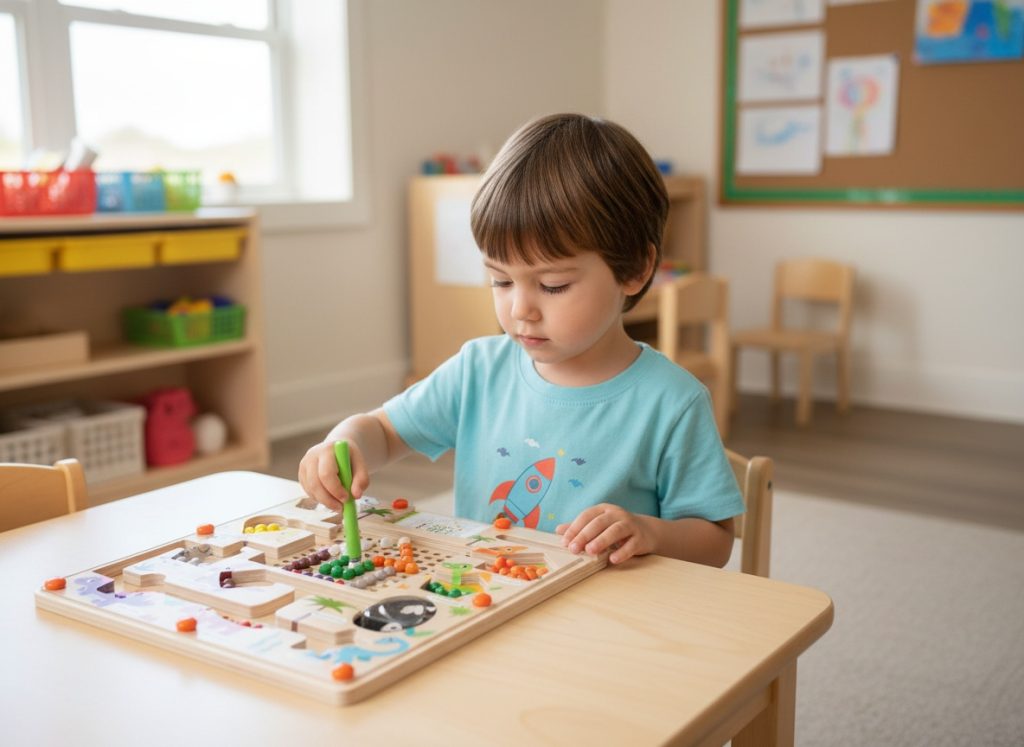
One reason Maze Toys continue to gain popularity is their ability to combine physical movement with cognitive challenges in a single activity. Children are encouraged to solve problems while keeping their hands actively engaged, creating a stronger connection between thinking and movement.
Studies on early childhood education have found that children participating in structured fine motor activities for 10–15 minutes per session, three to four times each week, generally demonstrate better hand control and longer task persistence than children who spend the same amount of time on less interactive learning activities.
Based on our experience working with educational toy buyers and developing products for preschool programs, customers increasingly prioritize classroom durability, progressive learning value, and ease of repeated use over decorative features. These practical considerations often have a greater influence on long-term purchasing decisions than appearance alone.
Why Teachers Frequently Choose Maze Toys
Many preschool teachers appreciate Maze Toys because they are suitable for both guided instruction and independent learning corners. A single toy can support color recognition, counting activities, number sequencing, or simple problem-solving exercises, making it a versatile classroom resource throughout the school year.
Because the learning process emphasizes exploration rather than speed, children are encouraged to develop confidence through repeated attempts instead of focusing only on finding the correct answer.
Maze Toys vs Puzzle Toys: A Developmental Comparison
Rather than asking which educational toy is universally better, it is more useful to compare how each supports different developmental objectives. Puzzle toys remain highly effective for visual perception and spatial reasoning, while Maze Toys encourage continuous practice of motor coordination, logical sequencing, and independent exploration.
| Development Area | Maze Toys | Puzzle Toys |
| Fine motor development | Excellent | Good |
| Hand-eye coordination | Excellent | Good |
| Logical thinking | Excellent | Excellent |
| Visual recognition | Good | Excellent |
| Independent exploration | Excellent | Good |
| Repetitive practice | Excellent | Moderate |
The comparison shows that both products contribute meaningfully to preschool learning. However, because Maze Toys allow children to repeat movements immediately without reorganizing multiple loose pieces, they generally provide more uninterrupted opportunities for practice. For younger preschoolers who are still refining hand control and coordination, this repeated interaction can offer additional developmental benefits.
How to Choose High-Quality Maze Toys for Preschoolers
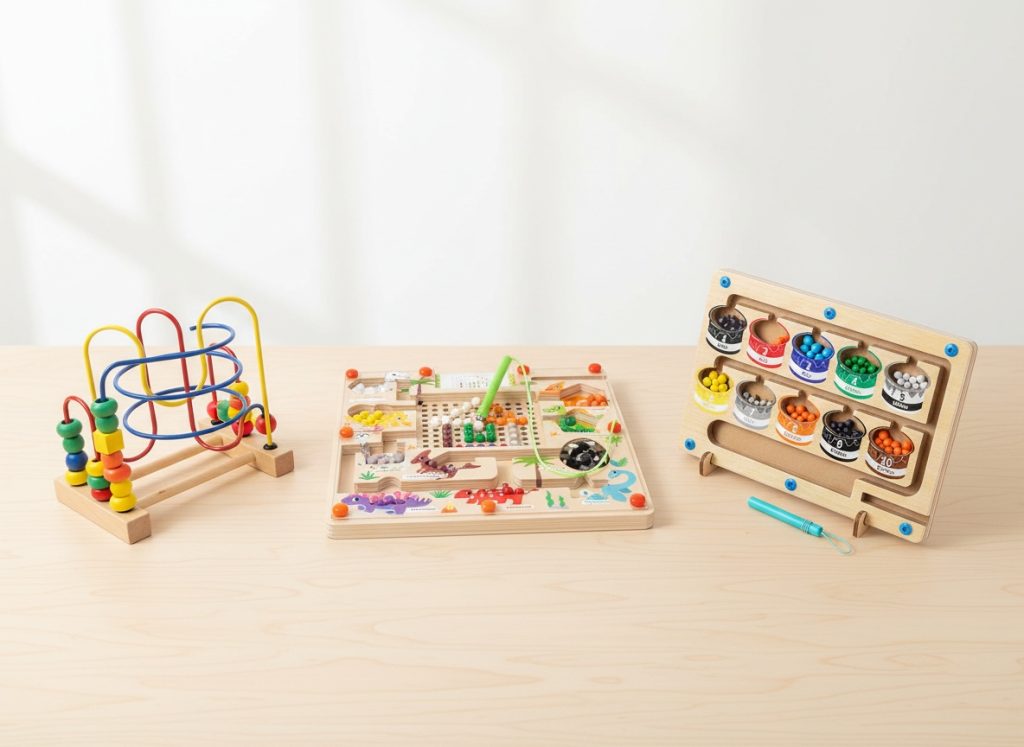
Selecting Maze Toys involves more than comparing appearance or price. Educational buyers increasingly evaluate measurable product specifications because these directly influence classroom performance, durability, and the overall learning experience.
Many preschool products use wooden panels between 12 mm and 18 mm thick, providing sufficient structural stability for frequent classroom use. Beads are commonly designed with a minimum diameter of 32 mm, while steel tracks measuring 4–5 mm in diameter help ensure smooth movement and long-term durability. Rounded edges with an approximate R3–R5 mm radius further improve handling comfort during everyday classroom activities.
Consider Progressive Learning Design
A well-designed Maze Toy should continue to challenge children as their abilities improve. Products that begin with simple pathways and gradually introduce color sorting, alphabet recognition, number sequencing, or multi-layer maze systems generally provide greater long-term educational value than products with only one level of difficulty.
As children’s skills develop, the same toy continues to provide meaningful challenges instead of becoming obsolete after only a few uses. This progression also helps educational institutions maximize the value of their teaching resources.
Why Educational Maze Toys Continue to Gain Market Attention
Demand for educational toys has steadily shifted from simple entertainment toward products that encourage active participation and measurable learning outcomes. Parents, educators, and schools increasingly seek learning materials that support both cognitive development and practical skill building.
Compared with many traditional puzzle products, Educational Maze Toys fit naturally into Montessori-inspired classrooms, STEM activities, occupational therapy sessions, and home learning environments. Their versatility allows one product to support multiple learning objectives, making them an efficient choice for educational settings.
From an industry perspective, buyers are also placing greater emphasis on consistent manufacturing quality, customization capabilities, and long-term product reliability. Manufacturers that can provide OEM and ODM services, customized packaging, and stable production capacity are often better positioned to meet the evolving needs of educational brands and distributors.
Choosing the Right Maze Toy Manufacturing Partner
For distributors, educational brands, and wholesalers, selecting the right manufacturing partner is just as important as selecting the right product. Reliable production capacity, consistent quality control, and flexible customization options all contribute to long-term business success.
Many buyers also look for manufacturers capable of supporting OEM and ODM projects, customized packaging, exclusive product designs, and dependable delivery schedules. These capabilities help brands differentiate their product lines while responding more efficiently to changing market demand.
| Buyer Type | Common Purchasing Focus |
| Preschool | Durable wooden Maze Toys with progressive learning levels |
| Montessori school | Magnetic Maze Toys and practical learning activities |
| Toy retailer | Multiple Maze Toy themes for different customer groups |
| Educational brand | OEM and ODM Maze Toys with private-label packaging |
FAQs
Are Maze Toys better than puzzle toys?
Both categories provide educational value, but they emphasize different skills. Puzzle toys are particularly effective for visual recognition and spatial reasoning, while Maze Toys encourage repeated fine motor practice, hand-eye coordination, and logical sequencing. Many educators recommend combining both to create a balanced learning environment.
What age are Maze Toys designed for?
Most preschool Maze Toys are designed for children between 3 and 6 years old, although the ideal difficulty level depends on the complexity of the pathways and learning objectives rather than age alone.
Are wooden Maze Toys suitable for classrooms?
Wooden Maze Toys are widely used in educational settings because they can withstand frequent classroom use when designed with appropriate structural specifications, including thicker wooden panels, rounded edges, and securely fixed moving components.
What features should buyers look for when sourcing Maze Toys?
When sourcing Maze Toys for preschools, retail stores, or educational brands, buyers should look beyond appearance and evaluate practical product specifications. Factors such as 12–18 mm wooden panel thickness, beads with a minimum diameter of 32 mm, smooth rounded edges, durable metal tracks, and age-appropriate learning progression all contribute to long-term product performance. For businesses planning OEM or ODM projects, it is also worth considering whether the manufacturer offers customization options, consistent quality control, flexible packaging solutions, and reliable production capacity. These factors can help ensure the products meet both educational requirements and market expectations.
Conclusion
Both Maze Toys and puzzle toys make valuable contributions to preschool education, but they achieve this through different learning approaches. Puzzle toys remain highly effective for developing visual recognition and spatial reasoning, while Maze Toys create more opportunities for continuous practice of fine motor control, hand-eye coordination, concentration, and logical thinking.
Research from organizations such as the Harvard Center on the Developing Child, the American Academy of Pediatrics, and NAEYC consistently highlights the importance of active, hands-on learning during early childhood. These findings, combined with practical classroom experience, explain why Maze Toys continue to gain recognition among educators and educational product buyers.
For distributors, educational brands, and childcare organizations, selecting Maze Toys with measurable product specifications and progressive learning designs can improve both educational outcomes and customer satisfaction. Partnering with an experienced Maze Toy manufacturer that offers reliable production, customization services, and consistent quality also helps businesses build stronger product portfolios while responding effectively to the growing demand for high-quality educational toys.