
Children rarely think about learning when they are playing. When they guide a bead through a winding path or move a magnetic ball through a narrow track, they are simply exploring the challenge in front of them. Yet behind this simple behavior, Maze Toys have been widely recognized in early childhood education as one of the most effective hands-on learning tools for developing concentration, coordination, and problem-solving skills.
In recent years, the global demand for educational toys has continued to rise as parents, educators, and commercial learning centers place greater emphasis on learning through play. Market research in the toy industry shows that interactive educational products are experiencing steady growth, driven by increasing awareness of cognitive development during early childhood. Within this trend, Maze Toys stand out because they combine physical interaction, visual engagement, and logical thinking in a single activity.
Unlike electronic toys that rely on sounds or animations, Maze Toys require children to actively participate in every step. Each movement involves observation, decision-making, and fine motor control. This creates a continuous feedback loop where children learn through trial, correction, and gradual improvement. As a result, wooden maze toys, magnetic maze toys, and maze activity panels are now widely used in preschools, Montessori classrooms, therapy centers, indoor playgrounds, and family learning environments.
From a commercial perspective, the growing popularity of Maze Toys also reflects a broader shift in the educational toy industry. Buyers are increasingly prioritizing products that offer long-term engagement, durable construction, and clear developmental value rather than short-term entertainment appeal.
Why Maze Toys Capture Children’s Attention Naturally
Children are naturally drawn to activities that offer achievable challenges. Maze Toys provide exactly this type of experience by combining curiosity with problem-solving. Instead of giving instant results, they encourage children to explore different routes, make decisions, and observe the outcome of each movement.
This process is often described in child development research as active engagement, where learning occurs through direct interaction rather than passive observation. Every attempt in a maze becomes part of a learning cycle, helping children understand cause and effect in a very intuitive way.
How Maze Toys Create Continuous Engagement Through Feedback
One of the key reasons children stay focused on Maze Toys for extended periods is the immediate visual feedback they receive. Every successful movement—whether sliding a bead into place or guiding a magnetic ball through a turn—produces a visible result. This reinforces motivation without external rewards.
As children repeat the activity, they gradually begin to anticipate outcomes before moving. Instead of random attempts, they start planning routes based on previous experience. This shift from reaction to planning is a critical step in early cognitive development and is one of the reasons educators continue to use Maze Toys in structured learning environments.
Learning Through Play as a Natural Process
Another important factor is that Maze Toys do not feel like formal learning tasks. Children perceive them as games, not lessons. This reduces pressure and encourages exploration.
During play, they naturally develop:
- visual tracking skills
- spatial understanding
- hand movement control
- decision-making ability
Without realizing it, children are building foundational skills that later support writing, mathematics, and logical reasoning. This is why Maze Toys are often categorized under learning through play and interactive play equipment in early education systems.
How Maze Toys Support Cognitive and Motor Development
While children are focused on completing a maze, multiple developmental systems are activated at the same time. This multi-layered engagement is one of the reasons Maze Toys are considered more effective than single-skill toys.
Rather than isolating one ability, maze-based activities integrate coordination, attention, and reasoning into one continuous process.
| Development Area | Learning Contribution |
| Fine motor skills | Improves finger strength and precision through controlled movement |
| Hand-eye coordination | Aligns visual tracking with physical action |
| Spatial awareness | Builds understanding of direction, distance, and positioning |
| Logical thinking | Encourages planning before action |
| Concentration | Supports sustained attention over time |
| Problem-solving | Develops trial-and-adjust thinking patterns |
This combination makes Maze Toys a common choice in preschool classrooms, Montessori environments, and occupational therapy programs where developmental progress is measured through hands-on interaction rather than instruction alone.
How Maze Toys Strengthen Fine Motor Control
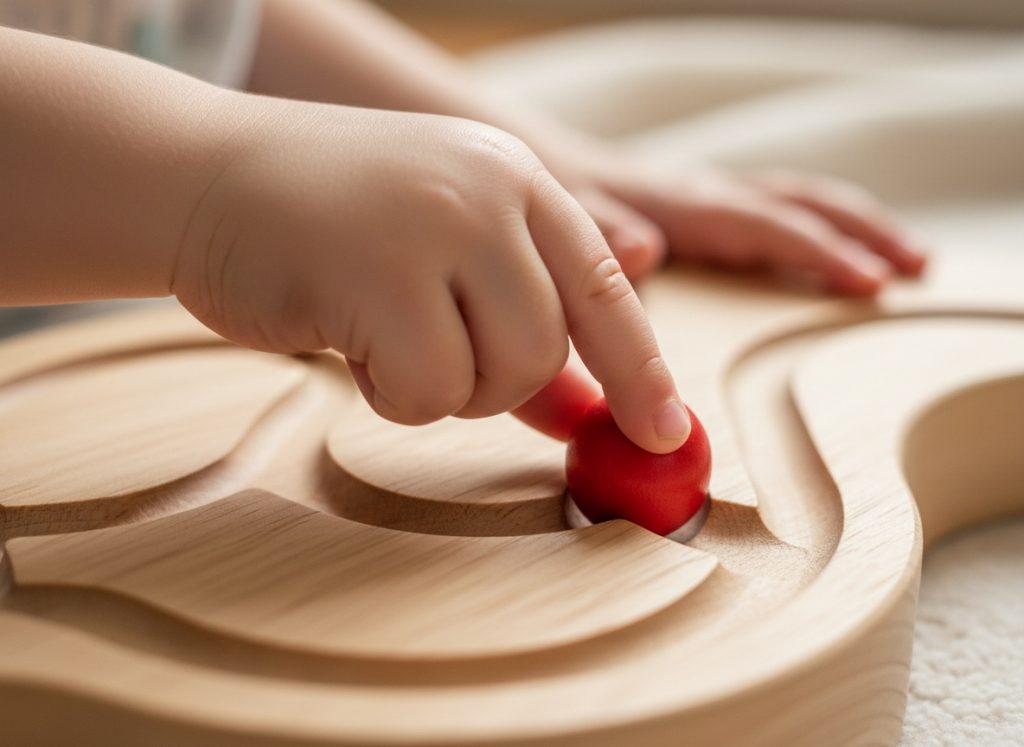
Fine motor development is essential for early childhood tasks such as writing, drawing, and self-care activities. Maze Toys, especially wooden versions, require repeated small movements such as pinching, sliding, and rotating components along a fixed path.
Commercial-grade wooden maze toys typically use 12–18 mm thick panels with rounded edges to ensure consistent structural stability during frequent use. These physical characteristics allow children to engage safely and repeatedly without damaging the product, making them suitable for classroom and commercial environments.
Developing Spatial Thinking Before Formal Education
Spatial awareness is one of the earliest cognitive skills children begin developing. Through maze interaction, they naturally understand concepts such as direction, sequence, and obstacle navigation.
This early exposure to spatial reasoning later supports academic learning in areas such as geometry, science, and problem-solving. Children who frequently engage in hands-on spatial activities often demonstrate stronger adaptability when encountering new tasks, as they are accustomed to analyzing multiple possibilities before acting.

Different Types of Maze Toys for Different Learning Environments
Although all Maze Toys share the same core principle of guiding an object through a path, their design variations serve different educational and commercial purposes. Selecting the right type depends on the learning environment and intended usage scenario.
Why Wooden Maze Toys Remain Widely Used
Among all categories, wooden maze toys continue to be widely adopted due to their durability and long service life. They are commonly found in preschools and early learning centers where daily usage is frequent and consistent.
Typical specifications for commercial wooden models include 12–18 mm panels, smooth rounded edges, and water-based surface coatings designed for repeated cleaning. Instead of focusing on general claims, buyers often evaluate measurable factors such as material thickness, finishing quality, and structural consistency.
Magnetic Maze Toys and Activity Panels in Modern Learning Spaces
Magnetic maze toys introduce a different level of precision by requiring children to guide enclosed steel balls using a magnetic pen. Many designs include 20–60 small balls distributed across color-coded paths, encouraging careful movement control and focus.
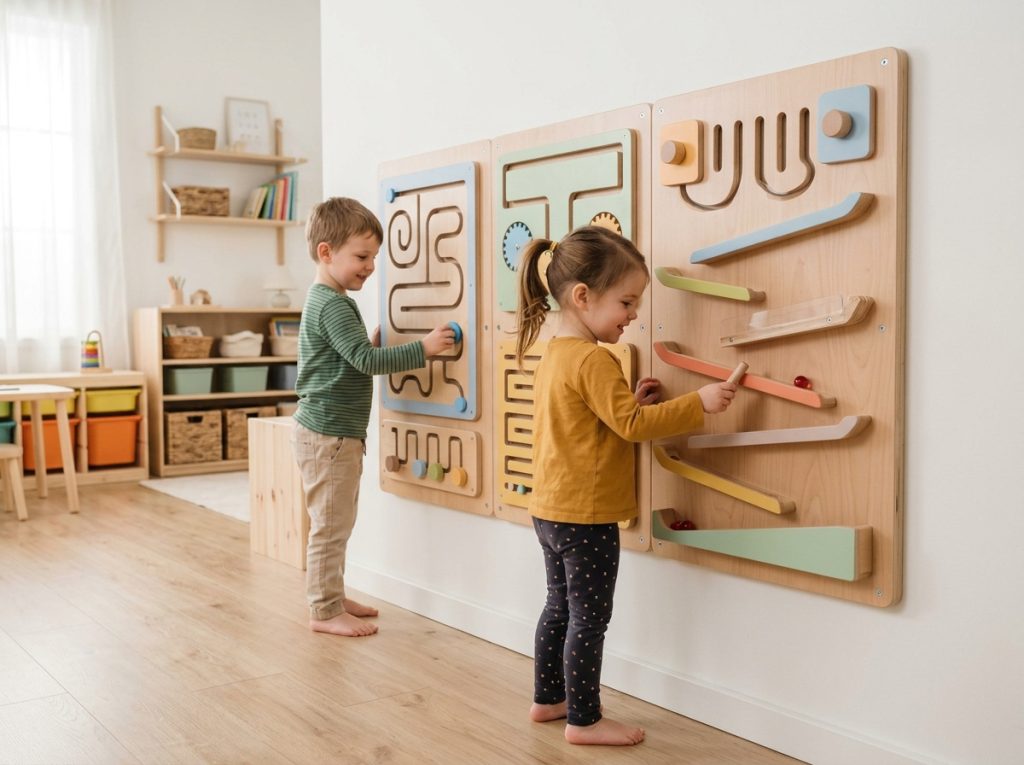
For larger environments such as indoor playgrounds, libraries, and children’s museums, wall-mounted maze activity panels provide a shared interactive experience. These systems allow multiple children to play simultaneously while optimizing space usage, making them especially suitable for commercial learning environments.
Why Maze Toys Are Increasingly Used in Commercial Play Spaces
The application of Maze Toys has expanded significantly beyond home and classroom environments. Today, they are widely used in indoor playgrounds, children’s museums, shopping mall play zones, and pediatric waiting areas where structured yet engaging activities are required.
This growth is closely linked to a broader shift in the educational toy industry. Commercial operators are increasingly prioritizing equipment that delivers consistent engagement without requiring digital systems or ongoing technical maintenance. In this context, Maze Toys offer a reliable solution because they combine durability, repeatable interaction, and educational value in a single product.
Unlike electronic entertainment devices, maze-based structures encourage children to interact physically with the environment. Each movement requires observation and decision-making, which helps maintain engagement over longer periods without external stimulation. Wall-mounted maze activity panels are particularly effective in commercial settings because they allow multiple users to participate simultaneously while optimizing available space.
Key Selection Criteria for Commercial Buyers
When evaluating Maze Toys for commercial use, professional buyers tend to focus on structural performance and long-term operational stability rather than decorative features.
| Evaluation Factor | Commercial Importance |
| Structural thickness (12–18 mm) | Ensures durability under continuous use |
| Edge finishing (R3–R5 rounding) | Enhances safety and user experience |
| Interaction density | Influences engagement duration |
| Surface coating resistance | Supports frequent cleaning in public areas |
| Component durability | Reduces maintenance and replacement frequency |
| Custom design capability | Supports branding and thematic integration |
These factors are particularly important in environments such as indoor playgrounds and educational facilities, where equipment is used by large groups of children throughout the day.
How to Choose a Reliable Maze Toys Manufacturer
Selecting a qualified Maze Toys manufacturer plays a critical role in ensuring product consistency, safety, and long-term value. For distributors, educational suppliers, and project-based buyers, manufacturing capability often matters as much as product design.
Professional manufacturers typically evaluate product requirements based on usage scenarios before production begins. A design intended for retail distribution may prioritize compact size and visual appeal, while commercial installations require higher structural strength and long-term durability.
The Role of Customization in Maze Toys Production
Customization has become an increasingly important factor in the educational toy market. Many buyers now prefer tailored solutions rather than standard designs, especially for branding or institutional projects.
Common customization options include:
- Educational themes such as animals, transportation, nature, or space
- Brand logos and visual identity integration
- Modular wall-mounted configurations
- Adjustable difficulty levels for different age groups
- Packaging design for retail or institutional distribution
Through customization, Maze Toys can be adapted to different learning environments while also supporting brand differentiation in competitive markets.
Long-Term Educational Value of Maze Toys
The long-term value of Maze Toys lies in their ability to support repeated, self-directed learning experiences. Unlike toys that offer fixed outcomes, maze-based activities allow children to explore multiple solutions, encouraging flexible thinking and adaptive problem-solving.
This type of interaction aligns closely with modern early childhood education principles, where learning is viewed as an active process rather than passive instruction. Through repeated engagement, children naturally develop concentration, coordination, and spatial reasoning skills.
In addition, Maze Toys are highly versatile. The same core concept can be applied across different product forms, including tabletop wooden mazes, magnetic boards, sensory activity panels, and large-scale interactive walls. This flexibility allows educational institutions and commercial operators to create layered learning environments using a consistent design language.
As a result, Maze Toys continue to maintain relevance across both educational and commercial sectors, even as new forms of digital entertainment emerge.
FAQs
At what age are Maze Toys suitable?
Most Maze Toys are suitable for children aged 18 months and above. Simpler bead-based designs are ideal for early exploration, while more complex magnetic or wall-mounted systems are better suited for preschool-aged children.
What skills do Maze Toys help develop?
Maze-based activities support the development of fine motor skills, hand-eye coordination, spatial awareness, concentration, and early problem-solving abilities through hands-on interaction.
Are wooden Maze Toys better than plastic versions?
Both materials have advantages. Wooden maze toys are commonly used in educational environments due to their durability and stable structure, while plastic versions are often lighter and more suitable for portable applications.
Can Maze Toys be used in commercial playgrounds?
Yes. Wall-mounted and large-format maze activity panels are widely used in indoor playgrounds, educational centers, and public spaces because they support multiple users and require minimal maintenance.
Conclusion
The continued popularity of Maze Toys is closely connected to their unique ability to combine play with learning. By encouraging children to observe, experiment, and adjust their actions, these toys naturally support cognitive and physical development without relying on structured instruction.
As the demand for learning through play continues to grow globally, Maze Toys remain a stable and expanding category within the educational toy industry. Their adaptability across home, classroom, and commercial environments makes them a practical choice for a wide range of applications.
For distributors, educational brands, and project developers, selecting a reliable Maze Toys manufacturer is essential not only for product quality but also for ensuring customization flexibility, consistent supply, and long-term cooperation potential.
In a market increasingly focused on meaningful engagement rather than simple entertainment, Maze Toys continue to demonstrate strong educational value and commercial relevance.