
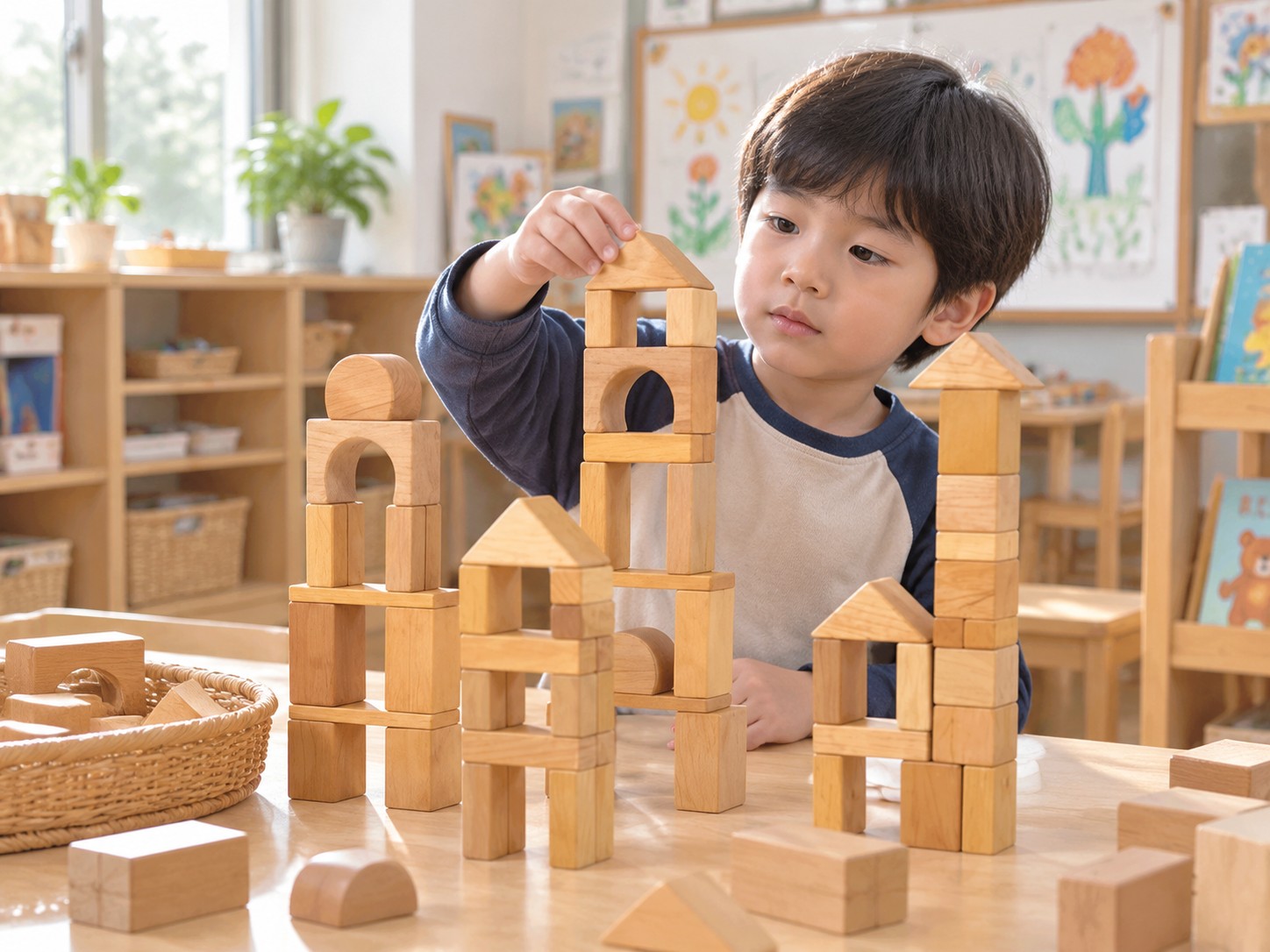
When early childhood educators and school buyers evaluate toys for their classrooms, the question isn’t just “Is this safe?” or “Is this colorful enough?” The real question is: Does this toy actually support how young children learn?
Many classrooms still rely on single-function toys — a toy that makes one sound when you press one button, or a puzzle with only one correct solution. These products are easy to manufacture and easy to sell, but they put a ceiling on learning. Children master them quickly, lose interest, and move on. The toy ends up in a bin, unused.
Open-ended toys work differently. A set of wooden blocks can become a house, a bridge, a city, or a math lesson depending on who is playing and what they need to explore. For teachers, school procurement teams, and educational product buyers, choosing the right open-ended toys isn’t a minor distinction — it’s a purchasing decision with long-term consequences for classroom quality, child development outcomes, and product value over time.
The Difference Between Open-Ended and Closed-Ended Toys in Practice
Walk into two different preschool classrooms. In the first, a shelf holds battery-operated toys with buttons, lights, and sounds. Children press the button, hear the response, and move on within minutes. In the second, a low table holds a set of open-ended wooden shapes, a collection of loose parts, and a few simple figures. Children are still there twenty minutes later — building, rearranging, narrating, negotiating.
The table below captures the core distinctions that matter most to teachers and institutional buyers:
| Open-Ended Toys | Closed-Ended Toys | |
|---|---|---|
| Outcome | Child-directed, no fixed result | Designed for one correct outcome |
| Engagement Duration | Sustained — children return repeatedly | Short — interest drops once mastered |
| Developmental Range | Scales across age and ability levels | Suited to a specific developmental stage |
| Curriculum Flexibility | Usable across subjects and activity types | Limited to one concept or skill area |
| Classroom Lifespan | Multi-year with consistent rotation | Replaced frequently as children outgrow them |
| Cost Over Time | Lower cost-per-use over extended use | Higher replacement cost per child |
| Social Play Value | Naturally supports group negotiation | Typically individual or parallel play |
| Differentiation Support | One set serves multiple learning levels | Requires separate products per level |
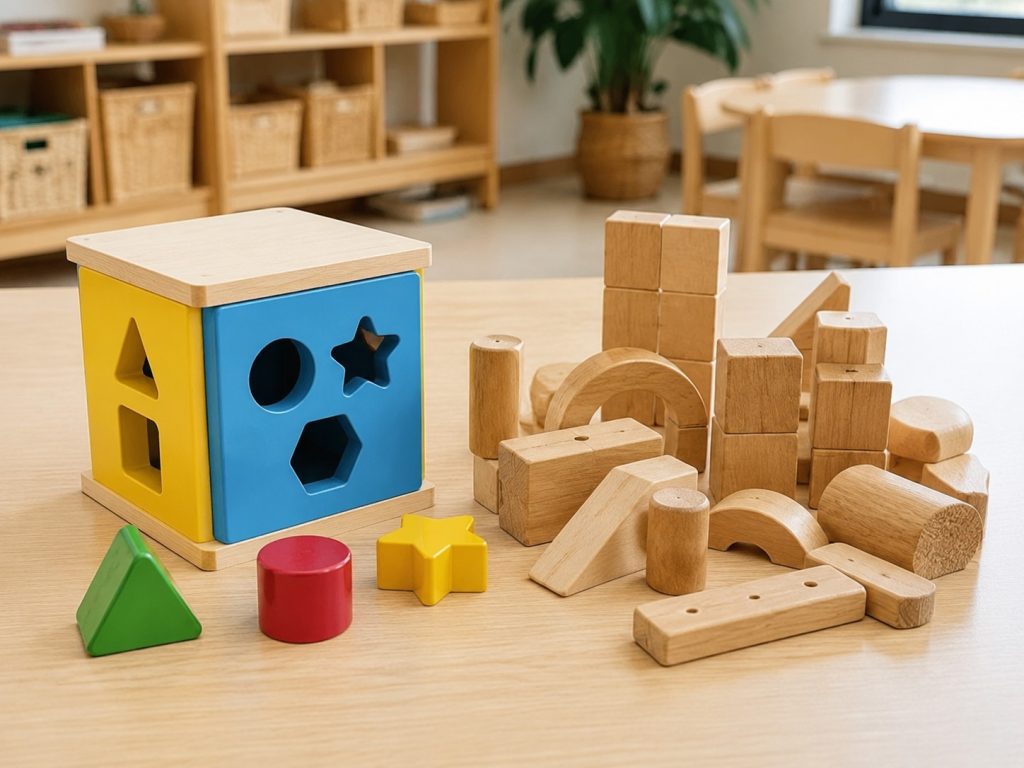
Closed-ended toys have a place — structured practice and skill reinforcement are legitimate learning needs. The problem arises when they dominate a classroom, leaving little room for the kind of exploratory, self-directed play that open-ended toys are specifically designed to support.
What Open-Ended Play Actually Develops
Child development research consistently identifies the early years as a critical window when children build understanding through physical interaction with their environment. Jean Piaget’s framework points to the preoperational and concrete operational stages as periods when hands-on, self-directed activity is the primary driver of cognitive growth — not passive instruction. Open-ended toys are built for exactly this developmental window.
Cognitive Flexibility and Problem-Solving
A child building with open-ended construction toys isn’t following a blueprint — they are creating one. Every decision about structure, stability, and material distribution is a small act of planning and self-regulation. This builds executive function skills: working memory, flexible thinking, and inhibitory control. A 2021 review in Early Childhood Education Journal found that child-directed play with open-ended materials was significantly associated with stronger executive function scores in children aged three to six — outcomes that predicted later academic performance more reliably than early literacy drills alone.
Language and Narrative Development
When children use open-ended play materials — a simple wooden figure, a set of loose parts — to enact a story, they are generating vocabulary, practicing syntactic structures, sequencing events, and taking the perspective of characters simultaneously. Teachers who work regularly with open-ended toys report that children’s verbal output during imaginative play is markedly richer than during structured toy activities, both in quantity and complexity.
Early Mathematical Thinking
Arranging objects by size, noticing that two small blocks equal one large one, figuring out why a tower keeps collapsing — these are early encounters with measurement, equivalence, and structural logic. Open-ended learning toys ground mathematical reasoning in physical experience, following the concrete-to-abstract progression that underpins effective early math pedagogy in a way that worksheets and single-function number toys cannot replicate at this age.
Social and Emotional Development
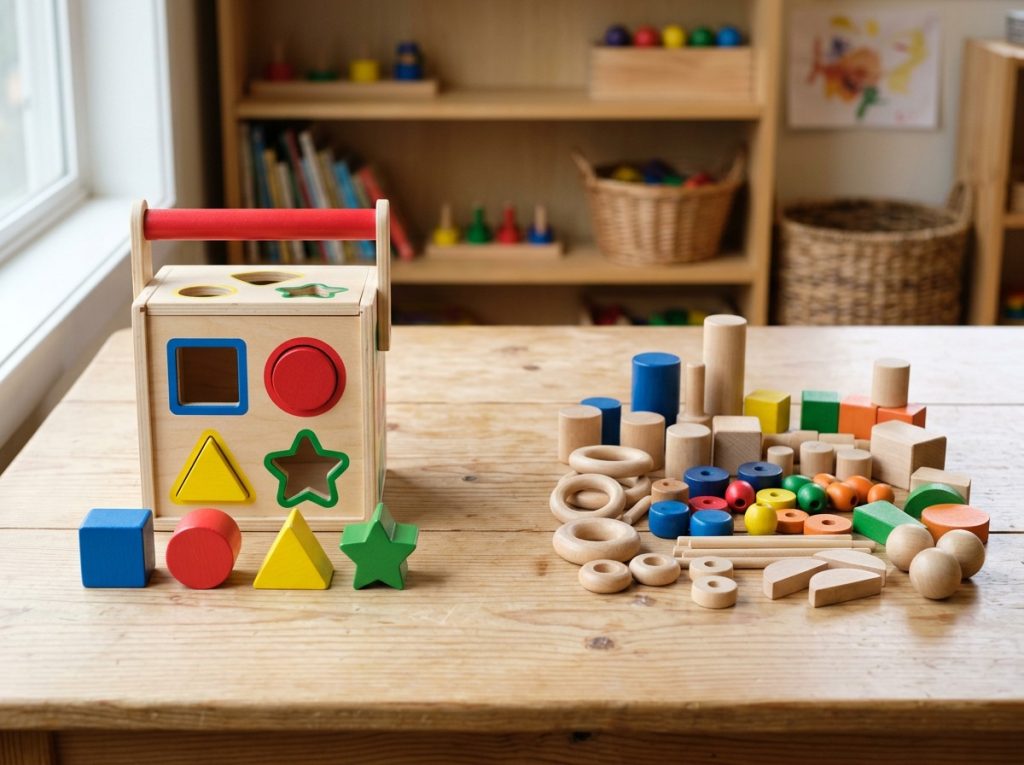
Shared open-ended toys create genuine social friction — and that friction is productive. When two children disagree about what the blocks should become, they face a real negotiation problem that no adult needs to manufacture. Children develop communication, conflict resolution, and collaborative thinking through the natural dynamics of shared open-ended play.
The Cost-Per-Use Case for Open-Ended Toys
Procurement decisions in schools are rarely made on developmental theory alone. The numbers matter.
A classroom that purchases ten single-function toys at $15 each spends $150. Each toy holds interest for roughly four to six weeks before it’s mastered and set aside. Across two years serving two cohorts, that classroom needs a second $150 purchase to maintain provision. Total spend: $300. Active use per toy: six to eight weeks.
A quality set of open-ended wooden toys priced at $120, rotated consistently, remains in active classroom use for three to four years. The same open-ended toys serve children at ages three, four, and five without modification, supporting math, language, and creative play within the same session. Spread across four years and multiple cohorts, cost-per-use drops below $0.10 per meaningful engagement — a fraction of the single-function alternative.
Schools that have shifted procurement toward open-ended toys consistently report reduced replacement frequency and higher per-product utilization. For buyers managing budgets across multiple classrooms, that difference compounds significantly over a three-to-five year purchasing cycle.
How Teachers Put Open-Ended Toys to Work
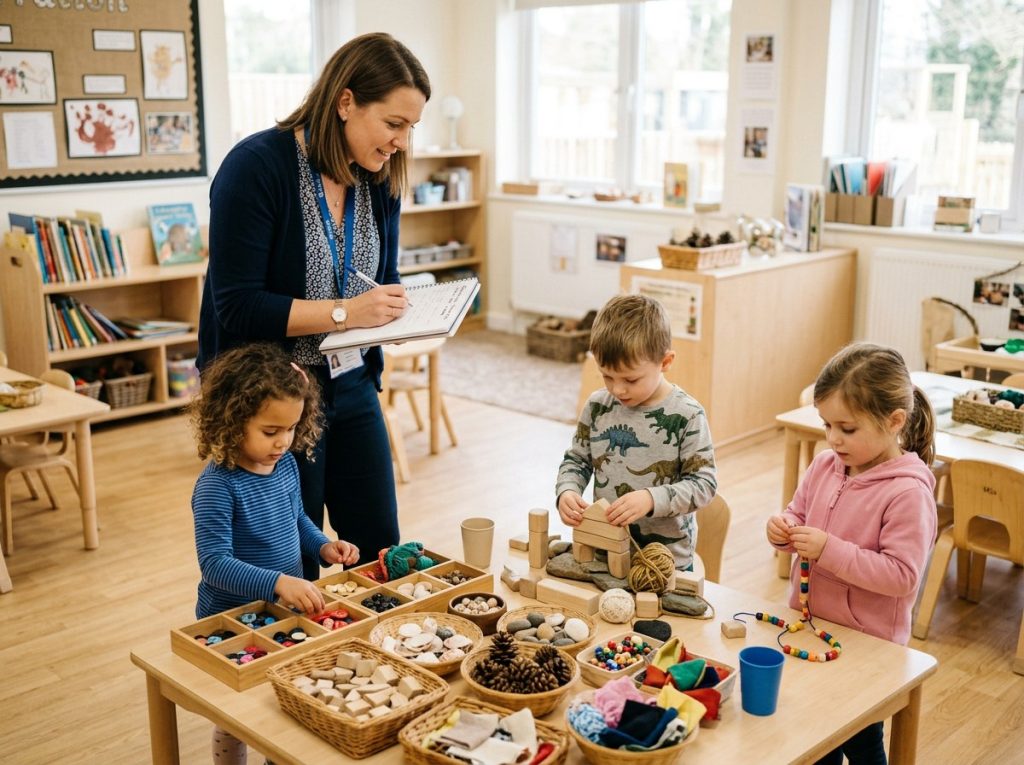
Intentional setup drives engagement. Skilled early childhood educators don’t simply place open-ended toys on a table — they create invitations to play. A tray of wooden shapes arranged near picture books about architecture suggests a direction without dictating one. The teacher’s role shifts from instructor to environment designer.
Rotation sustains interest without new spending. The same set of open-ended toys introduced alongside natural objects one week, art supplies the next, and simple measurement tools the week after generates genuinely different learning experiences. Teachers who rotate contexts rather than replacing products extract more educational value from the same investment.
Documentation turns play into evidence. Photographing children’s constructions and inviting them to explain their thinking transforms open-ended play into assessable learning — useful for reporting, identifying developmental needs, and building children’s capacity to reflect on their own work.
Mixed-age groupings multiply the value. Open-ended toys scale across developmental levels naturally. Older children model more complex play; younger children bring approaches that older ones have abandoned. One set of open-ended materials serves both without separate configurations.
What to Look for When Sourcing Open-Ended Toys
The category label alone is not a reliable guide. These are the factors that distinguish open-ended toys worth buying from those that merely look the part.
Durability for school use. Open-ended wooden toys need non-toxic finishes and construction robust enough for daily handling across multiple years. Products that degrade quickly don’t just cost more to replace — they lose play value as pieces chip or become mismatched.
Restrained design. The most effective open-ended toys are often the most visually simple. A wooden figure with minimal features invites children to project personality onto it; a detailed character with a fixed expression and branded costume does not. Abstraction in design is one of the clearest signals of genuine open-ended potential.
Set depth and extensibility. A single piece has limited play value. Open-ended toy sets with varied shapes, sizes, and forms create richer engagement and integrate naturally with other classroom materials, extending value without additional spend.
Genuine age-range breadth. Open-ended toys that scale across a three-to-six-year developmental range — not just marketed to multiple ages, but genuinely usable across them — reduce age-segmented purchasing and serve mixed-age classrooms without compromise.
Manufacturer educational depth. For institutional buyers sourcing directly, the manufacturer’s understanding of early childhood education matters as much as the product spec. Manufacturers who design open-ended toys in collaboration with educators, and who can articulate the developmental rationale behind their decisions, produce consistently better outcomes for school buyers than those focused primarily on cost and visual appeal.
Conclusion
The case for open-ended toys rests on three things that reinforce each other: developmental evidence, classroom practicality, and long-term purchasing value. Children who move through early childhood environments rich in open-ended play arrive in later grades with stronger executive function, broader language capacity, and more developed mathematical intuition. For schools, that translates into better utilization rates, lower replacement costs, and materials that serve a wider range of learners without additional investment.
Getting the sourcing decision right — choosing manufacturers who understand both the developmental requirements and the production standards that school environments demand — is where the value of open-ended toys is either captured or lost.
Looking for Open-Ended Toys Built for Classroom Use?
Vindstier develops and manufactures open-ended educational toys designed specifically for schools, early childhood programs, and educational product brands. Our open-ended toys are built to withstand institutional use, designed with developmental outcomes in mind, and available for OEM and ODM partnerships.
If you’re sourcing open-ended toys for a school program, building a product line, or looking for a manufacturing partner who understands early childhood education — we’d like to talk.