
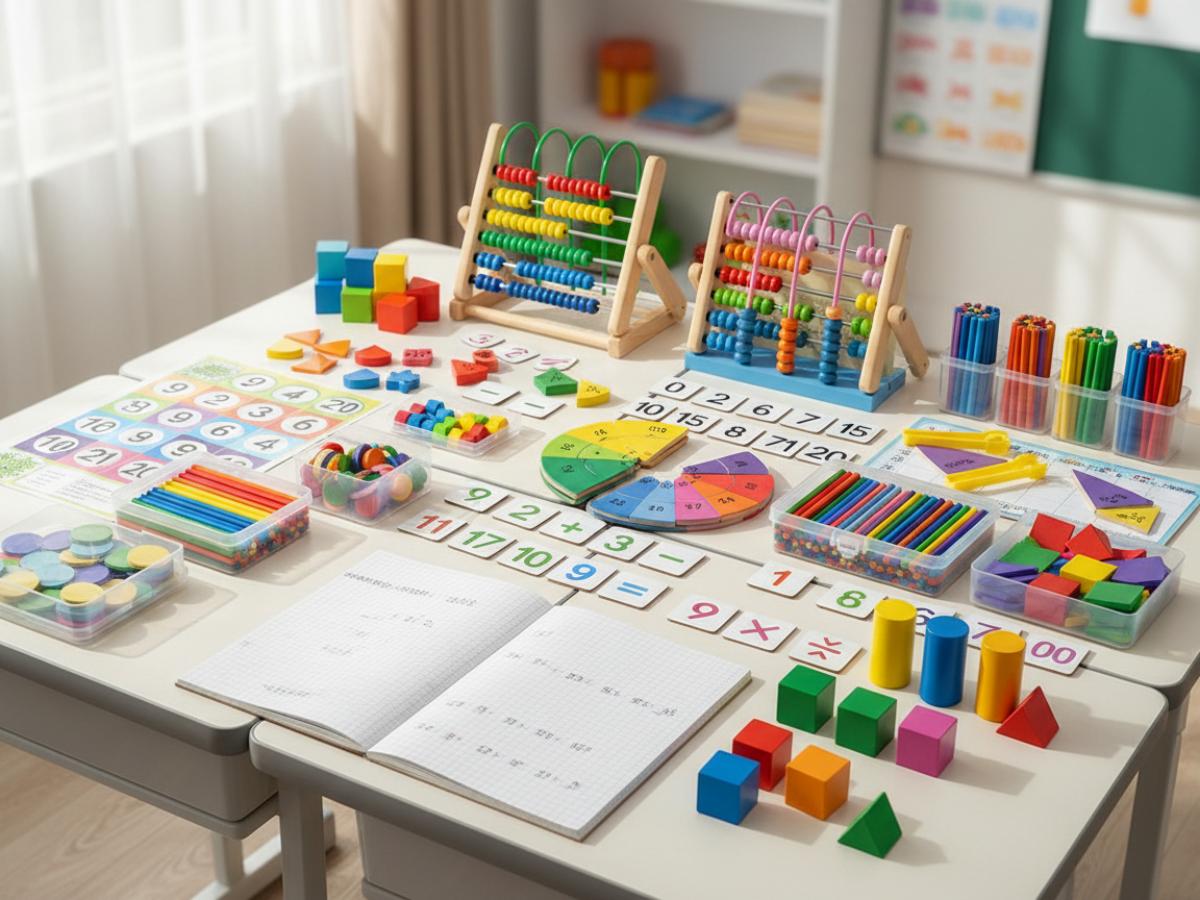
Early mathematics education plays a fundamental role in children’s cognitive development. However, for preschool and early elementary students, mathematical concepts are often difficult to understand because numbers, fractions, patterns, and relationships are abstract ideas.
Children do not naturally learn mathematics only through memorization. They need opportunities to explore, manipulate, and visualize concepts before they can fully understand them. This is why math manipulatives have become an essential learning resource in modern classrooms, early education programs, and home learning environments.
By transforming abstract mathematical ideas into hands-on experiences, math manipulatives allow children to understand concepts through interaction. They can count objects, compare quantities, build patterns, and explore mathematical relationships in a more natural way.
For schools, educational institutions, and educational toy brands, choosing suitable math learning products requires more than considering educational value. Buyers also need to evaluate product quality, safety standards, durability, supplier capabilities, and customization possibilities.
As demand for STEM education and hands-on learning continues to grow, math manipulatives have become an increasingly valuable category for educational toy manufacturers and suppliers. The right products can support children’s development while helping brands create competitive educational toy collections for global markets.
This article explores the best types of math manipulatives for preschool and early elementary students and explains how businesses can select reliable educational toy partners when developing these products.
What Are Math Manipulatives?
Math manipulatives are physical educational tools that help children understand mathematical concepts through direct interaction.
Unlike traditional learning methods that mainly rely on written exercises, manipulatives allow children to experience mathematics in a more concrete way. They can move pieces, compare objects, create different combinations, and discover solutions through hands-on exploration.
For example, when children learn fractions, simply looking at numbers on a worksheet may not provide enough understanding. However, using physical fraction pieces allows them to see how different parts form a complete whole, making the concept easier to understand.
Common math manipulatives include counting tools, number blocks, fraction models, pattern learning materials, sorting activities, and interactive math games.
These products are widely used in preschools, elementary schools, educational institutions, and homeschooling programs. For educational toy companies, they also represent an important product category because they combine learning functions with engaging play experiences.
High-quality educational toys are not only designed to entertain children but also to create meaningful learning opportunities.
Why Are Math Manipulatives Important for Preschool and Early Elementary Students?
Building Strong Mathematical Foundations Through Hands-On Learning
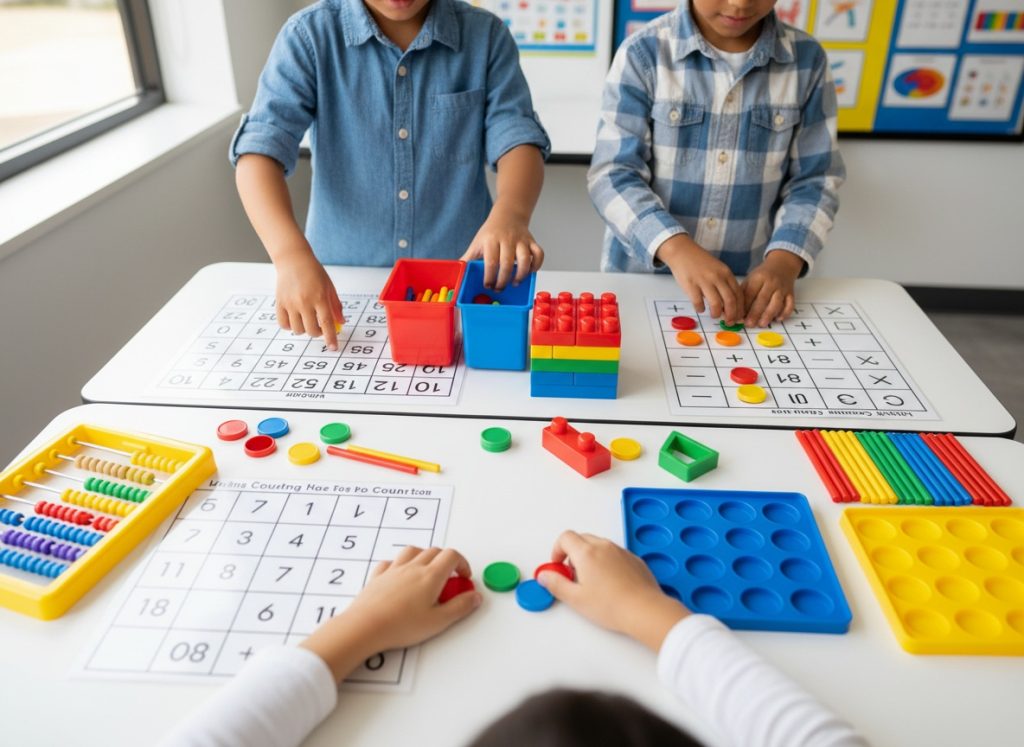
Young children usually understand concepts more effectively when they can connect ideas with real objects.
For example, counting blocks allow children to physically see the difference between numbers. Pattern activities help them recognize relationships between shapes and designs. Fraction tools allow them to understand parts and wholes through visual comparison.
This learning process helps children gradually move from concrete experiences to abstract mathematical thinking.
For educators, this makes math manipulatives valuable classroom resources because they support different learning stages. Instead of simply providing answers, these tools encourage children to explore and develop their own understanding.
Hands-on learning helps children build confidence because they actively participate in the learning process rather than passively receiving information.
Supporting STEM Learning and Problem-Solving Skills
Modern education increasingly focuses on STEM development, creativity, and critical thinking. Math manipulatives naturally support these goals because children are encouraged to experiment, analyze results, and find solutions.
When children create patterns, build structures, or solve mathematical challenges, they are developing skills that extend beyond mathematics.
For educational toy brands and STEM toy suppliers, products that combine mathematics with creativity have strong market potential. Parents and schools are increasingly looking for toys that provide educational benefits while maintaining children’s interest and engagement.
This trend has created growing opportunities for companies developing STEM educational toys, classroom learning tools, and interactive math products.
Which Math Manipulatives Are Best for Preschool Students?
Preschool children are usually beginning their mathematical journey. At this stage, learning tools should focus on basic concepts such as counting, sorting, recognizing numbers, and understanding simple relationships.
Counting-based manipulatives are among the most effective choices because they allow children to develop number awareness through direct experience.
Wooden number blocks are a good example of this type of educational product. They help children practice counting and number recognition while also supporting creative activities such as stacking, balancing, and building.
For educational toy brands, products with multiple learning functions often have stronger commercial value because they provide longer play cycles and appeal to different customer groups, including parents, schools, and retailers.
Sorting activities are also important during preschool education. By organizing objects according to color, shape, or size, children begin developing classification skills that later support more advanced mathematics.
Products such as fruit sorting stacking toys combine early math concepts with fine motor practice, making them suitable for preschool classrooms and home learning environments.
For buyers searching for wholesale educational toys, these multi-functional learning products are attractive because they provide both educational value and strong retail appeal.
Which Math Manipulatives Are Suitable for Early Elementary Students?
As children enter early elementary education, their mathematical learning becomes more complex. They begin exploring concepts such as fractions, geometry, measurement, and problem-solving, which require deeper understanding rather than simple memorization.
At this stage, the best math manipulatives should help children visualize relationships and develop mathematical reasoning.
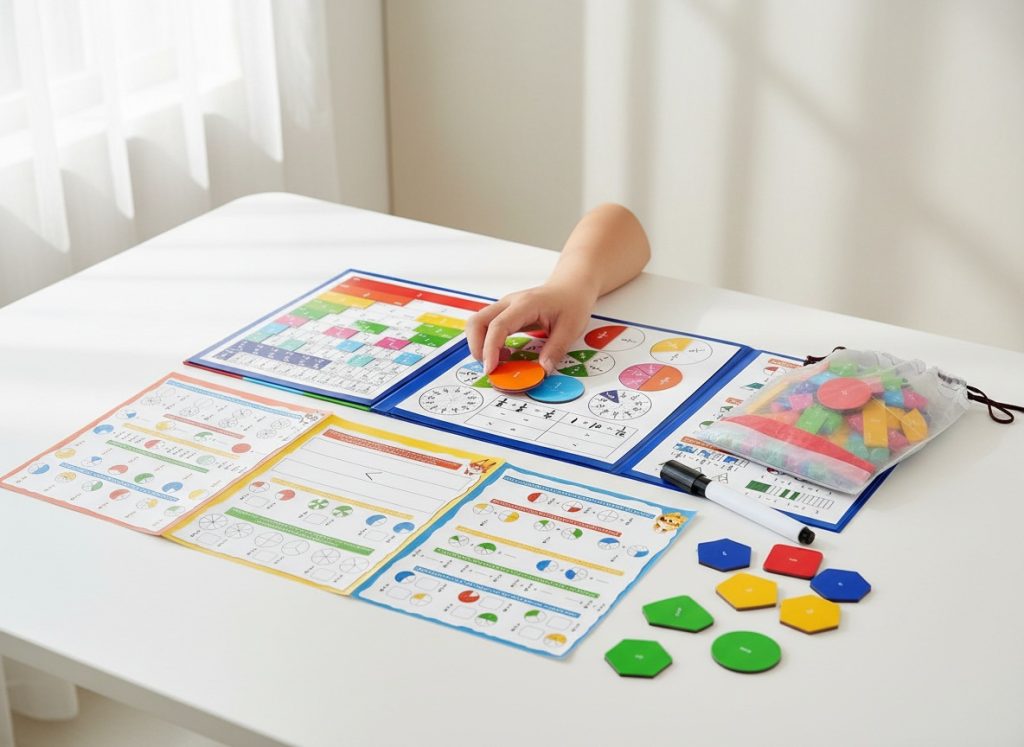
Fraction learning tools are especially valuable because fractions are often one of the first challenging topics for young learners. Many students struggle because fractions involve abstract ideas about parts, wholes, and comparisons.
Magnetic Fraction Teaching Aids provide an effective solution by allowing students to interact with fraction pieces directly. Through visual comparison and hands-on activities, children can better understand concepts such as equal parts, fraction relationships, and basic mathematical operations.
For schools and educational institutions, these tools help teachers present difficult concepts in a clearer and more engaging way. For educational toy brands, fraction learning products also represent a valuable opportunity because they combine curriculum support with strong educational market demand.
Geometry-based learning tools are another important category for early elementary students. Products such as Magnetic Pattern Blocks Sets encourage children to explore shapes, symmetry, and spatial relationships while developing creativity and logical thinking.
For companies looking to expand their educational product lines, STEM-focused math manipulatives can provide strong market potential because they support both academic learning and creative exploration.
How Do Math Manipulatives Support Different Learning Goals?
One of the reasons math manipulatives remain popular among educators is their ability to support multiple learning objectives through one product.
A well-designed learning tool does not teach only a single concept. Instead, it creates opportunities for children to explore different skills at the same time.
For example, a number-based educational toy may introduce counting skills while also supporting problem-solving and logical thinking. A pattern-based product may teach geometry concepts while encouraging creativity and independent exploration.
This multi-functional approach is increasingly important for educational toy buyers because schools and parents are looking for products that provide long-term learning value.
For educational toy manufacturers, understanding these learning goals is essential when developing competitive products. Successful educational toys need to balance educational purpose, play experience, product durability, and market expectations.
The strongest educational products are those that create meaningful learning experiences while remaining engaging for children.
What Should Buyers Consider When Choosing Math Manipulatives?
For schools, distributors, and educational toy brands, selecting the right math manipulatives requires evaluating both educational performance and product reliability.
The first consideration is whether the product truly supports children’s learning needs. Educational toys should be designed around clear learning objectives rather than focusing only on appearance.
The second consideration is manufacturing quality. Since math manipulatives are often used repeatedly in classrooms and learning environments, products need to be durable, safe, and suitable for long-term use.
Materials, production processes, and quality control standards all influence the final user experience. For buyers sourcing educational toys internationally, working with an experienced educational toy manufacturer can reduce risks and ensure consistent product quality.
Another important factor is customization capability. Different markets often have different educational requirements, packaging preferences, and product positioning strategies.
A professional math manipulatives supplier should be able to support customized solutions, including product design improvements, material choices, packaging development, and OEM or ODM educational toy projects.
Customization allows brands to create unique products that better match their target customers and strengthen their market competitiveness.
Why Educational Toy Brands Work with Professional Math Manipulatives Suppliers?
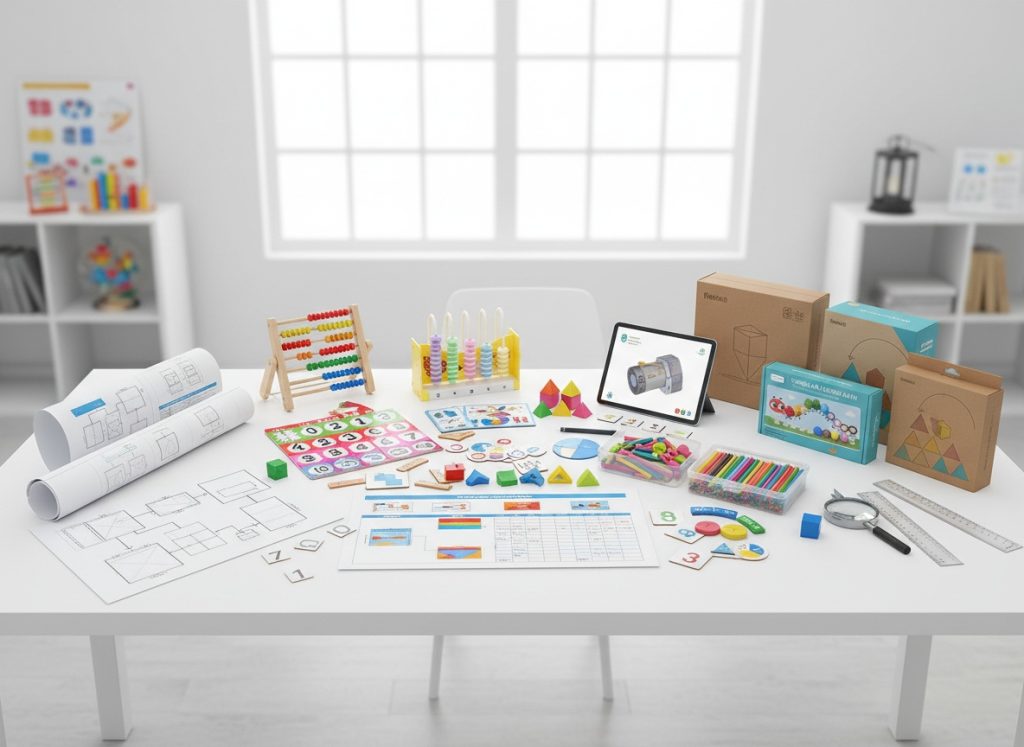
The global demand for educational toys continues to increase as parents, schools, and institutions place greater emphasis on early learning, STEM education, and skill development.
However, developing successful educational products requires more than manufacturing ability. Brands need partners who understand children’s learning behaviors, educational trends, and market expectations.
A professional educational toy supplier can help businesses transform ideas into practical products by providing support throughout the development process.
For example, an experienced supplier can help evaluate product functions, optimize designs, select suitable materials, and create solutions that meet different market requirements.
For companies searching for OEM educational toys or custom educational toys, supplier experience is especially important because product quality and educational value directly influence customer satisfaction.
Vindstier focuses on developing educational toys that combine learning, creativity, and interactive play. Our product range covers magnetic learning tools, wooden educational toys, math learning products, sorting activities, and STEM-inspired learning solutions.
Through product development support and customization services, Vindstier works with global partners to create educational toy products suitable for schools, retailers, and educational brands.
Whether a company is launching a new educational toy collection or expanding an existing product category, choosing the right manufacturing partner can help build stronger products and long-term market opportunities.
Math Manipulatives vs Traditional Worksheets: Which Learning Method Works Better?
Worksheets have traditionally been used in mathematics education because they help children practice calculations and review concepts.
However, worksheets mainly focus on written repetition, while math manipulatives provide opportunities for exploration and discovery.
For younger learners, this difference is especially important. Children need to understand why mathematical concepts work before they can confidently apply them.
Hands-on learning tools allow students to experiment, make mistakes, and discover solutions independently. This process creates deeper understanding and stronger learning outcomes.
The most effective educational approach often combines both methods. Manipulatives introduce concepts through interaction, while worksheets reinforce knowledge through practice.
Learning becomes more effective when children understand concepts first and practice skills afterward.
Frequently Asked Questions
What are examples of math manipulatives?
Math manipulatives include counting tools, number blocks, fraction learning materials, pattern blocks, sorting toys, and interactive math games. These products help children understand mathematical concepts through hands-on activities.
Why are math manipulatives important in early education?
They help children visualize abstract concepts and develop stronger mathematical understanding through direct interaction. This approach supports early number skills, logical thinking, and problem-solving abilities.
How do schools choose the right classroom math manipulatives?
Schools usually consider factors such as educational purpose, age suitability, product durability, safety standards, and classroom usability when selecting math learning tools.
Can educational toy suppliers provide customized math manipulatives?
Yes. Professional suppliers can provide custom educational toys based on brand requirements, including product design, materials, colors, packaging, and functional adjustments.
Conclusion
The best math manipulatives for preschool and early elementary students are products that make mathematics easier to understand through interaction, exploration, and meaningful play.
From counting tools that build early number skills to fraction models and geometry products that support advanced thinking, well-designed learning materials help children develop confidence and curiosity toward mathematics.
For schools, educational institutions, and toy brands, selecting the right products requires considering not only educational benefits but also product quality, supplier reliability, and customization opportunities.
As demand for STEM learning toys and educational products continues to grow, partnering with an experienced educational toy manufacturer can help businesses create products that meet modern learning needs while achieving long-term market success.
Vindstier provides educational toy development and customization solutions for global partners, helping brands create innovative learning products that support children’s growth and adapt to changing education markets.