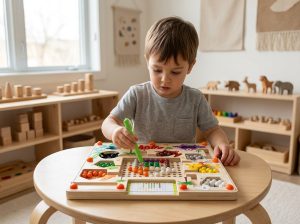
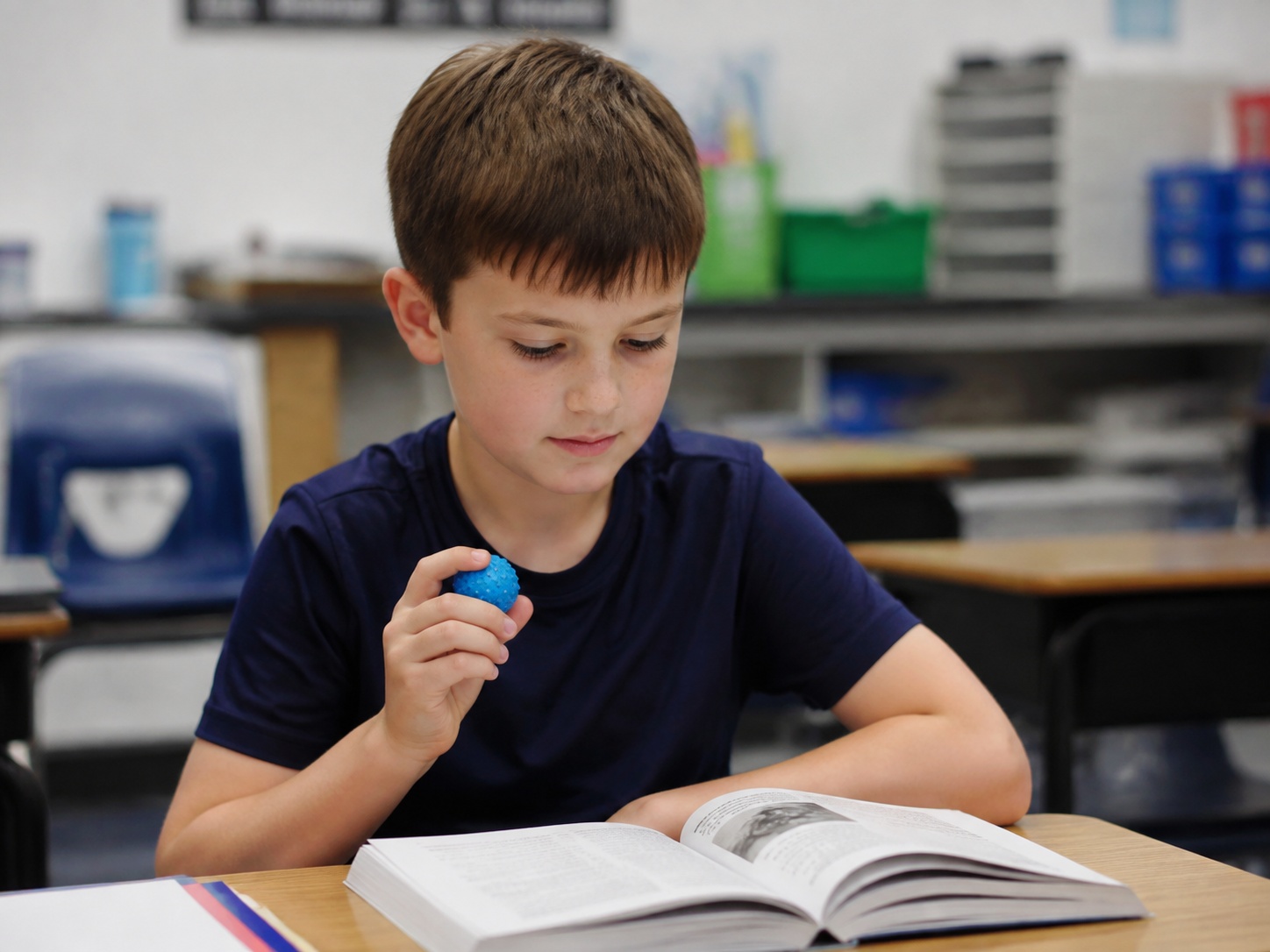
A teacher starts a lesson with twenty-five focused faces; eight minutes later, half the class is fidgeting or staring out the window. This is not a discipline problem. It is a regulation problem — many children, especially younger ones or those with sensory-processing differences, simply run out of the internal resources needed to stay still and attentive for an extended stretch. Telling a child to “pay attention” rarely fixes this, because attention is not a switch a child can flip on command. It is a skill that depends on sensory input, movement, and a certain amount of hands-on engagement — which is exactly the gap concentration toys are designed to fill.
This is where concentration toys have found a real, growing role in classrooms and homes. Rather than asking a child to suppress restlessness, these tools give restlessness somewhere productive to go, freeing up mental bandwidth for the actual lesson. For teachers managing large groups, school buyers evaluating classroom materials, and brands sourcing products for the education market, understanding how concentration toys actually function — and which types solve which problems — matters more than treating them as a generic accessory.
Why Attention Breaks Down in the Classroom
Sustained attention requires a child to filter out competing stimuli: the hum of an air conditioner, a classmate’s pencil tapping, their own hunger or restlessness. Younger children and children with ADHD, sensory processing differences, or high anxiety have a smaller margin for this kind of filtering. When that margin runs out, the brain looks for an outlet, and that outlet is usually motion — tapping a foot, twisting in a chair, doodling, or talking.
Traditional classroom management responds to this by asking for stillness: sit up, hands still, eyes forward. For many children this approach works against biology rather than with it. Occupational therapists have long used sensory tools — textured objects, resistance bands, fidget items — to help children self-regulate, and this same principle is what underlies well-designed concentration toys for classroom use. Concentration toys work by giving that outlet a quiet, contained form rather than eliminating it. The toy is not a distraction from the lesson; it is a low-effort outlet that keeps the higher-effort cognitive work — listening, reading, problem-solving — available.
What Makes a Toy Effective for Concentration, Not Just Entertainment
Not every fidget object or sensory item earns a place in a classroom, and this is where effective concentration toys differ from generic novelty items. A toy that is too visually interesting, too loud, or too novel becomes the main event instead of a background support, pulling attention away from the lesson rather than toward it. The concentration toys that genuinely work as classroom concentration tools tend to share a few traits: they can be used without looking at them, they produce no distracting sound, and they offer just enough tactile or kinesthetic feedback to satisfy the need for movement without escalating into play.
This is a meaningful distinction for school buyers choosing concentration toys for a whole grade level. A spinning, light-up gadget markets well but often fails in a real classroom, because it invites other students to watch rather than ignore it. Simpler tools — a textured squeeze item, a quiet fidget slider, a weighted lap pad — tend to hold up better over a full school year precisely because they stay in the background of a child’s attention rather than becoming the center of it.
A Classroom Case: Using Concentration Tools During Reading Instruction
Background
A second-grade classroom of 24 students included several children who struggled to stay seated through 20-minute guided reading blocks. The teacher had already tried seating changes and shortened instructions, with limited improvement. The school’s learning support team suggested introducing tactile concentration toys for a trial group of six students during independent reading time.
Application Process
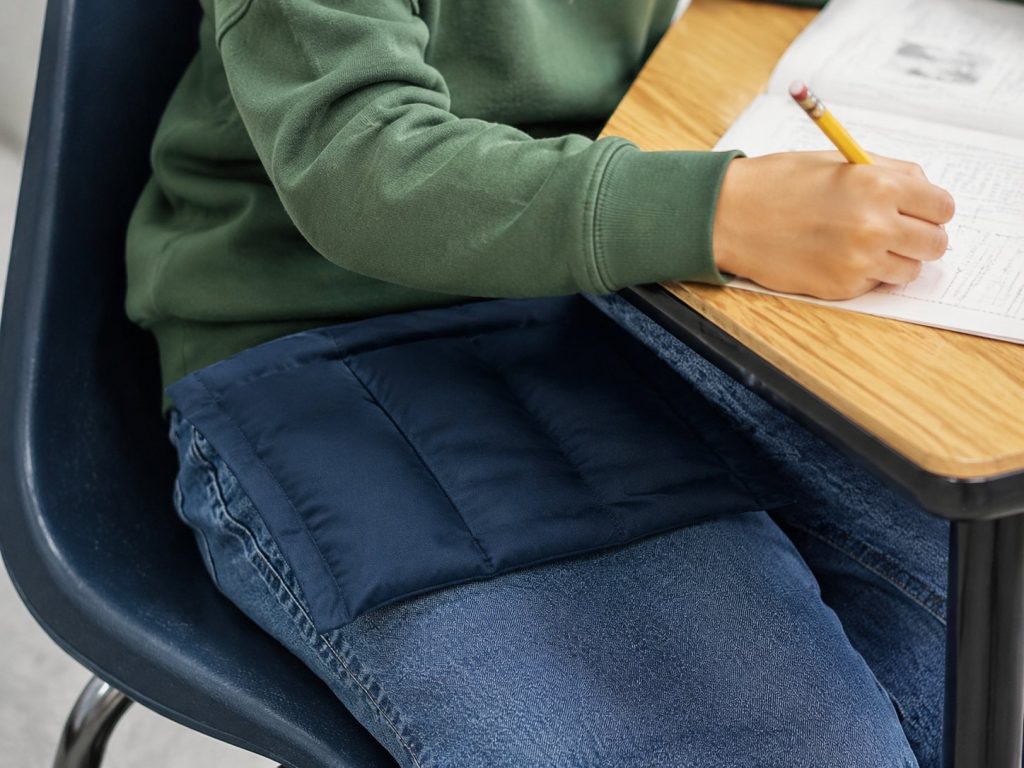
Each student in the trial group was given one of two concentration toys to hold — a silicone squeeze shape, or, for two students who needed stronger sensory input, a lap pad with gentle weighted distribution. The teacher set one clear rule: the tool stays in the lap or under the desk, used quietly, hands only, no trading. Students kept their own tool at their desk throughout the reading block rather than passing it around, which removed the social distraction that had undermined earlier attempts with shared classroom fidget bins.
Problem Solved
The teacher kept an informal tally over the two-week trial. Verbal redirections during reading time — the “eyes on your book” reminders — dropped from an average of about 7 per 20-minute block to roughly 2. The tools did not make the students more interested in reading itself; what changed was their ability to stay physically settled long enough for the lesson to register. For the two students using weighted lap pads, the time it took them to settle back into task after a transition, such as returning from recess, shortened from around 5 minutes to under 2. These figures came from one teacher’s own classroom tracking rather than a formal study, but they were consistent enough over the two weeks to convince the school to extend the trial to a second classroom the following term.
Practical Value
For the teacher, the outcome was fewer interruptions and less time spent on redirection, which meant more actual instruction delivered per class period. For the school, the trial gave a low-cost, evidence-informed intervention that did not require pulling students out for separate support — the concentration toys worked within the regular classroom setting. For the students, the value was less visible but arguably more important: fewer corrections and less friction around a behavior they could not fully control on their own.
Types of Concentration Toys and Where Each One Fits
Different children respond to different kinds of sensory input, and a single type of concentration toy rarely fits every situation. The table below outlines the main categories of concentration toys seen in classroom use.
| Type | Suitable Users | Problems Solved | Classroom Application |
|---|---|---|---|
| Tactile squeeze/texture toys | Students who fidget with hands, younger children | Restlessness during listening tasks | Held quietly at desk during instruction or read-aloud |
| Weighted lap pads or shoulder wraps | Students with high anxiety or sensory-seeking needs | Difficulty settling after transitions | Used during seated independent work |
| Quiet fidget sliders or clickers (silent mechanism) | Students who need repetitive motion to focus | Restlessness during long explanations | Held under desk during teacher-led instruction |
| Chewable or oral-motor tools | Students who bite pencils, chew clothing | Oral sensory-seeking behavior | Worn as pendant during any seated activity |
| Textured seat cushions or wobble supports | Students who struggle to stay seated | Core-level restlessness, frequent standing | Used at desk throughout the school day |
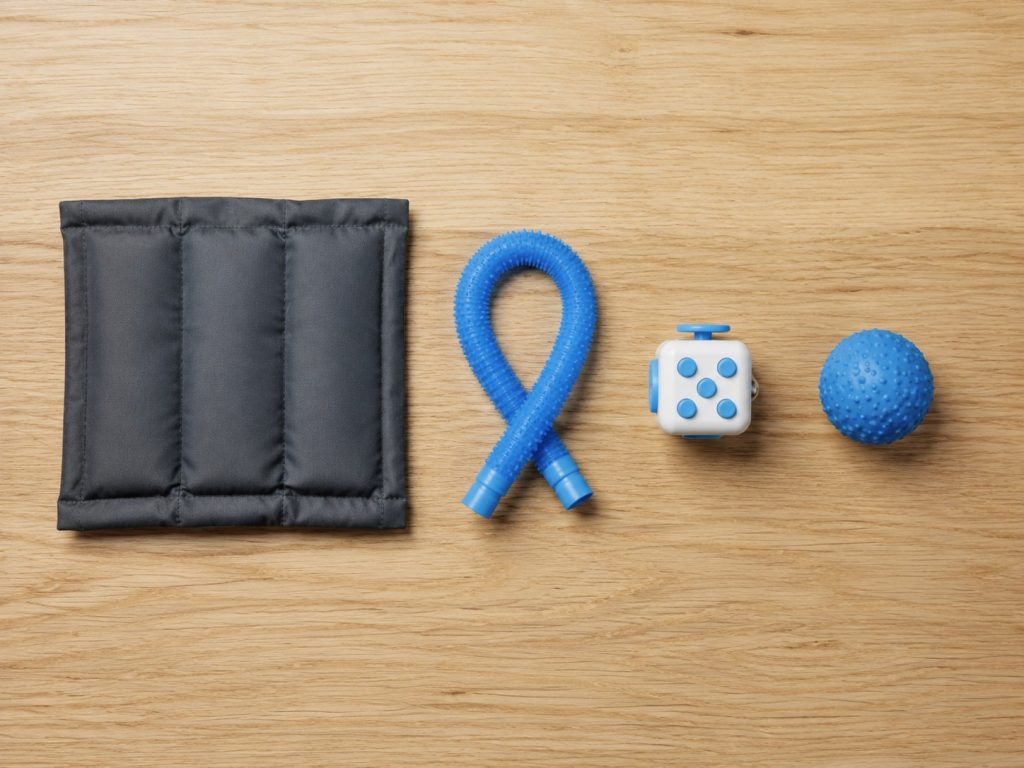
Buyers comparing these categories of concentration toys should think less about which product looks most impressive and more about which sensory need is actually being addressed in their specific classroom. A school with several students who chew on pencils has a different requirement than one with students who struggle to stay in their seats, and matching the tool to the behavior is what determines whether the intervention actually reduces disruption.
Where Vindstier Fits Into This Picture
Vindstier develops its concentration toy line around this classroom-first logic. Because the toys are intended for repeated daily use by the same child over a school term, the design process prioritizes how a tool holds up under six hours a day of handling, dropping, and squeezing rather than how it photographs. Vindstier’s tactile squeeze tools and quiet sensory items are built without moving parts that squeak or click, which addresses the specific reason many fidget products get pulled from classrooms within weeks — noise that draws attention rather than absorbing it.
For schools and distributors, this also translates into a practical purchasing consideration: products that get pulled from classrooms due to noise or breakage represent wasted budget. Vindstier’s materials are selected for classroom-grade wear, meaning a batch purchased for a grade level can reasonably be expected to last through a full academic year of daily handling by seven- and eight-year-olds, rather than needing mid-year replacement. For toy brands and distributors evaluating a supplier, this kind of product-level attention to real classroom conditions — not just aesthetics — is often the difference between a product that gets reordered and one that does not.
What Teachers, School Buyers, and Brand Partners Each Look For
A teacher evaluating concentration toys is mainly asking whether they can be introduced without adding management overhead: do they require constant monitoring, do they create jealousy among students who don’t have one, can they be used silently. Concentration toys that meet these conditions get used consistently; ones that don’t get confiscated within a month.
A school buyer purchasing concentration toys is thinking further ahead — about durability across dozens of students and multiple terms, about whether the tool is easy to clean and sanitize, and about whether a supplier can provide consistent stock for reordering rather than a one-off batch. Low-cost, generic sensory items often fail this test, since inconsistent quality control means one batch works well and the next falls apart within weeks.

A brand or distribution partner sourcing concentration toys for resale is generally looking past the individual product to the manufacturer behind it: does this supplier understand classroom use cases well enough to guide product selection, and can they support OEM or ODM requests if a retailer wants a customized version for a specific curriculum or age group. Manufacturers with genuine classroom-use research behind their product design tend to be easier long-term partners than those simply replicating whatever is trending in the sensory-toy market.
A Note on Industry Overcrowding
The market for concentration toys and sensory fidget items has grown crowded over the past several years, and much of that growth has come from smaller suppliers cycling through trending product shapes without consistent manufacturing standards behind them. For a school, this shows up as batch-to-batch inconsistency: one order holds up fine, the next arrives with parts that crack or a texture that wears smooth within a month. That inconsistency is expensive in a way that is easy to miss at the purchasing stage — replacing a failed batch mid-term costs more than choosing a slightly higher-priced, better-tested supplier from the start. The more useful sourcing question is not which product looks most current, but which supplier can reliably deliver the same quality on the third reorder as on the first.
Conclusion
Concentration toys are not a novelty add-on to classroom supplies; used well, they address a real gap between what children’s attention systems can sustain and what a full school day demands of them. The tools that hold up in practice tend to be simple, quiet, and durable rather than flashy, and they work best when matched to the specific sensory need behind a child’s restlessness rather than applied as a one-size-fits-all fix. For schools and distributors sourcing these products, that same logic — function over appearance, classroom durability over shelf appeal — is worth applying to the choice of manufacturer as much as to the choice of toy.