When a child loses interest in a toy within minutes, most parents assume the toy wasn’t entertaining enough. But the real issue is often different: the toy wasn’t designed to grow with the child or connect to how they actually learn. The result is a shelf full of unused products and a missed opportunity during a critical developmental window.
Choosing learning toys isn’t about finding the most colorful option on the shelf or the one with the highest rating on an e-commerce platform. It’s about understanding what drives meaningful development at each stage — and recognizing that the wrong toy, even a well-intentioned one, can waste both time and money.
This guide breaks down what parents, educators, and institutional buyers should genuinely evaluate before selecting learning toys for children.
Why Most Learning Toy Decisions Miss the Mark
The learning toy market has expanded significantly over the past decade. More options doesn’t mean better decisions. In fact, the flood of products claiming educational value has made it harder to identify what actually works.
Many products on the market are labeled “educational” based on surface-level features: alphabet prints, counting graphics, or STEM branding on the packaging. But a printed number on a foam block doesn’t create a meaningful learning experience. What matters is whether the toy creates an interaction that challenges a child’s thinking, encourages problem-solving, or builds a specific skill through repeated, engaging use.
The American Academy of Pediatrics (AAP) has consistently emphasized that play is the primary vehicle through which young children learn — and specifically, that play involving active manipulation, social interaction, and open-ended exploration produces stronger developmental outcomes than passive entertainment. This distinction matters when evaluating whether a product marketed as a learning toy actually delivers on that claim.
Parents and buyers who understand this distinction make significantly better purchasing decisions — and avoid the pattern of buying toys that get ignored after the first afternoon.
Age Appropriateness Is Not Just a Safety Label
Most parents check the age label on packaging, but few use it as a real evaluation tool. Age recommendations on learning toys exist for two reasons: physical safety and developmental readiness.
Developmental readiness matters more for educational outcomes. A toy designed for a 5-year-old will frustrate a 3-year-old not because of danger, but because the cognitive demands exceed what that child is ready for. A child who fails repeatedly at a task without support doesn’t learn resilience — they disengage.
Matching the toy’s cognitive demand to the child’s current developmental stage is one of the most important factors parents overlook. When evaluating learning toys, ask: what skill does this toy build, and is my child ready to engage with that skill in a meaningful way?
For toddlers aged 2 to 3, learning toys should focus on cause-and-effect relationships, basic shape recognition, and fine motor development. For children aged 4 to 6, toys that introduce early literacy, number sense, and categorization are more appropriate. From age 7 onwards, developmental toys should challenge reasoning, sequencing, and problem-solving rather than just basic identification tasks.
How to Assess Your Child’s Developmental Readiness at Home
Age labels provide a starting point, but children develop at different rates. Two quick observations can help parents make a more accurate match before purchasing.
The first is the frustration-to-engagement ratio. Introduce a similar activity — a simple puzzle, a sorting task, or a building challenge — and observe how long the child engages before showing frustration. If they disengage within two to three minutes without attempting to problem-solve, the cognitive demand is likely too high. If they complete the task immediately without pausing to think, the challenge level is too low.
The second is imitation versus independent action. Present the child with a new material and step back without demonstrating its use. Children who are developmentally ready for a toy will typically begin exploring it independently or ask purposeful questions. Children who are not yet ready will either ignore the material or look immediately to the adult for instruction. This simple observation tells you whether the toy aligns with where the child currently is — not where the packaging says they should be.
Open-Ended Design vs. Single-Function Toys
One of the clearest differences between high-quality learning toys and low-value ones is whether the toy has a fixed endpoint or an open-ended design.
A single-function toy — like a button-press device that recites the alphabet — teaches through repetition until the child masters the task, then offers nothing further. An open-ended learning toy, by contrast, supports multiple levels of play and can be used in different ways as the child develops.
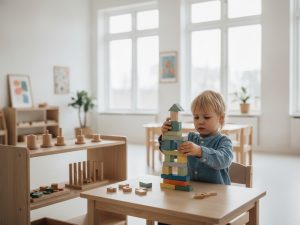
Building blocks are the classic example. A 3-year-old stacks them. A 5-year-old builds structures. A 7-year-old uses them to recreate patterns or explore symmetry. The toy itself hasn’t changed, but the learning experience evolves because the design doesn’t limit the interaction to a single outcome.
The National Association for the Education of Young Children (NAEYC) identifies open-ended materials as a core component of high-quality early learning environments, noting that they support divergent thinking, creativity, and sustained engagement more effectively than closed-ended, single-solution toys. This aligns with what experienced classroom teachers observe: children return to open-ended materials repeatedly because the possibilities don’t run out.
Open-ended learning toys offer better long-term value for both home and classroom environments because they remain relevant across developmental stages and can be used in group settings with children at different levels simultaneously.
For school buyers and educational institutions, this characteristic is especially important. Toys that support differentiated learning reduce the need to purchase multiple versions of the same product for different ability groups.
Material Quality and Sensory Engagement
The materials a learning toy is made from directly influence how a child interacts with it. This is particularly relevant for younger children, for whom tactile experience is central to how they process and retain information.
Cheap plastic toys often fail to provide the sensory feedback that supports learning. A wooden puzzle piece has weight and texture that communicates information to a child’s hands during manipulation. A flimsy plastic version of the same puzzle piece removes that layer of sensory engagement entirely.
Sensory-rich materials support the concrete-to-abstract learning approach that underpins most early childhood education frameworks. Research published in developmental psychology journals consistently shows that children form stronger conceptual understanding of abstract ideas — numbers, fractions, spatial relationships — when they first manipulate physical objects representing those concepts. This is the principle behind the widespread use of manipulatives in mathematics education, and it applies equally to language, science, and social-emotional learning materials.
When evaluating material quality in learning toys, consider durability in repeated use, surface texture and whether it supports or discourages manipulation, weight and size appropriateness for the child’s hand strength and coordination, and safety certifications relevant to the market.
For institutional buyers, material safety certification is a non-negotiable procurement criterion, not a secondary consideration. Depending on the market, relevant standards include EN71 (the European toy safety directive), ASTM F963 (the U.S. standard for toy safety), and CPSIA (the Consumer Product Safety Improvement Act, which governs children’s products sold in the United States). Procurement teams should request documentation confirming compliance with the applicable standard for their region, rather than accepting general “safety certified” claims without specific certification references.
For institutional buyers, material quality also affects total cost of ownership. A well-made learning toy that lasts three to five years of classroom use delivers significantly better value than a cheaper alternative that requires replacement within a single school year.
Does the Toy Support Skill Progression?
A learning toy should do more than introduce a concept — it should allow a child to progress within that concept over time.
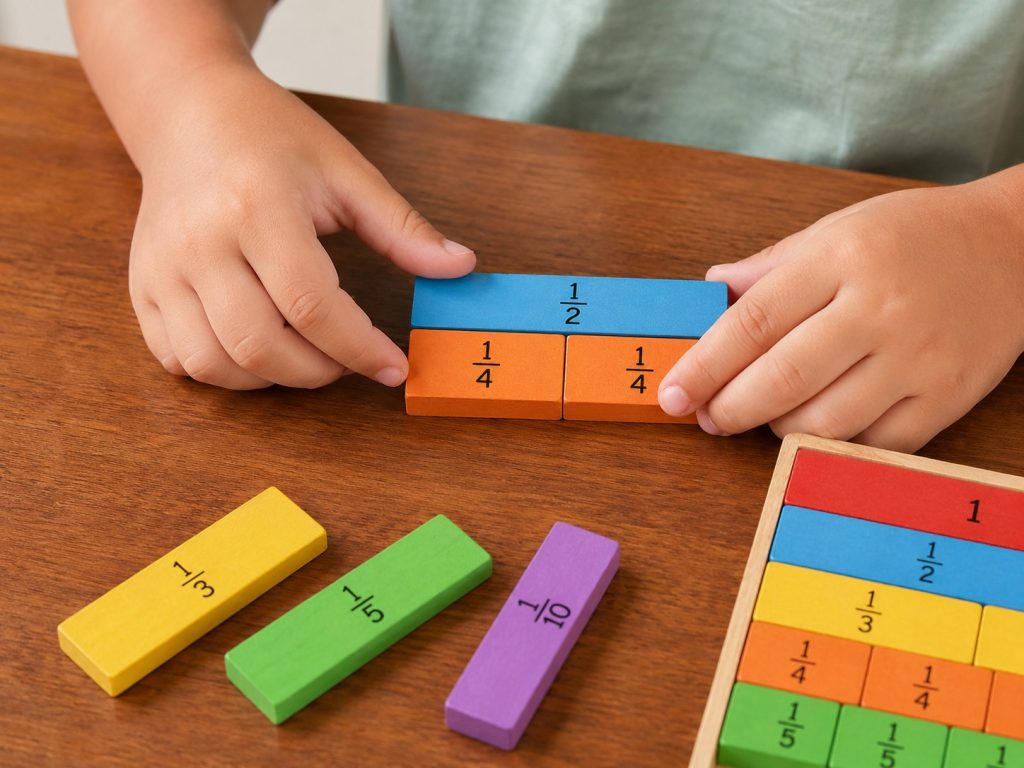
Consider a set of magnetic fraction tiles. At the introductory level, a child might use them to identify halves and quarters visually. As understanding deepens, the same tiles support comparison between fractions, addition of fractions with common denominators, and eventually more complex fraction relationships. The toy creates a learning progression, not just a single exposure.
This design principle is what separates category-leading learning toys from generic alternatives. Skill progression within a single product signals genuine educational design thinking, rather than surface-level educational branding.
A practical example: a primary school in a curriculum-focused procurement process replaced a set of single-concept number cards with a manipulative-based number system that allowed children to work across place value, addition, subtraction, and multiplication using the same physical components. Teachers reported that children engaged with the materials across year groups without the materials feeling repetitive, because the cognitive demand scaled with the curriculum. The procurement team reduced the number of individual SKUs purchased while expanding the range of curriculum objectives covered — a meaningful outcome for school budget planning.
Parents choosing learning toys for home use should ask: where does this toy take my child six months from now? If the answer is nowhere — because the toy only covers one level of engagement — it’s likely to be underused quickly.
The Role of Social and Collaborative Play
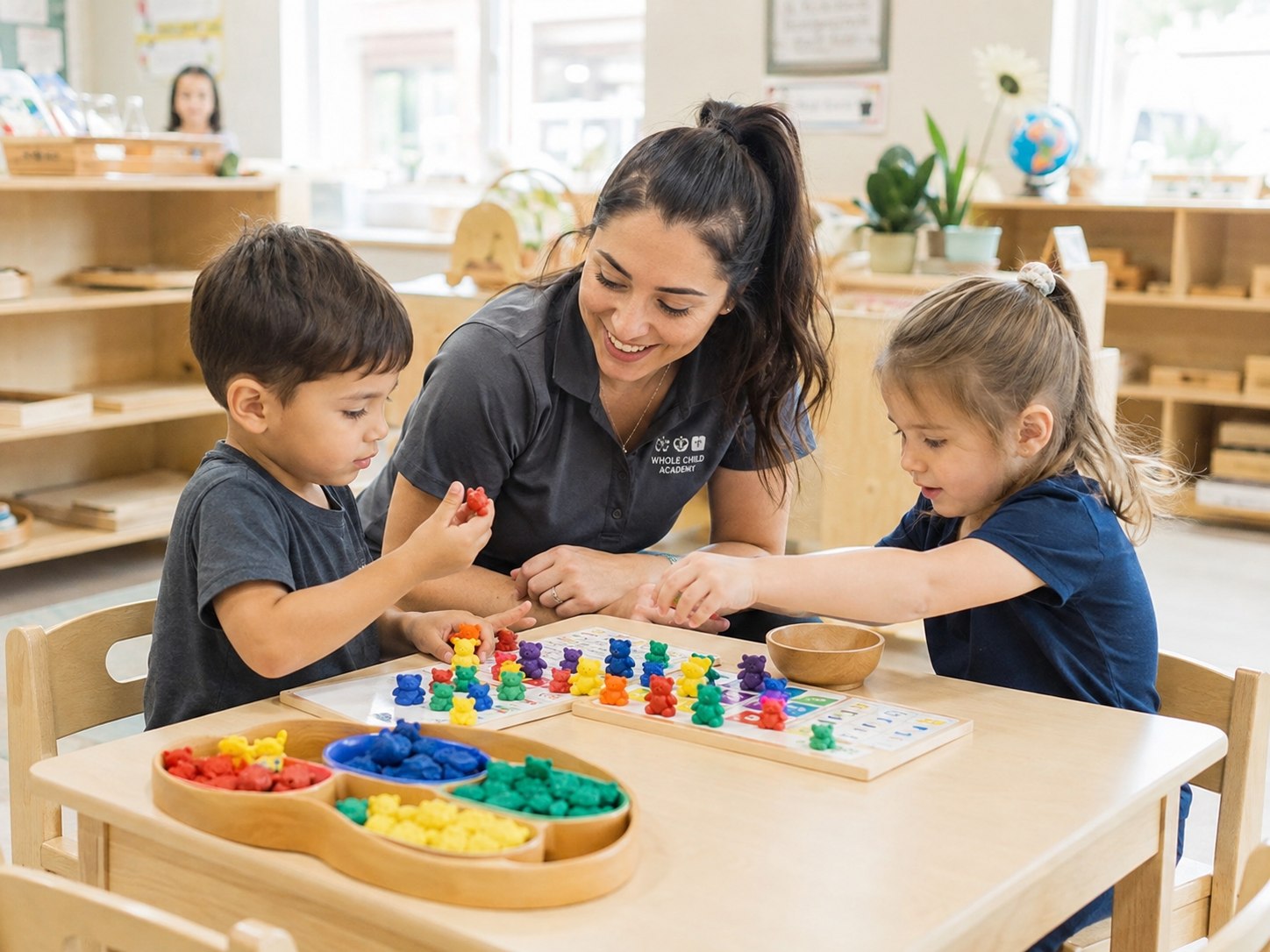
Learning toys don’t always need to be used in isolation. Some of the most effective learning experiences for children happen through collaborative play — where two or more children work together toward a shared goal, negotiate rules, communicate about strategies, and navigate disagreement.
Research from Vygotsky’s zone of proximal development framework, widely adopted in early childhood education, shows that children learn more effectively when engaging with peers at slightly higher developmental levels. A learning toy that supports collaborative use creates the conditions for this type of peer-assisted learning naturally — without requiring a structured adult-led lesson.
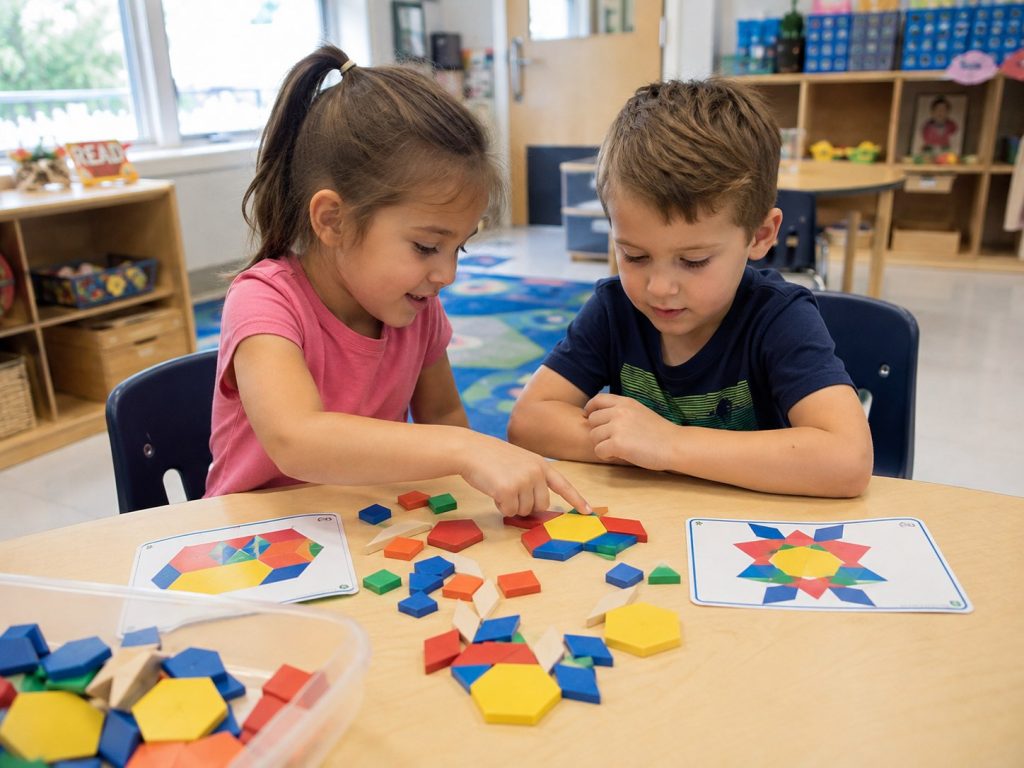
For classroom environments, this makes collaborative learning toys particularly valuable. A single set of pattern-building tiles used by a group of four children creates a richer learning context than four children each using individual single-player apps simultaneously. Teachers consistently report that collaborative materials also generate more spontaneous language use, which supports communication development alongside the toy’s primary learning focus.
Parents choosing learning toys for children who will share them with siblings or use them in social play settings should assess whether the toy supports two or more players meaningfully, not just tolerates it.
Alignment with Educational Frameworks
Parents who are engaged with their child’s schooling often find more value from learning toys that align with the frameworks being used in the classroom. This alignment allows the toy to reinforce classroom concepts during home play rather than introducing separate, disconnected content.
Common frameworks that inform quality learning toy design include Montessori principles, which emphasize self-directed activity and the use of concrete materials; Reggio Emilia approaches, which support exploration and creative inquiry; and standard early childhood curriculum frameworks used in most national education systems, which sequence skill development across literacy, numeracy, and social-emotional learning.
Toys designed with explicit alignment to recognized educational frameworks give parents and institutional buyers a more credible basis for selection than toys that claim educational value without reference to any underlying methodology.
When reviewing a learning toy’s educational claims, look for specific framework references, curriculum alignment statements, or involvement of child development specialists in the design process. These signals indicate that the educational value has been considered beyond the marketing copy.
What Institutional Buyers Evaluate Differently
Parents and school procurement officers approach learning toy selection from different angles, but the underlying quality indicators are consistent.
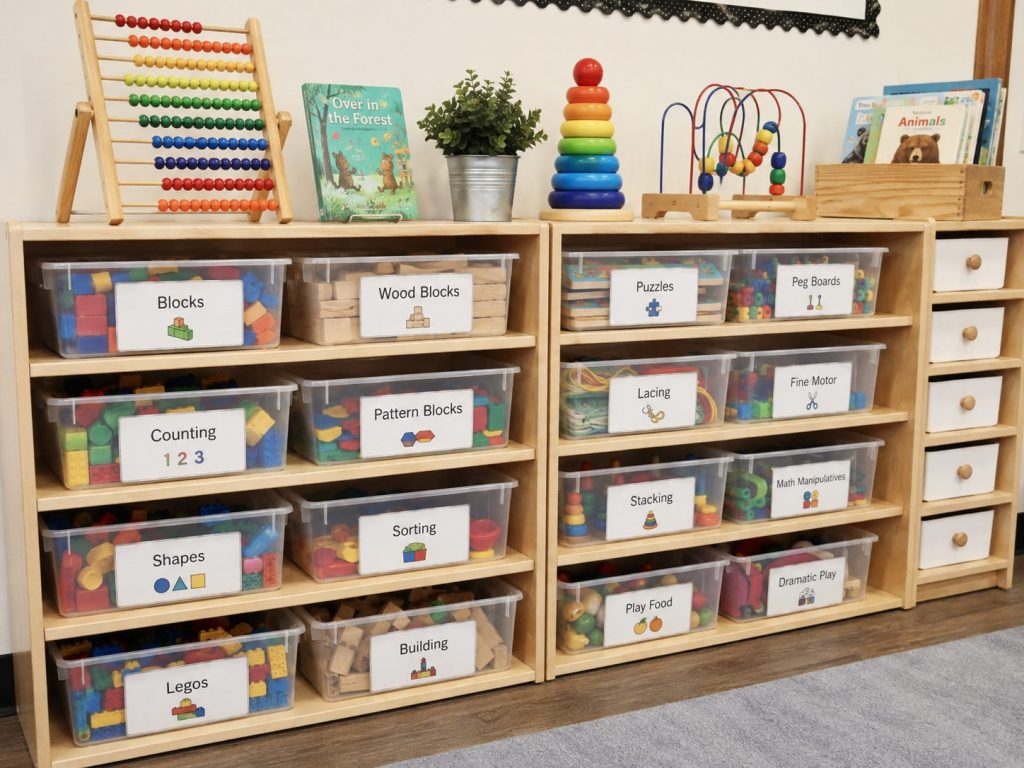
Schools and educational institutions focus on a set of practical criteria that go beyond what individual parents typically assess. Classroom scalability — whether the product works effectively in groups of 20 to 30 children — is a primary concern. Storage and organization — whether the product can be packed away efficiently and retrieved quickly during lesson transitions — affects teacher workflow significantly. Multi-year durability affects budget planning across academic cycles.
Beyond logistics, school buyers evaluate whether a learning toy supports inclusive learning environments. Products that can be used by children with different learning needs, motor abilities, or language backgrounds are more versatile and support classroom equity goals. NAEYC’s guidelines on developmentally appropriate practice specifically call for learning materials that can be adapted to a range of learners within the same environment — a standard that well-designed learning toys should be able to meet.
Toy brands, distributors, and procurement teams working at scale increasingly look for manufacturers who understand these institutional requirements — not just product specifications, but the actual classroom context in which the toys will be used. Suppliers who can provide certification documentation, curriculum alignment evidence, and classroom use data alongside their product catalog are better positioned to serve the education market than those offering products without that layer of professional support.
Red Flags When Choosing Learning Toys
Knowing what to avoid is as useful as knowing what to look for.
Learning toys that rely primarily on screen interaction or passive audio stimulation without requiring active manipulation from the child tend to offer limited developmental value, particularly for children under seven. The AAP’s guidelines on screen time and young children are explicit on this point: passive screen-based content does not produce the same learning outcomes as hands-on, interactive engagement with physical materials. The research supporting this position is substantial and consistent across multiple studies conducted over the past two decades.
Toys with excessive proprietary components — pieces that only work within one branded system and cannot be combined with other materials — reduce creative flexibility and typically reflect commercial lock-in strategies rather than educational design priorities.
Overly prescriptive toys that have one correct solution and provide no pathways for exploration tend to reward memorization rather than understanding. A child who learns to complete a puzzle through trial-and-error learns more about spatial relationships than a child who is shown the solution and asked to replicate it.
Finally, any learning toy that claims to accelerate development beyond normal ranges — particularly products marketed as capable of making children “genius-level” or producing dramatic cognitive improvements — should be evaluated critically. Quality learning toys support healthy development; they don’t promise to shortcut it.
A 3-Step Quick Check Before You Buy
When assessing any learning toy at point of purchase, this three-step check takes under two minutes and filters out most low-value products.
Step one: identify the specific skill. Ask what precise skill this toy develops and whether your child is currently at the stage where that skill is emerging. If the answer is vague — “it’s educational” or “it helps with learning” — the product likely lacks intentional educational design.
Step two: count the ways to play. A quality learning toy should have at least three distinct ways a child can interact with it across different developmental stages. If you can only identify one, it’s likely a single-function product regardless of how it’s marketed.
Step three: check the certification. For any learning toy entering a home with children under 14, confirm the product carries a recognized safety certification for your region — EN71 for Europe, ASTM F963 or CPSIA compliance for the United States. No documentation means no verification, regardless of what the packaging states.
Choosing Learning Toys That Last
The best learning toys share a few characteristics that transcend category, age group, or price point. They create genuine interaction rather than passive reception. They grow with the child rather than serving a single purpose. They are built from materials that support the sensory experience of learning rather than undermining it. And they connect to real educational goals — backed by recognized frameworks and credible research — rather than simply wearing educational branding.
For parents making individual purchases, these criteria protect against impulse buying and help build a home environment where learning through play is genuinely supported. For educators and institutional buyers, they form the basis of a more rigorous procurement process that delivers better outcomes for children and better long-term value for schools.
Vindstier designs learning toys with these criteria built into the development process — from material selection and safety certification to age-stage alignment, curriculum relevance, and classroom usability. For buyers seeking educational toy partners with strong product development expertise and institutional market understanding, the conversation starts with knowing what quality actually looks like.