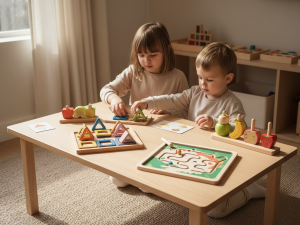
As expectations around childhood development continue to evolve, toys are increasingly being evaluated not only for entertainment value but also for their contribution to learning outcomes. In this context, Educational Toys have gained significant attention from parents, educators, and retailers who are looking for products that support cognitive development, creativity, and long-term skill building.
Research from institutions such as the American Academy of Pediatrics and Harvard Center on the Developing Child indicates that children learn more effectively when they actively engage with their environment through exploration and problem-solving. This principle has directly influenced the rapid expansion of the Educational Toys category across global markets.
Why Educational Toys Support Stronger Learning Outcomes
The effectiveness of this type of learning tools is closely related to how children naturally acquire knowledge. Unlike traditional toys, which are often designed primarily for entertainment, these learning-based products are structured around learning objectives that encourage active participation.
Children learn best when they are not simply receiving information but interacting with it. These learning-based products create this environment by encouraging experimentation, exploration, and decision-making during play. Over time, this active engagement helps strengthen memory retention and conceptual understanding.
Learning Through Active Exploration
Learning through play is widely recognized in early childhood education as a key driver of cognitive development. When children manipulate objects, test ideas, and observe outcomes, they are effectively building mental models of how the world works.
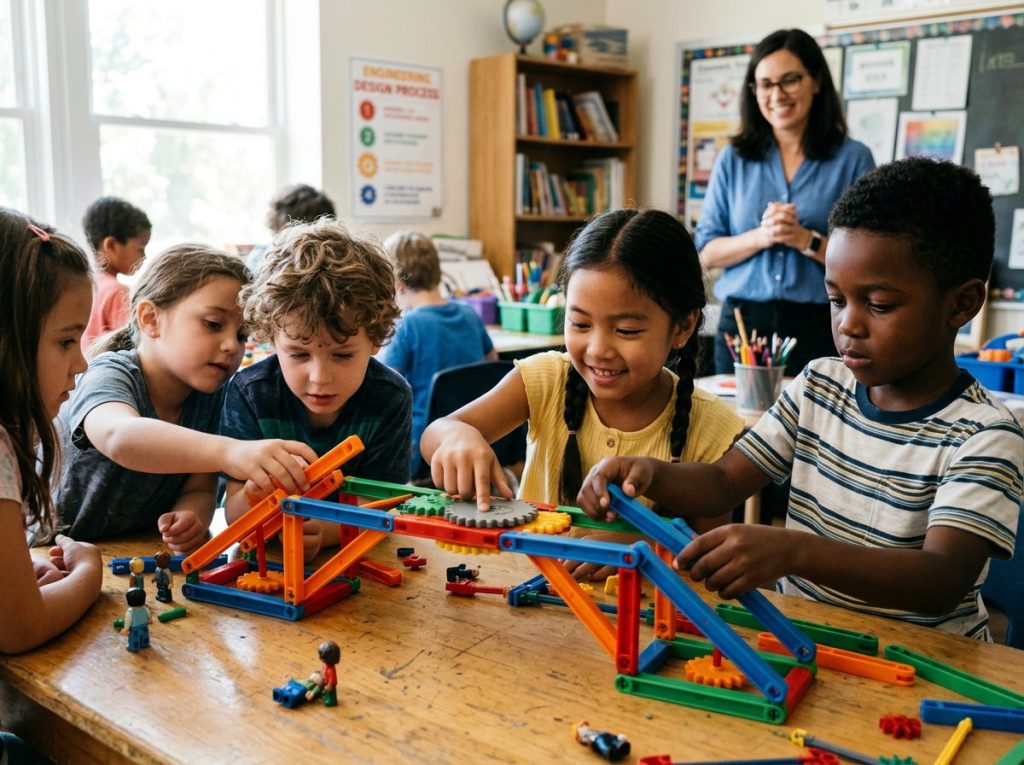
A simple construction activity illustrates this well. When a child builds a structure, they must consider balance, stability, and spatial relationships. If the structure fails, they adjust their approach and try again. This cycle of trial, observation, and correction helps develop both problem-solving ability and resilience.
Studies in child development suggest that active participation in learning tasks leads to stronger long-term understanding compared to passive learning methods.
Educational Toys vs Traditional Toys
| Aspect | Educational Toys | Traditional Toys |
| Learning Focus | Structured or semi-structured learning objectives | Primarily entertainment and imaginative play |
| Problem-Solving | Frequently required during play | Limited or incidental |
| Skill Development | Multi-dimensional (cognitive, motor, social) | Often single-focus |
| Engagement Style | Active experimentation | Passive or repetitive interaction |
| Long-Term Value | Sustained learning progression | Varies depending on use |
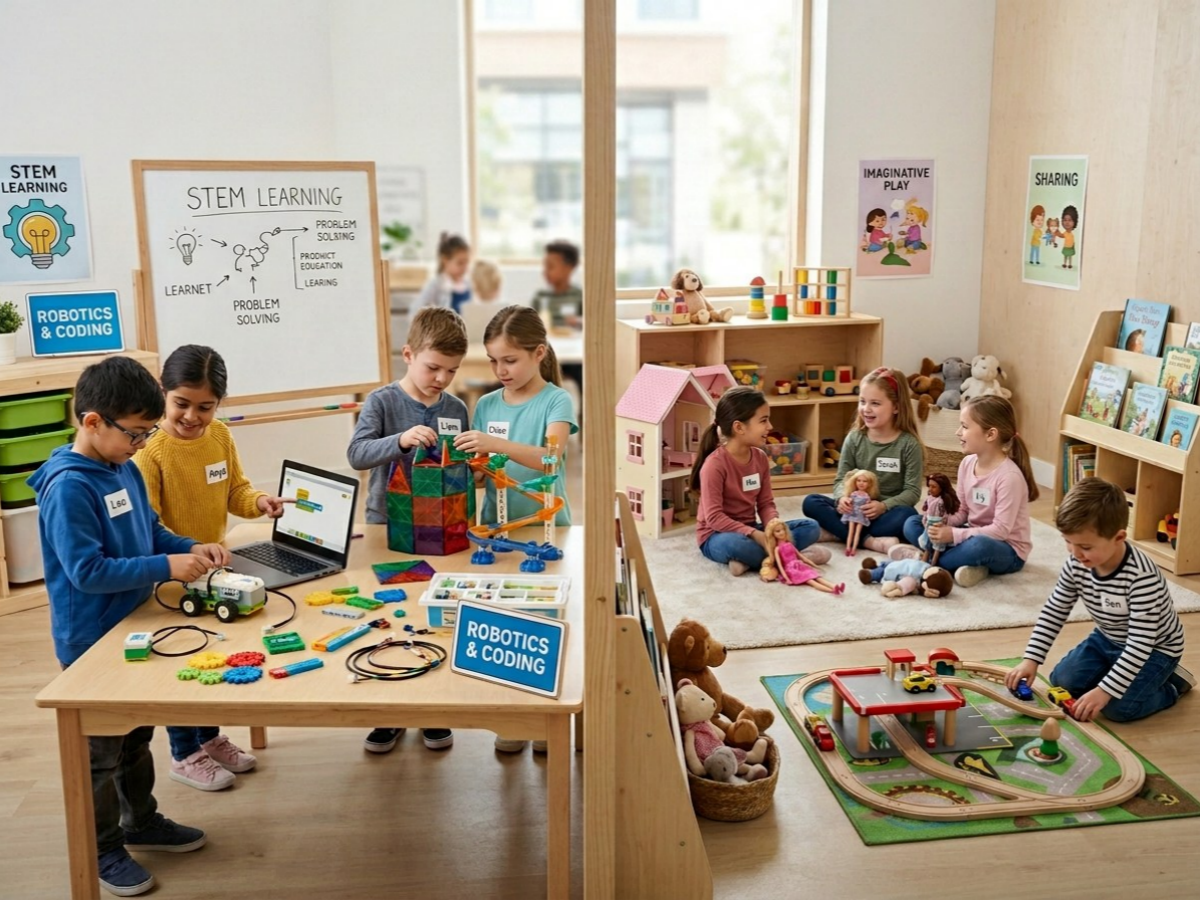
This comparison highlights that the key distinction is not the presence or absence of fun, but rather the depth and direction of learning embedded in the play experience.
How Educational Toys Encourage Critical Thinking and Problem-Solving
Critical thinking develops when children are exposed to situations that require them to make decisions, test hypotheses, and evaluate outcomes. Educational Toys are particularly effective in this regard because they rarely offer a single correct way to complete a task.
Instead, they introduce open-ended challenges where multiple solutions are possible. This encourages children to think independently and refine their strategies through experience rather than instruction alone.
The Growing Role of STEM Educational Toys
STEM-focused Educational Toys have become a major driver of innovation in the toy industry. However, their value extends beyond science or engineering content. The underlying benefit lies in how they train children to approach complex problems systematically.
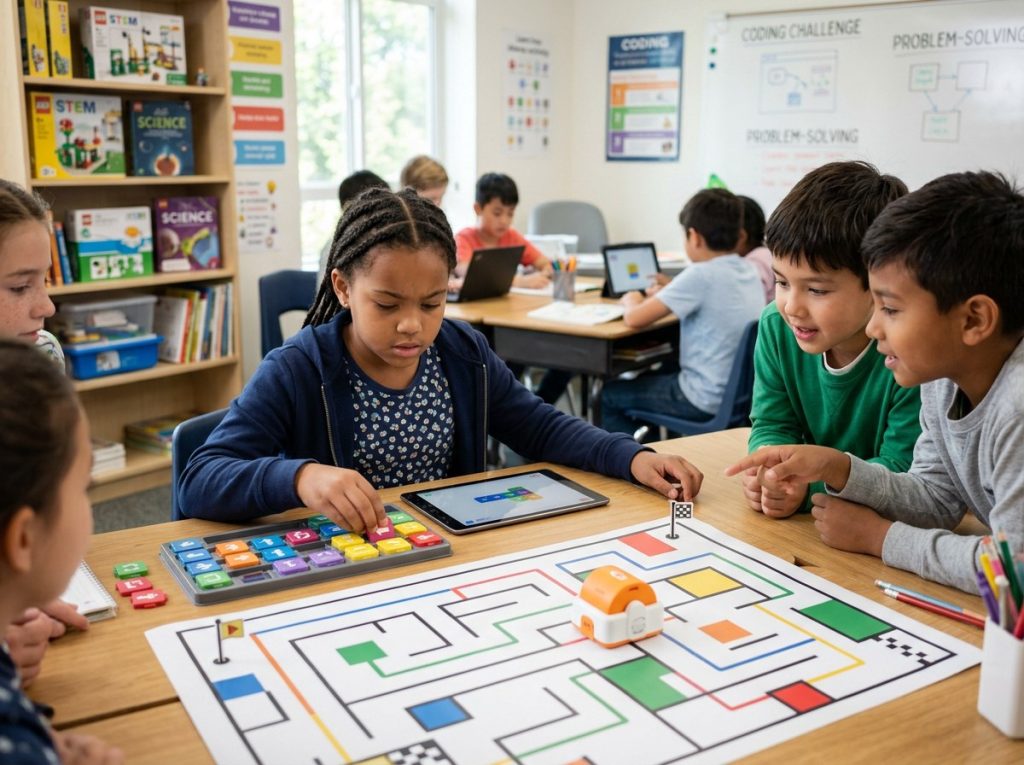
For example, when working with a coding-based learning tool, a child must plan instructions, test sequences, identify errors, and revise logic. This process mirrors real-world problem-solving used in technology and engineering fields.
As a result, many educators view STEM-based learning tools not just as learning tools, but as early exposure to structured thinking patterns that support future academic performance.
Educational Toys Help Develop Multiple Skills Simultaneously
One of the most important advantages of this category is their ability to integrate multiple areas of development within a single activity. Instead of focusing on one isolated skill, they often combine cognitive, physical, and social learning.
A construction-based learning activity, for instance, naturally encourages children to coordinate hand movements while simultaneously planning structures and solving design challenges. When played in groups, it also introduces communication and cooperation into the learning process.
This layered approach reflects how learning occurs in real life, where skills are rarely used in isolation. These products therefore provide a more holistic developmental experience compared to many traditional toy formats.
Educational Toys Buyer Considerations (Parents, Schools, Retailers)
| Buyer Type | Primary Evaluation Focus |
| Parents | Learning value, engagement, developmental support |
| Schools | Curriculum alignment, classroom usability |
| Retailers | Consumer demand, product differentiation |
| Distributors | Market stability, repeat purchase potential |
For commercial buyers, Educational Toys are often evaluated based on long-term educational relevance rather than short-term novelty. Products that support multiple learning outcomes tend to perform better in both classroom and retail environments.
What Makes High-Quality Educational Toys Different
Not all products in this category deliver the same level of learning impact. High-quality products are typically designed with specific developmental goals in mind rather than general entertainment purposes.
Manufacturers that specialize in this category often start by defining the skills they want to develop, such as problem-solving, spatial awareness, or early STEM understanding. The product is then engineered to naturally guide children toward these learning outcomes through structured interaction.
The Importance of Progressive Learning Design
A key feature of effective learning-based toys is their ability to evolve with the child’s development. Instead of offering a single fixed experience, they introduce increasing levels of complexity.
For example, a modular building system may begin with simple shapes and gradually introduce more advanced structural possibilities. Similarly, coding toys often progress from basic commands to more complex logic-based tasks.
This progression helps maintain engagement over time while continuously reinforcing learning objectives.
Why Educational Toys Are Gaining Popularity in Schools and Retail Markets
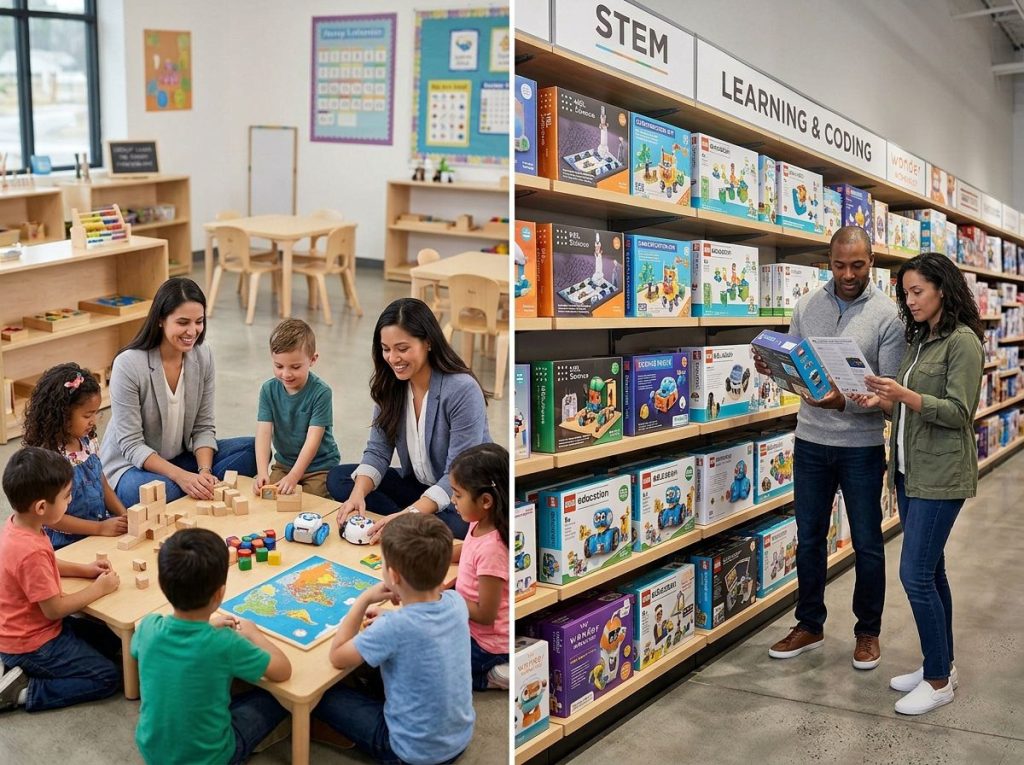
The demand for Educational Toys continues to expand beyond home use. Schools increasingly integrate them into learning environments to support interactive teaching methods that complement traditional instruction.
At the same time, retailers have observed a shift in consumer behavior. Parents are actively seeking toys that contribute to cognitive development, creativity, and school readiness. This has positioned Educational Toys as a high-value category within the global toy market.
From a business perspective, distributors and wholesalers also recognize the stability of this segment. Unlike trend-driven toy categories, Educational Toys are supported by long-term educational priorities, making them a more predictable product line.
Market Trends Driving Growth in Educational Toys
Several long-term trends are shaping the continued expansion of the Educational Toys industry.
One of the most significant factors is the growing awareness of early childhood development. Parents are increasingly informed about how early learning experiences influence cognitive and social outcomes later in life.
In addition, there is rising demand for alternatives to screen-based entertainment. Educational Toys offer a hands-on learning experience that encourages physical interaction and independent thinking.
The global emphasis on STEM education has also strengthened demand. Schools and educational programs continue to prioritize science and technology learning, creating sustained interest in Educational Toys that introduce these concepts in accessible ways.
Frequently Asked Questions About Educational Toys
At What Age Can Children Start Using Educational Toys?
Educational Toys are available across all developmental stages. Early sensory toys support infants and toddlers, while older children may benefit from construction sets, STEM kits, and coding-based learning tools.
Are STEM Educational Toys Better Than Traditional Toys?
STEM Educational Toys focus more on problem-solving, logic, and experimentation, while traditional toys often emphasize imagination and social play. Both play a role in development, and a balanced combination is generally considered most effective.
How Do Educational Toys Support Early Childhood Development?
Educational Toys encourage active engagement, helping children develop cognitive skills, language abilities, creativity, and executive functioning through hands-on learning experiences.
Why Are Educational Toys Popular Among Schools and Retailers?
Schools value Educational Toys for their alignment with learning objectives, while retailers benefit from strong and growing consumer demand for educationally meaningful products.
Conclusion
Traditional toys continue to play an important role in childhood development, particularly in fostering imagination and social interaction. However, growing evidence from educational research and market behavior suggests that Educational Toys provide additional value by combining play with structured learning opportunities.
Through active exploration, problem-solving challenges, and progressive skill development, Educational Toys help children build cognitive, creative, and practical abilities in a more integrated way. As demand continues to grow among parents, schools, retailers, and distributors, Educational Toys are increasingly positioned as a core category within the global toy industry.