Most parents searching for stem toys for preschoolers run into the same wall: the toy looks educational on the box, engages a child for ten minutes, then gets shoved under the couch. The problem is rarely the child. It is usually a toy that asks for one correct answer, then goes silent. The Vindstier Fruit Sorting Stacking Toy is built around a different logic — one that keeps a three-year-old thinking, adjusting, and coming back for another round.
What Makes This Fruit Sorting Stacking Toy a True STEM Experience
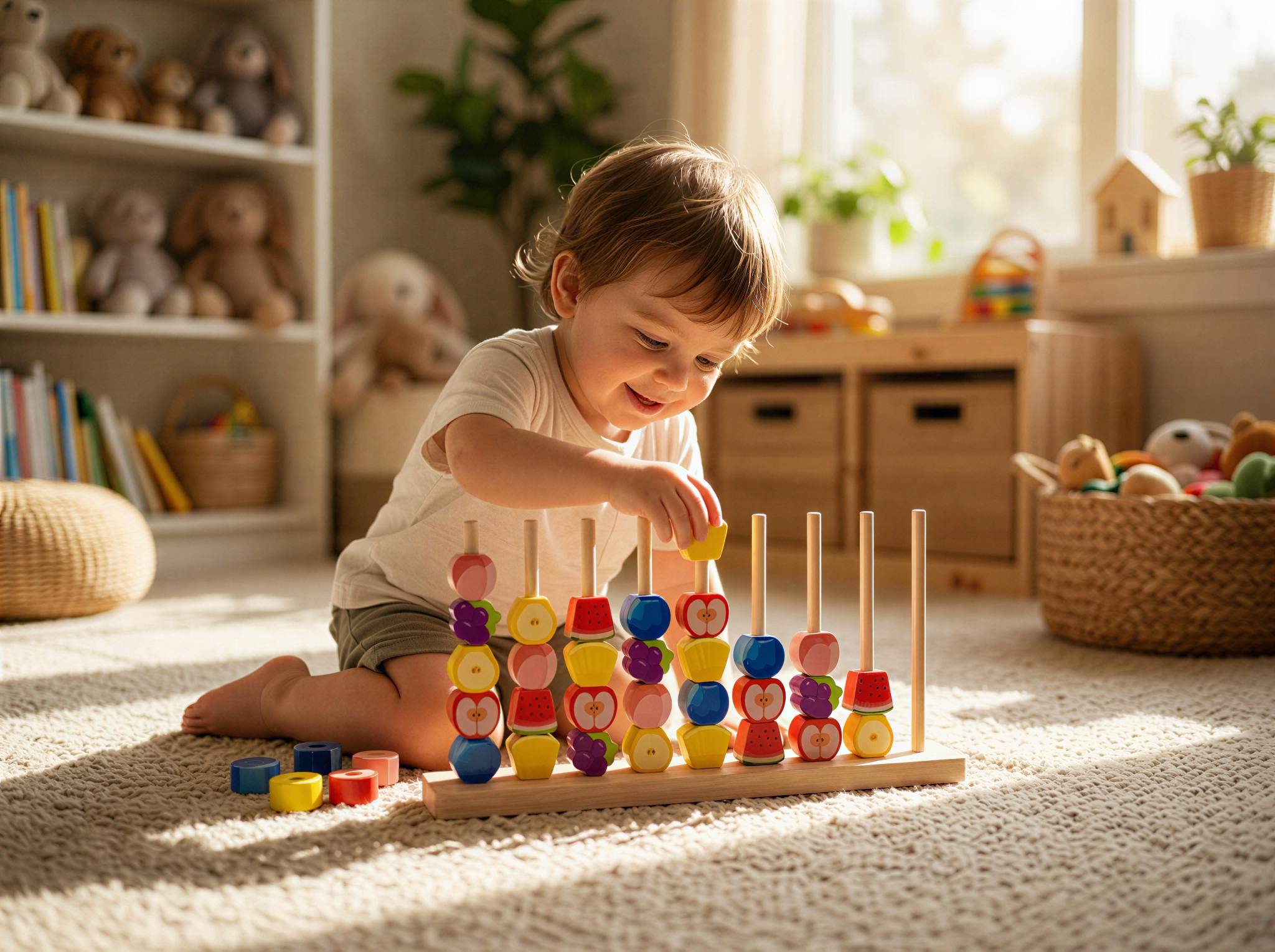
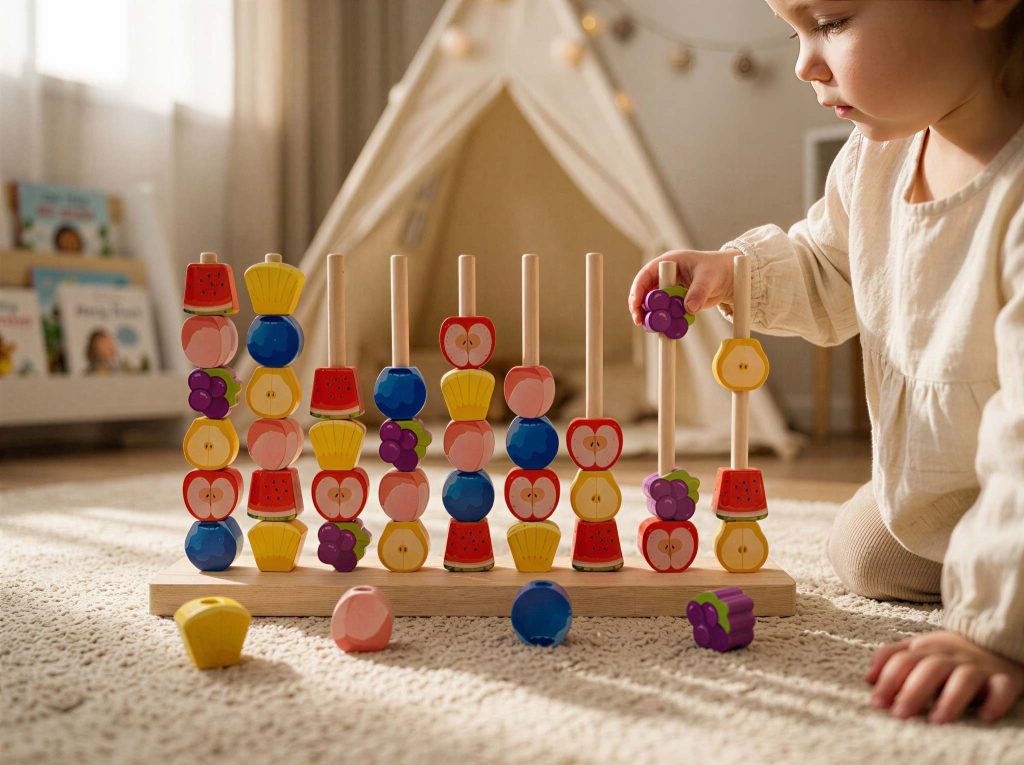
STEM learning at the preschool level is not about coding apps or building robots. It is about giving a child a problem with no single obvious solution and letting them work through it with their hands. The Vindstier Fruit Sorting Stacking Toy does exactly that through a Tower of Hanoi-inspired structure: 7 columns loaded with mixed fruit blocks and 2 spare posts. The child’s task is to move blocks across posts until each column holds only one fruit type.
There is no button that beeps “correct.” There is no animated character giving hints. The feedback is immediate and physical — either the apple block fits where the child planned, or it does not, and they have to rethink the sequence. This is computational thinking in its most tangible form for a preschooler: observe the state, plan a move, test it, adjust.
For parents who have watched their child breeze through shape sorters by age two and a half, this matters. The Tower of Hanoi mechanic scales in difficulty naturally. A child starting out will focus on moving one fruit type. As their sequencing improves, they begin planning two or three moves ahead. The same physical toy challenges a 3-year-old and a 5-year-old in genuinely different ways — not because of interchangeable difficulty settings, but because the child’s own growing logic creates the challenge.
Color and Fruit Recognition Built Into Every Move
The 7 fruit types — apples, watermelons, grapes, and four others — are rendered in bright, non-glare colors that are easy for young eyes to distinguish without causing visual fatigue during extended play. This is relevant because color recognition at age 3 is not just about naming colors. It is about using color as categorical information to make decisions.
Every time a child reaches for a block on the Fruit Sorting Stacking Toy, they are performing a micro-classification task: this block is a watermelon, watermelons go on this post, so I pick this one next. That reasoning loop — identify, categorize, act — is the cognitive pattern that early childhood educators describe as pre-mathematical thinking. It is the same pattern children will use later when sorting numbers, letters, and eventually data.
The non-glare finish is not a cosmetic detail. Children playing with wooden toys for toddlers in bright indoor lighting can experience glare fatigue that shortens their attention window. The matte surface treatment on these fruit blocks keeps visual contrast clear without reflection, which means longer focused play sessions without a cranky exit.
How the Fruit Sorting Stacking Toy Develops Fine Motor Skills Through Real Resistance
Grasping a fruit block and threading it down onto a wooden dowel requires a child to control grip pressure, align the hole to the post, and release with intention. This is not the same motor demand as pressing a button or swiping a screen. The natural wood has slight tactile resistance — enough that the child’s hand muscles are doing real work, not just resting on a surface.
Pediatric occupational therapists often recommend open ended play toys precisely because they do not dictate hand position. With the Fruit Sorting Stacking Toy, a child might grip the block from the top, from the side, or by pinching the edges — and all of those grips are valid. The dowel threading motion strengthens the intrinsic hand muscles that will later control pencil grip and scissor use.
For parents who notice their preschooler avoiding fine motor tasks — reluctant to use crayons, struggling with buttons — this kind of repetitive, self-motivated threading play builds the strength and coordination those tasks require, without feeling like practice.
Why the Wooden Construction Matters for This Specific Play Pattern
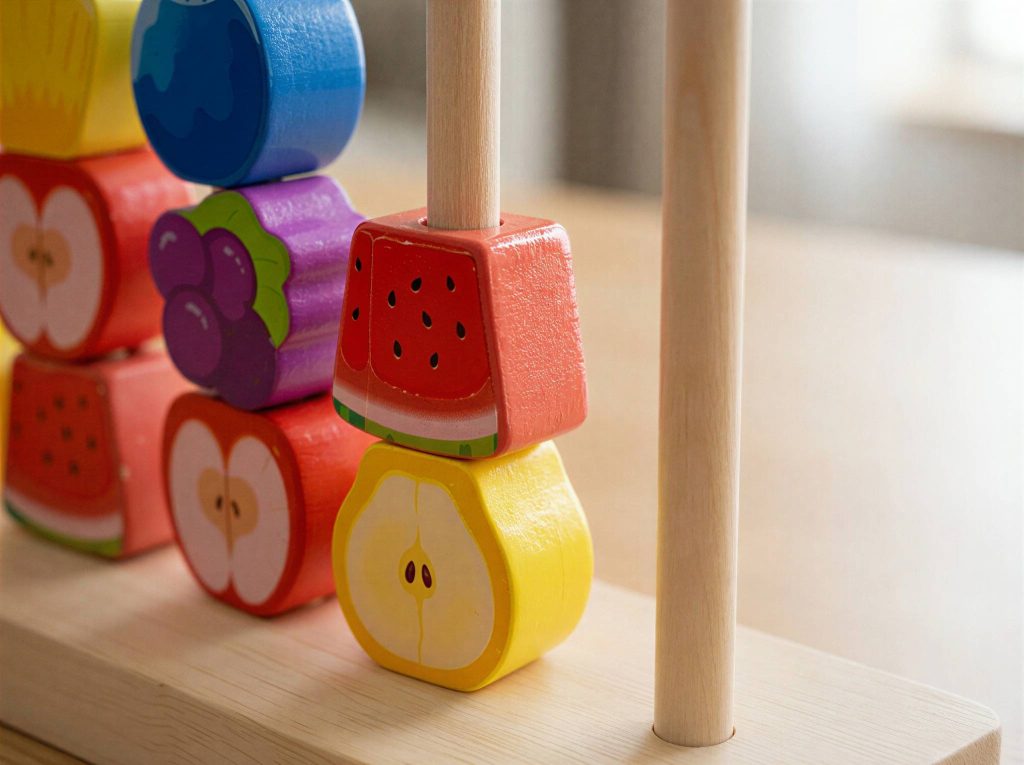
The Fruit Sorting Stacking Toy is crafted from natural solid wood using laser-cut precision, with every edge chamfered and 360° polished to a smooth finish. This is directly relevant to how the toy is used: children are repeatedly picking up blocks, threading them, lifting them off posts, and transferring them. Hands contact edges constantly.
A toy made from injection-molded plastic can achieve smooth surfaces, but it cannot replicate the weight distribution of solid wood. The density of each fruit block gives it a satisfying drop onto the post — children can feel when a block is seated correctly. That tactile confirmation is part of what makes the play loop rewarding and repeatable.
The CE certification covering EU toy safety standards and the CPC certification covering US consumer product safety requirements both address the specific scenario of a 3-year-old repeatedly mouthing, dropping, and throwing wooden blocks — because that is what 3-year-olds do. The certifications apply to this product’s actual use conditions, not to a sanitized version of how it might be used.
The Fruit Sorting Stacking Toy as a Gift That Grows With the Child
The colorful gift box packaging makes this a natural choice for stocking stuffers for 3+ years, birthday presents, or holiday gifts — but the more important gift quality is longevity. Most educational toys for 3 year olds are outgrown within a season because the challenge ceiling is too low. The Tower of Hanoi mechanic has a natural difficulty curve that extends well past the initial unboxing.
A child at 3 years old will explore the blocks freely, learn the fruit names, and attempt basic sorting. At 4, they will start self-imposing rules: “I can only use one spare post.” At 5, they may begin counting moves and trying to solve it in fewer steps. Parents do not need to introduce these challenges — children generate them independently when the toy’s structure supports open-ended thinking.
This parent-child interaction dimension is also worth naming directly. Sitting across from a child while they work through a sorting sequence gives parents a visible window into how their child is problem-solving. It is easier to have a conversation about thinking strategies when there is a physical puzzle on the table between you.
Conclusion
The Vindstier Fruit Sorting Stacking Toy earns its place in the stem toys for preschoolers category not by labeling itself educational, but by being structured in a way that makes thinking unavoidable. The Tower of Hanoi mechanic, 7 distinct fruit types in non-glare colors, solid wood construction with 360° polished edges, and the threading motion that builds real hand strength — each element serves the child’s development in a specific, non-interchangeable way.
For parents looking for Montessori toys 3+ years that hold attention across months rather than days, or for buyers sourcing eco-friendly wooden play sets that meet both CE and CPC safety standards, the Fruit Sorting Stacking Toy is worth a closer look.