
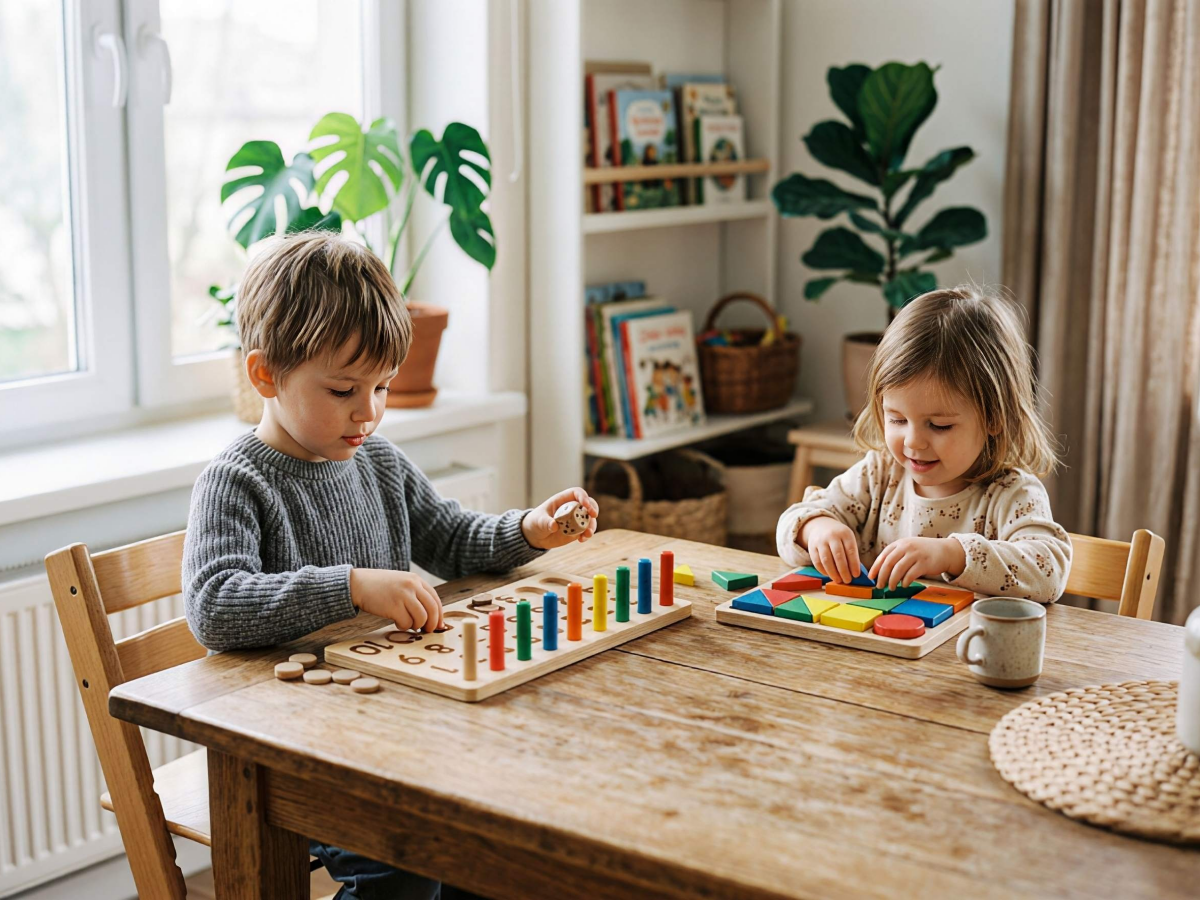
Educational Toys are becoming one of the most discussed solutions for families trying to reduce children’s daily screen exposure without sacrificing independent play.
For many parents, screen time did not begin as a long-term parenting choice. It often started as a quick solution during dinner preparation, long car rides, or busy workdays. Over time, however, many families notice the same pattern: once children become used to constant digital stimulation, quieter hands-on activities suddenly feel less interesting.
That shift explains why searches related to screen-free Educational Toys, independent learning activities, and Montessori-inspired play have increased steadily in recent years.
According to Common Sense Media, children between ages 2–8 now average more than two hours of daily screen exposure. At the same time, child development researchers continue emphasizing the importance of tactile exploration, problem-solving, and self-directed play during early childhood.
Still, replacing screens is not as simple as buying random Educational Toys.
Many products labeled “educational” hold attention briefly, then end up untouched on shelves a week later. Others require constant adult guidance, which defeats the purpose of independent play in the first place.
What usually makes the difference is whether the activity naturally encourages children to keep experimenting on their own.
Some toys quietly become part of everyday family routines without parents realizing it at first.
Why Educational Toys Encourage More Independent Thinking
Independent play is often misunderstood as simply “playing alone.”
In reality, researchers usually connect self-directed play with:
- stronger focus
- emotional regulation
- decision-making
- problem-solving persistence
- adaptability after mistakes
A 2023 child development review published through the American Academy of Pediatrics noted that tactile exploratory play helps children practice sustained attention in ways passive entertainment often interrupts.
Most parents do not describe the change in those terms, though.
They usually notice smaller things first.
A child stays with one activity longer. Another restarts a game independently after making a mistake instead of immediately asking for help. Some even begin talking themselves through small problems while playing.
That kind of engagement tends to happen more naturally when children physically interact with an activity instead of simply watching it.
Interestingly, many tabletop learning games create this effect because the child controls the pace. There are no flashing prompts, automatic hints, or instant corrections. Children experiment, pause, retry, and gradually adjust their own strategies.
Sometimes the process looks messy at first. That is usually part of the learning.
Educational Toys That Hold Attention Longer Without Screens
One reason many screen-free activities fail is surprisingly simple:
children solve the challenge once, memorize the answer, and lose interest.
Educational Toys tend to maintain engagement longer when they include:
- changing outcomes
- visible progress
- self-correction
- physical interaction
- room for experimentation
The most effective activities rarely feel identical twice.
| Design Element | Why It Supports Independent Play |
| Hands-on movement | Keeps children mentally and physically engaged |
| Changing game situations | Prevents repetitive memorization |
| Clear objectives | Encourages self-directed completion |
| Open-ended outcomes | Allows creativity and experimentation |
| Self-correction | Reduces dependence on adults |
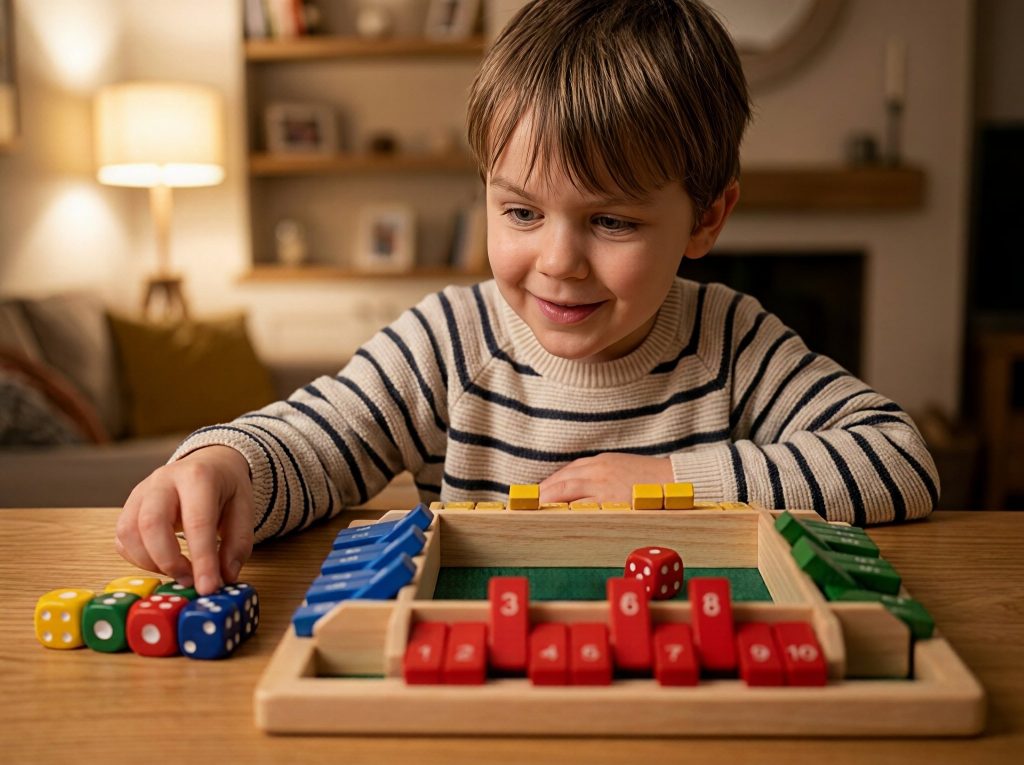
This becomes especially noticeable in tabletop number games.
A single dice roll can completely change the direction of play, forcing children to rethink decisions in real time. Some children move quickly at first without much strategy. After several rounds, many naturally begin slowing down and thinking ahead before making choices.
Parents often notice children:
- counting possibilities quietly
- reconsidering risky decisions
- trying to beat earlier scores
- predicting which numbers they hope not to roll next
Those small behavioral shifts usually develop through repeated play rather than direct instruction.
Why Replay Value Matters More Than Many Parents Expect
Many educational products focus heavily on “learning outcomes,” but long-term replay value is often what determines whether children voluntarily return to the activity.
That repeated return matters.
A hands-on game that changes slightly every round tends to hold attention much longer than fixed-answer exercises or repetitive digital tapping.
Some families notice children quietly reopening a tabletop game the next morning before breakfast just to try a different strategy from the day before.
That kind of curiosity is difficult to force artificially.
How Educational Toys Reduce Passive Entertainment Habits
Screens are extremely effective at capturing attention immediately.
Physical play works differently. It develops engagement more gradually.
That slower pacing is not necessarily a disadvantage. In many cases, it is exactly what helps children stay involved longer.
Several early childhood studies suggest that activities combining movement, observation, and problem-solving may support longer attention spans during preschool developmental stages.
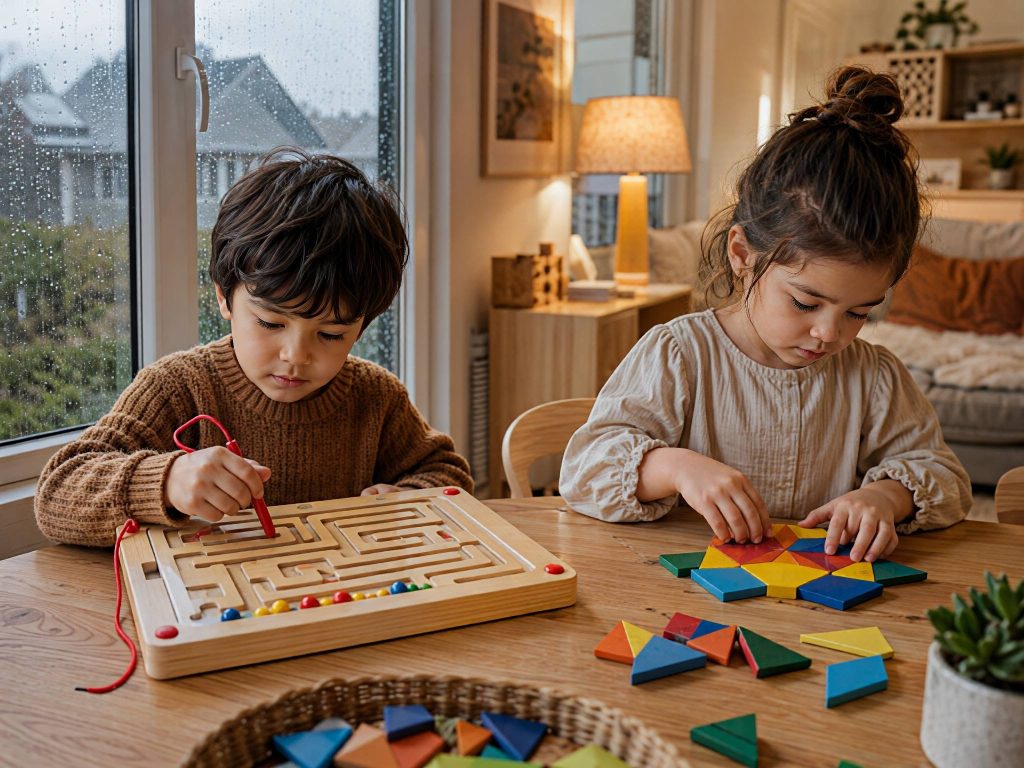
Maze-style tabletop activities are a good example.
Many children initially move too quickly through magnetic mazes and become frustrated when pieces get stuck or pathways become blocked. After several attempts, their movements often become calmer and more deliberate as they begin anticipating obstacles ahead of time.
The adjustment happens naturally through experience.
Independent Problem Solving Often Begins with Small Mistakes
Some of the most valuable learning moments happen quietly.
A child realizes halfway through an activity that a shortcut does not work. Another notices that one decision creates a problem later in the game. Instead of receiving instant digital correction, they pause, backtrack, and experiment again.
Interestingly, children often become more patient once they realize mistakes are simply part of progressing through the activity.
That process of self-correction is one reason tactile Educational Toys frequently support independent play more effectively than passive entertainment.
Children are not just watching outcomes happen. They are influencing them directly.
Why Quiet Educational Toys Matter During Evening Routines
For many households, screen time increases most heavily during transitional parts of the day:
- after dinner
- before bedtime
- during rainy afternoons
- while parents finish household tasks
- during shared quiet time with siblings
This is usually when quieter tabletop activities begin feeling more valuable than parents initially expected.
Loud electronic toys can create short bursts of excitement but also overwhelm shared spaces quickly. In contrast, quieter hands-on games tend to blend more naturally into evening routines.
Small design details often make a bigger difference than expected.
For example, some tabletop number games now include felt-lined playing surfaces that soften dice noise during repeated play sessions. Enclosed magnetic activities can also reduce cleanup stress during travel or restaurant waiting periods because pieces remain contained instead of scattering across tables and floors.
Those details may seem minor at first, but many parents only begin appreciating them after weeks of everyday use.
Educational Toys That Encourage Longer Attention Through Creativity
Children usually stay engaged longer when one activity allows multiple possible outcomes instead of a single correct answer.
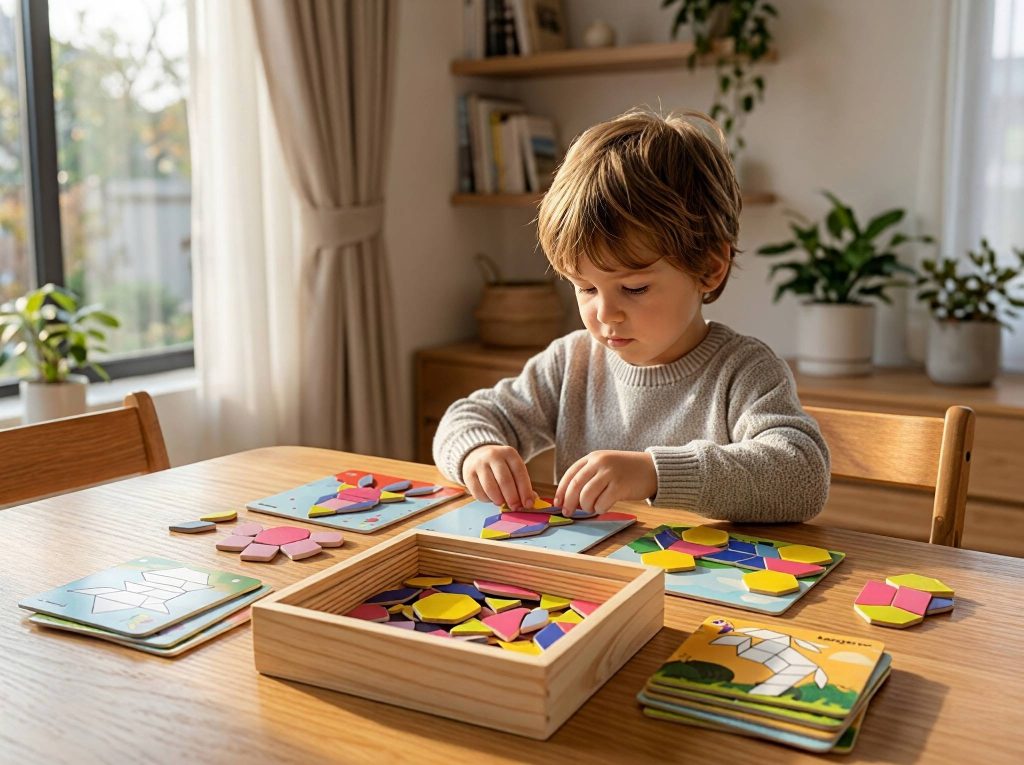
That flexibility is one reason open-ended geometric activities continue appearing frequently in Montessori-style learning environments.
Children may spend one day carefully copying patterns and another day inventing entirely original designs from the same materials.
Some build symmetrical shapes. Others experiment with animals, vehicles, towers, or abstract arrangements that change repeatedly during play.
According to several Montessori classroom observations, open-ended construction activities are often associated with longer uninterrupted work periods and stronger spatial reasoning development during preschool years.
What matters most is that children remain in control of the pace and direction of exploration.
There is no timer pushing them forward.
What Parents Often Notice After Several Weeks of Independent Play
The most meaningful changes usually happen gradually.
Not every child immediately sits quietly with a tabletop activity for long periods. Some bounce rapidly between toys at first. Others become impatient after making mistakes.
But after several weeks, many families begin noticing smaller behavioral changes that feel surprisingly significant.
Children may begin restarting activities independently without asking for help. Some become more willing to solve small problems on their own before turning to adults. Others simply spend longer periods focused on one thing without immediately asking for a screen.
Parents sometimes notice children explaining game rules to younger siblings after repeated play sessions. In other homes, a child may quietly continue building or replaying an activity alone the next morning without being reminded.
None of these moments feel dramatic on their own.
Together, though, they often reflect a shift from passive entertainment toward more self-directed engagement.
Conclusion
Reducing screen time rarely works through restriction alone.
Children still need challenge, stimulation, movement, creativity, and opportunities to explore independently.
The most effective Educational Toys are not simply distractions from screens. They create situations where children stay mentally involved through hands-on decision-making, experimentation, and curiosity.
Whether children are solving tabletop number challenges, experimenting with geometric designs, or working through maze-style activities, they remain active participants in the outcome instead of passive observers.
And for many families, the biggest change is not simply less screen time.
It is watching children stay curious, focused, and genuinely absorbed in something they chose to continue on their own.