A preschool teacher hands a child a pair of scissors for the first time, and the cutting line wanders far from where it should. A parent watches their four-year-old struggle to catch a soft ball tossed gently from two feet away. A kindergarten aide notices that half the class still grips a crayon with a fist instead of a pincer grasp. These moments look small, but they point to the same underlying gap: the connection between what a child sees and what their hands can do has not yet fully developed—and this is exactly where hand-eye coordination toys can make a difference.
In short, the best hand-eye coordination toys for preschoolers combine progressive difficulty, multi-sensory feedback, and kid-sized design to build real visual-motor skills through play, closing this gap through low-pressure, enjoyable practice. In other words, hand-eye coordination toys are not just playthings; they are tools that help preschoolers connect what they see with what their hands can do. But not every toy marketed for this purpose actually delivers on that promise. Many products on the market focus on entertainment value rather than developmental structure, leaving teachers and parents to guess whether a toy is actually helping. This article breaks down what genuinely effective hand-eye coordination toys look like, how to evaluate them for classroom or home use, and what preschool educators and buyers should prioritize when selecting products for developmental impact rather than novelty.
Why Hand-Eye Coordination Matters for Preschool Development
Hand-eye coordination (also called visual-motor coordination) is the ability to process visual information and translate it into precise, controlled hand movement. For preschool-age children, this skill underpins far more than sports or drawing. It shapes how a child learns to write, how they manage self-care tasks like buttoning a coat or using utensils, and how confidently they engage with hands-on classroom activities like building, sorting, and threading.
For preschoolers, practicing hand-eye coordination through carefully chosen toys can support foundational skills that extend far beyond playtime.
Children between the ages of three and six are in a critical developmental window for this skill. Their visual tracking abilities are maturing, their fine motor muscles are strengthening, and their brains are actively building the neural pathways that link perception to action. Toys that engage this process repeatedly, in low-pressure and enjoyable ways, give children more opportunities to practice than isolated exercises ever could.
Teachers see the downstream effects when this development lags. A child with underdeveloped hand-eye coordination often struggles with letter formation, has difficulty with puzzles or building tasks, and may avoid activities that require precision because they find them frustrating rather than fun. Choosing the right coordination-building toys early can prevent these frustrations from compounding into avoidance behaviors later in preschool or kindergarten.
What to Look for in Hand-Eye Coordination Toys for Preschool Classrooms & Home Use
Not every toy that claims to build hand-eye coordination actually does so in a structured way. When evaluating options for a classroom or a home learning environment, a few criteria separate genuinely developmental toys from toys that simply keep hands busy.
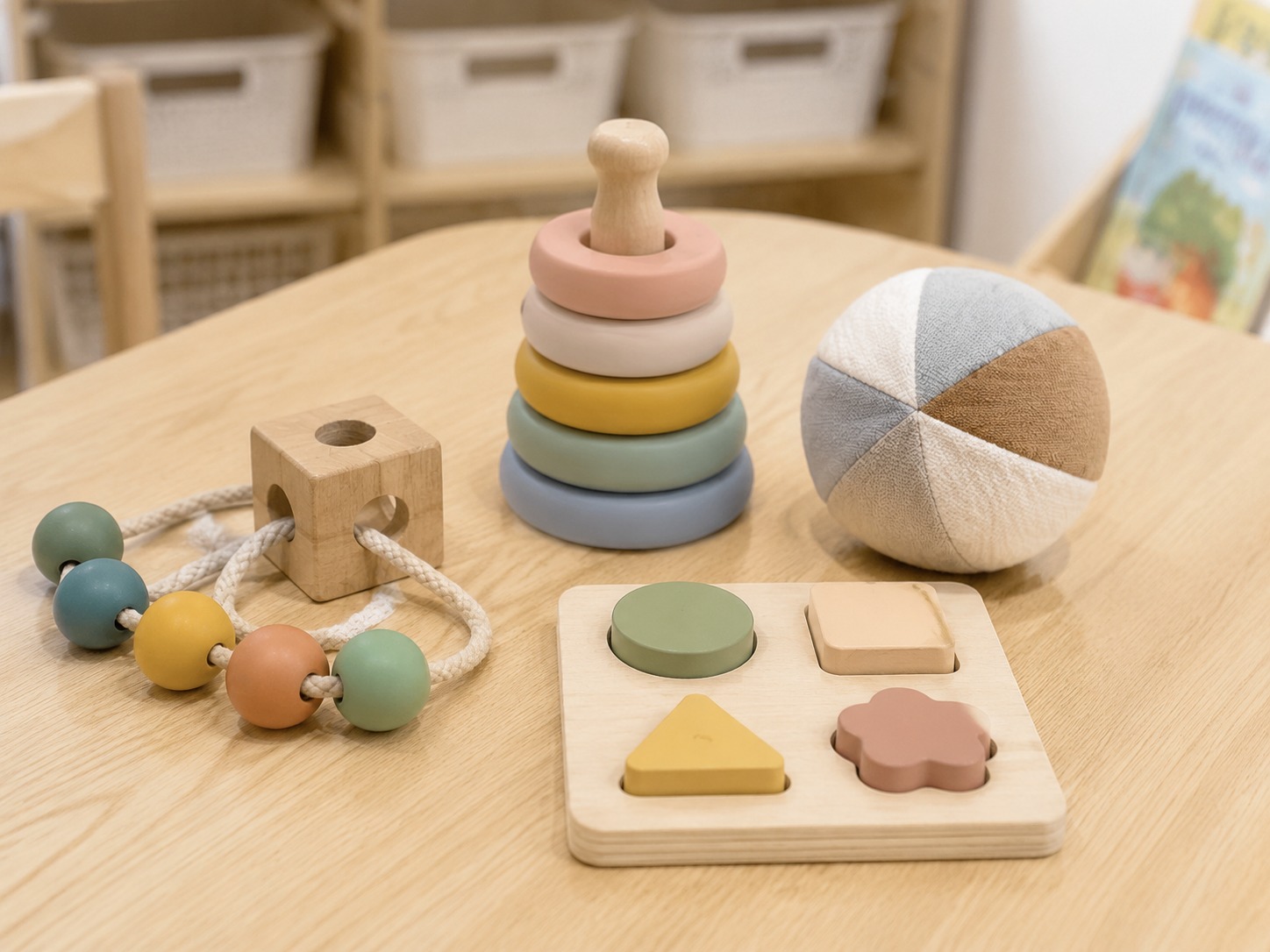
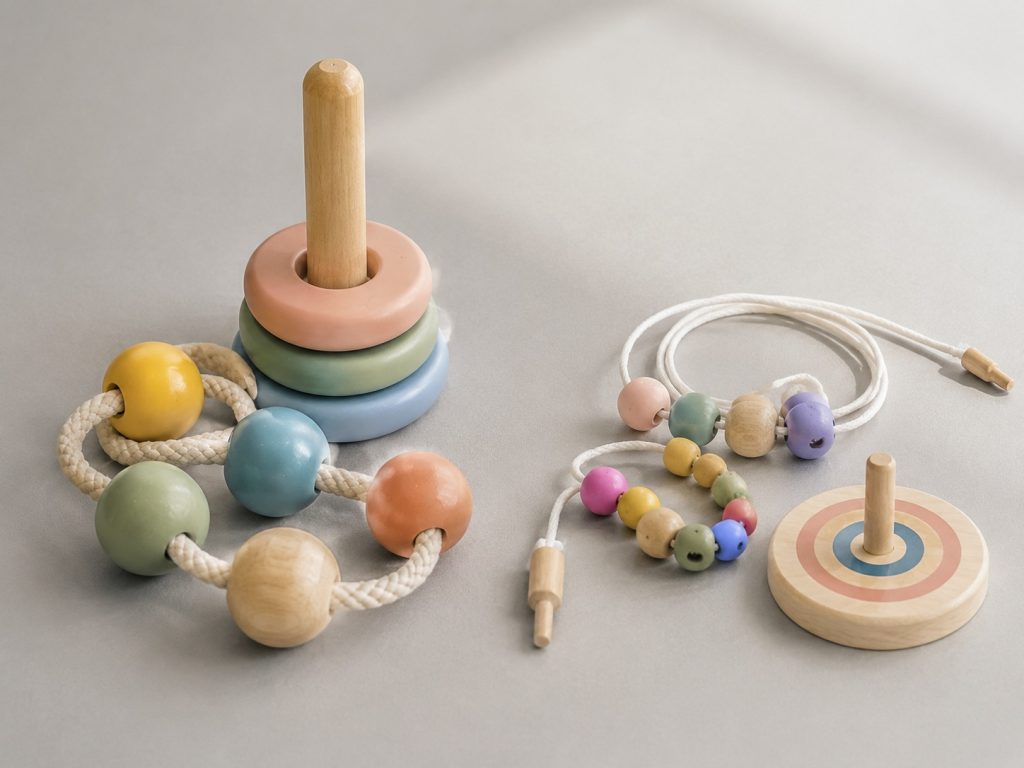
Progressive difficulty. Effective coordination toys allow a child to start with a simpler version of a task and gradually work toward more precise movements. A lacing toy with large holes and thick cord teaches the same underlying skill as one with smaller holes and finer thread, but the second version demands more control. Toys that only offer one fixed level of challenge lose their educational efficacy once a child adapts to them.
Multi-sensory feedback. Children learn coordination faster when a toy gives immediate, clear feedback — a satisfying click when a piece fits correctly, a visual change when a target is hit, or resistance that signals a movement was accurate. This feedback loop is what turns repetition into actual skill-building rather than passive play.
Appropriate grip and scale. Preschoolers have smaller hands and less-developed grip strength than older children. Toys designed without this in mind — pieces that are too small, too slippery, or that require adult-level dexterity — create frustration rather than growth. The best hand-eye coordination toys for this age group are scaled specifically to preschool hands, not adapted down from products meant for older children.
Open-ended engagement. A toy that can only be “solved” once loses its practice value quickly. Toys that support repeated, varied use — building sets, target-and-toss games, threading activities with changeable patterns — keep children engaged long enough to build real muscle memory and visual tracking skill.
Classroom durability. For schools and educational buyers, a toy also needs to withstand daily handling by multiple children. A hand-eye coordination toy that breaks after a few weeks of classroom use isn’t just a maintenance problem — it interrupts the consistency a child needs to actually build the skill over time. For buyers sourcing school supply hand eye games and hand-eye coordination toys for entire grade levels or multi-classroom use, this durability also protects long-term budget value by reducing replacement costs.
To tailor selections more precisely, match toy complexity to a child’s developmental stage. For 3-year-olds, prioritize large, easy-grip pieces and wide targets to build foundational control. For 5–6 year olds, opt for fine motor skills toys for 3-5 year olds and up with smaller components and adjustable difficulty to stretch growing precision and visual tracking ability.
| Selection Factor | What It Solves | Why It Matters for Preschoolers |
|---|---|---|
| Progressive difficulty | Prevents skill plateaus from fixed challenges | Keeps engagement and growth aligned as coordination improves |
| Multi-sensory feedback | Eliminates vague, delayed learning feedback | Immediate feedback reinforces correct movement patterns |
| Preschool-scaled grip | Avoids frustration from adult-sized pieces | Matches motor development stage of 3–6 year olds |
| Open-ended design | Extends practice value beyond one-time use | Supports regular practice needed for motor learning |
| Classroom durability | Prevents disrupted routines from breakage | Ensures consistent access across many children and uses |
Common Mistakes to Avoid When Selecting Hand-Eye Coordination Toys for Preschool
One of the most frequent mistakes in this category is treating “hand-eye coordination toy” as a marketing label rather than a design standard. A toy with bright colors and moving parts can look developmental without actually training visual tracking or motor precision in any structured way. Teachers and buyers who rely solely on packaging claims often end up with a shelf of toys that entertain but don’t build the target skill. Instead, use the five criteria outlined above to evaluate a toy’s actual educational efficacy, rather than taking packaging claims at face value.
Another common issue is choosing toys based on age range alone, without considering the specific coordination challenges a group of children is facing. A classroom full of children who already have strong grasping skills but weak visual tracking needs different tools than a classroom where fine motor grip is the main gap. Generic, one-size-fits-all product selections often miss this nuance. Matching tools to specific skill gaps — whether grip strength, visual tracking, or bilateral coordination — aligns with the progressive difficulty and preschool-scaled grip principles that make hand-eye coordination toys truly effective.
A third mistake is underestimating how much toy quality affects consistency of use. Cheaply made coordination toys — pieces that don’t fit precisely, targets that don’t register contact clearly, materials that degrade with handling — actually undermine the feedback loop children rely on to learn. If a child can’t tell whether their movement was accurate because the toy itself is imprecise, the developmental benefit is lost regardless of the toy’s intended purpose. This is why multi-sensory feedback and classroom durability are non-negotiable selection factors — they preserve the learning loop that drives real skill growth.
Visual Motor Activities for Preschool Classroom: How Coordination Toys Work in Practice
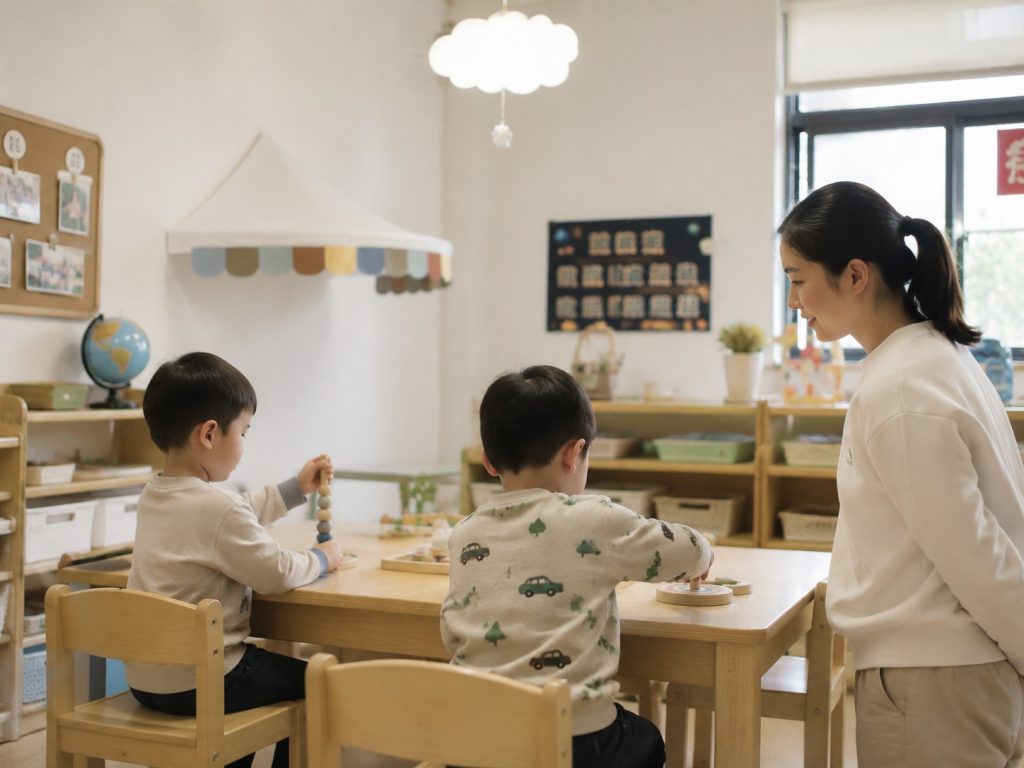
Consider a typical pre-kindergarten classroom with children aged four to five. Several children in the group show early signs of coordination lag: hesitant scissor use, difficulty stacking small blocks without knocking them over, and reluctance to participate in drawing activities.
A teacher introduces a rotation of targeted activities using hand-eye coordination toys — a ring toss set with graduated target distances, a bead-threading activity with progressively smaller beads, and a simple catch-and-target game using soft, easy-grip balls. Rather than presenting these as isolated exercises, the teacher builds them into daily transition times and small-group stations, giving each child several short, 10-minute daily practice sessions across the week instead of one long session.
Within this structure, children engage at their own pace. A child who struggles with the ring toss at the closest distance simply stays there longer, while a child who masters it quickly moves to a greater distance. The hand-eye coordination toys aren’t graded or timed — they simply give each child a reason to practice the same underlying skill repeatedly, in a form that feels like play rather than instruction.
Over the course of 4–6 weeks, the teacher observes practical carryover: steadier scissor control during art time, more confident block-building, and fewer instances of children avoiding fine motor tasks altogether. This is the real value of well-designed coordination toys — not a single dramatic improvement, but a steady reduction in the friction between what a child intends to do and what their hands can actually execute.
How Vindstier Designs Hand-Eye Coordination Toys for Real Classroom Needs
Vindstier approaches hand-eye coordination toys as developmental tools first and play products second. Every design decision starts with a specific coordination challenge — visual tracking, grip precision, target accuracy, or bilateral hand use — rather than starting with a toy concept and working backward.
This shows up in practical details that matter to teachers and school buyers. Vindstier’s coordination sets are built with preschool-scaled grip design, so pieces are sized and weighted for smaller hands rather than scaled-down versions of toys meant for older children. Feedback mechanisms — whether a satisfying connection point, a clear visual target, or defined resistance — are built into the product rather than left to chance, so children get the immediate cues that make consistent skill rehearsal effective.

Difficulty progression is also built into the product line itself. A single Vindstier coordination set often includes multiple challenge levels within the same toy — adjustable target distances, graduated bead sizes, or interchangeable components — so a teacher can use one product across an entire classroom of children at different developmental stages, rather than purchasing separate toys for each skill level.
For school buyers and distributors, this design philosophy translates into practical value: fewer product replacements, more consistent classroom outcomes, and toys that hold up to daily multi-child use without losing the precision that underpins their educational efficacy. For brand partners exploring OEM or ODM collaboration, it reflects Vindstier’s broader manufacturing approach — developmental logic informs product engineering from the earliest design stage, not as an afterthought layered onto a finished toy.
Conclusion
Choosing hand-eye coordination toys for preschool development isn’t about finding the most colorful or feature-packed option on a shelf. It’s about identifying tools that give children structured, regular practice connecting what they see to what their hands can do — with feedback, appropriate difficulty, and durability built in from the start. For teachers, this means fewer frustrated students and steadier classroom outcomes. For school buyers, it means selecting products that hold up to real daily use without sacrificing developmental impact. And for the children using them, it means turning an invisible developmental gap into confident, capable hands.