When parents, educators, retailers, and toy brands compare Wooden Building Blocks with plastic alternatives, the discussion rarely focuses on appearance alone. Durability, educational value, maintenance, manufacturing quality, and long-term cost all play important roles in the decision-making process. As demand for educational toys continues to grow, buyers are also paying closer attention to how products are manufactured, what materials are used, and whether they can withstand years of everyday use.
Research published by the American Academy of Pediatrics (AAP) highlights that open-ended play supports healthy cognitive, social, and emotional development. Similarly, the National Association for the Education of Young Children (NAEYC) emphasizes that simple construction materials encourage problem-solving, creativity, and communication during early learning activities. These findings help explain why Wooden Building Blocks remain a popular choice in homes, preschools, Montessori classrooms, and educational institutions around the world.
For importers, wholesalers, and private-label brands, the comparison extends even further. Manufacturing consistency, customization capabilities, quality control, and product lifespan directly affect customer satisfaction and long-term business performance. This article provides an objective comparison of wooden and plastic building blocks while exploring why many buyers continue to invest in high-quality Wooden Building Blocks for both educational and commercial purposes.
Why Wooden Building Blocks Are Still Popular Today
Although plastic construction toys dominate many retail shelves, Wooden Building Blocks have maintained strong market demand for decades. According to industry reports from Grand View Research, the global educational toy market continues to expand as parents increasingly invest in products that encourage independent learning, creativity, and hands-on exploration. Within this growing market, wooden educational toys remain one of the most recognized categories because they combine simplicity with long-term usability.
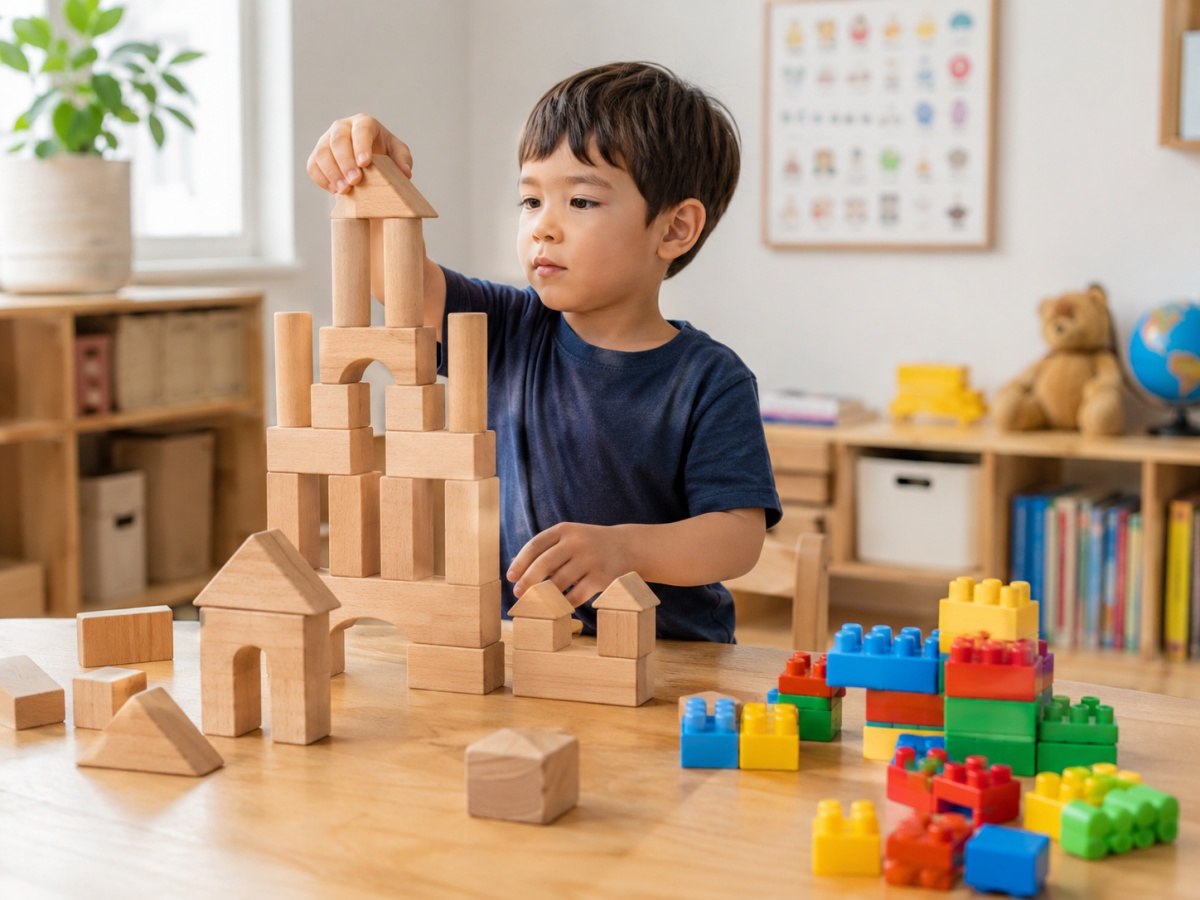
Unlike toys designed around a single function, wooden blocks offer unlimited possibilities. The same set of blocks can become a bridge, a castle, a city skyline, or an abstract sculpture without requiring additional components or electronic features. This flexibility encourages children to experiment with different ideas instead of following predetermined building instructions.
Another reason for their popularity is durability. Solid hardwood blocks are designed to withstand repeated stacking, dropping, and rebuilding over many years. While plastic toys may gradually develop scratches, discoloration, or weakened connection points after prolonged use, quality wooden blocks often maintain their structural integrity with only basic care. As a result, many schools and daycare centers continue using the same block sets for years, making them a practical long-term investment.
The appeal of Wooden Building Blocks also aligns with the growing interest in Montessori toys, STEM toys, and other educational products that encourage open-ended learning. Rather than entertaining children through lights or sounds, these toys invite them to think independently, solve problems, and build confidence through experimentation. This educational philosophy has contributed to steady demand across both consumer and institutional markets.
Research on constructive play suggests that children engaged in open-ended building activities often spend longer periods experimenting, adjusting designs, and developing spatial reasoning than when using toys with fixed play patterns.
For manufacturers and retailers, this lasting popularity creates another advantage. Unlike trend-driven products that quickly lose market interest, classic Wooden Building Blocks remain relevant across generations, making inventory planning and long-term product development more predictable.
Wooden Building Blocks vs. Plastic Blocks: Which Performs Better?
One of the most common questions buyers ask is whether Wooden Building Blocks are better than plastic alternatives. The answer depends on the intended application rather than the material alone. Both products have strengths, and understanding those differences helps parents, educators, and businesses make informed purchasing decisions.
The comparison below highlights several practical considerations.
| Feature | Wooden Building Blocks | Plastic Building Blocks |
| Building Stability | Higher due to the natural weight of solid hardwood | Lighter weight makes tall structures easier to topple |
| Creative Freedom | Open-ended construction without fixed connections | Designed around interlocking systems |
| Expected Service Life | Frequently exceeds 10 years with proper maintenance | Can show wear or discoloration after extended use |
| Surface Feel | Warm, natural texture with gentle friction | Smooth synthetic finish |
| Maintenance | Clean with a damp cloth and dry immediately | Usually washable with mild detergent |
| Common Applications | Montessori classrooms, preschools, educational toys | Model building, themed construction sets |
The table shows that neither material is universally better. Plastic construction toys excel when precise interlocking mechanisms are required, allowing users to create highly detailed models that remain firmly connected. This makes them particularly suitable for advanced construction projects and themed building systems.
By contrast, Wooden Building Blocks emphasize creativity rather than replication. Since there are no connectors that dictate how pieces fit together, children naturally explore concepts such as balance, symmetry, gravity, and structural stability through trial and error. Every building session becomes a process of experimentation instead of following a predefined assembly method.
How Material Influences Learning Experiences
Material characteristics influence much more than appearance. Solid hardwood typically has greater density than molded plastic, giving each block additional weight and stability during play. As children stack increasingly complex structures, they learn to adjust positioning carefully because every movement affects balance.
Researchers studying early childhood education have found that open-ended construction activities support several developmental skills simultaneously. While building with Wooden Building Blocks, children continuously estimate distances, compare shapes, recognize patterns, and modify their designs when structures become unstable. These repeated adjustments encourage critical thinking without requiring formal instruction.
The tactile experience also differs noticeably. Natural wood provides subtle variations in grain and texture, while carefully sanded surfaces remain comfortable to handle. Although these characteristics may seem minor, they contribute to a more engaging sensory experience that many educators associate with longer periods of focused play.
Which Material Offers Better Long-Term Value?
Purchase price often receives the most attention during product comparisons, but long-term value depends on several additional factors. Schools, childcare centers, and retailers frequently evaluate toys based on replacement frequency, maintenance requirements, and customer satisfaction over many years of use.
For example, a well-manufactured set of Wooden Building Blocks produced from hardwood species such as beech or maple can remain in daily classroom use for more than a decade when properly maintained. Because there are no mechanical joints, electronic components, or specialized connectors, there are fewer parts that can fail over time.
Plastic blocks certainly offer advantages in portability and compatibility with larger construction systems. However, when durability, educational flexibility, and product longevity are evaluated together, many educational institutions continue to view wooden building blocks as a cost-effective long-term investment rather than simply comparing the initial purchase price.
Educational Benefits of Wooden Building Blocks
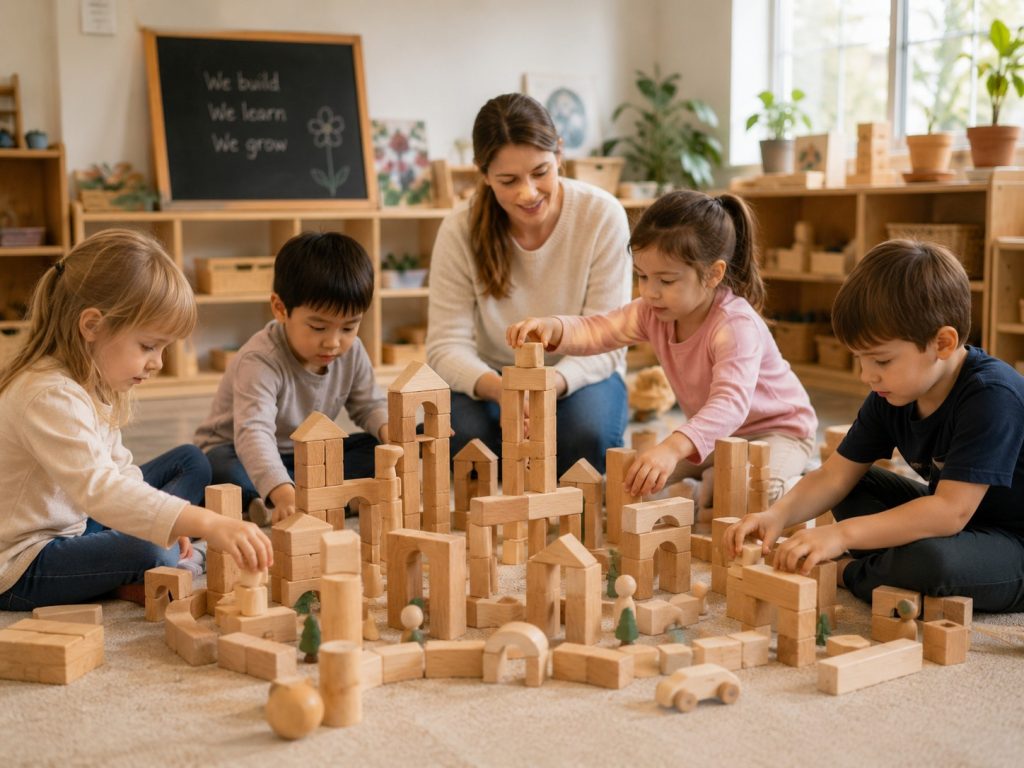
One of the reasons Wooden Building Blocks have remained a staple in educational environments is their ability to support multiple aspects of child development through a single activity. Unlike toys designed to teach one specific skill, building blocks encourage children to learn by experimenting, observing results, and adjusting their ideas. This process closely reflects how problem-solving happens in real life.
Research published in early childhood education journals has shown that constructive play can positively influence spatial reasoning, early mathematical understanding, language development, and collaborative skills. Because there is no single “correct” outcome, children are encouraged to test different solutions, learn from unsuccessful attempts, and improve their designs through repeated practice.
For example, a simple tower-building activity naturally introduces concepts such as height, balance, symmetry, and proportion. When children work together, they also practice communication by explaining ideas, negotiating roles, and solving problems as a team. These learning opportunities emerge organically during play rather than through formal instruction.
Another advantage of Wooden Building Blocks is their compatibility with different educational approaches. Montessori classrooms often use wooden learning toys because they encourage independent exploration, while many STEM programs incorporate construction toys to introduce basic engineering concepts at an early age. The same block set can therefore remain relevant as children’s skills continue to develop, making it valuable for both families and educational institutions.
Why Open-Ended Play Encourages Deeper Learning
Open-ended play has become an increasingly important concept in early childhood education. Instead of directing children toward one predefined outcome, it allows them to decide how materials should be used. This freedom encourages imagination while strengthening independent decision-making.
With Wooden Building Blocks, every piece can perform multiple functions. A rectangular block may become part of a bridge, the wall of a castle, or the foundation of an imaginary city. Because there are no fixed connectors or electronic features, children rely on observation and creativity rather than instructions.
Educators frequently note that this type of play keeps children engaged for longer periods because the challenge evolves naturally. A tower that collapses becomes an opportunity to rethink its structure, while a completed design often inspires an entirely new project. The learning process continues through experimentation rather than ending once a model is finished.
How to Evaluate High-Quality Wooden Building Blocks
Not all Wooden Building Blocks are manufactured to the same standard. For retailers, distributors, and private-label brands, evaluating product quality requires looking beyond appearance and considering measurable production specifications that affect long-term performance.
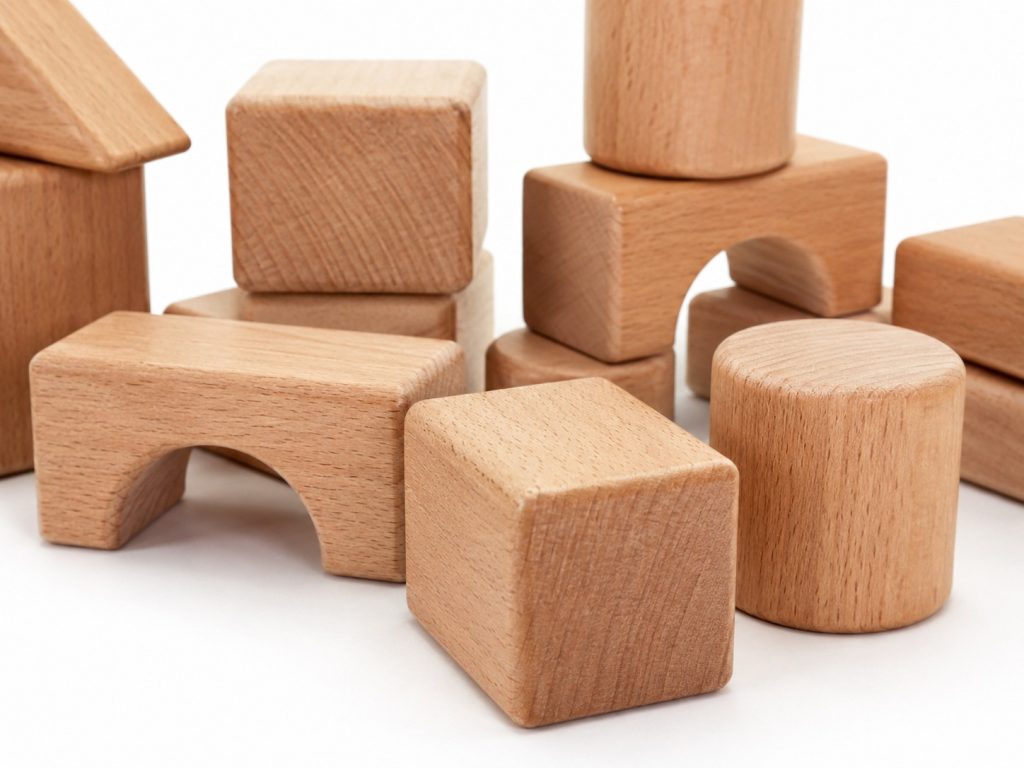
Wood selection is one of the first factors to examine. Hardwood species such as beech, maple, and rubberwood are widely used because they offer good dimensional stability, consistent density, and resistance to everyday wear. Beech wood, for example, typically has a density of approximately 720 kg/m³, providing enough weight to improve stacking stability without making the blocks difficult for children to handle.
Moisture control is equally important during production. Most professional manufacturers maintain wood moisture content between 8% and 12%, reducing the likelihood of cracking, warping, or deformation after shipment. This is particularly important for international orders that may experience significant changes in temperature and humidity during transportation.
Surface finishing also has a direct impact on quality. Well-manufactured blocks usually go through multiple sanding stages before painting, resulting in smooth surfaces without splinters or rough edges. Rounded corners, typically with an edge radius of 2–3 mm, help improve handling while reducing sharp contact points during play.
Instead of relying on general marketing statements, buyers should ask manufacturers about their production standards. Information such as dimensional tolerance, paint specifications, and inspection procedures provides a clearer indication of product consistency than broad claims about quality.
Production Details That Matter to Professional Buyers
For importers and wholesalers, consistency across thousands of units is often more important than the appearance of a single sample. Small manufacturing differences can influence customer satisfaction, return rates, and overall brand reputation.
Several production indicators deserve particular attention:
| Quality Indicator | Typical Manufacturing Standard |
| Wood moisture content | 8%–12% |
| Dimensional tolerance | Approximately ±0.5 mm |
| Corner radius | 2–3 mm |
| Surface finish | Multi-stage sanding with no visible burrs |
| Paint system | Water-based coating with uniform coverage |
| Inspection | Random sampling before packaging and shipment |
Although specifications vary by manufacturer, maintaining these production standards generally results in better product consistency and fewer quality-related complaints after delivery.
How Wooden Building Blocks Are Manufactured
For many B2B buyers, understanding the manufacturing process is just as important as comparing product features. A well-controlled production line helps ensure that every batch of Wooden Building Blocks meets consistent quality standards, especially for OEM and private-label projects.
The process begins with careful material selection. Logs are cut into boards before being kiln-dried to achieve the target moisture content. Proper drying minimizes internal stress within the wood and helps maintain dimensional stability throughout production.
After drying, precision cutting equipment shapes the boards into individual blocks according to the required dimensions. Maintaining accurate cutting tolerances is essential because even slight variations can affect stacking performance and overall product appearance.
The blocks then move through several sanding stages. Automated and manual sanding remove rough fibers, smooth the surfaces, and round each edge. This step not only improves the appearance of the finished product but also creates a comfortable tactile experience during use.
Once surface preparation is complete, the blocks are coated with water-based paints or clear finishes, depending on customer requirements. Manufacturers typically apply multiple thin layers rather than one thick coating to achieve consistent color while preserving the natural texture of the wood. After curing, every batch undergoes quality inspection before packaging.
Throughout production, experienced manufacturers also monitor dimensions, surface quality, coating consistency, and packaging accuracy. These inspections help ensure that large-volume orders remain consistent across different production batches, which is particularly important for distributors supplying multiple retail markets.
Why Manufacturing Consistency Matters
From a consumer’s perspective, one set of building blocks may appear similar to another. For retailers and toy brands, however, manufacturing consistency directly affects business performance.
Blocks with stable dimensions stack more evenly, reducing customer complaints about uneven shapes. Consistent paint application improves the appearance of retail products, while proper moisture control minimizes the risk of cracking during international shipping and warehouse storage.
Reliable production processes also make customization more efficient. Whether developing wooden educational toys for a new product line or creating OEM solutions for established brands, manufacturers with standardized production systems are generally better equipped to deliver consistent quality across repeated orders.
As global demand for Wooden Building Blocks continues to grow, manufacturing capability has become an important competitive advantage. Buyers increasingly evaluate not only the product itself but also the factory’s ability to maintain quality, manage lead times, and support long-term partnerships.
Why Businesses Choose Wooden Building Blocks Manufacturers
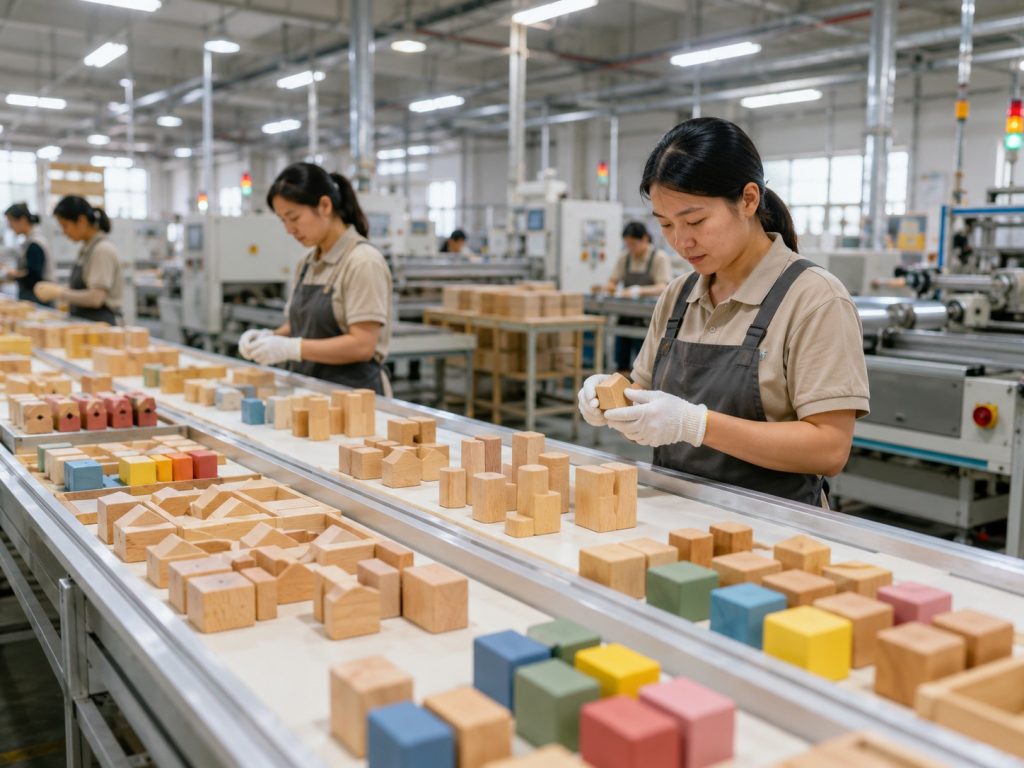
For importers and retailers, selecting the right product is only part of the purchasing process. Choosing a reliable Wooden Building Blocks manufacturer often has a greater impact on long-term business success. Consistent quality, stable production capacity, and responsive communication help reduce sourcing risks and improve customer satisfaction after products reach the market.
As competition in the educational toy industry becomes stronger, many brands are shifting away from purchasing standard products and instead developing exclusive product lines. This trend has increased demand for manufacturers that can provide flexible OEM and ODM services while maintaining consistent production quality.
An experienced building toy manufacturer should be able to support projects from product development to final shipment. Rather than simply producing blocks according to drawings, a reliable supplier typically assists with material recommendations, packaging solutions, quality inspections, and production scheduling. This collaborative approach helps buyers shorten product development cycles and respond more quickly to changing market demand.
What to Look for in a Wooden Toy Supplier
When evaluating a potential wooden toy supplier, price should not be the only consideration. A factory with strong manufacturing capabilities can often reduce hidden costs by improving product consistency and minimizing quality issues.
Several factors are worth discussing during the supplier selection process:
- Material sourcing: Can the factory consistently supply hardwood species such as beech, maple, or rubberwood based on project requirements?
- Customization capabilities: Does the manufacturer offer OEM and ODM services, including custom dimensions, Pantone color matching, laser engraving, logo printing, and retail packaging?
- Quality control: Are inspections carried out throughout production as well as before shipment?
- Production capacity: Can the supplier maintain consistent lead times during peak seasons?
- Export experience: Does the factory understand international packaging standards, labeling requirements, and shipping documentation?
These questions provide a clearer picture of a supplier’s long-term reliability than comparing quotations alone.
Customization Creates Greater Market Value
Consumer expectations continue to evolve, and many retailers are looking for products that stand out from standard catalog offerings. As a result, customization has become an important advantage for brands selling wooden educational toys.
For example, a manufacturer may offer:
| Customization Option | Business Benefit |
| Custom block sizes and shapes | Creates exclusive product collections |
| Pantone color matching | Maintains consistent brand identity |
| Logo engraving or printing | Strengthens brand recognition |
| Custom gift boxes or retail packaging | Enhances shelf presentation |
| Instruction manuals in multiple languages | Supports international distribution |
| Barcode and labeling services | Simplifies retail and warehouse operations |
These services allow importers and private-label brands to differentiate their products without investing in their own manufacturing facilities. More importantly, they help create a stronger brand presence in competitive markets where consumers increasingly value originality and product quality.
Frequently Asked Questions About Wooden Building Blocks
Are Wooden Building Blocks better than plastic ones?
Both materials have their advantages, but they are designed for different purposes. Plastic blocks are well suited for detailed interlocking models, while Wooden Building Blocks are widely preferred for open-ended play, balance training, and creative exploration. Many educational environments choose wooden blocks because they encourage children to experiment without being limited by fixed connection systems.
What type of wood is commonly used for Wooden Building Blocks?
High-quality Wooden Building Blocks are often manufactured from beech, maple, or rubberwood. These hardwood species offer good dimensional stability, consistent density, and excellent durability, making them suitable for repeated everyday use in homes, schools, and childcare centers.
How long do Wooden Building Blocks typically last?
When manufactured with properly dried hardwood and maintained under normal indoor conditions, Wooden Building Blocks can remain in excellent condition for more than ten years. Their simple construction, without mechanical parts or electronic components, helps reduce wear and extends their service life.
Can Wooden Building Blocks be customized for private-label brands?
Yes. Many manufacturers provide OEM and ODM services for importers, distributors, and retailers. Common customization options include block dimensions, color schemes, logo engraving, packaging design, instruction manuals, barcode labeling, and private-label branding. Working with an experienced manufacturer helps ensure that customized products remain consistent across large production runs.
Conclusion
Whether Wooden Building Blocks are better than plastic alternatives ultimately depends on the intended application. Plastic construction toys offer advantages for intricate interlocking designs and lightweight handling, while wooden blocks provide a different set of strengths centered on creativity, durability, and open-ended learning.
Research from organizations such as the American Academy of Pediatrics (AAP) and the National Association for the Education of Young Children (NAEYC) continues to highlight the value of open-ended play in supporting children’s cognitive and social development. Combined with their natural tactile qualities, structural stability, and long service life, Wooden Building Blocks remain an important category within educational toys for families, schools, and childcare providers.
From a business perspective, the product itself is only one part of a successful sourcing strategy. Importers, wholesalers, and private-label brands also benefit from working with manufacturers that maintain stable production processes, strict quality control, and flexible customization capabilities. Features such as controlled wood moisture content, precise machining, consistent finishing, and comprehensive OEM services contribute not only to product quality but also to long-term customer satisfaction and brand reputation.
As global demand for Montessori toys, STEM toys, and other wooden educational toys continues to grow, investing in high-quality Wooden Building Blocks offers opportunities beyond immediate sales. It enables businesses to build product lines that combine educational value, reliable performance, and lasting market appeal. For companies seeking sustainable growth in the educational toy industry, partnering with an experienced Wooden Building Blocks manufacturer is a practical step toward delivering products that meet the expectations of today’s international buyers while supporting long-term brand development.