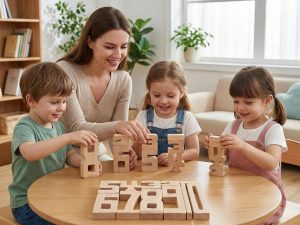
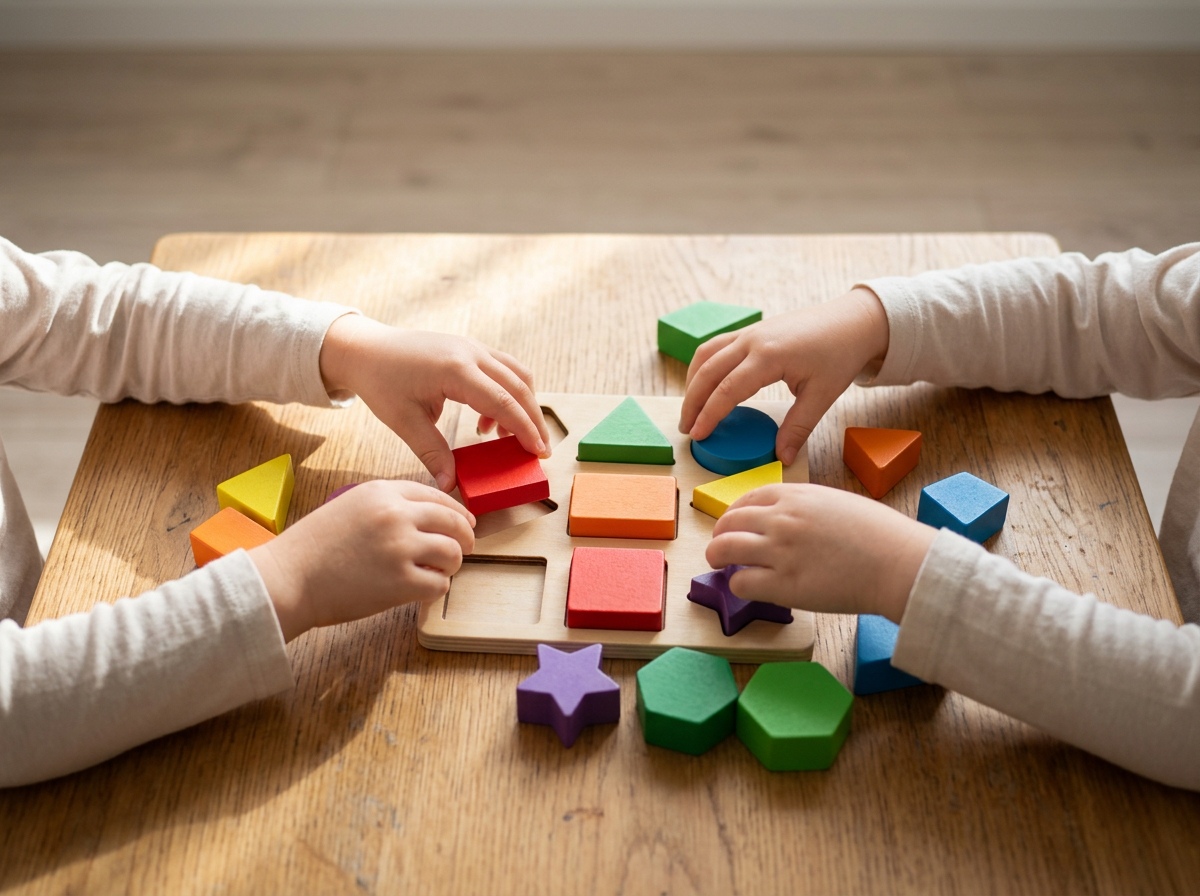
Most children entering kindergarten arrive with vastly different levels of readiness — not because of intelligence, but because of what they were exposed to in the two years before enrollment. Teachers see this gap on day one. Some children can follow multi-step instructions, take turns, and hold a pencil with confidence. Others struggle to sit still for ten minutes, let alone engage with structured tasks. Well-chosen educational toys for 5 year olds are one of the most scalable ways to narrow this gap before formal schooling begins.
The question isn’t whether early play matters. The evidence on that is settled. The real question is which types of play actually build the cognitive and social foundations that school demands — and whether the materials in classrooms and homes are doing that work, or just filling time.
Children this age are old enough to engage with rule-based games, symbolic thinking, and early literacy concepts, but still learn primarily through hands-on manipulation. Generic play materials rarely meet that standard. Here’s what separates educational toys for 5 year olds that genuinely build school readiness from those that simply look the part.
Why school readiness is more than academic knowledge
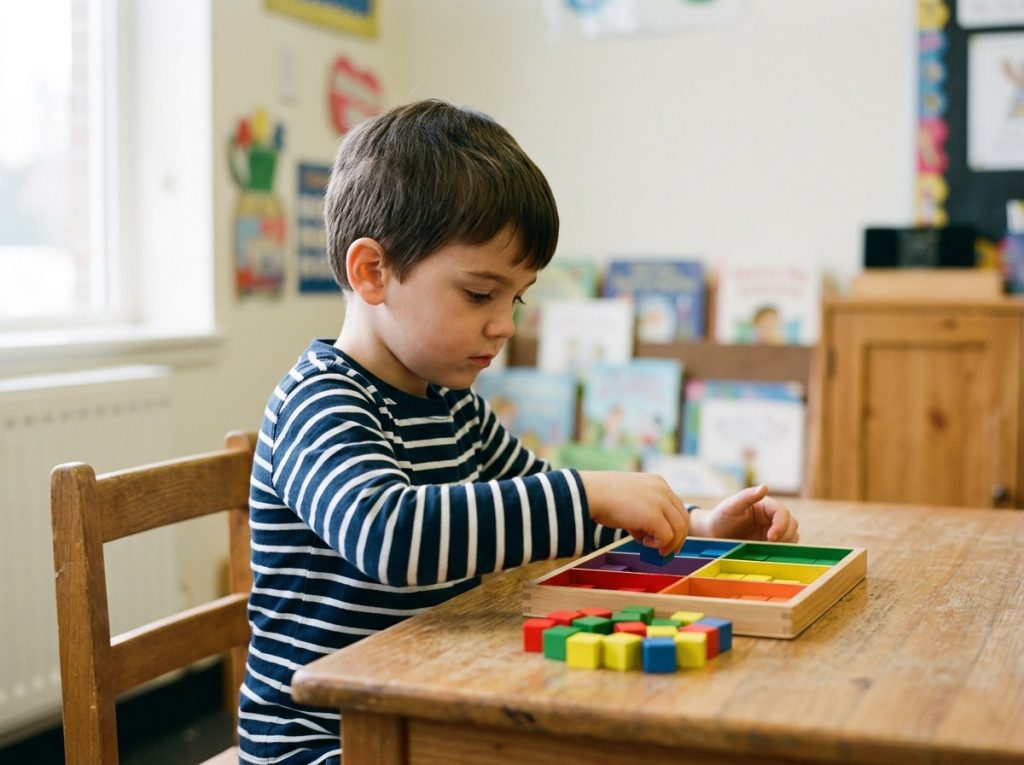
When researchers talk about school readiness, they’re describing a cluster of skills that falls into three categories: cognitive foundations, executive function, and social-emotional regulation.
Cognitive foundations include phonological awareness, early numeracy, and the ability to hold information in mind while applying it. Executive function covers working memory, inhibitory control, and cognitive flexibility — switching between rules or tasks without breaking down. Social-emotional regulation means a child can manage frustration, wait their turn, and collaborate toward a shared outcome.
Moffitt et al. (2011) tracked over 1,000 children from birth to age 32 and found that executive function measured in early childhood was a stronger predictor of adult outcomes — including academic achievement and employment — than IQ or family socioeconomic status. The implication for early childhood educators and procurement teams alike is significant: play environments that build these specific capacities aren’t supplementary. They’re foundational.
The problem is that most early childhood materials optimize for engagement rather than skill-building — which is why the selection criteria for educational toys for 5 year olds matter more than most procurement processes currently reflect. Bright colors, sounds, and novelty create the appearance of learning without requiring the kind of effortful processing that actually strengthens cognitive circuits. This is precisely the gap that well-designed educational toys for 5 year olds are positioned to fill.
What makes educational toys for 5 year olds genuinely effective
Age 5 is a developmental inflection point. Children’s prefrontal cortex development accelerates between ages 3 and 6, which means this window is when rule-following, planning ahead, and self-monitoring are most plastic and most trainable. Play materials that engage these functions do something that passive screen time and open-ended free play alone cannot: they put mild, productive cognitive demand on the child repeatedly, in short cycles.
The design criteria that separate effective learning tools from decorative ones come down to four observable features. A well-designed toy presents a rule structure the child can understand but not immediately master. It requires holding a goal in mind across multiple steps. It produces visible, self-verifiable feedback — either the puzzle fits or it doesn’t, the pattern matches or it doesn’t — without requiring adult judgment at every turn. And it scales: as the child’s skill grows, the toy should still offer meaningful challenge rather than becoming trivially easy.
Toys that fail on these criteria tend to share certain features: a single correct interaction mode, immediate reward on first contact, no rule structure requiring memory or planning, or a difficulty ceiling that a competent 4-year-old can hit in twenty minutes. Recognizing these failure patterns is the first practical filter when evaluating educational toys for 5 year olds at the product selection stage.
When sourcing at the institutional level, this distinction has direct procurement implications. Educational toys for 5 year olds that hold productive engagement for six months across a range of skill levels represent fundamentally different lifecycle value than products that cycle off classroom shelves after three weeks.
How different toy categories target different readiness skills
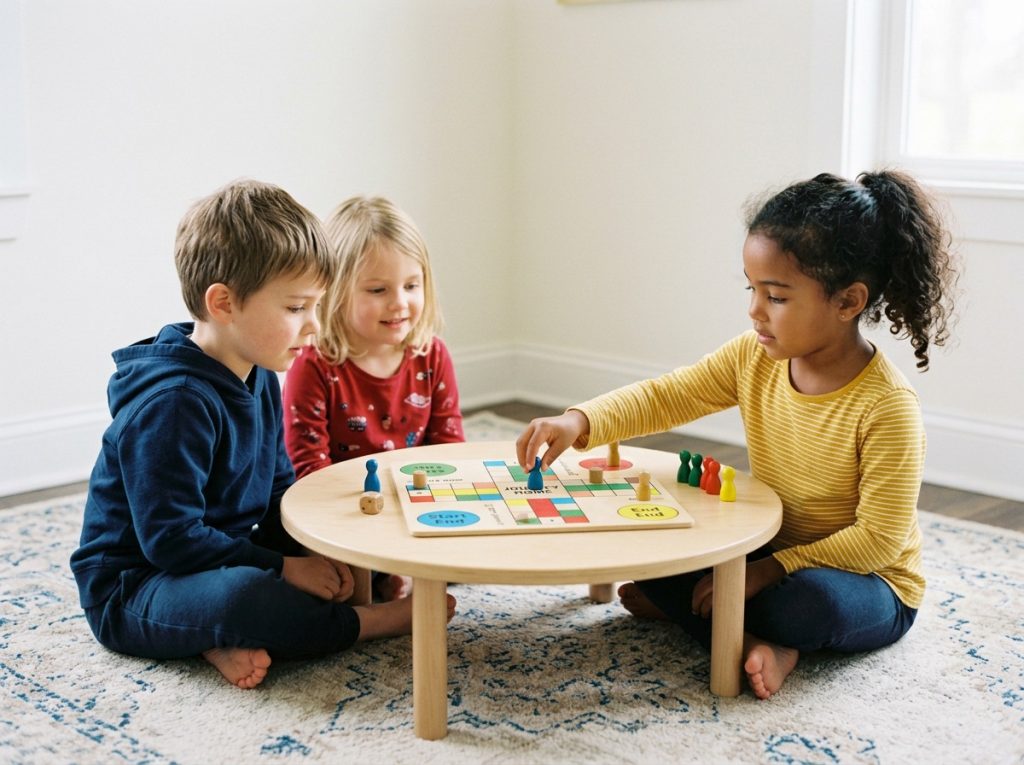
Not all learning materials address the same developmental outcomes. Understanding which category builds which skill allows teachers to construct a classroom environment with intentional coverage rather than accidental gaps — and helps procurement teams avoid duplicating investments across the same developmental domain.
Construction and building sets — blocks, magnetic tiles, interlocking structures — build spatial reasoning, planning, and the ability to mentally rotate and manipulate objects. Verdine et al. (2014) found a direct correlation between spatial skills at age 3 and math performance at age 5, suggesting that block play is doing mathematics preparation work years before numbers appear in curriculum.
Matching, sorting, and pattern games build the categorization and sequential logic that underpin early reading and arithmetic. The critical design element here is whether the rules shift across play sessions. A toy that requires only color matching trains attention. One that shifts between sorting by color, then shape, then size requires cognitive flexibility — a different and more valuable skill for classroom contexts.
Cooperative board games and turn-taking formats are undervalued in most early childhood settings. Unlike competitive games, cooperative formats require children to hold their own role in mind while tracking the shared goal — a working memory and social coordination task that closely mirrors small-group classroom work. Ramani and Siegler (2008) found that number line board games produced measurable improvements in numerical magnitude understanding in preschoolers, with effects that persisted weeks after the intervention ended. This category of educational toys for 5 year olds is consistently underrepresented in classroom procurement lists relative to its developmental return.
Early literacy manipulatives — letter tiles, phoneme sorting cards, word-building tools — are most effective when they require active construction rather than passive recognition. The physical act of assembling a word from movable parts engages different neural pathways than pointing to a letter on a screen.
Among educational toys for 5 year olds, the most effective classroom environments don’t go deep in one category — they spread across all four. A setting stocked entirely with building materials will produce strong spatial reasoners who are underprepared for the turn-taking and rule-following demands of group instruction.
Why deployment structure determines what children actually gain
The same set of educational toys for 5 year olds can produce meaningfully different outcomes depending on how they’re integrated into daily classroom structure. Procurement decisions and product design are only two-thirds of the equation — the deployment layer is where most of the variance in outcomes actually lives.
The most common deployment failure is using structured learning materials as free-choice fillers. When children access manipulatives without a defined task or scaffold, they tend to default to exploratory play — which has value, but doesn’t target the executive function skills these tools are designed to build. The material becomes a rotation prop rather than an instructional instrument.
A more effective structure introduces the tool with explicit rule modeling first. The teacher demonstrates the target behavior — verbalizing steps, self-checking, adjusting after an error — before children work independently. This brief modeling phase, typically five minutes or less, shifts children’s interaction mode from exploratory to goal-directed. The cognitive load on the child increases, and that’s precisely where the developmental work happens.
Rotation timing also matters. Research on deliberate practice in early childhood (Ericsson & Pool, 2016, adapted for educational contexts) suggests that shorter, more frequent sessions with the same material outperform longer, infrequent exposures in terms of skill consolidation. For classroom scheduling, this means fifteen minutes three times per week with a specific manipulative set will generally outperform a single forty-five minute session.
For school coordinators managing materials across multiple classrooms, standardizing the deployment protocol — not just the product selection — is what creates consistent outcomes at scale. Two classrooms using identical educational toys for 5 year olds but with different facilitation approaches will show measurably different results at the six-week mark.
Observable indicators that learning is actually happening

Selecting well and deploying consistently is only meaningful if there’s a feedback loop confirming that developmental progress is occurring. The indicators worth tracking are specific and observable without formal assessment instruments.
Watch for these behaviors during independent or small-group play sessions with educational toys for 5 year olds. Is the child self-correcting — noticing an error and adjusting without prompting? Is the child verbalizing steps or rules aloud? Is sustained focus holding for at least 8 to 12 minutes on a single task without redirection? In group formats, is the child tracking the shared state of the game, not only their own turn?
These behaviors are proxies for working memory, inhibitory control, and cognitive flexibility — the executive functions that predict classroom performance most reliably. If a child completes tasks quickly but shows none of these behaviors, the toy’s challenge ceiling is likely too low.
For school coordinators conducting materials audits, a practical benchmark: well-chosen educational toys for 5 year olds should show sustained, challenge-engaged interaction for at least 60% of children in a mixed-readiness classroom across a six-week observation window. Engagement that drops off before that point suggests the difficulty architecture is flat, the deployment structure is weak, or both.
Where these tools have limits
Educational toys for 5 year olds are effective for building specific cognitive and social skills within structured or semi-structured play contexts. They are not a substitute for language-rich interaction with adults, outdoor physical play, or unstructured creative exploration. A classroom that over-indexes on structured materials at the expense of these other domains will see narrower development.
The skill gains from educational play also require time for consolidation. A child rotating through a new manipulative every few days is unlikely to show the same depth of development as one who spends concentrated time with a smaller set of well-chosen tools. Novelty is not the same as learning.
Implementation support matters as much as product quality. A well-designed learning material used as a reward prop rather than an instructional tool — introduced without modeling the target behaviors — will consistently underperform its actual potential. This is particularly relevant for under-resourced settings where professional development time is limited.
Finally, even the best educational toys for 5 year olds deliver most reliably when aligned with what teachers are explicitly teaching. Disconnected from curriculum sequencing, high-quality materials produce isolated skills that transfer less reliably to classroom performance.
Who should act on this, and how
For school purchasing coordinators: the procurement question to ask isn’t “what is the price per unit” but “what is the cost per child per year of demonstrated use.” Durability, multi-age adaptability, and difficulty range determine that number more than list price does. Request vendor documentation on difficulty architecture and materials testing standards before approving a line item. A product without a defined challenge progression is unlikely to retain instructional value past the first semester.
For early childhood teachers: prioritize coverage across the three developmental domains — spatial and constructive, categorization and sequential, social and cooperative — over accumulating depth in a single category. Identify which children are showing the weakest executive function indicators in the first two weeks, and ensure those children have consistent access to cooperative game formats. The deployment structure matters as much as the material itself: five minutes of explicit modeling before independent use will measurably change what children get from the same toy.
For distributors and resellers: the institutional buyer in this category is making a three-to-five-year infrastructure decision. Sales conversations that lead with lifecycle cost data, replacement cycle projections, and curriculum alignment documentation will outperform those leading with novelty features or unit price. Buyers who understand the deployment layer — not just the product — will close with higher confidence.
The school readiness gap that teachers observe on the first day of kindergarten is real and measurable. Educational toys for 5 year olds, selected against clear developmental criteria and deployed with a structured facilitation approach, are one of the few scalable interventions available before formal instruction begins. The standard for what counts as “educational” deserves to be higher than most current procurement decisions reflect — and the evidence for what works is already there.