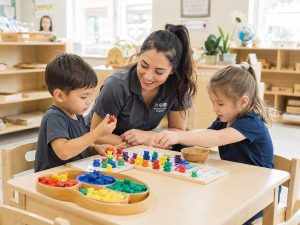
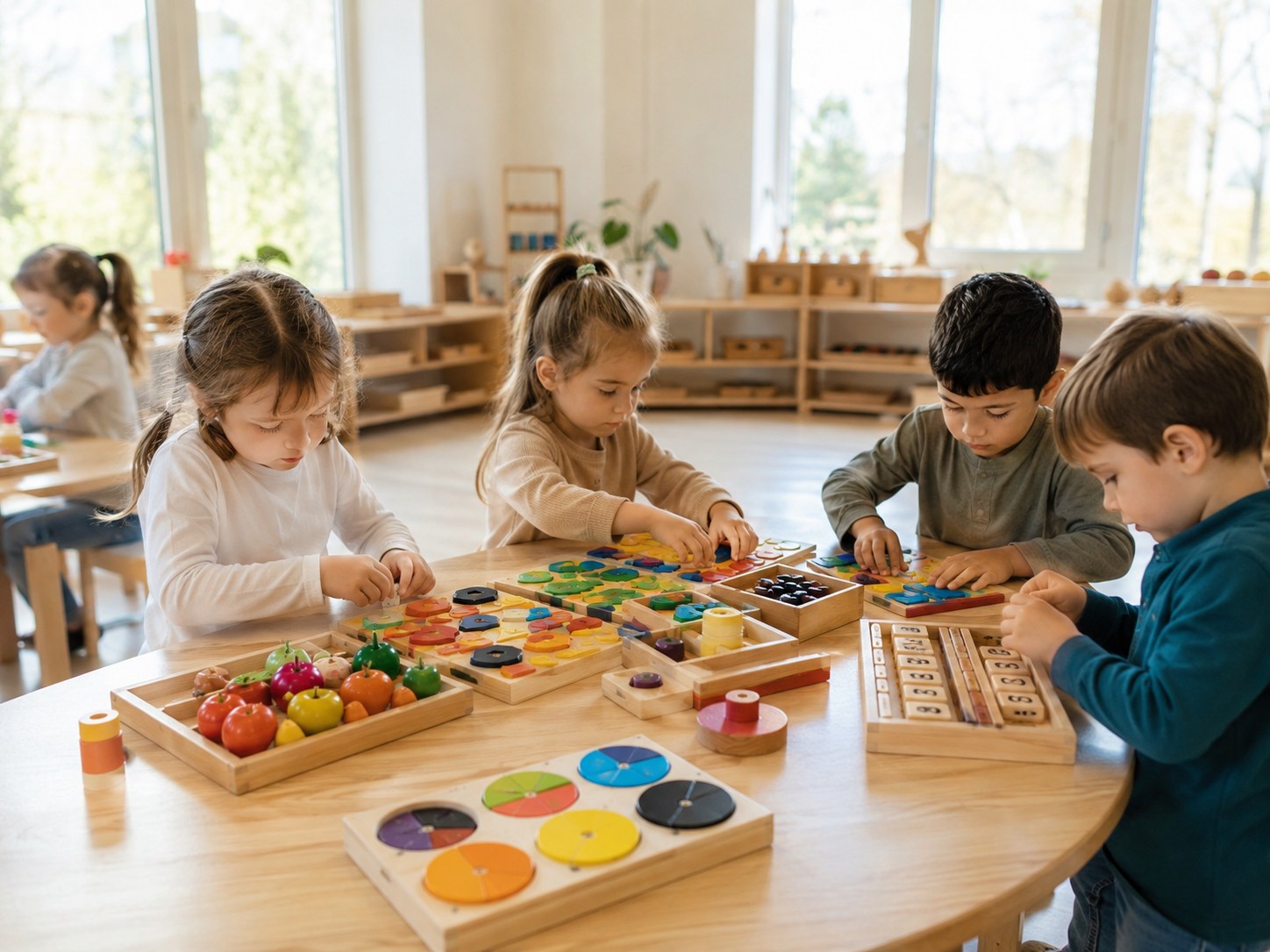
Children learn best when they can explore, experiment, and discover through direct experience. Instead of simply watching a demonstration or tapping a screen, they build towers, solve puzzles, sort objects, match colors, and test ideas with their own hands. This active learning process—often referred to as hands-on learning—helps transform abstract concepts into meaningful experiences that children can understand and remember.
That is one of the main reasons wooden educational toys remain an important part of early childhood education. From homes and daycare centers to Montessori classrooms and preschools, these learning tools encourage children to interact with real objects while developing cognitive, physical, and social skills simultaneously.
As concerns about excessive screen time continue to grow, educators and parents are placing greater emphasis on tactile learning experiences that encourage creativity, concentration, and independent thinking. Rather than replacing technology completely, wooden educational toys provide a balanced learning experience by allowing children to apply what they learn through physical exploration.
Research in early childhood development suggests that children retain knowledge more effectively when they manipulate objects, repeat actions, and solve problems independently. Physical interaction stimulates multiple areas of the brain responsible for movement, memory, language, and reasoning, making hands-on activities particularly valuable during the preschool years.
For educational brands, retailers, wholesalers, and distributors, the growing demand for high-quality learning materials also presents significant business opportunities. Schools and families increasingly seek educational toys that combine learning value, durability, and long-term usability, creating strong demand for thoughtfully designed wooden learning products.
This guide explores what wooden educational toys are, how they support hands-on learning, their relationship with Montessori and STEM education, how they compare with plastic alternatives, how to choose the right products for different age groups, and what professional buyers should consider when selecting an OEM or ODM manufacturing partner.
Research in child development consistently indicates that children develop stronger problem-solving abilities when they actively participate in learning rather than passively receiving information. Hands-on activities encourage exploration, repeated practice, and independent thinking, all of which contribute to deeper understanding.
What Are Wooden Educational Toys?

Wooden educational toys are learning tools designed to help children develop cognitive, physical, creative, and social skills through purposeful play. Unlike conventional toys that primarily focus on entertainment, educational toys are created with specific learning objectives in mind, encouraging children to understand concepts such as mathematics, language, logic, creativity, and scientific thinking while interacting with physical objects.
Today, wooden educational toys are widely used in homes, preschools, daycare centers, Montessori classrooms, therapy programs, and early learning institutions. Their popularity comes from their ability to combine meaningful learning experiences with enjoyable, hands-on play. Instead of simply completing an activity once, children can often use the same toy in different ways as their abilities develop, extending both its educational value and product lifespan.
For example, stacking blocks help children understand balance, spatial relationships, and hand-eye coordination. Sorting toys encourage color recognition, classification, and logical thinking. Wooden number blocks introduce counting and early mathematics, while magnetic pattern blocks help children explore geometry, symmetry, and creative design. Fraction manipulatives make abstract mathematical concepts easier to visualize, and maze games strengthen concentration and problem-solving skills through repeated practice.
Rather than following a single sequence of instructions, many wooden educational toys are intentionally designed for open-ended play. Children are encouraged to experiment, make mistakes, and discover different solutions independently. This flexibility allows the same product to support multiple stages of development instead of being quickly outgrown.
The table below highlights several common categories of wooden educational toys and their primary learning objectives.
| Product Category | Primary Learning Focus | Typical Learning Environment |
|---|---|---|
| Wooden Number Blocks | Counting, number recognition, balancing | Homes, preschools |
| Magnetic Fraction Teaching Aids | Fractions, visual mathematics | Primary classrooms |
| Magnetic Pattern Blocks | Geometry, creativity, spatial reasoning | Montessori classrooms, families |
| Fruit Sorting Toys | Color recognition, classification, fine motor skills | Toddlers, daycare centers |
| Wooden Maze Games | Logical thinking, patience, hand-eye coordination | Early learning centers |
| Magnetic Parking Games | Letter recognition, matching, problem-solving | Preschool classrooms |
One of the greatest strengths of wooden educational toys is their versatility. A simple set of number blocks, for instance, may first introduce counting, later support balancing activities, and eventually become part of imaginative construction games. Likewise, pattern blocks can begin as shape-matching exercises before evolving into creative design challenges or introductory geometry lessons. This ability to adapt to children’s changing developmental needs makes wooden educational toys a practical long-term investment for both families and educational institutions.
The growing interest in purposeful learning has also encouraged educational brands to move beyond individual products and develop complete learning collections. Instead of purchasing isolated toys, schools and retailers increasingly look for coordinated product ranges that support mathematics, logical thinking, creativity, fine motor development, and STEM readiness through connected learning experiences.
Understanding what wooden educational toys are is only the first step. The next question is even more important: why do these learning materials play such an effective role in hands-on learning? Exploring the educational principles behind active learning provides valuable insight into why wooden toys continue to be trusted by educators, parents, and learning professionals around the world.
Why Wooden Educational Toys Support Hands-On Learning
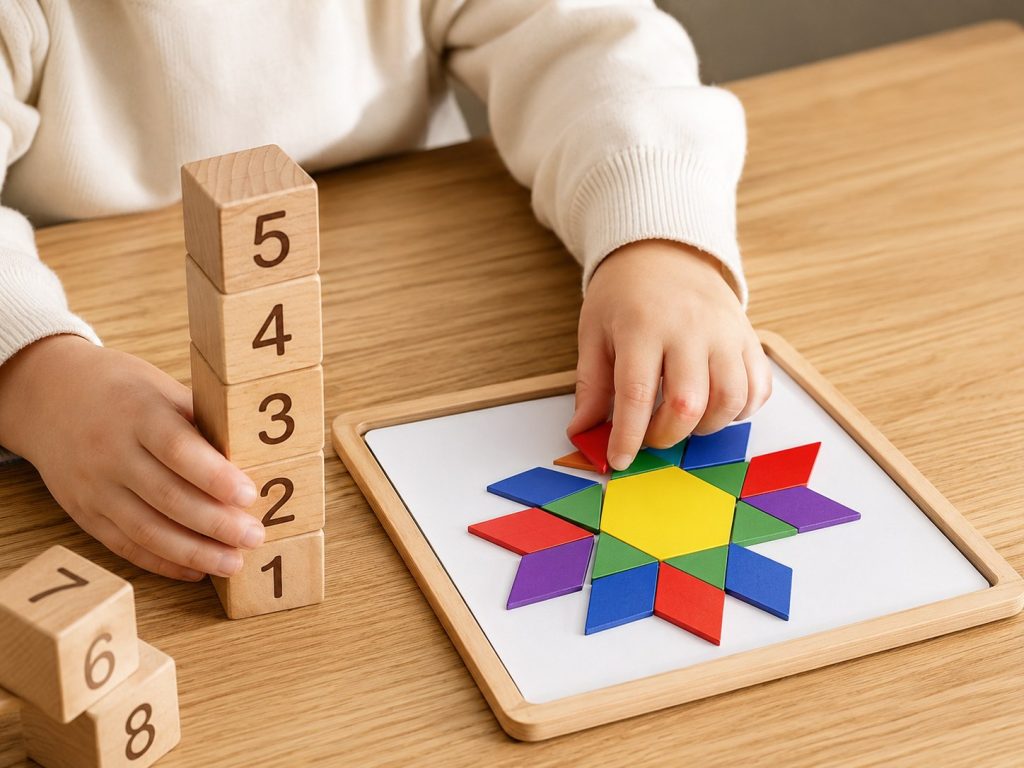
Hands-on learning is an educational approach that encourages children to acquire knowledge by actively participating in tasks rather than simply observing or memorizing information. Whether they are stacking blocks, completing puzzles, sorting objects, or solving logic games, children learn through experimentation, repetition, and reflection. Every action provides immediate feedback, helping them understand why something works and what they can do differently the next time.
This learning process is one of the greatest strengths of wooden educational toys. Instead of presenting ready-made answers, these toys encourage children to think independently and discover solutions through trial and error. As they manipulate different shapes, compare sizes, balance objects, or connect patterns, they develop cognitive, physical, and emotional skills simultaneously.
Unlike many digital learning tools, which often guide children toward predetermined outcomes, wooden educational toys provide greater flexibility. There is usually more than one way to complete an activity, encouraging children to experiment with different ideas rather than simply following instructions. This open-ended exploration builds confidence because success comes from personal discovery instead of external prompts.
Educational psychologists have found that physical interaction strengthens learning by engaging multiple senses at the same time. When children touch, move, rotate, and compare real objects, the brain processes information through vision, movement, and tactile feedback simultaneously. These combined experiences make new concepts easier to understand and remember.
For example, a child learning mathematics with wooden number blocks is not simply recognizing printed numbers. They arrange the pieces, compare quantities, balance structures, and repeat counting exercises while physically interacting with each concept. Similarly, magnetic pattern blocks introduce geometry through direct manipulation, making ideas such as symmetry, angles, and spatial relationships easier to understand than illustrations alone.
Another important advantage of wooden educational toys is their ability to encourage sustained concentration. Because there are no flashing lights, automatic hints, or continuous sound effects, children naturally slow down, observe carefully, and solve challenges independently. Many preschool teachers report that children remain engaged for longer periods when activities require thoughtful interaction instead of constant digital stimulation.
In classroom environments, educators often rotate different learning materials throughout the week rather than introducing every activity at once. A sorting activity may be followed by number blocks, a maze challenge, and a pattern-building exercise over several days. This gradual rotation keeps learning fresh while giving children repeated opportunities to reinforce important concepts through meaningful practice.
Research in early childhood education suggests that repeated hands-on experiences contribute to multiple areas of development simultaneously.
| Learning Activity | Developmental Benefits |
|---|---|
| Stacking and balancing | Fine motor skills, coordination, spatial awareness |
| Sorting and matching | Logical thinking, classification, attention to detail |
| Counting and number games | Early mathematics, sequencing, problem-solving |
| Magnetic pattern building | Creativity, geometry, visual reasoning |
| Maze and tracking games | Patience, planning, hand-eye coordination |
Rather than focusing on isolated academic skills, wooden educational toys encourage children to combine movement, observation, communication, and reasoning within the same activity. This integrated learning experience explains why physical educational toys continue to play an important role in early childhood education despite the rapid growth of digital learning technologies.
Why Hands-On Learning Supports More Than Academic Development
The value of wooden educational toys extends beyond teaching numbers, letters, or shapes. Daily play also provides opportunities for children to develop practical life skills that are difficult to cultivate through worksheets or passive learning alone.
When children work together to build a structure, negotiate how to complete a puzzle, or patiently test different solutions to finish a maze, they naturally strengthen communication, cooperation, perseverance, and emotional regulation. These experiences help prepare them for future classroom environments where teamwork, creativity, and independent thinking are just as important as academic knowledge.
For this reason, many educators view wooden educational toys not simply as classroom materials, but as practical learning tools that support children’s overall development.
The Connection Between Wooden Educational Toys, Montessori, and STEM Education
As educational approaches continue to evolve, two concepts are frequently discussed alongside wooden educational toys: Montessori education and STEM learning. Although these educational philosophies have different origins, they share several principles that make wooden learning materials especially effective.
Montessori education emphasizes independence, self-directed exploration, and learning through carefully prepared environments. Rather than relying primarily on teacher instruction, children are encouraged to discover concepts by interacting with physical materials at their own pace. Wooden educational toys naturally align with this philosophy because they provide tactile feedback, encourage repetition, and allow children to recognize and correct mistakes independently.
Many Montessori classrooms intentionally choose simple, purposeful learning materials instead of products that depend on electronic sounds or visual effects. The objective is to help children concentrate on the learning process itself rather than external stimulation.
STEM education, which integrates science, technology, engineering, and mathematics, also emphasizes inquiry, experimentation, and problem-solving. Although technology is an important component of STEM, many foundational concepts can be introduced through physical learning experiences before children begin using digital tools.
Building towers helps children explore balance, gravity, and structural stability. Pattern blocks introduce geometry, symmetry, and spatial reasoning. Fraction manipulatives make mathematical relationships easier to visualize, while maze games strengthen logical thinking and planning. In every case, children gain understanding by experimenting with real materials rather than memorizing abstract concepts.
The relationship between these educational approaches can be summarized below.
| Educational Approach | Core Principles | How Wooden Educational Toys Support Learning |
|---|---|---|
| Montessori Education | Independence, repetition, self-correction | Encourages self-directed exploration through tactile materials |
| STEM Education | Inquiry, experimentation, problem-solving | Introduces scientific and mathematical concepts through hands-on activities |
| Early Childhood Education | Play-based learning, active participation | Combines educational objectives with meaningful play experiences |
Rather than belonging exclusively to one educational philosophy, wooden educational toys are flexible enough to support multiple teaching methods. This versatility explains why they are widely used in homes, Montessori classrooms, kindergartens, therapy centers, after-school programs, and early learning institutions around the world.
Why Open-Ended Learning Materials Continue to Gain Popularity
One reason wooden educational toys continue to gain popularity is their ability to adapt as children grow. Many learning materials support progressively more advanced activities without requiring children to replace the product after only a short period.
A simple set of wooden blocks may first be used for color recognition and stacking. As children develop, the same blocks can support counting exercises, balancing challenges, imaginative construction projects, and cooperative classroom activities. Likewise, magnetic pattern blocks often evolve from shape-matching exercises into lessons involving geometry, symmetry, and creative design.
This long-term adaptability allows educators and parents to maximize the educational value of each product while providing children with familiar learning materials that continue to present new challenges.
From a commercial perspective, this versatility also benefits educational brands, distributors, and retailers. Rather than marketing toys for a single purpose, they can develop complete learning collections that support early mathematics, STEM readiness, fine motor development, creativity, and logical thinking across multiple age groups. As global demand for educational toys continues to grow, this broader educational value has become an increasingly important factor in purchasing decisions.
Wooden Educational Toys vs. Plastic Educational Toys
Parents, educators, and professional buyers often compare wooden educational toys with plastic alternatives when selecting products for homes, classrooms, or retail stores. While both categories can support children’s development, they differ in learning experience, durability, design philosophy, and long-term educational value.
Plastic educational toys are widely used because they are lightweight, colorful, and often incorporate interactive features such as lights, sounds, or electronic feedback. These elements can quickly attract children’s attention and are useful for introducing new concepts through guided activities.
However, educational experts generally agree that maintaining children’s engagement over time requires more than immediate stimulation. Meaningful learning develops when children are encouraged to think independently, make decisions, test ideas, and solve problems without relying on automatic prompts or predetermined answers.
This is where wooden educational toys provide a different learning experience. Their simple, open-ended design encourages children to become active participants rather than passive observers. Without flashing lights or recorded instructions, children naturally focus on manipulating objects, experimenting with different approaches, and discovering solutions through repeated practice.
Studies in child development suggest that tactile learning plays an important role in strengthening memory and conceptual understanding. By physically handling objects, children connect movement with thinking, making abstract ideas easier to understand through direct experience.
The following comparison highlights the different strengths of each category.
| Comparison Factor | Wooden Educational Toys | Plastic Educational Toys |
|---|---|---|
| Learning approach | Open-ended exploration | Guided interaction |
| Sensory experience | Strong tactile feedback | Primarily visual and auditory |
| Creativity | Encourages multiple solutions | Often follows preset functions |
| Fine motor development | Strong emphasis | Moderate |
| Screen dependency | None | Some products include electronics |
| Long-term educational value | Suitable for multiple developmental stages | Depends on product design |
| Collaborative play | Well suited for group activities | Varies by product |
Rather than viewing one option as universally better, many educators recommend combining both approaches. Digital and electronic learning tools can introduce concepts efficiently, while wooden educational toys provide opportunities for children to apply and reinforce those concepts through meaningful hands-on experiences.
Why Many Educational Institutions Continue to Choose Wooden Learning Materials
Many preschool classrooms intentionally include a large proportion of wooden educational toys because they encourage collaboration, creativity, and repeated exploration.
Teachers often observe that open-ended learning materials naturally inspire discussion and teamwork. A simple pattern block activity may lead children to compare shapes, describe colors, solve spatial challenges, and even create imaginative stories together. Instead of focusing on one correct answer, children learn to communicate ideas, evaluate different solutions, and build confidence through exploration.
For schools and childcare centers managing limited classroom resources, versatility is another practical advantage. A single educational toy that supports mathematics, logical thinking, creativity, and fine motor development provides greater long-term value than products designed for only one specific learning objective.
Choosing Wooden Educational Toys for Different Age Groups
Children develop rapidly during the early years, making age-appropriate product selection essential for both families and educational institutions. Rather than choosing toys based only on appearance, educators generally recommend selecting learning materials that match children’s developmental stage while leaving room for continued growth.
For younger children, educational experiences should focus on simple exploration through actions such as grasping, stacking, sorting, and matching. As children become more confident, learning materials can gradually introduce concepts involving numbers, logic, construction, creativity, and problem-solving.
The following guide illustrates how wooden educational toys can support different stages of early childhood development.
| Age Group | Development Focus | Recommended Wooden Educational Toys |
|---|---|---|
| 3–4 years | Fine motor skills, shape recognition, counting | Wooden Number Blocks, Magnetic Parking Game |
| 4–5 years | Logical thinking, spatial awareness, early mathematics | Magnetic Pattern Blocks, Wooden Maze Games |
| 5–6 years | Problem-solving, fractions, cooperative learning | Magnetic Fraction Teaching Aids, advanced construction sets |
| 6+ years | STEM exploration, mathematical reasoning, creative design | Multi-functional building sets and advanced educational games |
Rather than replacing toys every year, many wooden educational toys continue to provide educational value as children’s abilities grow. Wooden number blocks, for example, may first introduce counting before later supporting addition, subtraction, balancing activities, and imaginative building games. Pattern blocks can evolve from simple shape recognition into more advanced geometry and design challenges.
Because of this long-term versatility, many schools and educational brands prefer complete learning collections instead of individual products with limited educational applications.
Building Progressive Learning Experiences
Experienced educators often introduce learning materials in a logical sequence so that each new activity builds upon previously acquired skills.
A child may begin by sorting colors, then progress to recognizing shapes, learning numbers, solving simple logic challenges, and eventually exploring fractions or geometric patterns. This gradual progression allows children to develop confidence while expanding their understanding step by step.
For educational brands, organizing product collections around developmental milestones rather than individual toys also creates a clearer purchasing journey for schools, retailers, and parents.
How to Identify High-Quality Wooden Educational Toys
Whether purchasing for classrooms, retail businesses, or private-label brands, evaluating the quality of wooden educational toys requires more than comparing product appearance. High-quality educational toys combine thoughtful learning design, durable construction, reliable manufacturing, and consistent quality standards to support children’s development over many years.
The first consideration is educational value. Effective learning toys encourage children to explore, think independently, solve problems, and use their imagination instead of simply completing repetitive actions. Products that support multiple learning objectives often remain useful for much longer than toys designed for only one activity.
Material selection is another important factor. Many manufacturers choose FSC-certified beech or pine because these woods offer durability, a comfortable feel, and consistent performance during daily classroom or home use. Smooth polishing and carefully finished edges improve both safety and user experience while allowing children to handle the toys comfortably during extended play sessions.
Surface coatings should also be evaluated carefully. Instead of relying on general claims, professional buyers usually look for manufacturers that provide clear technical specifications. Water-based coatings tested according to standards such as EN71-3 or ASTM F963 provide measurable information that supports purchasing decisions and demonstrates manufacturing transparency.
The checklist below summarizes several factors that experienced buyers commonly evaluate.
| Evaluation Area | What to Look For |
|---|---|
| Educational design | Supports multiple developmental skills and open-ended learning |
| Material | FSC-certified beech, pine, or other responsibly sourced wood |
| Surface finish | Smooth edges with durable water-based coating |
| Compliance | EN71, ASTM F963, CPSIA, or applicable regional requirements |
| Product durability | Designed for repeated classroom and home use |
| Manufacturing consistency | Stable quality across production batches |
| Packaging | Efficient for shipping, storage, and retail presentation |
| Customization | OEM, ODM, private labeling, multilingual packaging |
Beyond product specifications, supplier capability plays an equally important role. Reliable communication, consistent production quality, on-time delivery, and flexible customization services often determine whether a long-term business partnership will be successful.
Many distributors also evaluate whether manufacturers can provide customized packaging, multilingual instruction manuals, barcode management, retail-ready labeling, and exclusive product configurations. These value-added services simplify product launches while helping brands establish stronger market identities.
As global demand for educational products continues to grow, manufacturers that combine educational expertise with dependable production capabilities are increasingly becoming preferred partners for schools, retailers, wholesalers, and international educational brands.
Choosing the Right OEM & ODM Wooden Educational Toy Manufacturer

Selecting high-quality wooden educational toys is only one part of a successful sourcing strategy. For importers, distributors, retailers, and educational brands, choosing the right manufacturing partner is equally important. A reliable supplier contributes not only to product quality but also to delivery performance, brand consistency, and long-term business growth.
As competition in the educational toy market continues to grow, buyers are increasingly looking for manufacturers that provide complete solutions rather than simple production services. Product development support, flexible customization, consistent quality control, and responsive communication have become essential factors when evaluating long-term partners.
Professional buyers typically assess manufacturers from several key perspectives before establishing cooperation.
Experienced buyers also value manufacturers that understand early childhood education instead of simply producing products based on drawings. Suppliers with educational product development experience can often provide practical recommendations on functionality, age suitability, packaging design, and product positioning, helping brands respond more effectively to changing market demands.
Production capacity is another important consideration. As businesses expand into new markets, manufacturers should be able to increase production volumes while maintaining consistent quality. Reliable capacity planning reduces supply risks, shortens lead times, and supports seasonal demand without compromising product standards.
Why Customization Has Become a Competitive Advantage
As the educational toy industry becomes increasingly competitive, product differentiation is more important than ever. Rather than selling identical products, many brands develop customized collections that reflect their own educational philosophy, visual identity, and target market.
OEM and ODM services make this possible by allowing businesses to customize products in a variety of ways, including:
- Logo engraving or printing
- Customized packaging and instruction manuals
- Multilingual product inserts
- Exclusive color combinations
- Product bundles for different educational markets
- Retail-ready barcode and labeling solutions
These services enable distributors and private-label brands to establish stronger brand recognition while reducing product development time and accelerating market entry.
Why Educational Brands Choose Vindstier
As global demand for wooden educational toys continues to increase, educational brands are seeking manufacturing partners that combine educational expertise with dependable production capabilities.
Vindstier specializes in the development and manufacturing of wooden educational toys for early childhood education. Rather than focusing on a single product category, the company offers a coordinated product portfolio designed to support mathematics, logical thinking, creativity, fine motor development, and hands-on learning.
By offering complementary learning products instead of standalone items, educational brands can build complete collections that support children’s development across different learning stages.
In addition to manufacturing, Vindstier provides OEM and ODM services for wholesalers, distributors, retailers, and educational brands. These services include private labeling, customized packaging, instructional material development, product adaptation, and branding support to help customers create differentiated product lines.
Rather than competing solely on price, Vindstier focuses on long-term partnerships built on educational value, consistent product quality, and reliable manufacturing. This collaborative approach enables customers to introduce high-quality educational products while strengthening their own brand positioning in competitive markets.
Frequently Asked Questions
Are wooden educational toys suitable for Montessori education?
Yes. Many Montessori learning environments incorporate wooden educational toys because they align with Montessori principles such as independent exploration, repetition, self-correction, and experiential learning. Their open-ended design allows children to learn at their own pace through direct interaction with physical materials.
How do wooden educational toys support STEM learning?
Many wooden educational toys introduce fundamental STEM concepts through practical activities. Building blocks encourage engineering thinking, fraction manipulatives simplify mathematical concepts, pattern blocks explore geometry and spatial reasoning, while maze games strengthen logical thinking and planning. These activities help children understand abstract concepts through real-world exploration.
How can buyers identify high-quality wooden educational toys?
Professional buyers typically evaluate educational value, material specifications, manufacturing consistency, durability, surface finishing, compliance documentation, and supplier capabilities. Products that combine thoughtful educational design with reliable manufacturing standards generally provide greater long-term value for schools, retailers, and educational brands.
Conclusion
As children’s learning needs continue to evolve, the importance of meaningful hands-on experiences has become increasingly evident. Wooden educational toys encourage children to explore, experiment, and solve problems through direct interaction with real objects, transforming everyday play into valuable learning opportunities.
From supporting fine motor development and mathematical thinking to encouraging creativity, concentration, and independent problem-solving, these learning tools continue to play an important role in homes, classrooms, Montessori environments, and early childhood education programs worldwide. While digital resources remain valuable, combining technology with tactile learning experiences creates a more balanced educational approach that supports children’s overall development.
For businesses, the continued growth of the educational toy market presents significant opportunities. Retailers, distributors, and educational brands increasingly seek product collections that combine educational value, reliable quality, and long-term market potential. Working with an experienced manufacturing partner can simplify product development while helping brands deliver consistent learning experiences to customers.
Whether you are expanding an existing educational toy collection or launching a new private-label brand, selecting a manufacturer with expertise in wooden educational toys, flexible OEM and ODM services, and a strong understanding of early childhood education can provide a solid foundation for sustainable business growth.