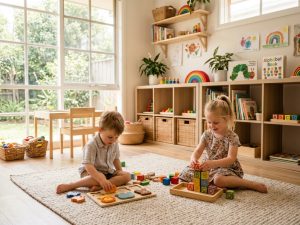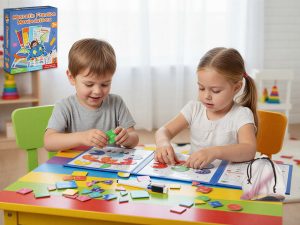
The way families choose children’s toys is changing. In the past, many purchasing decisions focused mainly on entertainment value, appearance, or short-term interest. Today, parents are paying more attention to whether a toy can support children’s development, remain useful over time, and provide meaningful play experiences.
This shift has increased interest in Wooden Educational Toys, which combine traditional hands-on play with early learning concepts. Unlike toys designed around a single function, well-designed wooden learning products encourage children to explore, build, organize, and solve problems through active participation.
Research in early childhood education highlights that hands-on activities play an important role in developing cognitive abilities, fine motor skills, and creative thinking. Activities such as sorting, stacking, matching, and building allow children to understand concepts through direct interaction rather than passive observation.
For many families, choosing Wooden Educational Toys is not simply about selecting a toy made from a particular material. It represents a preference for products that offer longer usability, educational value, and a more thoughtful approach to children’s consumption.
Why Are Wooden Educational Toys Becoming Popular Among Modern Families?
The growing popularity of Wooden Educational Toys reflects a broader change in family purchasing habits. Parents increasingly look for products that can combine learning opportunities with long-term play value.
According to early childhood development research, young children learn effectively when they can manipulate objects, repeat activities, and discover solutions independently. This explains why many educational approaches, including Montessori-inspired learning, emphasize practical activities rather than passive instruction.
Wooden learning products naturally support this learning style. A wooden sorting activity, for example, may initially help toddlers recognize colors and shapes. As children develop, the same toy can introduce concepts such as classification, counting, patterns, and logical reasoning.
This adaptability gives wooden toys an advantage in terms of practical value. Instead of being designed only for a specific moment, many products can continue supporting children’s learning as their abilities grow.
Another factor driving demand is the increasing interest in screen-free play. Many families are seeking alternatives that encourage concentration and creativity while reducing dependence on digital entertainment. Wooden toys provide a physical learning experience where children can interact directly with objects and create their own play methods.
The Growing Demand for Sustainable Toys for Kids
Sustainability has become an important consideration in the children’s product market. However, sustainable purchasing is not only about the origin of materials. It also involves product lifespan, frequency of replacement, and the overall value a product provides throughout its usage cycle.
Studies on responsible consumption suggest that extending the useful life of products can reduce unnecessary replacement. In the toy industry, this means families often prefer products that remain engaging and functional for longer periods.
This is one reason Wooden Educational Toys continue to attract attention. Many wooden learning products are designed with simple structures and flexible functions, allowing children to use them in different ways over time.
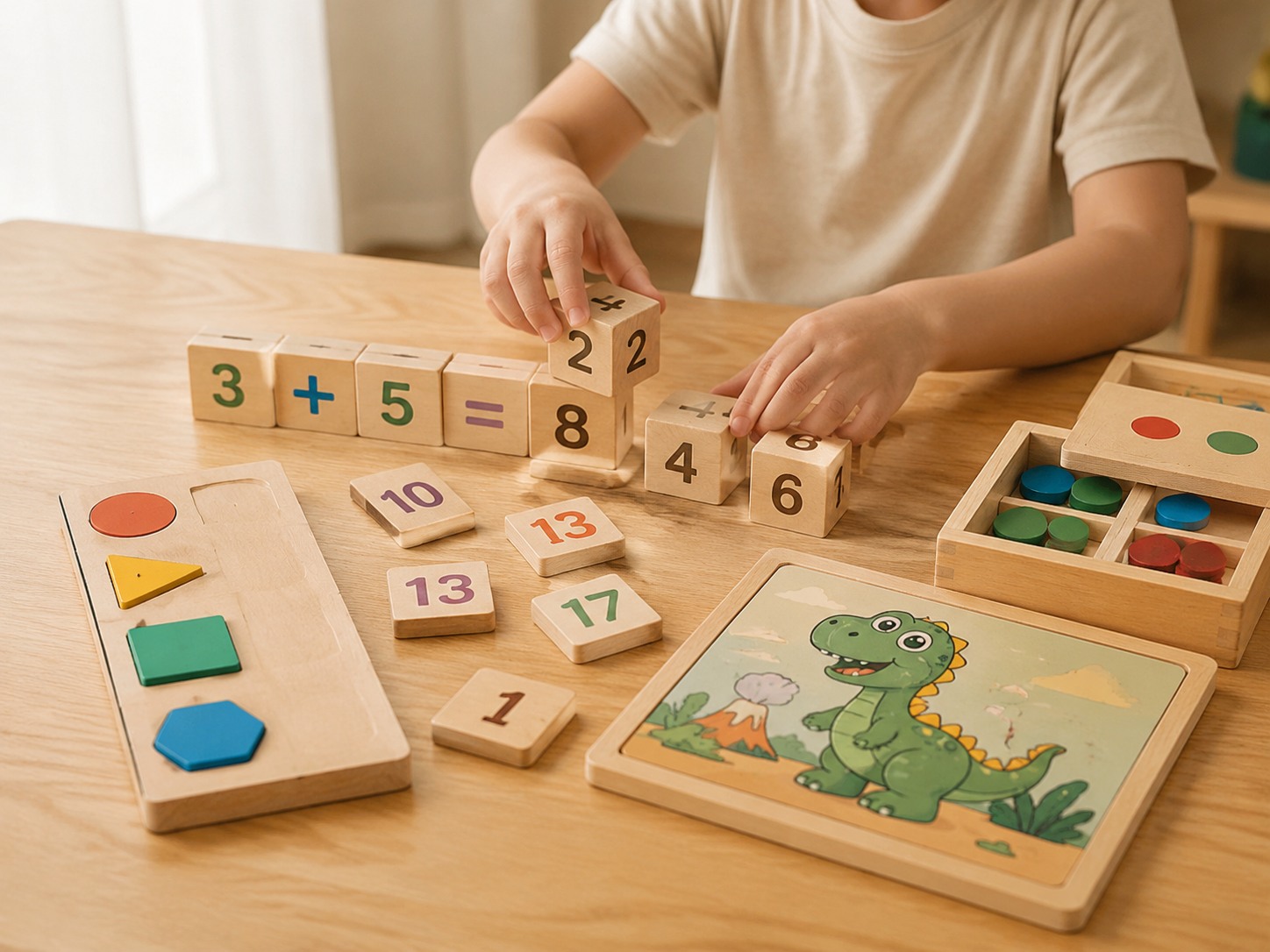
For example, wooden number blocks can support early counting activities for younger children. Later, the same pieces can be used for mathematical games, pattern creation, or creative building challenges. The ability to support multiple learning stages increases the overall value of the product.
From a sustainability perspective, a durable educational toy is not only a play product but also a long-term learning tool.
How Wooden Educational Toys Support Sustainable Family Choices
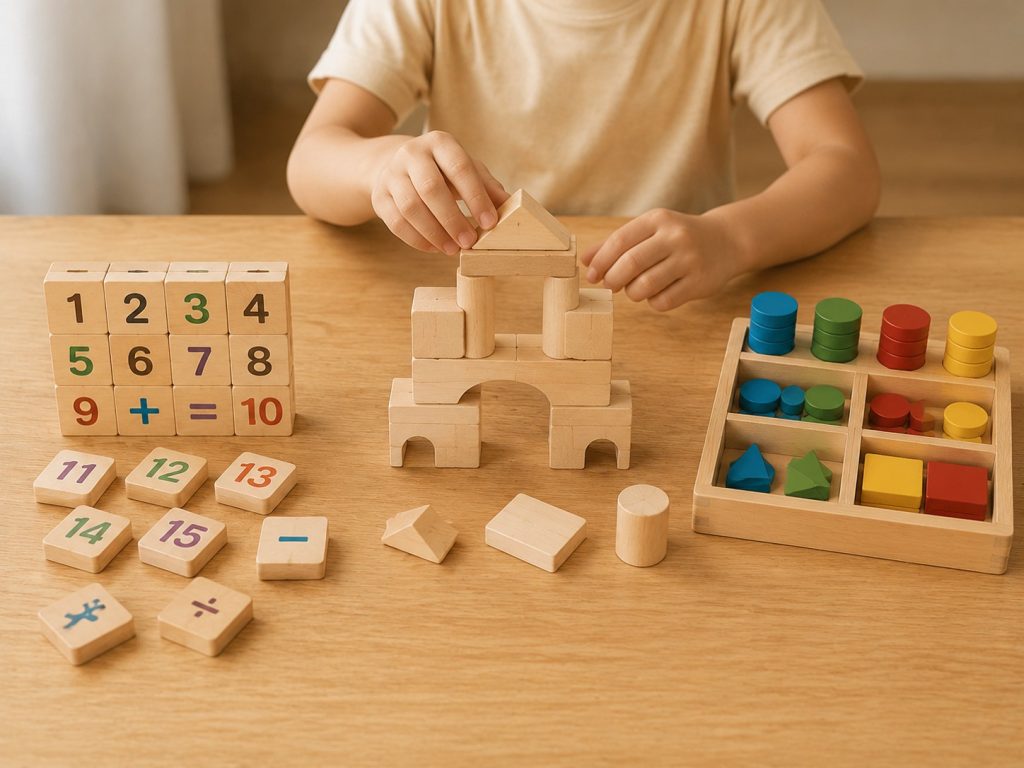
When discussing sustainable children’s products, durability and usability are two important factors that should be considered. A product that remains useful for years can create more value than one that quickly loses its purpose.
Wooden Educational Toys are often associated with sustainable consumption because many designs focus on long-term engagement. Their value comes from creating repeatable learning experiences rather than relying on temporary excitement.
| Sustainability Factor | How Wooden Educational Toys Create Value |
|---|---|
| Long product lifespan | Durable designs allow repeated learning activities over time |
| Flexible learning functions | Many toys support different activities as children develop |
| Reduced replacement frequency | Longer usability may reduce the need for frequent purchases |
| Hands-on interaction | Encourages active learning through physical exploration |
Longer Product Lifespan Creates Greater Value
Children naturally interact with toys through repeated actions. They build, rearrange, test, and experiment during play. Because of this, durability becomes an important factor when evaluating children’s educational products.
Well-designed wooden toys often focus on simple structures that encourage continuous exploration. Products such as wooden building sets, magnetic pattern activities, and wooden maze games can remain interesting because children can approach them in different ways.
For instance, a magnetic pattern block set may first introduce basic shapes and colors. Later, children can use the same pieces to create complex designs and explore symmetry. The learning experience develops together with the child.
This long-term usability is one reason many families view wooden learning products as a practical investment rather than a short-term purchase.
How Durability Supports More Sustainable Toy Consumption
Sustainability in toys is closely connected with how products are designed, used, and replaced.
A toy with a longer functional life can reduce the need for frequent replacement and help families make more thoughtful purchasing decisions. This does not mean every wooden product automatically creates a sustainable outcome, but products designed for repeated educational use can provide advantages through extended usability.
For toy brands and manufacturers, durability also represents an important product development consideration. Creating toys that children can continue using over multiple stages requires careful attention to design, functionality, and educational purpose.
This approach is becoming increasingly important as consumers look for sustainable toys for kids that offer both learning benefits and lasting value.
What Makes Wooden Educational Toys Different From Plastic Learning Products?
When families compare different types of children’s learning products, the key difference is not simply the material used to make the toy. More importantly, it is about how the product encourages children to interact, explore, and develop skills through play.
Different toy categories can provide different experiences. Electronic toys may introduce children to sounds, digital interaction, or programmed responses, while traditional wooden products often focus on physical exploration and creative thinking.
The growing interest in Wooden Educational Toys comes from their ability to create open-ended learning experiences. A child can stack blocks in different ways, arrange patterns, test solutions, or create new games using the same set of pieces. This flexibility allows children to participate actively instead of only following a predetermined process.
| Comparison Area | Wooden Educational Toys | Electronic or Fixed-Function Toys |
|---|---|---|
| Learning approach | Encourages exploration through hands-on interaction | Often focuses on programmed responses |
| Creativity | Supports different solutions and play methods | Usually follows designed functions |
| Learning flexibility | Can adapt as children’s abilities develop | Often provides a fixed experience |
| Parent-child interaction | Creates opportunities for shared exploration | May involve more independent operation |
Early childhood education research emphasizes that physical interaction plays an important role in learning. When children move, arrange, and manipulate objects, they build connections between actions and results.
For example, when children use wooden blocks to create structures, they are practicing planning, balance, spatial awareness, and problem-solving. A wooden maze activity encourages children to test strategies and adjust their approach when facing challenges.
This does not mean one type of toy is suitable for every learning situation. However, the continued growth of wooden learning products shows that many families value toys that encourage imagination, independent thinking, and longer engagement.
How Wooden Educational Toys Connect With Montessori and STEM Learning
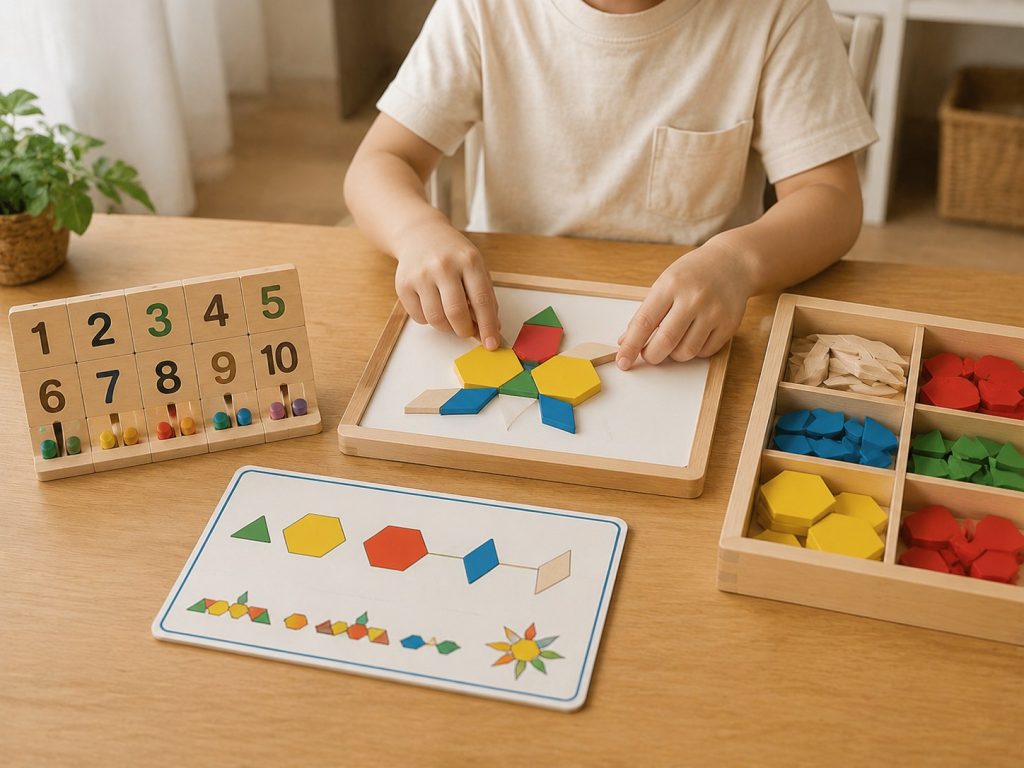
The connection between wooden toys and educational approaches such as Montessori and STEM has become one of the main reasons for their growing popularity.
Montessori education emphasizes independence, hands-on learning, and practical exploration. Many Montessori wooden toys are designed around these principles by allowing children to interact with materials directly and discover concepts through experience.
STEM learning also begins with simple activities before children enter formal science and mathematics education. Sorting objects, recognizing patterns, building structures, and understanding numbers are all early foundations of STEM development.
Supporting Early Childhood Development Through Hands-On Learning
During preschool years, children develop important abilities through repeated practice and exploration. Well-designed Wooden Educational Toys can support this process by creating opportunities for children to learn through movement and discovery.
For example, wooden number blocks allow children to explore counting and basic mathematics through physical interaction. Instead of only seeing numbers on a page, children can touch, arrange, and compare different pieces.
Similarly, magnetic pattern blocks can introduce concepts such as geometry, symmetry, and creative design. Children are encouraged to think about relationships between shapes and create their own solutions.
Through these activities, children naturally practice logical thinking, fine motor control, spatial understanding, and concentration. These skills are developed through repeated interaction rather than direct instruction.
Rather than providing only one educational outcome, quality wooden learning products create a flexible environment where multiple skills can develop together.
This is why many educators and families consider Wooden Educational Toys valuable tools for early childhood learning.
Why Wooden Educational Toys Create Opportunities for Toy Brands
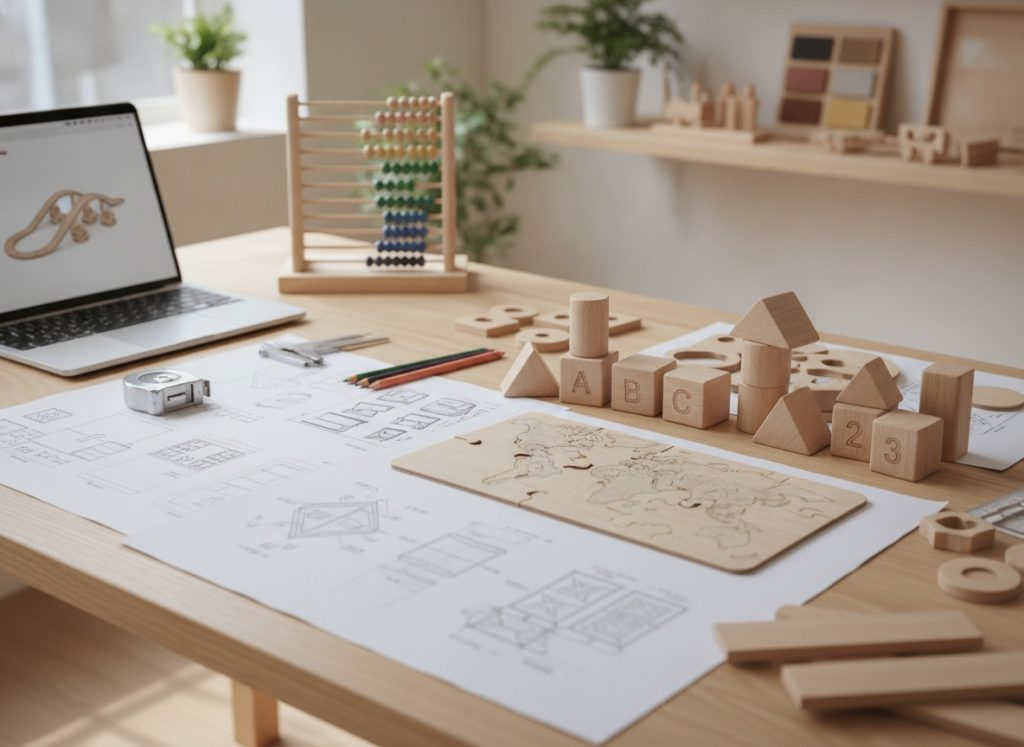
The demand for educational and sustainable children’s products is also creating new opportunities for toy companies, retailers, and distributors.
Today’s market is not only looking for attractive products. Businesses are increasingly searching for educational toy solutions that combine market appeal, learning value, and reliable product development capabilities.
For companies entering the educational toy category, working with an experienced wooden educational toys manufacturer can help transform ideas into products that meet different customer expectations.
A professional supplier can support businesses through product design, customization, packaging development, and manufacturing solutions.
At Vindstier, the focus is on developing educational products that combine learning concepts with practical play experiences. The product range includes wooden learning toys, magnetic educational activities, number learning tools, sorting games, and other preschool-focused products designed for children aged 3+.
By understanding both children’s learning needs and market trends, Vindstier helps partners develop products that align with the growing demand for meaningful educational play.
Custom Wooden Educational Toys for Growing Markets
Customization has become increasingly important as brands look for ways to differentiate themselves in competitive markets.
A custom wooden educational toys supplier can help businesses create products based on specific educational goals, target markets, and brand requirements.
For example, educational toy brands may develop customized products focused on different learning objectives:
| Product Direction | Educational Value |
|---|---|
| Wooden number learning toys | Supports early mathematics and number recognition |
| Magnetic learning activities | Encourages creativity and spatial thinking |
| Sorting and matching toys | Develops classification skills and coordination |
| Wooden puzzle and maze products | Builds problem-solving ability |
Customization allows brands to create more targeted product collections instead of relying only on standard toy categories.
For retailers, schools, and educational businesses, this flexibility provides opportunities to respond to changing consumer preferences while building stronger product differentiation.
How Brands Can Evaluate a Wooden Educational Toys Supplier
Choosing the right supplier is an important step for companies developing educational toy products. Beyond manufacturing capability, businesses often need partners who understand children’s learning needs and product requirements.
A reliable supplier should consider several important factors.
Product Development Experience
Educational toys require more than attractive designs. They need clear learning purposes and practical play functions.
A professional manufacturer should understand how different product structures support children’s development and how educational concepts can be integrated into real play experiences.
Customization Capability
Different markets may require adjustments in product design, packaging, colors, educational themes, or product combinations.
Working with a supplier that provides customization support allows brands to develop collections that better match their target customers.
Quality Management and Production Support
Consistent production processes are essential for maintaining product reliability and brand reputation.
For companies expanding their educational toy categories, partnering with a specialized wooden educational toys manufacturer can provide advantages in product innovation, customization flexibility, and long-term market development.
How Can Families Choose the Right Wooden Educational Toys?
Choosing the right educational toy requires more consideration than simply selecting an attractive design. A valuable learning product should match a child’s developmental stage, interests, and opportunities for exploration.
When families evaluate Wooden Educational Toys, they often consider whether the product can provide meaningful activities rather than only short-term entertainment. A well-designed toy should offer enough challenge to encourage learning while remaining accessible for children to explore independently.
The most valuable educational toys are usually those that grow with children. A product that introduces simple concepts at an early stage and supports more advanced activities later can provide greater long-term value.
| Evaluation Factor | What Families Can Consider |
|---|---|
| Learning purpose | Does the toy encourage skills such as counting, creativity, logic, or problem-solving? |
| Play flexibility | Can children explore different ways to use the product? |
| Development suitability | Does the activity match the child’s current abilities? |
| Long-term value | Can the toy continue supporting learning as skills improve? |
Parents may also consider whether the toy encourages interaction between children and adults. Many wooden learning activities create opportunities for parents to ask questions, guide exploration, and participate in the learning process.
For example, a wooden sorting activity can become more than a color recognition game. Parents can introduce concepts such as grouping, comparison, and decision-making through simple conversations during play.
This type of interaction helps transform toys into meaningful learning experiences.
FAQs
Are Wooden Educational Toys Better for Early Learning?
The value of a toy depends on its design and how children interact with it. However, many Wooden Educational Toys support early learning because they encourage hands-on exploration, problem-solving, and creative thinking.
Activities involving building, sorting, matching, and counting allow children to practice skills through direct experience, which is an important part of early childhood development.
Rather than replacing traditional learning methods, educational toys provide additional opportunities for children to explore concepts through play.
Why Are Wooden Educational Toys Considered Sustainable?
The sustainability of a toy depends on several factors, including product lifespan, design purpose, usage frequency, and the overall product lifecycle.
Wooden learning products are often considered sustainable choices because many are designed for repeated use and can support different learning stages. A durable toy that remains useful over time may reduce the need for frequent replacement.
However, sustainability should be evaluated through the complete lifecycle of a product, including design, manufacturing, transportation, usage, and end-of-life considerations.
This broader perspective allows families and businesses to make more informed purchasing decisions.
Are Wooden Toys Suitable for Montessori Learning?
Many Montessori educators value toys that encourage independence, hands-on exploration, and practical learning experiences.
Because many wooden toys are based on simple structures and interactive activities, they often align with Montessori principles. Products such as sorting games, wooden puzzles, number activities, and building sets can support children’s exploration and discovery.
The connection between Montessori learning and wooden toys is not only about the material but also about encouraging children to participate actively in the learning process.
Can Businesses Order Custom Wooden Educational Toys?
Yes. Many educational toy brands, retailers, and distributors work with manufacturers to develop customized products based on their market requirements.
A professional custom wooden educational toys supplier can provide support in areas such as product design, educational concepts, packaging, and production planning.
For businesses planning to expand their educational toy categories, customization can help create differentiated product collections that better match their target customers.
Conclusion
The growing demand for Wooden Educational Toys reflects a shift in how families and businesses evaluate children’s products. Instead of focusing only on immediate entertainment, more consumers are looking for toys that provide educational value, long-term usability, and meaningful play experiences.
Research in early childhood education highlights the importance of hands-on learning, and wooden learning products naturally support this approach by encouraging children to explore, create, and solve problems through direct interaction.
From a sustainability perspective, the greatest value of wooden toys comes from their ability to remain useful over time. Products designed for repeated learning experiences can help families make more thoughtful purchasing decisions while providing children with opportunities for continued development.
For toy brands, retailers, and educational suppliers, the growing market for wooden learning products also creates opportunities for innovation and customization. Working with an experienced wooden educational toys manufacturer can help businesses develop products that combine educational concepts with market requirements.
At Vindstier, we focus on creating educational toy solutions that support early learning through carefully designed products, including wooden learning activities, magnetic educational toys, number-based learning tools, sorting games, and preschool development products. Through customization and product development support, Vindstier helps partners create educational products that meet the evolving needs of families and markets.
Whether for home learning, classrooms, or retail collections, well-designed Wooden Educational Toys continue to demonstrate their value as products that connect learning, creativity, and sustainable consumption.