
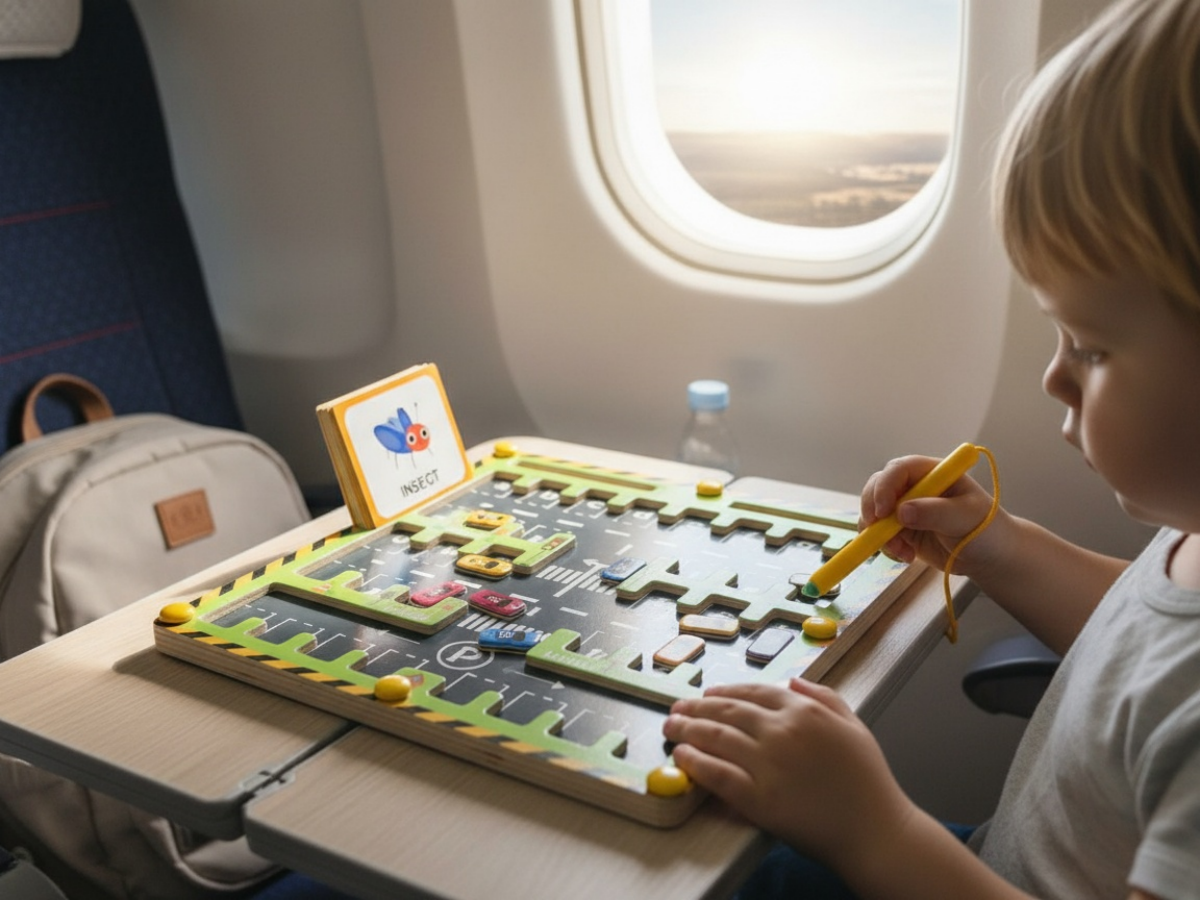
Family travel with preschoolers rarely feels as simple as parents hope.
Even short trips can quickly turn stressful when children become restless, toys fall onto the floor, or screen time becomes the only reliable distraction. Airports, restaurants, and hotel waiting areas create another challenge entirely: children still need stimulation, but parents also need activities that stay quiet, organized, and manageable in small spaces.
That growing frustration is exactly why more families have started looking for travel-friendly educational toys that children can use independently. Yet many portable toys create new frustrations of their own. Puzzle pieces disappear under seats, cards bend inside backpacks, and magnetic accessories often get lost halfway through a trip.
The Magnetic Parking Game approaches portability from a much more practical angle.
Instead of relying on loose accessories, the game transforms alphabet learning into a parking adventure where children guide 26 colorful letter cars into matching parking spaces using a magnetic stylus. Because every vehicle remains permanently sealed beneath a transparent acrylic cover, children can stay engaged without leaving scattered pieces across airplane trays, restaurant tables, or car seats.
More importantly, the activity feels playful rather than instructional.
Children are not simply “learning letters.” They are navigating tiny vehicles through parking paths, matching colors and alphabet spaces while naturally strengthening the controlled hand movements connected to early writing readiness.
Why Magnetic Parking Game Works Better During Travel Than Traditional Toys
Many travel toys are designed mainly for entertainment without considering the realities of movement and limited space.
Children sitting inside cars, airplanes, or restaurants cannot spread materials across large surfaces or constantly ask adults to retrieve dropped pieces. In situations like these, the enclosed structure of the Magnetic Parking Game makes a noticeable difference.
Because all 26 mini letter cars stay enclosed beneath the acrylic surface, the entire activity remains self-contained throughout the trip.
Parents are not constantly stopping to pick up scattered pieces, reorganize accessories, or reset the activity every few minutes. Even during longer travel periods, children can continue playing independently while the game stays neat and fully organized.
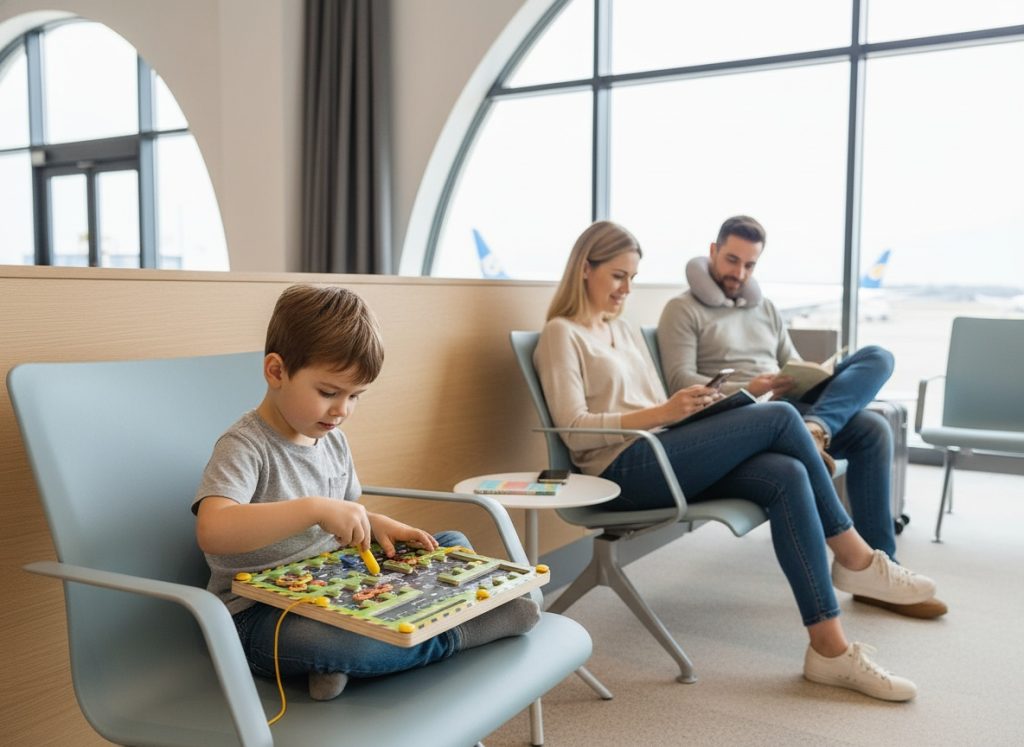
A Self-Contained Design Makes Family Travel Less Stressful
The built-in stylus slot solves another common travel problem that many parents immediately recognize: losing toy accessories mid-trip.
Unlike magnetic drawing boards where pens frequently disappear inside bags or car seats, the Magnetic Parking Game keeps the stylus secured directly inside the board itself. During long travel days, small design details like this often end up mattering far more than parents expect.
| Common Travel Toy Problem | How Magnetic Parking Game Solves It |
| Loose pieces fall under seats | Cars remain permanently enclosed |
| Toys become noisy during travel | Magnetic movement stays quiet |
| Activities need large play areas | Compact size fits tray tables and laps |
| Children lose focus quickly | Parking missions create clear goals |
| Parents repeatedly reorganize toys | Self-contained structure minimizes interruptions |
For many families, convenience matters just as much as educational value.
The Magnetic Parking Game stands out because it manages to support both at the same time.
How Magnetic Parking Game Encourages Learning Without Feeling Like Study Time
Research from the National Association for the Education of Young Children suggests that preschool children retain literacy concepts more effectively when learning happens through active play rather than direct instruction.
Travel situations tend to make this even more noticeable, especially when children are already adjusting to unfamiliar routines, long waiting periods, and limited physical movement.
The Magnetic Parking Game avoids the resistance that often comes with traditional learning activities by embedding alphabet recognition inside movement-based gameplay.
As children guide alphabet vehicles through narrow pathways, they naturally begin matching letters with parking spaces while simultaneously recognizing colors and repeating controlled hand movements linked to early writing development.
Because the activity feels like a parking challenge rather than a lesson, children often remain engaged much longer than they would with flashcards or repetitive drills.
Why the Parking Theme Holds Children’s Attention Longer
The strongest preschool learning toys usually combine educational goals with imaginative context.
Here, each letter car has its own destination, so children naturally focus on completing the parking lot instead of treating the activity like traditional letter practice.
Research on gamified learning environments has shown that children repeat activities more frequently when they can visually track progress during play.
The Magnetic Parking Game reinforces this naturally by allowing children to visually track their progress as colorful vehicles move through routes, match with correct parking spaces, and gradually build alphabet familiarity through repetition.
As repetition increases, letter familiarity often develops organically without formal memorization.
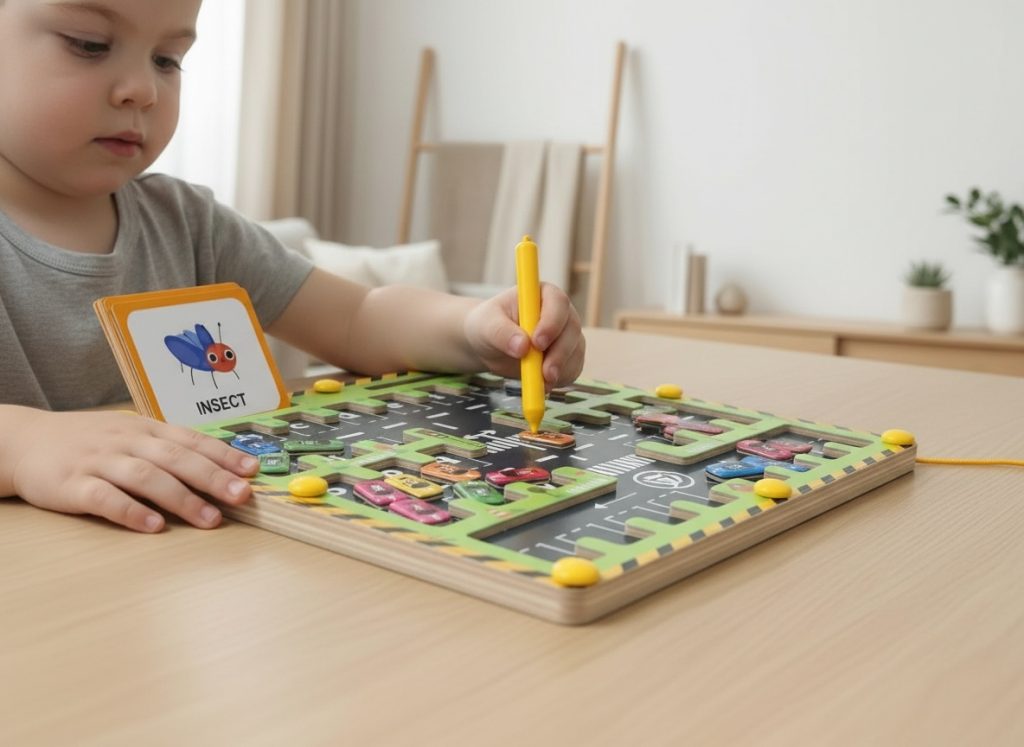
Why Magnetic Parking Game Supports Early Writing Skills
Many parents focus heavily on alphabet recognition before realizing that writing readiness also depends on hand control and coordinated movement.
The “drag-and-guide” system inside the Magnetic Parking Game directly supports these physical foundations.
Children must carefully control the magnetic stylus while moving one vehicle at a time through narrow pathways. The magnetic strength is intentionally calibrated so that the stylus normally guides only a single car instead of pulling multiple vehicles unpredictably.
As a result, the gameplay feels far more controlled and intentional than simple free-form magnetic movement.
Fine Motor Skills Developed During Play
| Game Action | Developmental Benefit |
| Holding the magnetic stylus | Pencil grip preparation |
| Guiding vehicles through paths | Wrist stability |
| Moving one car precisely | Hand-eye coordination |
| Parking inside matching spaces | Spatial awareness |
| Repeating controlled movements | Muscle memory development |
Research published in early childhood occupational therapy studies has linked guided magnetic tracing activities with stronger pre-writing motor control among preschool-aged children.
The Magnetic Parking Game naturally incorporates many of these same movement patterns into everyday play.
How the Magnetic Parking Game Stays Engaging Without Screens
One challenge many families face during travel is balancing convenience with screen exposure.
Tablets and phones may solve boredom temporarily, but they can also create overstimulation during long trips. Hands-on problem-solving activities usually create a calmer type of engagement that many parents notice almost immediately during longer trips.
The Magnetic Parking Game works particularly well because the gameplay remains visually structured and goal-oriented. Children concentrate on guiding vehicles through pathways, completing parking tasks, and correcting movement mistakes without needing rapid digital stimulation.
Research from the American Academy of Pediatrics suggests that hands-on, screen-free play supports stronger attention regulation and sustained focus during early childhood development.
Whether it is a delayed flight, a long drive, or a quiet evening in a hotel room, the Magnetic Parking Game gives preschoolers a structured activity that feels engaging while remaining calm, portable, and easy for parents to manage.
Why Families Appreciate the Portable Structure of Magnetic Parking Game
Portability is often misunderstood in the toy industry.
A toy does not become travel-friendly simply because it is small. Families usually need activities that stay organized under real travel conditions.
The design of the Magnetic Parking Game reflects these real travel conditions in several practical ways.
The acrylic top permanently seals every letter vehicle inside the board, preventing the frustration of missing pieces during travel. At the same time, the transparent surface still allows children to visually follow every movement clearly, preserving the satisfaction of active gameplay.
Compared with lightweight foldable toys that slide easily on tray tables or car seats, the wooden frame also provides greater stability during use.
How Families Commonly Use Magnetic Parking Game During Trips
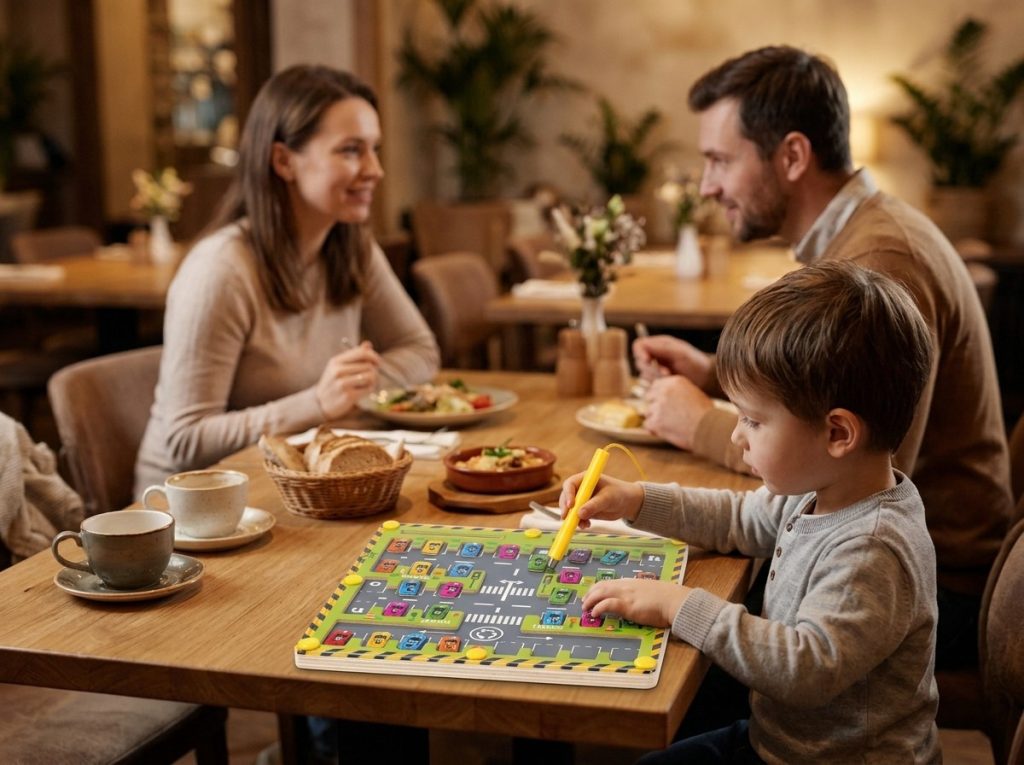
Many families end up using the Magnetic Parking Game across multiple travel situations, from airplane tray-table activities and long road trips to restaurant waiting periods or quiet downtime inside hotel rooms.
The included 12 double-sided vocabulary cards further extend the replay value by introducing 24 beginner learning words connected to the parking activities.
Instead of feeling disconnected from the main activity, the vocabulary cards extend the parking challenges naturally by introducing new matching goals and word associations.
Safety Design Matters More During Travel Play
Travel toys experience very different conditions than toys used only at home.
They are frequently packed into bags, dropped onto hard surfaces, and handled inside moving vehicles.
The Magnetic Parking Game addresses these travel-specific challenges through:
- a solid wooden frame
- reinforced transparent acrylic covering
- 360° rounded polished edges
- enclosed magnetic components
During travel, the enclosed vehicle structure helps prevent one of the most common frustrations parents deal with: small toy pieces spreading across tight spaces like airplane seats or restaurant tables.
Meanwhile, the calibrated magnetic system helps maintain smoother gameplay by allowing children to guide vehicles with greater precision rather than unintentionally moving several cars at once.
This consistency helps younger children remain confident and focused while playing independently.
Conclusion
Traveling with preschoolers usually feels much more manageable when a toy can keep children engaged without creating extra noise, clutter, or constant interruptions.
Rather than relying on loose puzzle pieces or short-lived distractions, the Magnetic Parking Game creates a contained learning experience that stays organized even during long trips. Children often stay absorbed in guiding the 26 colorful letter cars toward their matching parking spaces, while parents appreciate how much quieter and easier travel becomes when the activity stays organized from beginning to end.
One reason children tend to stay interested in the Magnetic Parking Game is that the learning happens naturally while they focus on completing the parking challenges themselves. As children navigate parking routes using the magnetic stylus, they are simultaneously practicing alphabet recognition, color matching, concentration, and controlled hand movements without feeling pressured into formal learning.
The permanently enclosed vehicle structure, built-in stylus storage, and calibrated magnetic movement system also solve many of the frustrations families commonly experience with portable toys, especially during flights, road trips, and restaurant waiting periods.
For families searching for travel-friendly educational toys that can realistically hold a preschooler’s attention while remaining calm, portable, and easy to manage, the Magnetic Parking Game offers a balance of practicality and hands-on developmental learning that few traditional travel toys achieve.