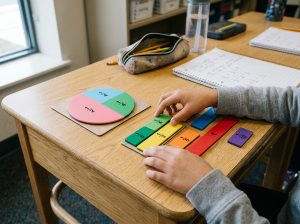
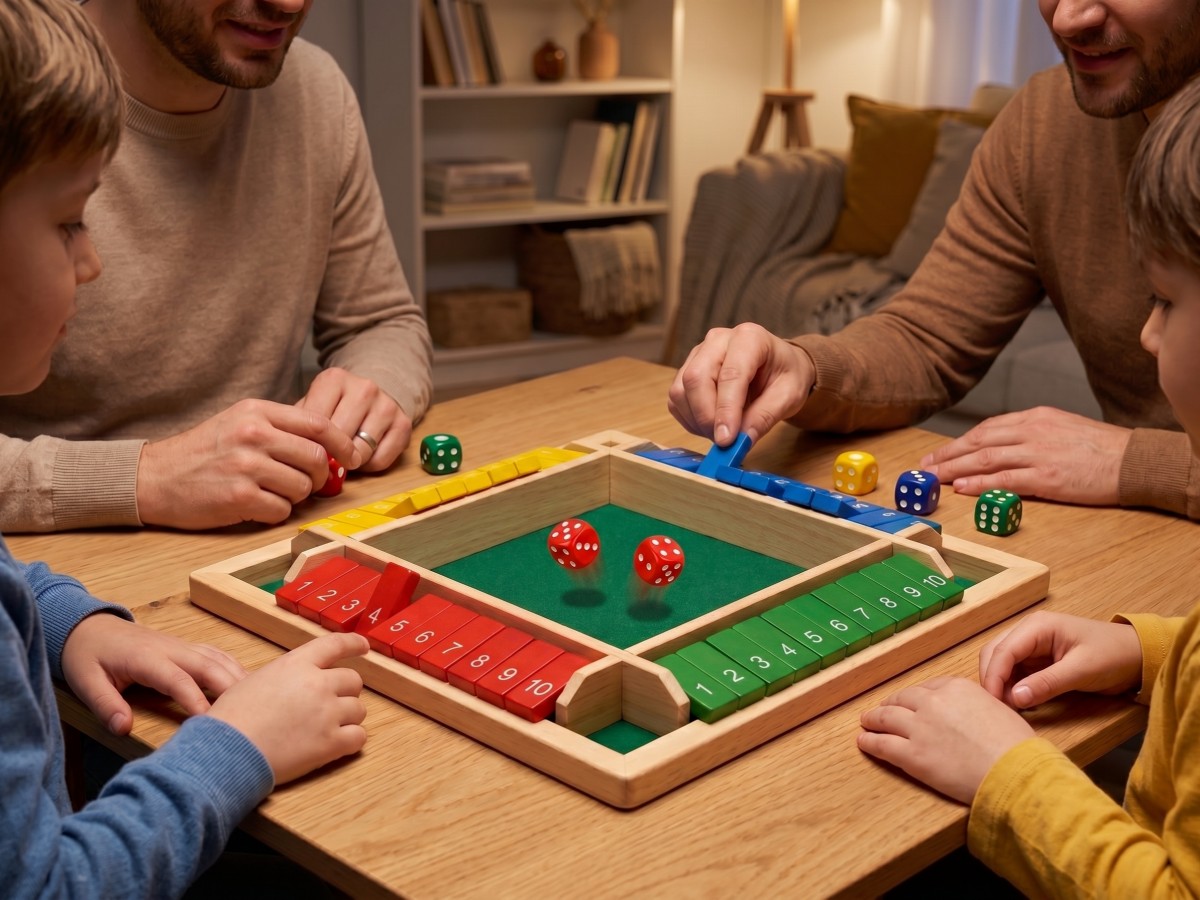
Board games often reveal something interesting about how children learn.
When kids voluntarily repeat calculations, rethink decisions after losing a round, and stay emotionally engaged without relying on screens, the learning process starts to look very different from traditional math practice. For many families, however, finding activities that balance education with genuine entertainment can feel surprisingly difficult.
Many parents notice the same pattern after a few days. Flashcards get pushed aside, math worksheets start feeling like homework, and educational apps often become passive screen time much faster than expected. Even some tabletop learning games lose their appeal once children realize the activity is repeating itself.
The Number Flip Dice Box takes a noticeably different approach.
Instead of separating entertainment from arithmetic practice, the game combines dice rolling, mental calculation, probability judgment, and decision-making into a fast-paced tabletop challenge where every flipped number changes the direction of the game. Children are not simply solving equations; they are constantly evaluating risks, predicting future outcomes, and adjusting strategies in real time.
What makes the experience especially engaging is that strategic thinking develops naturally during play.
A player who flips larger numbers too early may struggle later in the round. A child who ignores probability may leave difficult combinations behind. After a few rounds, many children begin spotting patterns on their own and planning several moves ahead without even realizing it. In many families, it quickly turns into the kind of game where everyone wants “just one more round” after a close finish.
Why Number Flip Dice Box Feels More Engaging Than Traditional Math Practice
Many educational games rely heavily on repetition.
Children are often asked to memorize answers, repeat formulas, or complete isolated exercises that rarely feel connected to real decision-making. The Number Flip Dice Box works differently because every dice roll introduces uncertainty, forcing players to actively think rather than mechanically respond.
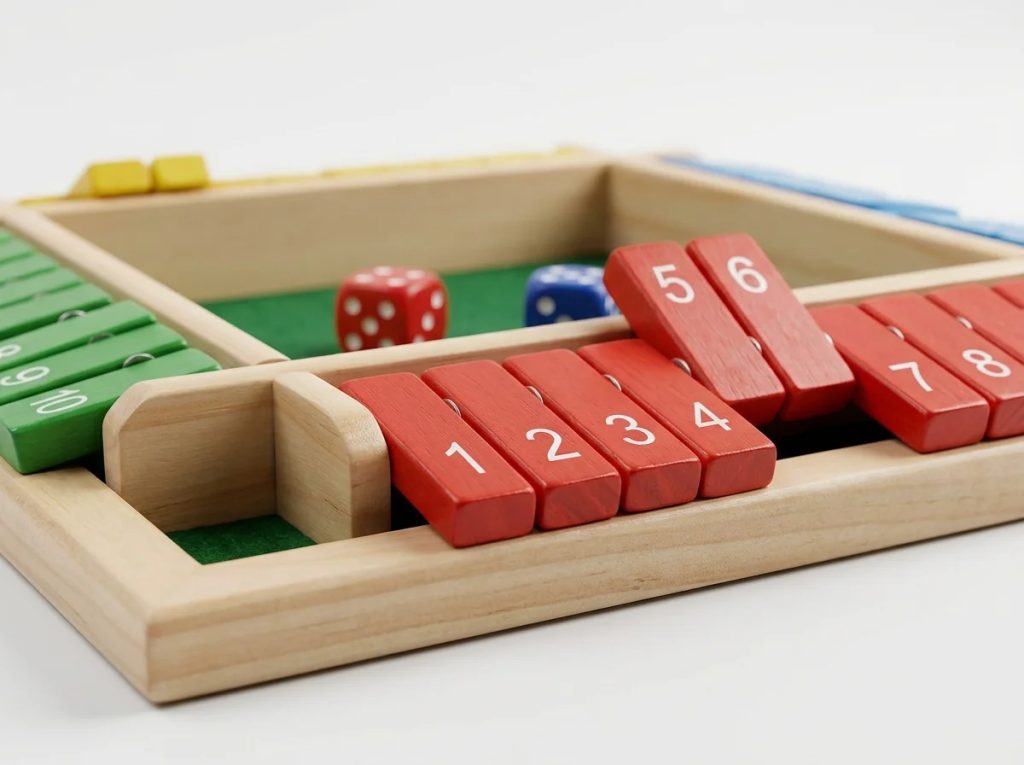
In each round, players roll the dice, calculate totals, and strategically flip numbered tiles to achieve the lowest remaining score possible. Because every decision affects future options, children naturally begin thinking beyond immediate answers.
Instead of simply solving arithmetic problems, players start weighing choices carefully. Some turns feel surprisingly rewarding, while others force players to rethink their strategy almost immediately after the dice land. Children quickly realize that choosing the wrong combination early in the game can limit future possibilities later on.
In practice, children often stay mentally engaged longer when activities require them to react, adjust, and rethink decisions instead of repeating fixed answers over and over again.
The structure of the Number Flip Dice Box mirrors this type of cognitive flexibility surprisingly well.
Strategy Emerges Through Small Decisions
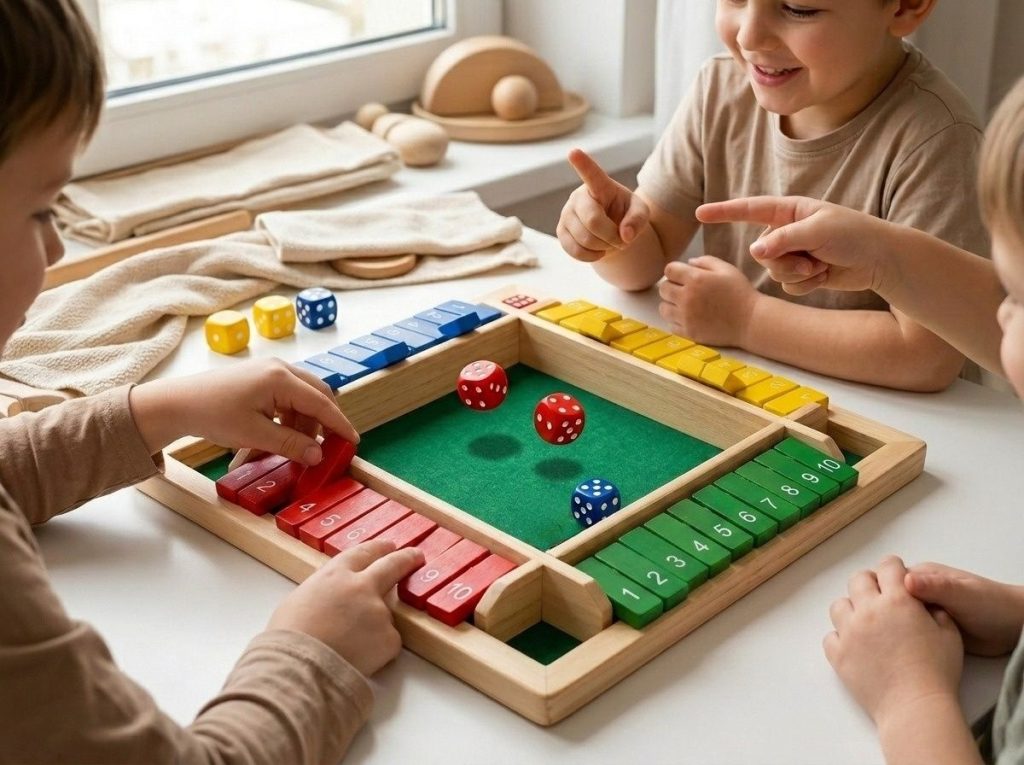
One reason the Number Flip Dice Box holds attention so effectively is that every turn creates multiple possible outcomes.
A child may decide to:
- flip one large number immediately
- preserve smaller combinations for later turns
- take a short-term risk to improve future flexibility
- adjust strategy after an unlucky roll
These choices seem simple at first, but after several rounds, many children naturally begin slowing down before making a move. They compare options more carefully, predict possible outcomes, and sometimes even explain their reasoning aloud during family play sessions.
How Number Flip Dice Box Strengthens Mental Arithmetic Naturally
Children often resist traditional math drills because repetition feels disconnected from purpose.
Inside the Number Flip Dice Box, however, arithmetic becomes necessary for progress. Players continuously add, subtract, and reorganize number combinations while trying to improve their score and stay competitive throughout the game.
That difference changes how children interact with numbers.
Real-Time Calculation Feels More Dynamic Than Worksheets
During gameplay, children are constantly performing mental calculations while reacting to changing game conditions. They combine dice totals, compare different number combinations, and mentally test possible outcomes before deciding which tiles to flip.
Because these calculations happen inside a competitive and interactive environment, the process feels active rather than academic.
Many children who struggle with repetitive worksheets respond very differently when numbers become part of an active game. The competitive pace and fast decision-making often make mental calculation feel more natural and less stressful.
The Number Flip Dice Box supports this naturally because players repeat calculations voluntarily while concentrating on winning instead of “studying.”
| Gameplay Situation | Cognitive Skill Activated |
| Adding dice totals | Mental arithmetic |
| Choosing tile combinations | Logical reasoning |
| Planning future moves | Strategic thinking |
| Evaluating remaining numbers | Probability awareness |
| Adapting after bad rolls | Flexible decision-making |
After several rounds, many children begin reacting to number combinations much faster. Parents also tend to notice fewer impulsive choices and more deliberate decision-making as the game continues.
Why Number Flip Dice Box Encourages Strategic Thinking Over Pure Luck
Although dice outcomes introduce randomness, strong decisions still have a major impact on the final score.
Because luck alone rarely guarantees a win, players naturally begin paying closer attention to long-term choices as the game progresses.
Children gradually begin noticing patterns that influence their decisions. Some learn that flipping every available number immediately can create difficult situations later. Others discover that preserving certain combinations increases flexibility for future rolls.
Because outcomes constantly change, players naturally begin:
- comparing multiple options before acting
- thinking ahead instead of reacting impulsively
- adjusting decisions after mistakes
- recognizing higher-risk situations more quickly
Children usually understand these patterns much faster after experiencing the consequences directly during gameplay.
Repetition Builds Faster Decision-Making
Children improve reasoning skills more effectively when they repeatedly encounter situations that require adjustment and quick thinking rather than memorizing fixed answers.
The Number Flip Dice Box creates this kind of environment naturally.
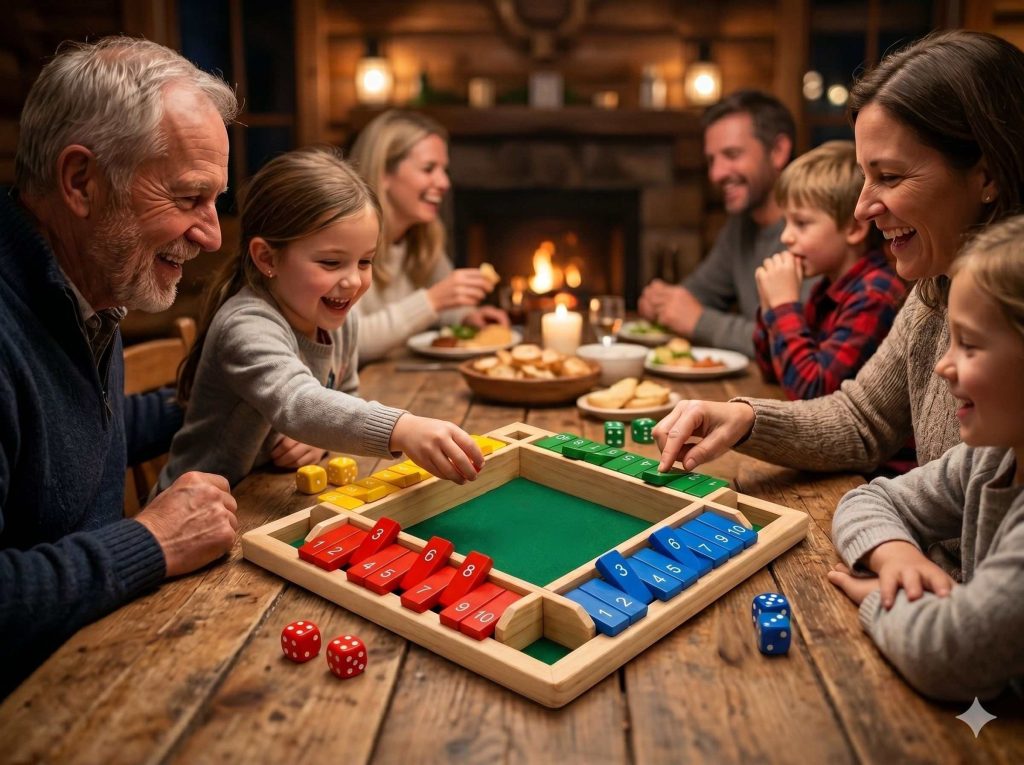
A child may initially make impulsive choices, only to realize later that stronger combinations were available. In future rounds, the same player often pauses longer, evaluates possibilities more carefully, and begins mentally simulating outcomes before flipping tiles.
Many families notice that children become noticeably more confident after several games. Players who rushed decisions early on often begin taking more time, comparing number combinations carefully, and reacting to changing situations with much better control.
How the Physical Design of Number Flip Dice Box Improves Gameplay
The physical structure of a tabletop game strongly influences how long families actually enjoy using it.
Poorly designed games often become noisy, unstable, or frustrating during repeated play sessions. The Number Flip Dice Box addresses many of these common issues through construction details directly connected to comfort and usability.
The board is crafted from solid birch wood with carefully polished rounded edges that feel smooth during extended gameplay. More importantly, the thick green felt center absorbs much of the sharp sound created during energetic dice rolls.
That quieter gameplay becomes especially valuable during:
- late-evening family activities
- indoor rainy-day play
- classroom group sessions
- restaurant game nights
- shared living spaces
Instead of loud plastic impact sounds, the felt surface softens each roll into a quieter and more controlled experience.
Stability Keeps Children Focused Longer
The reinforced flip hinges and anti-slip base also contribute more than many parents initially expect.
Fast-paced tabletop games can quickly become frustrating when boards slide across tables or number tiles flip inconsistently. The Number Flip Dice Box reduces these interruptions through smoother tile transitions, stable table grip, and reinforced flipping mechanisms that maintain consistent gameplay even during competitive rounds.
As a result, children stay mentally focused on strategy rather than constantly adjusting pieces or resetting the board.
Why Number Flip Dice Box Works Well for Family Interaction
One reason tabletop games continue to remain valuable in modern households is that they create shared problem-solving experiences.
Unlike passive entertainment, the Number Flip Dice Box encourages conversation, prediction, friendly competition, and collaborative thinking across multiple generations.
During family gameplay, children naturally observe how adults evaluate risks, manage setbacks, and rethink strategies after difficult rolls. Parents, meanwhile, gain opportunities to model patience, flexible thinking, and calm decision-making during unpredictable situations.
Many families notice that competitive but low-pressure games often create more natural interaction than structured learning activities. Children become more willing to explain their thinking, celebrate successful moves, and stay engaged for longer periods when the focus shifts toward shared gameplay rather than direct instruction.
Shared Gameplay Without Digital Distractions
Unlike screen-based activities that often isolate attention, the Number Flip Dice Box keeps interaction centered around direct human participation.
This becomes especially noticeable during:
- camping trips
- holiday gatherings
- indoor family nights
- classroom team activities
- casual party or bar game sessions
Because the rules remain easy to understand while strategic depth increases over time, both children and adults can stay engaged without the experience feeling overly simplified.
Why Kids Keep Coming Back to Number Flip Dice Box
Many educational toys lose replay value because children quickly memorize patterns or exhaust the available challenges.
The Number Flip Dice Box avoids this problem because no two rounds unfold exactly the same way.
Dice outcomes continuously reshape the available choices, forcing players to rethink strategies, adapt to changing number combinations, and make new decisions under pressure.
Many families notice that children rarely stop after a single round. Once someone manages a particularly low score, everyone usually wants another turn to try beating it. Siblings begin competing over strategies, parents experiment with safer number combinations, and children often become surprisingly determined to improve their previous results.
One round may reward careful number management, while the next forces players to completely rethink their approach after an unlucky roll. That unpredictability keeps the experience feeling fresh far longer than many traditional educational games.
Conclusion
The Number Flip Dice Box succeeds because it transforms arithmetic into an active decision-making experience rather than passive repetition.
Instead of treating math as isolated exercises, the game encourages children to calculate, predict, evaluate risks, and adjust strategies continuously while staying emotionally engaged in the gameplay itself. As rounds progress, children naturally strengthen mental arithmetic, probability awareness, logical sequencing, and flexible thinking without feeling pressured into formal learning.
Its physical design also contributes directly to the overall experience. The solid birch wood structure, reinforced flipping hinges, anti-slip base, and sound-dampening felt surface create smoother and quieter gameplay that families can comfortably enjoy across different environments, from classroom activities and rainy afternoons to camping trips and evening gatherings.
What makes the Number Flip Dice Box particularly effective is that strategic thinking develops through repeated real-time decisions rather than memorization alone. Every dice roll forces players to reassess possibilities, compare outcomes, and balance short-term gains against long-term positioning.
For families hoping to find a game that feels genuinely fun while still encouraging logical thinking and mental math practice, the Number Flip Dice Box offers a rare balance of strategic depth, replayability, hands-on interaction, and meaningful family entertainment.