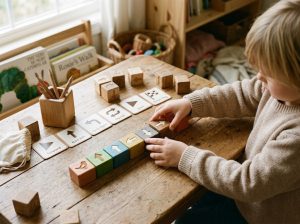
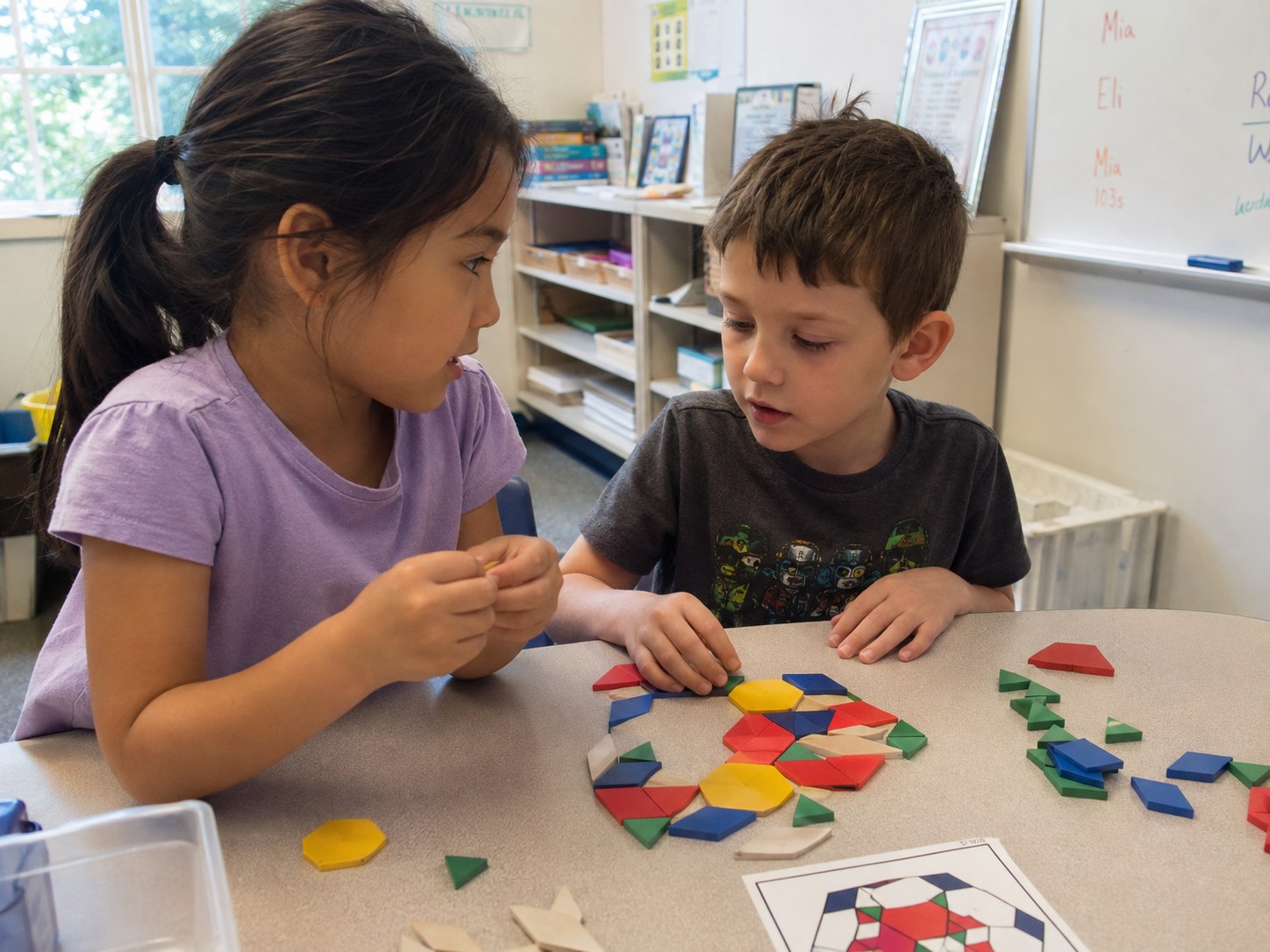
A kindergarten teacher hands a student a worksheet full of pattern-matching questions, and within two minutes the child has guessed the answers without understanding why they’re correct. This happens in classrooms everywhere: children learn to produce the right answer without building the reasoning that should sit underneath it. Worksheets can test whether a child knows an answer, but they rarely reveal whether a child knows how to think through a problem they’ve never seen before.
This gap matters more than it used to. Curriculum standards increasingly expect young learners to reason, sequence, and troubleshoot — not just recall facts. Yet many classrooms are still built around passive instruction, and many “educational” toys on the market are decorative at best, offering bright colors and little cognitive demand. Teachers are left searching for logic toys that actually build reasoning ability rather than just occupying a child’s hands for ten minutes.
Logic toys were designed to close that gap. Unlike toys that reward memorization or repetition, logic-based play asks a child to plan, test an idea, fail, adjust, and try again — the exact sequence that underlies real problem-solving. This article looks at why that distinction matters, how logical reasoning actually develops through play, and what schools and distributors should look for when evaluating logic toys for classroom or retail use.
Why Problem-Solving Skills Are Harder to Teach Than They Look
Most teachers agree that critical thinking is important. Far fewer have a reliable way to teach it directly, because reasoning isn’t a fact you can hand to a student — it’s a skill built through repeated, low-stakes struggle. A child develops the ability to plan three steps ahead the same way they develop balance on a bicycle: through trial, imbalance, and correction, not through explanation.
This creates a real classroom problem. Group instruction is efficient for delivering content but poor at generating individual struggle, because a teacher managing twenty-five students can’t personally guide each child through their own trial-and-error process. Meanwhile, many “STEM” products marketed to schools are really content-delivery tools in disguise — apps and kits that walk a child through a fixed sequence of steps with only one correct path. That structure teaches compliance, not reasoning.
Genuine logical reasoning development requires open-ended problems with more than one valid approach, immediate physical feedback when an idea doesn’t work, and enough built-in challenge that success isn’t guaranteed on the first try. Few classroom materials meet all three conditions at once, which is exactly the space where well-designed logic toys are meant to operate. This is also the reason logic toys keep showing up on curriculum-aligned materials lists even as other toy categories fall out of favor.
What Actually Makes a Toy “Logic,” Not Just “Educational”
The word “educational” gets attached to almost any toy with numbers or letters printed on it, which makes the term nearly meaningless for a buyer trying to evaluate real cognitive value. Logic toys earn that label based on what they demand from the player, not what’s printed on the box.
A genuine logic toy requires the child to hold a goal in mind, test a move against that goal, and revise their approach when the move fails — the same loop used in coding, geometry proofs, and everyday troubleshooting. Sorting a set of blocks by color is a task; arranging blocks so that no two matching colors touch on any side is a logical reasoning challenge, because it forces planning, constraint-checking, and backtracking. This is the distinction that separates true logic toys from products that simply borrow the label for marketing purposes.
This is also why difficulty progression matters more than novelty. A strong line of logic toys offers a low floor so a four-year-old can enter the activity successfully, and a high ceiling so an eight-year-old is still meaningfully challenged. Products built around a single fixed difficulty level tend to stop generating real cognitive struggle once a child masters the one available challenge — at that point, the toy becomes a passive object rather than a reasoning tool.
How Logical Thinking Develops Through Play, Stage by Stage
Children don’t reason the same way at four as they do at nine, and logic toys that ignore developmental stage will either bore an older child or frustrate a younger one. This isn’t just a design preference — it tracks closely with Piaget’s widely referenced stages of cognitive development, where young children move from concrete, trial-and-error thinking toward the ability to hold multiple rules in mind and reverse a line of reasoning when it doesn’t work out. Vindstier’s product development starts from this distinction rather than treating logic toys as a single category.
| Age Range | Piaget-Aligned Stage | Reasoning Focus | What the Child Is Practicing |
|---|---|---|---|
| 3–5 years | Late preoperational | Sorting, sequencing, cause-and-effect | Recognizing patterns, predicting simple outcomes |
| 5–7 years | Early concrete operational | Spatial logic, basic strategy | Planning two to three moves ahead, testing solutions |
| 7–10 years | Concrete operational | Multi-step reasoning, constraint-based puzzles | Backtracking, holding several rules in mind at once |
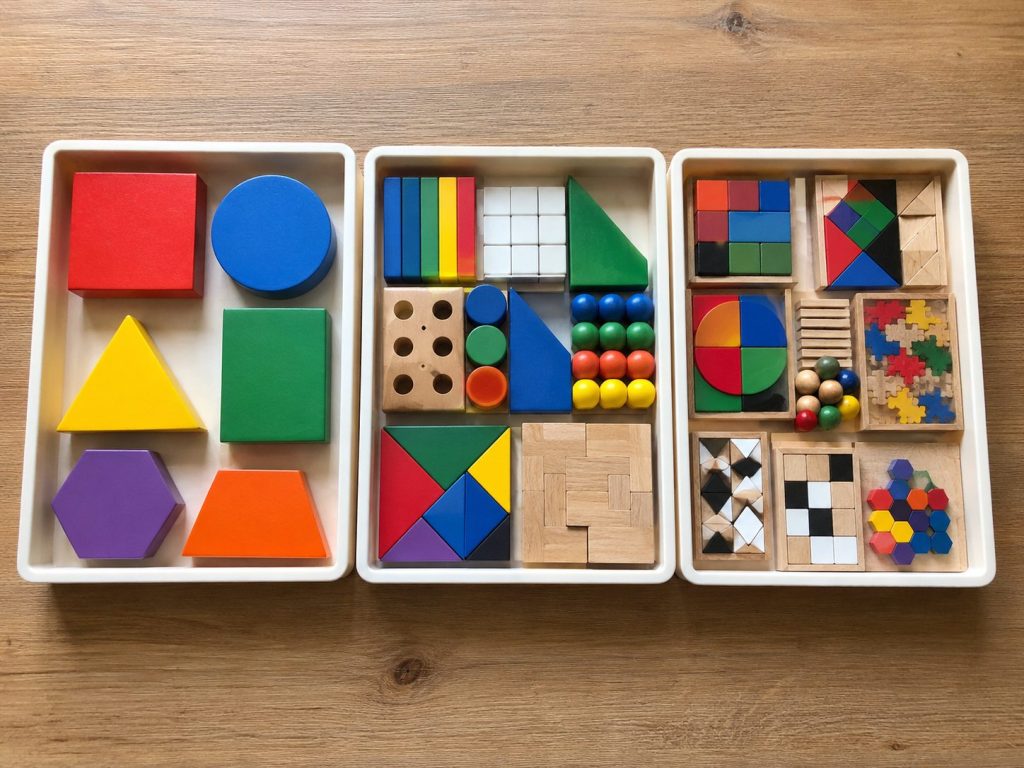
At the youngest stage, a child benefits from cause-and-effect logic toys where an action produces a visible, immediate result. A preschool teacher using stacking logic pieces, for instance, typically sees children learn through direct consequence — placing a heavier piece on top causes a visible collapse, and the child adjusts on the next attempt without needing an adult to explain why. That’s early logical reasoning happening through feedback rather than instruction.
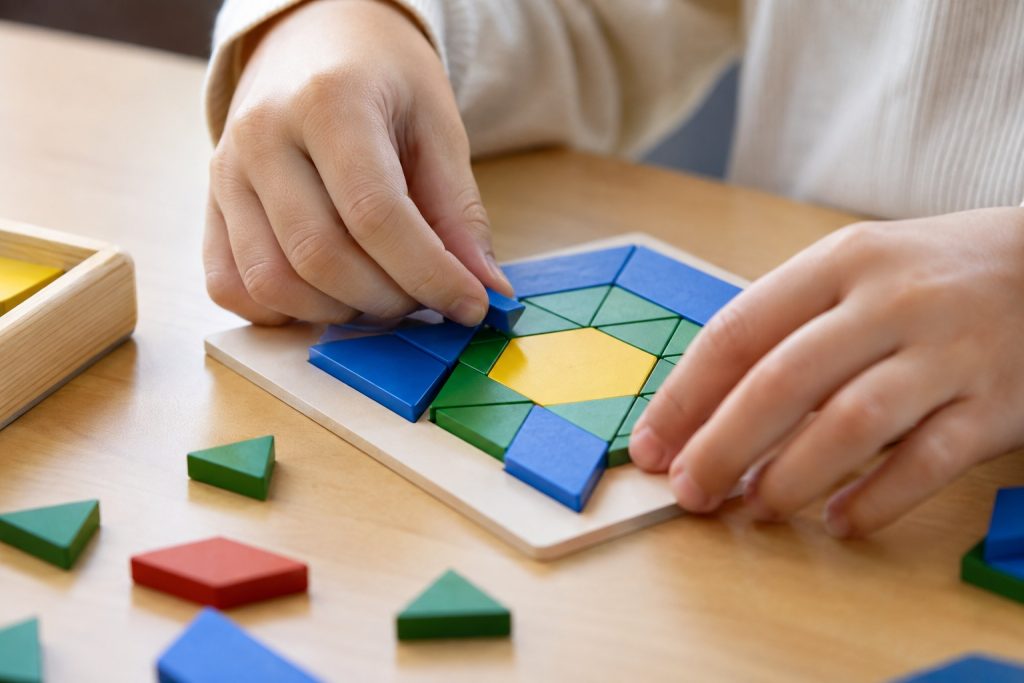
By the middle stage, children are ready for spatial reasoning games that require them to picture an outcome before acting, such as arranging shapes to fill a defined space with no gaps. Older children are ready for genuine constraint-based logic puzzles, where multiple rules must be satisfied simultaneously and an early mistake isn’t obvious until several steps later — the classroom example below shows this stage in practice.
Teachers who understand this progression are also better equipped to spot when a child is ready to move up a stage — the signal is usually a child solving the current challenge quickly and without visible hesitation, which is a cue to introduce a harder rule set rather than a new toy entirely.
Classroom Application: A Working Example
Background
A second-grade classroom of 24 students was working through a unit on shapes and spatial relationships. The teacher noted that several students could name geometric shapes correctly on a worksheet but struggled the moment they had to combine shapes to solve a physical arrangement problem — a strong sign that fact recall had outpaced actual spatial reasoning.
Application Process
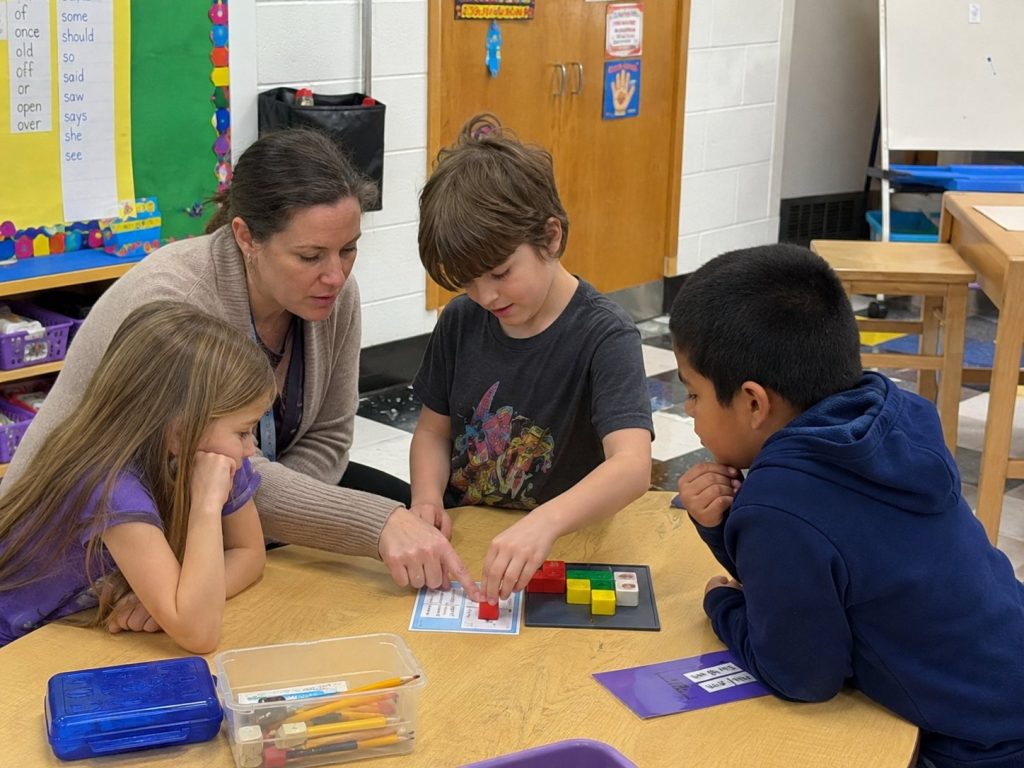
The teacher introduced a set of geometric logic toys during small-group rotations, starting with simple two-piece combinations and moving toward challenge cards that required four or five pieces to fit a fixed outline with no overlap. Students worked in pairs, which meant one child had to explain their reasoning out loud while the other tested it — turning silent guesswork into an argument that had to hold up under a partner’s questions.
Problem Solved
Within three sessions, the teacher observed a clear shift in most pairs: students began sketching their plan on scrap paper before touching the pieces, instead of trying pieces at random until something fit. By the fourth session, that planning step had become the group’s default approach rather than the exception. That shift — from trial-and-error to planned trial — is the specific reasoning gap the activity was designed to close, and it’s difficult to produce through worksheet-based instruction alone.
Practical Value
Students gained a physical, repeatable model for spatial planning that carried directly into their next geometry unit, where the teacher noted fewer students defaulting to guesswork on multi-shape problems. The teacher gained a rotation activity that required no new instruction each week, since difficulty could scale simply by handing out a harder challenge card.
Where Vindstier’s Logic Toy Line Fits
The gap described above — toys that look educational but don’t actually demand reasoning — is the specific problem Vindstier’s logic toy range was built to address. Every set is designed around a documented difficulty curve rather than a single fixed puzzle, so the same product supports a classroom across multiple grade levels instead of becoming obsolete after one unit.
For teachers, this means less prep time: challenge cards are organized by reasoning skill rather than just by age, so a teacher planning a spatial-reasoning lesson can pull the right level of logic toys without redesigning the activity from scratch. For school buyers, it means a defensible use of a limited materials budget — a single set that serves a wider grade span reduces the number of separate purchases a school has to justify each year, and pieces are built from materials rated for repeated daily classroom handling rather than occasional home use.
For toy brands and distributors evaluating Vindstier as a manufacturing partner, the same design philosophy extends to OEM and ODM work: logic toys for kids developed with Vindstier are built around researched reasoning stages rather than aesthetic trends, which tends to hold shelf relevance longer than novelty-driven product cycles that lose appeal once the visual trend fades.
How This Differs From Typical Market Logic Toys
Most logic toys on the market are built around a single puzzle with a single correct answer, which means the reasoning demand disappears the first time a child solves it. The gap between those products and a genuinely developmental line usually comes down to a few structural choices rather than surface features:
| Design Element | Typical Market Logic Toy | Vindstier’s Approach |
|---|---|---|
| Difficulty | One fixed puzzle | Layered challenge cards tied to a documented skill progression |
| Solution path | Single correct answer | Multiple valid solutions, so reasoning is required, not recall |
| Classroom fit | Sold as a standalone activity | Paired with teacher-facing guidance on which reasoning skill each challenge targets |
| Lifespan in a classroom | Loses relevance once solved | Scales with the child across several skill stages |
This is the distinction worth pressing on during a purchasing review: lower-priced logic toys built around a single answer key may look comparable on a spec sheet, but they don’t carry the same reasoning load once a child has solved the puzzle once. Logic toys built around progression keep generating the exact struggle-and-adjust cycle that builds problem-solving ability in the first place.
What to Look for When Choosing Logic Toys for a Classroom or Store
Not every product labeled a “brain teaser” earns the description. Buyers evaluating logic toys for a classroom or retail shelf should check for the following before committing a budget:
- Multiple valid solution paths, not a single fixed answer key, so the toy rewards reasoning rather than memorized steps.
- Built-in difficulty progression, so the same set stays relevant as a child’s or a classroom’s skill level grows.
- Physical, immediate feedback, meaning the child can see whether an idea worked without needing an adult to confirm it.
- Durability rated for repeated group handling, since classroom materials get far more wear than a toy used occasionally at home.
- Clear teacher documentation, including how the toy maps to specific reasoning skills, so it can be justified against curriculum goals during a purchasing review.
A toy that fails several of these checks may still be visually appealing, but it’s unlikely to produce the reasoning growth a school or parent is actually paying for.
Conclusion
Critical thinking isn’t something a child absorbs from a worksheet or a screen; it’s built the same way physical skill is built, through repeated, low-stakes attempts at problems that don’t hand over the answer for free. Logic toys that are designed around genuine difficulty progression — rather than decoration — give children exactly that kind of practice, and give teachers a tool that keeps working across grade levels instead of losing relevance after a single term.
For schools, distributors, and brand partners evaluating where to invest in educational products, the toys worth prioritizing are the ones that can show their reasoning behind the reasoning: a documented skill progression, real classroom durability, and evidence that the product asks something of the child beyond following instructions. That’s the standard Vindstier’s logic toy line is built to meet.