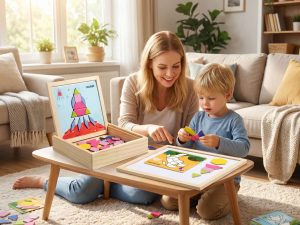
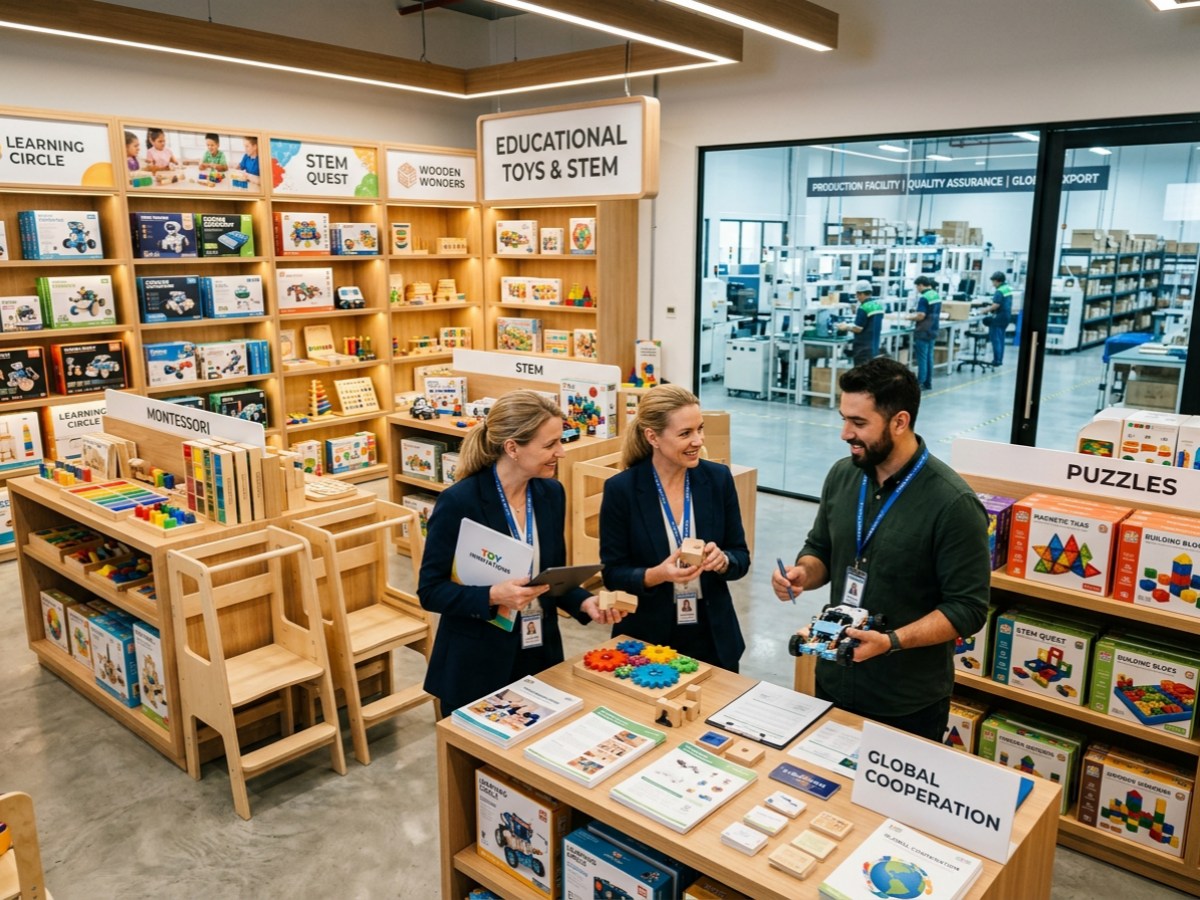
The global educational toy industry has experienced remarkable growth over the past decade as parents, schools, learning centers, and retailers increasingly prioritize products that combine learning objectives with engaging play experiences. According to industry research, the educational toy market is expected to continue expanding as STEM education, hands-on learning, and early childhood development remain key focuses worldwide.
For importers, distributors, retailers, and private-label brands, this growing demand creates significant business opportunities. However, success often depends on one critical factor: finding a reliable Educational Toy Supplier.
While many suppliers can provide attractive catalogs and competitive quotations, not every supplier can consistently deliver product quality, maintain stable lead times, and support long-term product development. As competition within the educational toy industry intensifies, choosing the right Educational Toy Supplier has become a strategic decision rather than a simple purchasing task.
Why Choosing the Right Educational Toy Supplier Matters
Selecting an Educational Toy Supplier affects far more than procurement costs. The supplier directly influences product quality, delivery reliability, inventory planning, and ultimately customer satisfaction.
A delayed shipment during a back-to-school season or holiday sales period can create inventory shortages and lost revenue opportunities. Likewise, inconsistent product quality may result in customer complaints, increased return rates, and damage to brand reputation.
Research shows that companies working with dependable manufacturing partners often experience fewer supply chain disruptions and improved operational efficiency. These benefits become increasingly important as businesses expand product lines or enter new markets.
For this reason, experienced buyers typically evaluate suppliers based on overall business value rather than unit pricing alone. Factors such as manufacturing expertise, communication efficiency, quality consistency, and product development capabilities frequently have a greater impact on long-term profitability than short-term purchasing savings.
What Defines a Reliable Educational Toy Supplier?
Although many manufacturers describe themselves as reliable, buyers should focus on measurable capabilities rather than marketing claims.
Manufacturing Experience and Industry Knowledge
An experienced Educational Toy Supplier often possesses a deeper understanding of educational product requirements, consumer preferences, and market trends.
Manufacturers that have worked with distributors, retailers, schools, and educational brands across multiple countries generally develop stronger problem-solving abilities and more refined production processes. This experience can help customers avoid common sourcing challenges and accelerate product launches.
Beyond manufacturing, knowledgeable suppliers can often provide recommendations regarding product functionality, packaging optimization, and market-specific adaptations. Such support becomes particularly valuable when introducing new products or developing private-label collections.
Production Capacity and Operational Stability
Production capability is another critical consideration. A supplier’s ability to manage increasing order volumes can directly affect business continuity and customer satisfaction.
Rather than evaluating factory size alone, buyers should examine production planning systems, workforce stability, equipment investments, and historical delivery performance.
| Evaluation Area | What Buyers Should Review |
| Production Capacity | Ability to support growing order volumes |
| Manufacturing Equipment | Production efficiency and consistency |
| Workforce Stability | Skilled labor retention and training |
| Lead Time Performance | Historical on-time delivery rates |
| Peak Season Planning | Capacity during high-demand periods |
Suppliers that communicate openly about these operational factors generally demonstrate stronger organizational maturity and greater long-term reliability.
How an Educational Toy Supplier Maintains Product Quality
Product quality remains one of the most important indicators of supplier performance.
For educational toys, quality extends beyond visual appearance. Durability, functionality, and manufacturing consistency all influence the end-user experience and ultimately affect brand reputation.
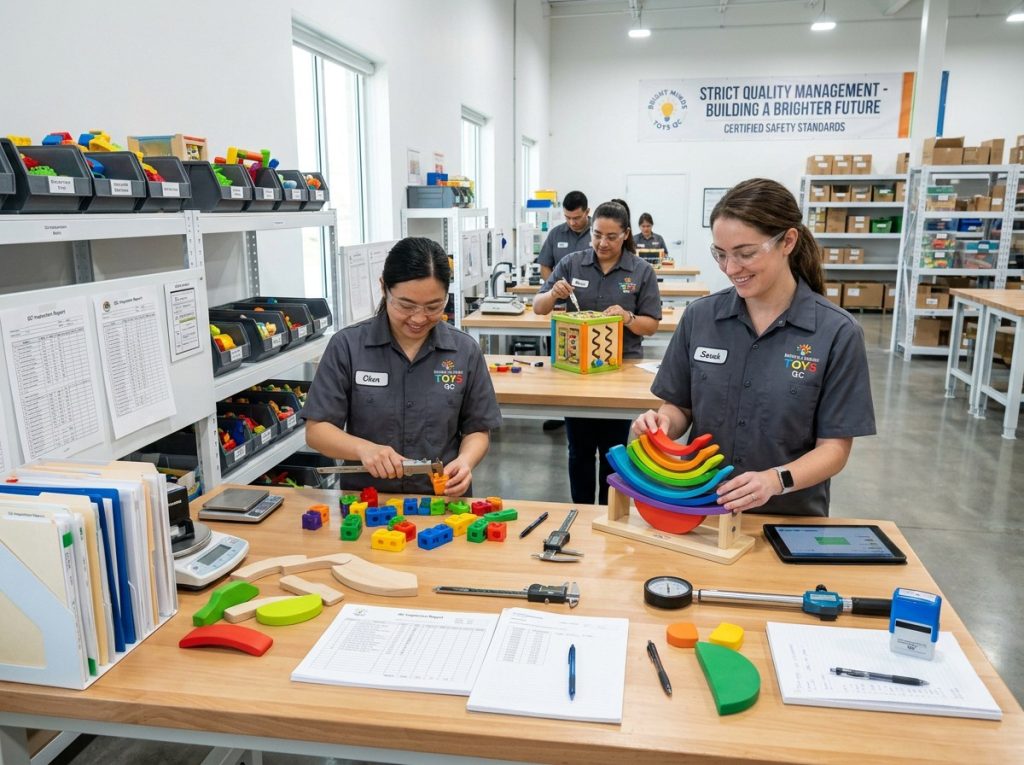
Professional educational toy factories typically implement quality management procedures throughout the production process. Material inspections, in-process quality checks, and final product evaluations help ensure consistent manufacturing standards.
Instead of relying on general quality statements, buyers should seek measurable information. For example, some educational toys undergo durability testing involving more than 5,000 operational cycles, while certain products may be evaluated through drop testing from approximately 1.2 meters to assess structural stability.
These objective benchmarks provide more meaningful insights than broad promotional claims.
Research suggests that product consistency remains one of the strongest drivers of customer retention in the educational toy sector.
Product Development and Educational Value
Leading educational toy manufacturers do more than produce existing designs. They actively participate in product innovation.
As STEM education and experiential learning continue to gain popularity, suppliers increasingly invest in research, prototype development, and user testing. Product concepts are often refined through multiple evaluation stages before entering mass production.
Market data indicates that STEM-related educational products remain among the fastest-growing categories within the industry. Suppliers with strong development capabilities are therefore better positioned to help customers respond to changing market demands and emerging educational trends.
A Common Scenario When Evaluating Suppliers
Many sourcing decisions become clearer when viewed through a real business situation.
Imagine a retailer preparing inventory for the upcoming back-to-school season. After evaluating several manufacturers, the company narrows its options to two potential suppliers offering similar educational toy collections.
One supplier offers a lower quotation, while the other provides detailed production schedules, documented quality control procedures, and historical delivery performance records.
At first glance, the lower-cost option appears more attractive. However, if production delays occur during peak sales periods, inventory shortages could result in missed sales opportunities and dissatisfied customers. In many cases, the financial impact of those disruptions exceeds the savings achieved through lower unit pricing.
This scenario highlights why experienced procurement teams often prioritize supplier reliability, communication quality, and operational stability over initial pricing differences.
What We Have Learned After Working With Global Educational Toy Brands
At Vindstier, we have worked with educational toy distributors, wholesalers, retailers, and private-label brands serving customers across different international markets.
One observation consistently stands out: while many buyers begin supplier discussions focused on pricing, the conversation eventually shifts toward delivery reliability, product consistency, and long-term supply chain stability.
For example, customers launching new educational toy collections often place significant importance on development timelines and production predictability. A delayed launch can affect seasonal promotions, inventory planning, and customer acquisition strategies.
Over the years, we have also seen growing demand for customized educational products. Many businesses are seeking differentiation through exclusive designs, customized packaging, and unique learning concepts rather than competing solely on price.
These experiences reinforce a simple conclusion: the most successful supplier relationships are built on trust, transparency, and consistent performance rather than short-term cost advantages.
Why Many Buyers Source from a China Educational Toy Supplier
China remains one of the world’s largest manufacturing hubs for educational toys.
The country’s mature supply chain ecosystem brings together raw material suppliers, mold developers, packaging manufacturers, and logistics providers, creating a highly efficient production environment.
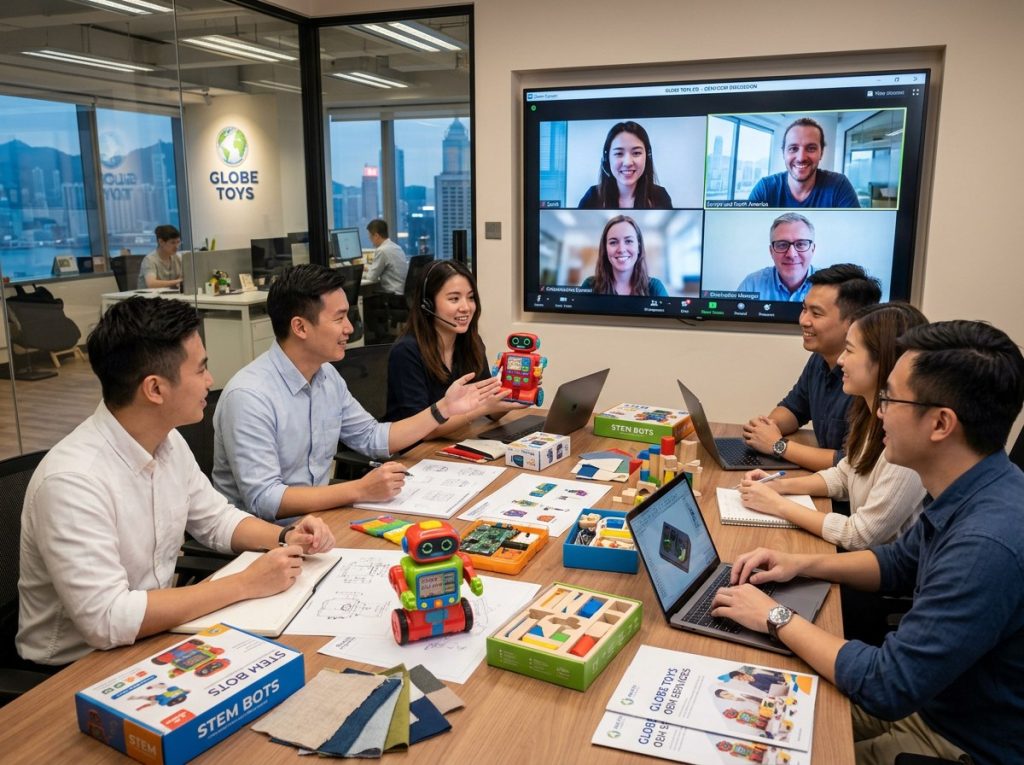
For businesses seeking OEM or ODM solutions, a China-based Educational Toy Supplier often offers advantages in product development speed, manufacturing scalability, and supply chain coordination. The ability to rapidly move from concept design to mass production can be particularly valuable in fast-changing markets.
At Vindstier, our team supports customers throughout the product development process, from concept evaluation and prototype development to production planning and final delivery. This integrated approach helps reduce sourcing complexity while improving project efficiency.
While supplier selection should always be based on individual evaluation criteria, many global buyers continue sourcing from China because of its manufacturing expertise, flexibility, and established infrastructure.
Questions Worth Asking an Educational Toy Supplier Before Cooperation
Evaluating a supplier requires more than comparing quotations.
Buyers should explore topics such as production scheduling, quality management, customization capabilities, and supply chain resilience. Understanding how a supplier manages challenges can provide valuable insight into its operational maturity.
The following framework can help structure supplier evaluations:
| Criteria | Importance Level |
| Manufacturing Experience | High |
| Quality Management | High |
| Product Development Capability | High |
| Communication Efficiency | High |
| Export Experience | Medium-High |
| Production Capacity | High |
| Customization Support | Medium-High |
| After-Sales Service | Medium |
A supplier willing to provide documentation, discuss processes openly, and answer technical questions in detail often demonstrates stronger partnership potential.
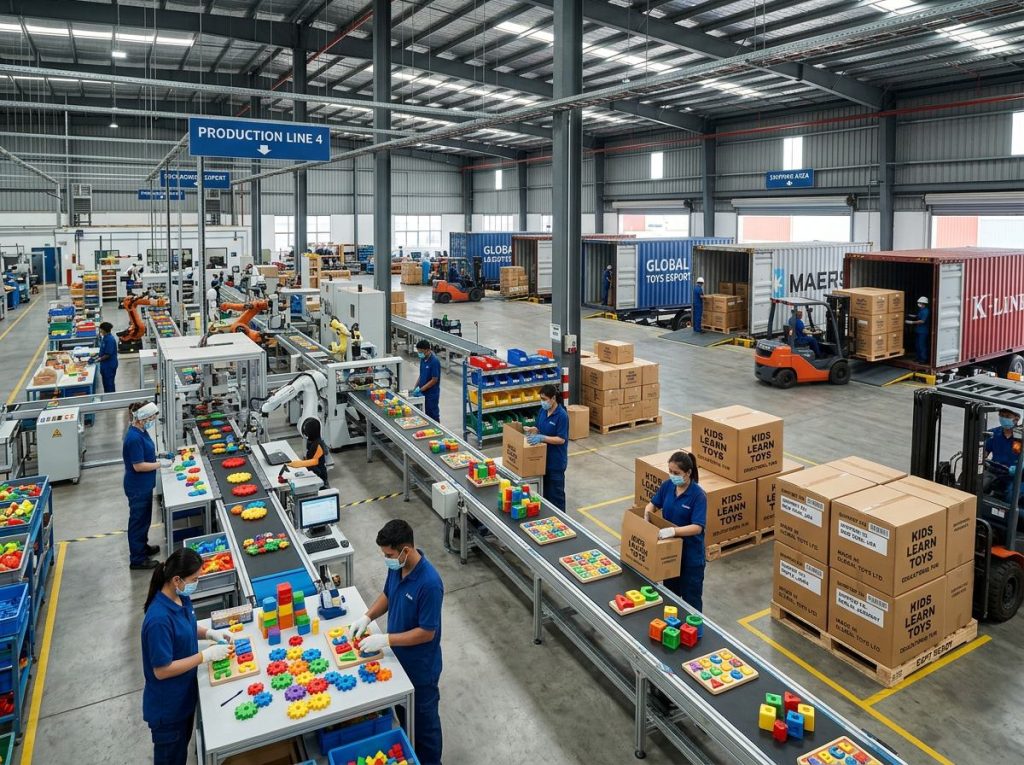
What to Look for in Your Next Educational Toy Supplier
As competition within the educational toy market continues to increase, selecting the right manufacturing partner becomes increasingly important.
Businesses evaluating a new Educational Toy Supplier should request samples, review production capabilities, discuss customization requirements, and examine quality management procedures before placing larger orders.
Equally important is identifying a supplier capable of supporting future growth. A reliable educational toy manufacturer should offer consistent production quality, transparent communication, and ongoing development support as market requirements evolve.
By taking a comprehensive approach to supplier evaluation, businesses can reduce sourcing risks while building stronger foundations for long-term success.
Frequently Asked Questions
How can I verify whether an Educational Toy Supplier is reliable?
A practical approach involves reviewing production capabilities, requesting samples, evaluating communication responsiveness, and examining historical delivery performance. Factory audits and quality documentation can also provide valuable insights.
What is the typical MOQ for educational toys?
Minimum order quantities vary depending on product complexity, manufacturing processes, and customization requirements. Standard products often have lower MOQs than fully customized OEM projects.
Can an Educational Toy Supplier provide OEM and ODM services?
Many manufacturers offer both OEM and ODM solutions. OEM services typically focus on customized branding and packaging, while ODM services may include product design, development, and engineering support.
How long does educational toy development usually take?
Development timelines vary based on product complexity. Projects involving custom molds, prototypes, and packaging design generally require more time than standard catalog products.
Conclusion
Finding a reliable Educational Toy Supplier requires more than comparing product catalogs and quotations. The most successful partnerships are built on manufacturing expertise, quality consistency, operational stability, and a shared commitment to long-term growth.
As the educational toy market becomes increasingly competitive, businesses that choose the right Educational Toy Supplier gain more than a manufacturing partner. They gain access to product innovation, supply chain reliability, and valuable industry expertise.
By carefully evaluating production capabilities, quality management systems, product development resources, and communication practices, buyers can identify a supplier that supports both immediate sourcing needs and future expansion goals. Ultimately, the time invested in supplier selection today can create lasting advantages for years to come.
For businesses seeking an experienced partner in educational toy manufacturing, OEM development, and customized learning products, Vindstier is committed to helping customers transform ideas into market-ready solutions through reliable production, transparent collaboration, and continuous innovation.