
Preschool directors and purchasing teams face persistent confusion when building material inventories: teachers trained in different pedagogical approaches request contradictory resources, creating uncertainty about which investments genuinely support child development versus which simply carry trendy educational labels. A Montessori educator needs self-correcting wooden cylinders; a Reggio-inspired teacher requests loose parts and light tables. Both approaches emphasize hands-on learning and natural materials, yet their material requirements share almost no overlap because they reflect fundamentally different beliefs about how children learn and what materials best support cognitive growth.
Reggio Emilia toys emerge from an Italian educational philosophy emphasizing child-led inquiry, artistic expression, and collaborative meaning-making through open-ended materials. Understanding what distinguishes these materials from Montessori tools—and why those differences create incompatible purchasing requirements—determines whether expensive material investments align with program goals or create costly mismatches between pedagogical intent and classroom reality.
Core Philosophy and Material Requirements
The Reggio Emilia approach originated in post-World War II Italy when educator Loris Malaguzzi and parents collaborated to build preschools emphasizing creativity, community, and child agency. Unlike Montessori’s scientifically systematized developmental progressions, Reggio embraces emergent curriculum—projects that unfold based on children’s questions rather than predetermined lesson sequences. Three core principles shape what qualifies as effective Reggio Emilia toys.
The Hundred Languages Concept
Reggio philosophy asserts children express understanding through multiple “languages”—drawing, building, sculpting, shadow play, music, movement—rather than primarily through words. Materials must support diverse representational modes, allowing children to translate ideas across mediums. Reggio Emilia toys prioritize expressive flexibility over single-purpose educational objectives, making open-ended materials like loose parts, art supplies, and light exploration tools central to the approach. This requires purchasing higher quantities of versatile materials rather than comprehensive sets covering specific developmental domains.
Environment as Third Teacher
Reggio classrooms treat physical space as an active learning agent. Materials are aesthetically arranged to invite investigation, displayed at child height on open shelving, organized by material type (natural objects, wire and fasteners, transparent materials) rather than prescribed activities. Reggio Emilia toys must be visually engaging, tactilely interesting, and combinable in unpredictable ways. The emphasis on beauty reflects the belief that attractive materials communicate respect for children’s work and invite sustained engagement, creating demand for premium storage solutions and aesthetic presentation systems.
Documentation and Social Learning
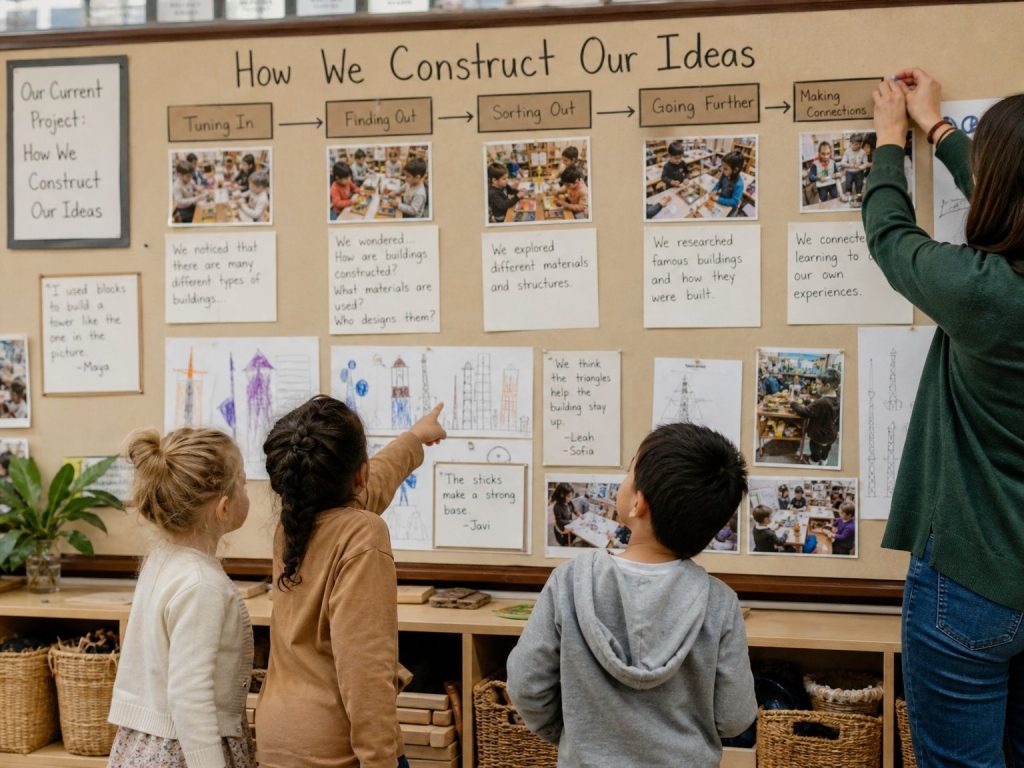
Children work collaboratively on extended projects spanning weeks or months, with teachers documenting learning through photographs, transcribed conversations, and displayed work. Materials support group investigation rather than individual mastery, creating different durability and quantity requirements than single-child-focused approaches. Reggio Emilia toys must withstand simultaneous manipulation by 3-5 children, offer sufficient quantity for collaborative building, and produce results worth documenting—structures that photograph well, processes that reveal thinking, artifacts that demonstrate learning progression.
For program administrators, these principles clarify why Reggio Emilia toys cannot be directly substituted with Montessori materials or conventional classroom toys. The material requirements emerge from distinct beliefs about learning processes, making surface-level material swaps pedagogically incoherent regardless of individual toy quality.
Defining Characteristics of Reggio Emilia Toys
Four material attributes separate authentic Reggio Emilia toys from generic early childhood supplies or materials from other pedagogical traditions.
Open-Ended Design Without Predetermined Outcomes
Reggio Emilia toys provide raw materials for child-directed creation rather than guiding toward specific solutions. Loose parts—buttons, shells, corks, tiles, natural objects—allow infinite combinations without “correct” arrangements. Wire, fabric scraps, and clay take whatever forms children imagine. This contrasts sharply with Montessori’s self-correcting materials that have single correct placements and conventional toys with obvious intended uses. The open-ended quality means the same materials support vastly different projects, reducing total quantity needed while increasing cognitive demand as children envision possibilities rather than following implied instructions.
Natural and Authentic Materials

Reggio philosophy emphasizes real, natural materials over plastic replicas, believing authentic objects communicate respect and provide richer sensory information. Wood, metal, glass, stone, shells, pinecones, clay, and fabric dominate material collections. Even manufactured items lean toward industrial authenticity—actual pulleys, real magnifying glasses, working flashlights—rather than toy versions with simplified mechanisms. This material authenticity provides genuine sensory feedback (weight, texture, temperature, sound) that builds accurate understanding of physical properties while communicating that children’s work merits real tools rather than infantilized substitutes.
Transparent and Light-Manipulating Materials
Light exploration holds special significance in Reggio pedagogy, leading to emphasis on transparent and translucent materials: colored acrylic tiles, glass gems, transparent fabric, cellophane, colored water in clear containers. Light tables serve as central exploration stations where children investigate transparency, color mixing, shadow formation, and visual layering. This material category connects scientific investigation with artistic expression and mathematical understanding, creating market opportunities for premium light exploration tools and transparent construction materials.
Aesthetic Quality and Careful Presentation
Materials are displayed in attractive baskets, wooden trays, or clear containers, organized by type or color, creating visual appeal that invites interaction. Unlike the primary-color plastic abundance of conventional classrooms, Reggio environments feature earth tones, natural materials, and carefully curated quantities. This aesthetic intentionality reflects the belief that beautiful environments communicate respect and that material presentation influences engagement quality, commanding higher price points than conventional plastic alternatives while appealing to programs prioritizing environmental design as pedagogical strategy.
How Reggio Emilia Toys Differ From Montessori Materials
Both approaches emphasize hands-on learning and minimize plastic toys, creating surface similarities that obscure fundamental differences in material design, intended use, and learning objectives.
| Dimension | Reggio Emilia Toys | Montessori Materials | Purchasing Implication |
|---|---|---|---|
| Purpose | Support open-ended exploration and creative expression | Teach specific skills through structured sequences | Reggio requires higher quantities of versatile materials; Montessori needs comprehensive sets covering developmental domains |
| Correct Use | No predetermined “correct” way; children determine purposes | Single correct method demonstrated through formal presentation | Reggio materials need durability for experimental use; Montessori materials need precision for specific feedback |
| Adult Role | Co-investigator and documenter | Preparer and guide | Reggio requires materials that photograph well for documentation; Montessori needs materials that function independently |
| Learning Mode | Collaborative group projects | Individual work cycles | Reggio needs higher per-material quantities for simultaneous use; Montessori needs individual sets to prevent waiting |
| Outcome Focus | Process and creative expression valued over product | Skill mastery and independence are primary goals | Reggio accepts consumable materials (paint, clay); Montessori prioritizes permanent reusable tools |
| Material Organization | By material type (natural objects, metals, transparent items) | By developmental domain (sensorial, math, language, practical life) | Different shelving systems and storage requirements for inventory management |

The most significant difference: Montessori materials guide children toward specific understandings through built-in controls of error that provide immediate feedback without adult intervention. Reggio Emilia toys offer no predetermined destination—value lies in children’s investigative process and representational choices rather than arriving at adult-anticipated conclusions. This philosophical divide creates practical tensions in mixed-approach programs where materials from one tradition cannot function in the other’s pedagogical context.
Material Implementation Requirements
Owning appropriate materials represents only the first step toward authentic Reggio practice. Material deployment, documentation methods, and environmental organization determine whether Reggio Emilia toys deliver intended learning potential.
Material Provocations and Environmental Setup
Rather than presenting all materials simultaneously, Reggio educators create “provocations”—intentional material arrangements that invite specific investigations without prescribing outcomes. Effective provocations balance structure with openness, requiring flexible material inventories that can be reconfigured based on emergent curriculum rather than fixed weekly lesson plans. This demands higher initial material quantities than might seem necessary, as diverse combinations support varied project directions.
Documentation Capabilities
Reggio projects unfold over weeks or months as children return repeatedly to deepen investigations. Documentation through photographs, transcribed conversations, and displayed work makes learning visible. This intensity means Reggio Emilia toys must produce documentable results—constructions that photograph meaningfully, processes that reveal cognitive development, artifacts that demonstrate progression over time. Materials that leave no trace miss the documentation emphasis central to authentic Reggio practice, making photography equipment and display systems essential budget line items beyond material costs alone.
Teacher Facilitation and Professional Development
Reggio teachers position themselves as curious learners alongside children rather than authority figures with predetermined answers. This facilitation style requires materials that sustain adult interest and support genuine inquiry. For professional development budgets, this teacher role shift often requires more investment than material purchases alone. Teachers trained in direct instruction or Montessori’s prepared presentations need substantial support to become comfortable with emergent facilitation, making implementation costs extend beyond material acquisition to pedagogical coaching.
Programs adopting Reggio materials without adjusting staffing patterns (adult-child ratios below 1:8 strain the observation and documentation demands) or providing adequate teacher training often see materials underutilized because educators lack capacity for the responsive facilitation that activates material potential.
Evaluating Material Effectiveness
Investment in Reggio Emilia toys generates returns only when materials demonstrably support extended investigation, creative expression, and collaborative meaning-making.
Sustained return engagement across days: Effective Reggio Emilia toys draw children back repeatedly across multiple days or weeks as projects deepen. Materials that children abandon after initial exploration fail to support the extended investigations that characterize authentic Reggio practice.
Diverse representational uses: Strong Reggio materials support multiple “languages”—children use the same materials in varied ways across projects. Materials that children use only one way suggest overly prescriptive designs incompatible with open-ended philosophy.
Quality of collaborative interaction: Reggio Emilia toys should facilitate rather than impede social learning. Materials generating frequent conflicts over access or creating competition indicate insufficient quantities or designs that don’t support parallel or collaborative use.
Documentation richness: Materials should produce artifacts and processes worth documenting. Teachers can assess material value by examining whether children’s work reveals thinking, demonstrates skill progression, or captures learning moments worth sharing with families.
Implementation Boundaries and Common Mistakes
Even well-selected Reggio Emilia toys face limitations that programs must acknowledge for realistic expectations.
Staffing and facilitation demands: Reggio approaches demand substantially higher adult facilitation than Montessori’s independent work cycles or conventional free-play models. Teachers must observe closely, document extensively, and respond thoughtfully to emerging interests—time requirements that strain inadequate adult-child ratios.
Cultural and contextual translation: Reggio’s emphasis on aesthetic beauty, lengthy project timelines, and extensive documentation reflects specific cultural values that don’t automatically transfer. Programs in high-pressure academic environments or communities prioritizing measurable skill acquisition may face parent resistance to process-focused approaches regardless of material quality.
Cumulative material costs: While individual Reggio Emilia toys often cost less than specialized Montessori materials, the quantities needed (multiple sets of loose parts, extensive natural material collections, comprehensive art supplies, documentation equipment) and ongoing consumable expenses (clay, paint, paper for extended projects) create budget demands that catch unprepared programs by surprise.
Common purchasing mistakes: Buying insufficient quantities for collaborative work forces turn-taking that contradicts simultaneous investigation principles; prioritizing novelty over versatility creates unused special-purpose items; neglecting documentation tools (cameras, display materials, storage for works-in-progress) prevents the visible learning that gives Reggio projects coherence; selecting materials too fragile for experimental use leads to teacher anxiety that restricts open-ended exploration.
Conclusion
Reggio Emilia toys emerge from a distinct educational philosophy valuing child-led inquiry, creative expression, and collaborative meaning-making over predetermined skill sequences. Understanding what makes materials authentically Reggio-compatible—open-ended design, natural authenticity, light-exploration potential, and aesthetic intentionality—prevents costly purchasing mistakes where materials from incompatible traditions get forced into inappropriate pedagogical contexts.
The approach differs fundamentally from Montessori in purpose (exploration versus skill mastery), adult role (co-investigator versus guide), learning mode (collaborative projects versus individual work), and material organization (by type versus developmental domain). These differences create practical implications for material quantities, durability requirements, documentation capabilities, and teacher facilitation demands that affect both upfront investment and ongoing operational costs.
For purchasing decision-makers, the key lies not in finding universally superior materials but in selecting tools that match specific pedagogical commitments and support intended learning processes. Programs should evaluate material budgets alongside staffing capacity, professional development resources, and cultural alignment with process-oriented learning before committing to Reggio implementation, as material success depends equally on pedagogical infrastructure and product quality.