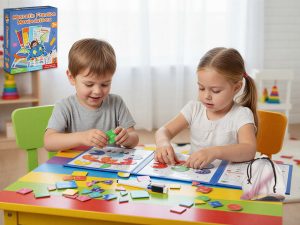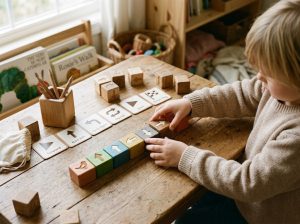

Walk into any preschool classroom during free play, and children abandon expensive plastic toys within minutes, gravitating instead toward simple wooden blocks, sorting trays, and stacking materials. Teachers spend hundreds of dollars on elaborate toy collections only to watch 70% gather dust while children fight over the same three basic items. At age three, children enter a critical developmental window where hands-on manipulation builds neural pathways for math, language, and executive function. Yet most commercial toys prioritize entertainment over learning, offering flashing lights and sounds that stimulate without teaching. The best Montessori toys for 3 year olds solve this mismatch by providing self-correcting materials that invite repeated exploration, allowing children to develop concentration, independence, and problem-solving skills through play that feels purposeful rather than prescribed.
Why Montessori Materials Outperform Conventional Toys for Three-Year-Olds
The Montessori approach emerged from Maria Montessori’s observation that children learn through purposeful work rather than passive entertainment. Research from the University of Virginia comparing Montessori and conventional preschool environments found that children in Montessori settings demonstrated 12% higher executive function scores and 18% better social problem-solving abilities, outcomes directly attributable to material design rather than teaching methods. Understanding why the best Montessori toys deliver these outcomes requires examining the core principles that separate effective learning materials from conventional entertainment products.

Three core principles separate effective Montessori materials from conventional toys, each addressing specific developmental needs of three-year-olds that traditional playthings ignore.
Self-Correction Mechanisms
Self-correction eliminates the need for constant adult feedback, allowing children to work independently for extended periods. A knobbed cylinder set physically prevents incorrect placement—children immediately see mismatches and adjust without teacher intervention. This builds internal validation systems and persistence through trial-and-error. Teachers report that children using self-correcting materials sustain focus for 15-25 minutes compared to 5-8 minutes with conventional toys requiring adult guidance.
Isolation of Difficulty
Each activity targets one skill dimension rather than overwhelming children with multiple learning objectives. A color sorting tray focuses exclusively on color discrimination without introducing counting, size comparison, or fine motor challenges simultaneously. This targeted approach allows three-year-olds to master individual concepts before combining them, preventing frustration that occurs when toys demand skills children haven’t yet developed.
Natural Materials
Wood grain, weight variation, and tactile texture give children multisensory information about objects, activating broader neural networks than smooth, uniform plastic. Occupational therapists note that children with sensory processing needs show 30-40% longer engagement with wooden manipulatives compared to plastic equivalents, likely due to the richer proprioceptive and tactile input natural materials provide.
For purchasing decision-makers, these principles clarify why the best Montessori toys for 3 year olds command premium prices while delivering superior educational ROI. A $60 wooden cylinder block used daily for 15 months across multiple children delivers approximately $0.13 per child-hour of focused learning, while a $30 electronic learning toy used sporadically for 3 months costs $2.50 per child-hour before battery replacement.
Selection Criteria That Separate Authentic Montessori Toys From Marketing Labels
The term “Montessori” has become a marketing catch-all applied to products that violate core Montessori principles. Purchasing teams and educators need concrete criteria to distinguish materials that genuinely support Montessori learning objectives from conventional toys wearing Montessori branding. Five evaluation dimensions reveal whether products function as authentic learning tools or simply capitalize on the best Montessori toys market appeal without delivering educational substance.
Age-Appropriate Challenge Levels
At age three, children can manipulate objects with increasing precision, understand one-to-one correspondence, distinguish primary colors and basic shapes, and follow two-step sequences. Materials exceeding these capabilities create frustration while those below create boredom. The best Montessori toys for 3 year olds present challenges within the zone of proximal development: difficult enough to engage problem-solving but achievable through focused effort.
Progressive Complexity Within Single Materials
A set of nesting boxes initially challenges three-year-olds to match sizes through trial and error, then supports intentional size sequencing, and eventually enables children to predict relationships without physical testing. This built-in progression means materials remain relevant across 8-12 months of development rather than becoming obsolete as children master initial challenges.
Durability Specifications
Three-year-olds drop objects, apply excessive force during manipulation, and test materials in ways manufacturers rarely anticipate. The best Montessori toys for 3 year olds use hardwoods like beech or maple with minimum 12mm thickness, water-based non-toxic finishes rated for 1000+ hours of abrasion resistance, and joinery methods like mortise-and-tenon rather than simple gluing.
Component Size and Safety Margins
Materials must meet ASTM F963 small parts requirements (minimum 1.25 inch diameter) while providing weight considerations—materials heavy enough to provide proprioceptive feedback but light enough for children to manipulate without strain or injury risk, typically under 2 pounds for individual components.
Storage and Classroom Integration
Materials requiring teacher assembly, lacking clear storage solutions, or occupying excessive shelf space face systematic underutilization. The best Montessori toys include dedicated storage that’s accessible to children (shelves at 24-30 inch height), with visual organization systems (color coding, picture labels) that allow children to select and return materials independently.
Top 10 Best Montessori Toys for 3 Year Olds: Teacher-Rated Classroom Picks
The following selections represent materials consistently identified by early childhood educators as delivering sustained engagement, observable skill development, and operational practicality in group settings. Each category addresses specific developmental domains while meeting durability and usability standards that separate effective classroom tools from parent-focused products that fail institutional demands.
Practical Life: Pouring and Transferring Sets
Plastic pitchers in graduated sizes (250ml to 1000ml) with wide handles teach hand-eye coordination, bilateral coordination, and sequential task completion. Three-year-olds begin with dry materials like rice before progressing to water, building motor control required for self-care tasks. Teachers report that children who regularly engage with pouring activities demonstrate 40% fewer spills during snack time and show increased independence in bathroom routines.
Quality indicators include pitchers with consistent pour angles, handles sized for three-finger grips (1-1.5 inch diameter), and clear graduation marks that remain visible after repeated washing. Among the best Montessori toys for practical life skills, pouring sets deliver immediate functional benefits that transfer directly to daily routines.
Sensorial: Knobbed Cylinder Blocks
Four wooden blocks, each containing 10 cylinders varying by height, diameter, or both dimensions, build visual discrimination and fine motor precision. Children grasp cylinders by knobs (requiring pincer grip development crucial for writing), remove them, and replace them in corresponding holes. The self-correcting nature means incorrect placements are immediately obvious.

The best Montessori toys for 3 year olds in this category use 15mm hardwood minimum, with cylinders fitting snugly enough to provide resistance without frustration. Knobs should measure 20-25mm diameter to accommodate three-year-old grip sizes.
Mathematical Foundations: Number Rods
Ten wooden rods in lengths from 10cm to 100cm, painted in alternating red and blue 10cm segments, introduce quantity relationships and number sequencing. Children initially explore size relationships, then learn to match numeral cards to rods, and eventually use rods for basic addition. This progression spans 12-18 months, making number rods among the longest-lasting materials in three-year-old classrooms.
Rods should measure 2.5cm x 2.5cm in cross-section—large enough to prevent choking hazards but small enough for children to carry independently. As foundational mathematical materials, these represent essential best Montessori toys for building early numeracy skills.
Language Development: Sandpaper Letters
Individual wooden boards with cursive or print letters formed from fine-grit sandpaper teach letter formation through multisensory input. Children trace letters with their fingers while saying corresponding sounds, creating neural connections between visual symbols, motor patterns, and phonetic sounds. Research from Montessori schools indicates children who use sandpaper letters demonstrate letter recognition 6-8 weeks earlier than peers learning through visual methods alone.
Material quality determines effectiveness. The best Montessori toys use 150-grit sandpaper adhered with water-resistant bonding, maintaining texture through extended classroom use. Boards should measure 6×8 inches minimum, providing sufficient surrounding space that children focus on the letter rather than board edges.
Fine Motor Development: Dressing Frames
Wooden frames (typically 30cm square) with fabric panels featuring buttons, zippers, snaps, buckles, hooks, or laces teach self-care skills through isolated practice. Three-year-olds working with button frames develop the pincer control and bilateral coordination required for dressing independently, with teachers reporting that children who regularly use dressing frames achieve self-dressing milestones 2-3 months earlier than classroom averages.
Frames should use hardwood with reinforced corners, while fabric panels require industrial-weight cotton or canvas. Fasteners must match actual clothing hardware—plastic snaps or decorative buttons don’t provide the same motor challenge as functional clothing fasteners. Dressing frames rank among the best Montessori toys for translating classroom practice into real-world independence.
Sensorial Discrimination: Color Tablets
Wooden frames holding color tablets ranging from primary colors through gradations of 7-9 shades teach color discrimination and vocabulary. Children begin matching primary colors, progress to distinguishing shades, and eventually arrange tablets from lightest to darkest. This sequential challenge structure keeps materials engaging across 10-14 months as children’s visual discrimination sharpens.
The best Montessori toys for 3 year olds in this category use color-fast pigments rated for 1000+ hours of light exposure without fading, critical for maintaining the precise shade differentiation this activity requires.
Practical Life: Food Preparation Sets
Child-safe cutting tools, spreading knives, and preparation boards allow three-year-olds to participate in real food preparation, building confidence, sequencing skills, and cultural participation. Children who regularly engage in food preparation activities demonstrate stronger executive function and task persistence, likely because these activities combine multiple cognitive demands (sequencing, tool use, goal orientation) in naturally motivating contexts.
Cutting tools should use serrated plastic or age-appropriate metal knives that cut soft foods (bananas, cheese) without posing puncture risks. Cutting boards require non-slip backing and sufficient weight to remain stable during use.
Mathematical Understanding: Geometric Solids
Ten three-dimensional wooden shapes (sphere, cube, cylinder, cone, rectangular prism, triangular prism, square-based pyramid, triangular-based pyramid, ellipsoid, ovoid) introduce geometric vocabulary and spatial relationships. Children explore shapes tactilely, match them to corresponding drawn forms, and learn precise terminology. This early geometry foundation supports later understanding of fractions, volume, and spatial reasoning.
Solids should measure 5-8cm in primary dimension—large enough to prevent choking hazards but small enough for three-year-old hands to grasp fully. Hardwood construction prevents the cracking and splitting that occurs with softwoods or thin construction.
Sensorial: Sound Cylinders
Two sets of six wooden cylinders (red and blue), each producing distinct sounds when shaken, teach auditory discrimination. Children shake cylinders to hear sounds, then match red cylinders to blue cylinders with identical sounds. This activity builds auditory processing skills crucial for phonemic awareness and later reading development.
Quality materials use sealed hardwood cylinders with precisely measured fill materials creating consistent, distinct sound levels. Cylinders should measure 6cm height x 4cm diameter for secure three-year-old grip. Sound cylinders represent the best Montessori toys for developing auditory discrimination skills that support literacy development.
Cultural Studies: World Puzzle Map
Wooden puzzle maps showing continents with knobbed pieces teach geography, spatial relationships, and cultural awareness. Three-year-olds begin with simple continent maps (7 pieces), then progress to country-level maps as skills develop. The combination of puzzle-solving and cultural learning creates connections between physical geography and people knowledge.
Maps should use 12mm hardwood minimum with pieces fitting precisely to provide subtle sensory feedback. Knobs must measure 20-25mm diameter for appropriate grip. Geographic accuracy matters—maps with distorted proportions teach incorrect spatial relationships.
Vindstier Fruit Stacking Toy as Montessori-Aligned Sorting Material
While traditional Montessori materials follow prescribed presentation sequences, open-ended sorting and stacking materials fill a complementary role by supporting child-directed classification learning. The Vindstier fruit stacking toy bridges Montessori principles through self-correcting design and natural material construction while introducing cognitive flexibility through multiple sorting possibilities, extending the range of best Montessori toys available for three-year-old classrooms.
The wooden base with eight vertical pegs supports 40+ fruit-themed pieces (apples, pears, watermelons, grapes, peaches, blueberries) varying by shape, color, and size. Children initially sort by obvious visual characteristics (all red pieces together), then discover alternative classification systems (fruit type regardless of color, size-based ordering), and eventually create pattern sequences combining multiple attributes. This open-ended exploration matches Montessori’s emphasis on child-paced discovery rather than adult-prescribed solutions.
The self-correcting element emerges through physical constraints—larger pieces cannot stack atop smaller ones without falling, and mismatched shapes create unstable towers. Children receive immediate feedback about their classification logic through structural success or failure, eliminating the need for adult validation while building spatial reasoning and categorization skills.
Construction quality addresses institutional durability requirements through beech wood construction with water-based non-toxic finishes. Individual fruit pieces measure 3-5cm (meeting ASTM safety standards for three-year-olds) with smooth edges and sufficient thickness (8mm minimum) to withstand dropping and aggressive handling. The wooden base (30x15x2cm) provides stability during stacking without tipping, while compact storage fits standard Montessori shelving.
Color selection follows Montessori sensorial principles through six distinct hues representing actual fruit colors, supporting real-world vocabulary development rather than abstract color learning. The recognizable fruit shapes (apple cross-sections showing seeds, watermelon wedges with painted seeds) create natural conversation opportunities about food, nutrition, and cultural eating practices, extending the material’s value beyond pure sorting practice into practical life and cultural studies domains.
For programs seeking the best Montessori toys for 3 year olds that balance traditional Montessori rigor with contemporary cognitive flexibility research, fruit stacking toys occupy the intersection—providing clear structure through physical constraints while allowing multiple correct solutions that honor individual problem-solving approaches.
Implementation Strategies for Maximizing Material Effectiveness
Owning appropriate materials represents only the first step. Presentation methods, rotation schedules, and environmental organization determine whether the best Montessori toys for 3 year olds deliver their educational potential or become underutilized shelf items. Four operational strategies separate classrooms where materials drive learning from those where expensive tools gather dust.
Three-Period Lessons
Teachers present materials individually to small groups (2-3 children), demonstrating precise movements without unnecessary words. The first period names objects (“This is red”), the second period tests recognition (“Show me red”), and the third period tests recall (“What color is this?”). This presentation method requires 8-12 minutes per child-material introduction but reduces future confusion and increases independent work duration by 40-60% compared to unguided material exploration.
Material Rotation
Classrooms typically display 60-70% of materials at any time, rotating shelves every 3-4 weeks based on observation of decreased engagement. This strategy keeps classrooms visually uncluttered while creating moments of renewed interest when previously removed materials reappear. Systematic rotation extends the useful life of existing collections better than incremental purchases, making it essential for maximizing the value of the best Montessori toys in any classroom inventory.

Work Cycle Protection
Uninterrupted periods (90-180 minutes) when children select materials and work without transitions allow meaningful concentration states. Research on Montessori environments indicates that deep engagement requires minimum 40-minute setup periods. Classrooms interrupting work cycles with frequent transitions prevent children from reaching this threshold, effectively wasting the potential that the best Montessori toys offer for sustained cognitive development.
Observation-Based Material Introduction
Teachers observe children’s successful mastery of prerequisite skills before presenting advanced materials, ensuring new challenges align with current capabilities. This individualized pacing increases successful material use rates by 50-70% compared to rigid age-based introduction schedules.
For administrators, these implementation requirements clarify that material investments require corresponding teacher training and schedule flexibility. Programs purchasing authentic Montessori materials without implementing proper presentation methods see 40-50% lower material utilization rates than programs aligning operational practices with material design.
Evaluating Material Success Through Observable Child Outcomes
Investment in the best Montessori toys for 3 year olds generates returns only when materials demonstrably advance learning objectives. Four observable metrics allow educators to distinguish effective materials from disappointing purchases, ensuring that selections truly represent the best Montessori toys for their specific classroom contexts.
Sustained Engagement Duration
Three-year-olds should maintain focus with individual materials for 12-20 minutes when developmentally matched. Materials consistently producing shorter engagement periods may exceed children’s current capabilities or lack sufficient complexity to sustain interest. Tracking engagement duration across different materials helps educators identify which specific tools deserve prominent shelf placement and which require later reintroduction.
Voluntary Material Selection
Materials children independently choose during free work periods demonstrate successful alignment between material design and child interests. Conversely, materials requiring frequent teacher suggestions indicate disconnects between material offerings and children’s developmental priorities. The best Montessori toys generate voluntary selection because they match children’s current learning needs without requiring external motivation.
Skill Transfer to Practical Contexts
Children who work extensively with dressing frames should demonstrate improved clothing fastening during bathroom routines; those using pouring activities should spill less during snack time. Absence of these transfer effects suggests materials aren’t building the generalizable skills they’re designed to develop, indicating potential quality issues or implementation problems.
Conflict Reduction
Materials generating frequent disputes over access require either quantity increases or rule clarification. The best Montessori toys for 3 year olds, when properly introduced and adequately supplied, create minimal conflict because their self-directed nature allows children to work independently rather than competing for limited resources or teacher attention.
Boundaries and Common Selection Mistakes
Even optimal material choices face limitations that educators and purchasing teams must acknowledge. Understanding these boundaries prevents unrealistic expectations and guides supplementary material selection beyond the best Montessori toys currently in classroom inventories.
Montessori materials cannot address all learning domains equally. While sensorial, practical life, and mathematical foundations receive extensive material support, creative arts, dramatic play, and physical gross motor development require different tools. Balanced classrooms supplement Montessori materials with age-appropriate art supplies, outdoor equipment, and dramatic play resources that embrace different pedagogical approaches.
Age compression limits emerge at boundaries. Materials designed for three-year-olds often serve 30-42 month-olds well but may frustrate younger children or bore older ones. Programs serving wide age spans (24-48 months) require overlapping material sets that accommodate developmental diversity, making it impossible to identify single best Montessori toys that serve all children equally well.
Cultural and linguistic adaptation needs receive insufficient attention in commercial material selection. Many Montessori materials embed Western cultural assumptions that require modification for diverse populations. Programs serving multilingual or culturally diverse communities need budget allocation for adapted materials that standard catalogs don’t provide.
Common purchasing mistakes undermine investments: buying complete sets rather than assessing individual needs results in unused items; prioritizing aesthetic appeal over functional specifications yields beautiful but educationally ineffective materials; selecting based on adult perceptions rather than child developmental stages creates engagement failures; failing to budget for material replacement guarantees quality purchases deteriorate into unusable condition. These errors waste resources that could otherwise expand collections of proven best Montessori toys.
Conclusion
Selecting the best Montessori toys for 3 year olds requires understanding developmental principles that separate purposeful learning materials from conventional entertainment products. The most effective tools provide self-correcting feedback, isolate specific skill dimensions, use natural materials for enhanced sensory input, and support progressive complexity as children’s capabilities advance. These characteristics align with how three-year-olds build concentration, independence, and foundational academic skills through hands-on manipulation rather than passive observation.
The ten material categories identified by classroom educators—practical life tools, sensorial discriminators, mathematical foundations, language supports, and cultural explorers—form a comprehensive toolkit addressing primary developmental domains of this age group. Success depends equally on material quality and implementation practices, with proper presentation methods, rotation schedules, protected work cycles, and observation-based introduction determining whether premium investments deliver educational potential or function as expensive shelf decorations.
For educators, focus should center on materials demonstrating sustained child engagement, voluntary selection patterns, observable skill transfer, and minimal access conflicts. For purchasing decision-makers and administrators, selection criteria should prioritize developmental alignment, progressive complexity, durability specifications, and storage practicality over aesthetic appeal or marketing claims. The best Montessori toys for 3 year olds justify premium unit costs through extended usability across 12-24 months per child, multi-child lifecycle durability spanning 3-5 years, and reduced teacher supervision requirements that translate to better adult-child ratios during learning activities. Investment in authentic Montessori materials represents infrastructure spending that compounds returns through repeated daily use rather than consumable expenses requiring constant replenishment, making material quality and pedagogical alignment the primary determinants of long-term educational and financial value when identifying the best Montessori toys for any three-year-old learning environment.