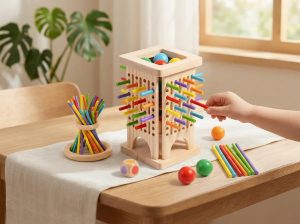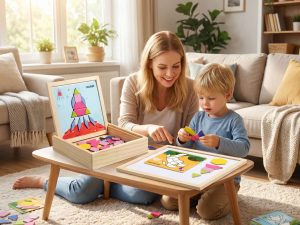
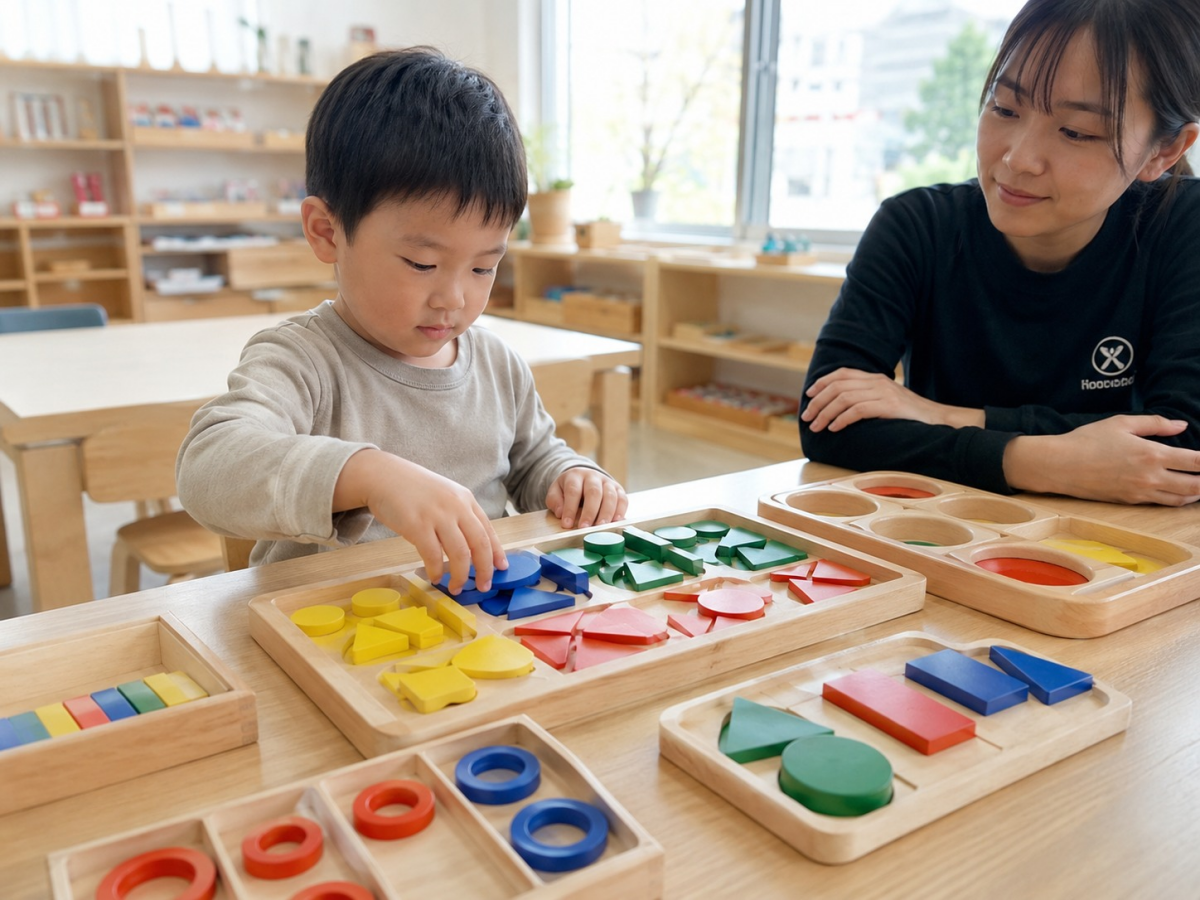
Early math learning begins long before children recognize numbers or solve simple equations. Children first learn to compare, classify, match, and recognize patterns through everyday experiences. This is why Sorting Toys have become an essential resource in many preschool classrooms, Montessori environments, and early learning centers. Rather than focusing only on counting, Sorting Toys encourage children to explore logical relationships through hands-on play, helping them develop the cognitive skills that support mathematics in later years.
Research in early childhood education suggests that classification, sequencing, and pattern recognition are among the strongest predictors of future mathematical achievement. Educational experts also emphasize that children learn mathematical concepts more effectively when they manipulate physical objects instead of relying solely on verbal instruction. From wooden sorting toys used in Montessori classrooms to colorful educational manipulatives designed for preschool math activities, these learning tools have become widely recognized for supporting both cognitive development and fine motor skills.
This article objectively evaluates whether Sorting Toys improve early math learning, examines the research behind their educational benefits, and explains what educators, distributors, and educational toy buyers should consider when selecting high-quality products.
Why Sorting Toys Improve Early Math Learning
Children develop mathematical thinking by exploring relationships before they understand numbers. They naturally notice similarities, identify differences, and organize objects into meaningful groups. These early experiences gradually become the foundation for counting, measurement, geometry, and problem-solving.
According to research published by the National Association for the Education of Young Children (NAEYC), activities involving classification and pattern recognition help strengthen logical thinking and support children’s understanding of mathematical concepts. Instead of memorizing answers, children learn how objects relate to one another, making mathematics more meaningful from the beginning.
Many preschool educators also observe that children remain engaged with sorting activities longer than traditional worksheet exercises because the learning process feels like exploration rather than formal instruction. This sustained engagement creates more opportunities to practice reasoning, language development, and decision-making within the same activity.
For example, when children receive a collection of colored wooden blocks, they may initially organize them by color. After completing that task, they often discover another possibility, such as sorting by shape or size. The same materials can therefore introduce multiple mathematical ideas without requiring additional teaching resources. This flexibility explains why educational sorting toys continue to be widely used in early childhood education.
Research suggests that children who regularly participate in classification and pattern-building activities often demonstrate stronger mathematical reasoning during preschool and kindergarten assessments.
Mathematical Concepts Developed Before Counting
Long before children begin adding or subtracting numbers, they are already developing mathematical understanding through observation and comparison. Activities with Sorting Toys naturally introduce concepts such as equality, quantity, sequencing, and categorization.
Rather than presenting mathematics as isolated facts, sorting activities encourage children to discover relationships independently. This process supports conceptual understanding instead of simple memorization, making later mathematical learning more intuitive.
How Sorting Toys Develop Essential Math Skills
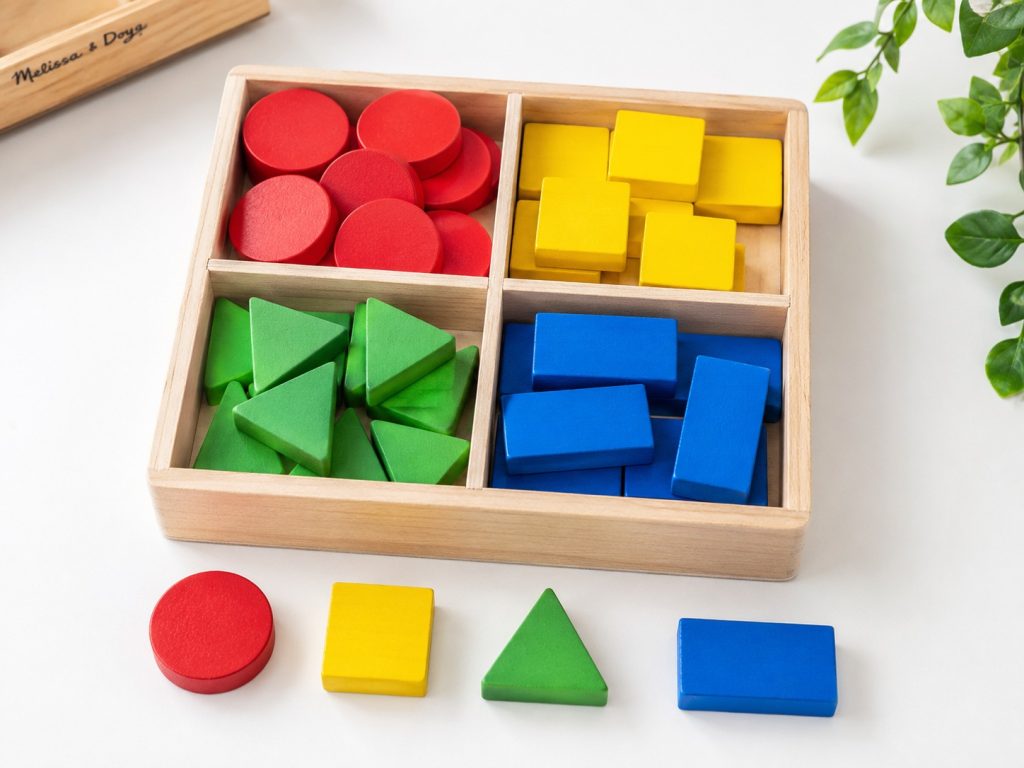
The educational value of Sorting Toys comes from their ability to combine several learning objectives within a single activity. Every decision children make—whether comparing colors, recognizing shapes, or grouping similar objects—requires observation, logical thinking, and problem-solving.
Developmental psychologists have long argued that children build stronger conceptual knowledge when they physically manipulate learning materials. This is one reason hands-on learning remains a central principle in many early childhood education programs.
Classification Encourages Logical Thinking
Classification is often considered one of the earliest mathematical skills. When children separate objects according to shared characteristics, they begin understanding that one collection can be organized in different ways depending on the chosen rule.
Imagine a classroom activity using forty-eight sorting pieces in six different colors and four geometric shapes. One child may decide to organize every object according to color, while another chooses to group them by shape. Both solutions are correct because each follows a logical rule. Through this process, children learn that mathematics often involves reasoning rather than memorizing a single answer.
Pattern Recognition Supports Future Mathematical Learning
Pattern recognition is another important outcome of using Sorting Toys. Once children become comfortable with simple classification, they naturally begin arranging objects into predictable sequences.
A child may create a pattern such as: Blue – Yellow – Blue – Yellow
After mastering this sequence, they often experiment with more complex arrangements involving multiple colors or shapes. Research indicates that early experiences with identifying and extending patterns are closely associated with later success in algebraic reasoning because children begin recognizing predictable relationships instead of viewing each object independently.
Sorting Toys Strengthen Number Sense
Although Sorting Toys are not designed primarily for arithmetic, they help children understand quantities in practical ways. While organizing objects into groups, children naturally compare which collection contains more pieces, fewer pieces, or an equal number. These comparisons introduce important mathematical vocabulary before formal calculations begin.
Teachers frequently extend these activities by asking children to estimate group sizes, count the objects after sorting, or explain why one category contains more items than another. Such conversations transform simple play into meaningful mathematical exploration.
| Early Math Skill | How Sorting Toys Support Learning | Long-Term Educational Benefit |
|---|---|---|
| Classification | Grouping by color, shape, or size | Logical reasoning |
| Pattern Recognition | Building repeating sequences | Early algebra readiness |
| Quantity Comparison | Comparing groups visually | Stronger number sense |
| Spatial Awareness | Organizing objects into defined spaces | Geometry foundation |
| Problem Solving | Applying different sorting strategies | Critical thinking |
What Research Reveals About Sorting Toys and Cognitive Development
The educational value of Sorting Toys extends beyond mathematics. Research in developmental psychology consistently shows that children understand abstract concepts more effectively when they manipulate physical materials instead of only listening to explanations.
Studies examining preschool sorting toys have found that repeated sorting activities contribute to improvements in working memory, visual discrimination, sustained attention, and executive function. While these abilities are often described as cognitive skills rather than mathematical skills, they directly influence how children approach mathematical challenges throughout their education.
Classroom observations also suggest that sorting activities encourage children to verbalize their thinking. Instead of silently completing a task, they explain why certain objects belong together or describe how they identified a pattern. This process strengthens mathematical vocabulary alongside reasoning ability.
Educational specialists often recommend asking open-ended questions during sorting activities rather than providing immediate answers. Questions such as “Can these pieces be grouped another way?” or “What happens if we change the sorting rule?” encourage children to reconsider their reasoning and explore multiple solutions. This style of guided discovery aligns with inquiry-based learning approaches commonly used in early childhood education.
Classroom observations suggest that children remain engaged with sorting activities longer when adults encourage discussion rather than simply correcting answers. Extended conversations often lead to richer mathematical reasoning and stronger language development.
More Than Mathematics
Another reason Sorting Toys continue to receive positive attention is that they support several developmental domains simultaneously. While children practice mathematical thinking, they also refine fine motor coordination by grasping, rotating, and placing individual pieces into different compartments.
These activities strengthen hand-eye coordination and finger control, skills that later contribute to handwriting, drawing, and the manipulation of classroom tools. At the same time, children learn patience, concentration, and persistence as they complete increasingly complex sorting challenges.
Because one activity addresses multiple developmental goals, Montessori sorting toys, color sorting toys, and shape sorting toys are frequently incorporated into classrooms, therapy sessions, and home learning environments.
What Makes High-Quality Sorting Toys More Effective
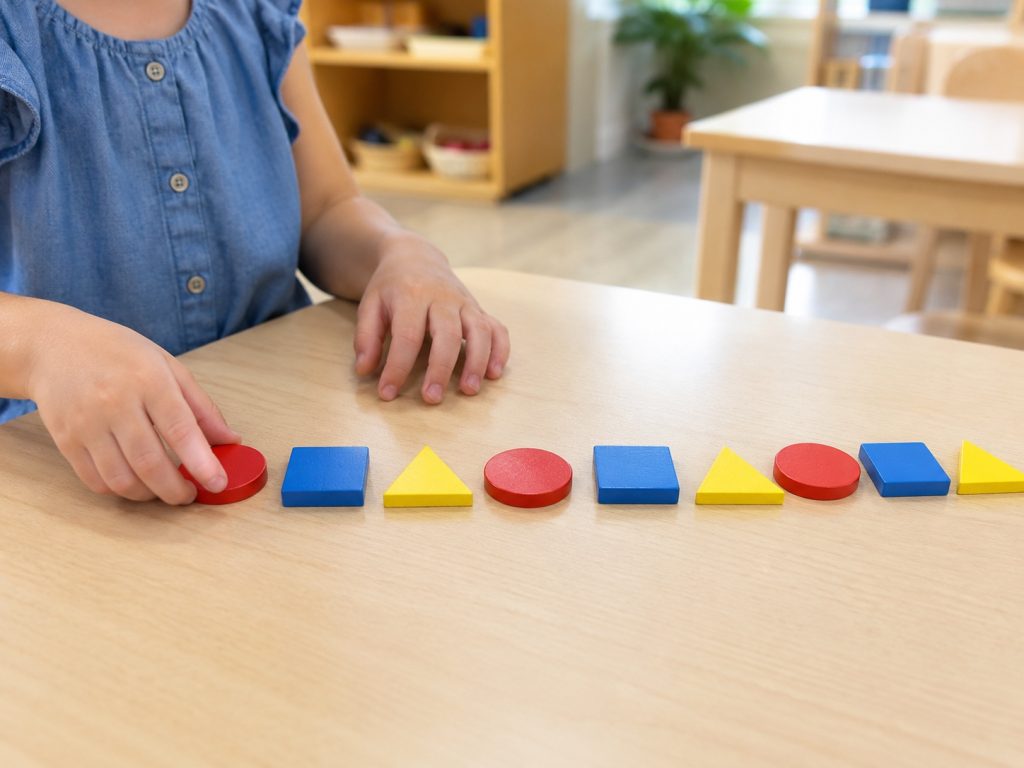
Not all Sorting Toys provide the same educational experience. The design of the product directly influences how many mathematical concepts children can explore and how long the toy remains useful as their abilities develop.
Experienced educators generally prefer learning materials that encourage open-ended exploration rather than activities with only one correct solution. A thoughtfully designed sorting set allows children to progress naturally from simple color matching to more advanced classification, pattern building, quantity comparison, and early problem-solving.
Several measurable product characteristics contribute to richer learning experiences.
| Product Feature | Educational Value |
|---|---|
| 48–72 sorting pieces | Supports individual and group activities while allowing multiple classification strategies |
| Six or more color categories | Encourages flexible comparison and sorting |
| Four to six geometric shapes | Expands shape recognition and logical thinking |
| Clearly divided storage tray | Reinforces organization habits and independent clean-up |
| Pieces measuring approximately 35–45 mm | Comfortable for preschool children to grasp and manipulate |
Instead of relying on broad promotional statements, educational buyers increasingly expect manufacturers to provide clear product specifications. For example, describing a product as including forty-eight solid wooden pieces with smooth polished edges, a water-based coating, and recommendations for children aged 36 months and above provides practical information that supports purchasing decisions.
For buyers comparing wooden sorting toys from different suppliers, detailed specifications also make it easier to evaluate product consistency, classroom suitability, and long-term durability. This evidence-based approach has become increasingly important for schools, educational distributors, and private-label brands seeking reliable manufacturing partners.
Rather than focusing solely on appearance, professional buyers typically consider whether the toy can support progressive learning activities over several years. Products that allow children to explore increasingly complex sorting challenges generally provide greater educational value than toys designed for a single objective.
Why Sorting Toys Remain a Valuable Educational Investment
As early childhood education continues to emphasize experiential learning, Sorting Toys remain one of the most versatile teaching resources available. Unlike toys designed for a single purpose, a well-designed sorting set can support different learning objectives as children’s abilities develop. The same collection of pieces can be used for color recognition during one activity, shape classification during another, and later for pattern creation, counting, or simple addition exercises.
Many preschool teachers report that this flexibility makes sorting materials a regular part of classroom learning rather than an occasional activity. Because the rules can be adjusted according to children’s developmental stages, Sorting Toys remain relevant throughout several years of early education. This adaptability also helps schools maximize the value of their teaching resources without frequently replacing learning materials.
From a retail perspective, the continued demand for preschool sorting toys reflects growing interest in educational products that combine learning with play. Parents increasingly look for toys that encourage independent exploration instead of passive entertainment, while schools and learning centers often prioritize materials that align with early childhood learning standards.
Research also suggests that children learn more effectively when they actively participate in discovering solutions rather than receiving direct instruction. Sorting activities naturally encourage this process because children must observe, compare, test ideas, and sometimes revise their decisions before arriving at a solution. The learning experience becomes interactive, which helps reinforce both confidence and curiosity.
For educational brands, this creates an opportunity to present products through evidence rather than marketing language. Demonstrating how Sorting Toys support cognitive development, early mathematics, and fine motor skills provides stronger value for buyers than broad claims alone. Over time, this approach helps establish a more professional and trustworthy brand image.
What to Look for When Sourcing Sorting Toys
Whether purchasing for a preschool classroom, a retail brand, or a distribution business, selecting the right Sorting Toys involves more than comparing appearance or price. Educational effectiveness, product consistency, and manufacturing capability all influence long-term value.
A reliable supplier should be able to explain not only how the product is made but also how it supports learning outcomes. Buyers increasingly expect measurable product specifications because these details help schools and retailers evaluate whether a product meets their educational requirements.
The following table highlights several factors commonly considered during supplier evaluation.
| Evaluation Factor | Why It Matters |
|---|---|
| Number of sorting pieces | Supports both individual learning and collaborative classroom activities |
| Variety of colors and shapes | Encourages multiple classification and pattern-building exercises |
| Consistent dimensions | Improves compatibility across learning activities |
| Smooth surface finish | Provides a comfortable handling experience during repeated use |
| Organized storage solution | Makes classroom management and clean-up more efficient |
| Customization options | Supports private-label and educational brand requirements |
Beyond product specifications, many international buyers also evaluate a manufacturer’s production capabilities. Depending on business needs, useful services may include OEM and ODM development, custom color matching, branded packaging, barcode labeling, multilingual instruction manuals, and bulk order support. These services simplify procurement while allowing distributors and retailers to develop products that reflect their own market positioning.
For educational institutions, durability is equally important. Sorting materials are often used daily by multiple groups of children, making consistent manufacturing quality an important consideration. Products that maintain their appearance and functionality through repeated classroom use generally provide a better long-term return on investment.
Choosing Sorting Toys with both educational value and reliable manufacturing standards helps ensure that the products remain useful across different learning environments, from preschools and daycare centers to educational retail stores.
Benefits of Sorting Toys Beyond Early Math Learning
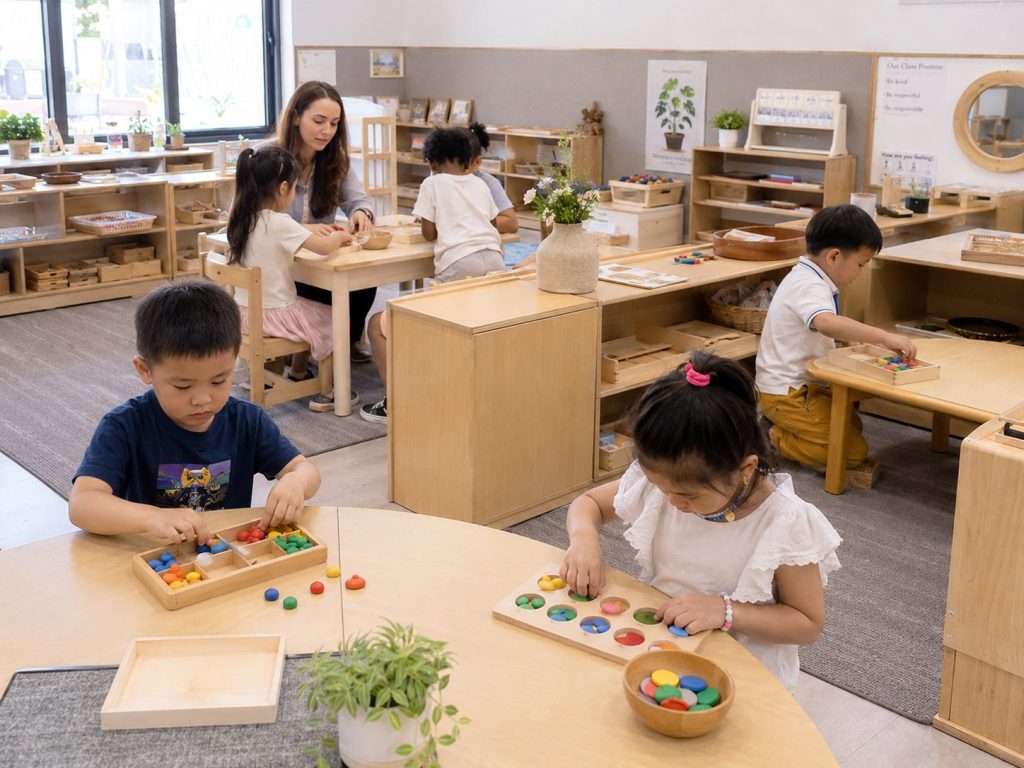
Although Sorting Toys are frequently associated with mathematics, their educational value extends into several other areas of child development. Because sorting activities require children to observe carefully, manipulate objects, and communicate their thinking, they naturally support interdisciplinary learning.
For example, children strengthen language skills as they describe colors, shapes, sizes, and patterns. They expand vocabulary by explaining why certain objects belong together and by comparing different groups. At the same time, handling individual pieces helps develop fine motor coordination, finger strength, and hand-eye coordination, all of which contribute to later writing and drawing skills.
Sorting activities also encourage social development when completed in pairs or small groups. Children learn to share materials, discuss different ideas, and cooperate while solving simple challenges together. These collaborative experiences help develop communication skills alongside mathematical reasoning.
Another advantage is that Sorting Toys support differentiated learning. Teachers can simplify activities for beginners by focusing on a single attribute such as color, then gradually increase complexity by introducing multiple sorting rules, pattern creation, or quantity comparisons. This flexibility allows one learning resource to remain engaging as children’s abilities improve.
Because of these broader developmental benefits, Sorting Toys are now commonly found not only in preschool classrooms but also in Montessori environments, STEM learning programs, occupational therapy settings, and home-based early learning activities.
FAQs
Are Sorting Toys good for preschool math?
Yes. Research indicates that sorting activities help children develop classification, pattern recognition, logical reasoning, and quantity awareness before formal arithmetic instruction begins. These foundational skills support later mathematical learning in preschool and elementary school.
At what age can children begin using Sorting Toys?
Many Sorting Toys are designed for children aged 36 months and above because they involve manipulating individual pieces that require appropriate supervision. Buyers should always refer to the manufacturer’s recommended age range for each specific product.
Can Sorting Toys improve fine motor skills?
Yes. Repeatedly grasping, rotating, placing, and organizing sorting pieces helps strengthen finger control, hand-eye coordination, and precision movements. These skills contribute to everyday classroom activities such as drawing, writing, and using learning tools.
Are wooden Sorting Toys better than plastic versions?
Both materials can support learning effectively when thoughtfully designed. Wooden sorting toys are often selected for their durability, tactile feel, and long service life, while plastic products may offer lighter weight and easier cleaning. The overall educational value depends more on the toy’s design, learning objectives, and manufacturing quality than on the material alone.
Conclusion
Current research and classroom experience suggest that Sorting Toys play an important role in helping children develop the foundational skills needed for later mathematical success. Through classification, comparison, pattern recognition, and logical reasoning, children build conceptual understanding before formal arithmetic begins. At the same time, these activities strengthen fine motor skills, language development, attention, and problem-solving, making sorting materials valuable across multiple areas of early childhood education.
For schools, educational retailers, distributors, and learning brands, selecting thoughtfully designed Sorting Toys supported by measurable product specifications offers both educational and commercial advantages. Rather than relying on broad promotional claims, presenting clear learning outcomes, practical classroom applications, and detailed manufacturing information helps build credibility with professional buyers.
If you are sourcing Sorting Toys for educational programs, retail distribution, or private-label projects, choosing products that combine research-informed design with reliable manufacturing standards can help meet the expectations of both educators and today’s increasingly quality-focused market.