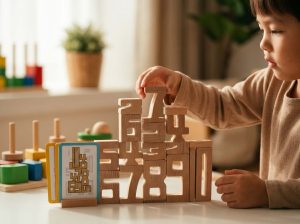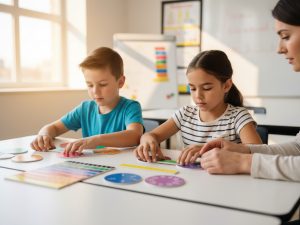
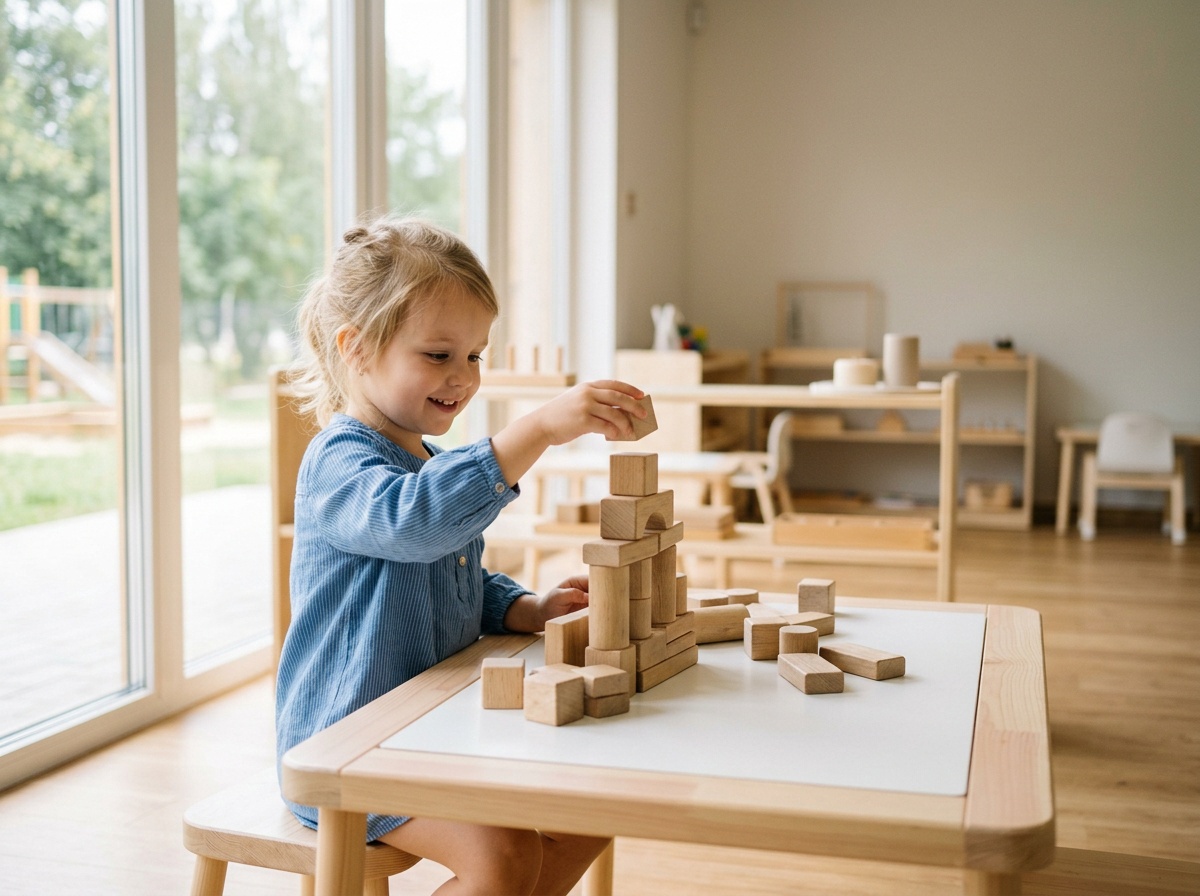
Building Blocks have remained one of the most valuable educational toys for generations. Even as digital learning tools become increasingly common, educators continue to emphasize the importance of hands-on play. Studies in early childhood education show that construction activities help children develop cognitive abilities, physical coordination, creativity, and communication skills in ways that screen-based learning alone cannot easily replicate.
Parents often notice that children can spend long periods stacking, balancing, and rebuilding simple blocks. While these activities may seem like ordinary play, educational researchers have found that they encourage children to think critically, experiment with different solutions, and learn from their own discoveries. Understanding these benefits also helps schools, distributors, and retailers choose educational Building Blocks that provide long-term learning value instead of short-term entertainment.
Whether they are wooden Building Blocks in a preschool classroom or construction blocks used in STEM activities, these open-ended building toys allow children to explore mathematics, engineering, language, and social interaction through meaningful play. This article examines what children can learn from Building Blocks and why they continue to play an important role in modern education.
Why Are Building Blocks Still Important in Early Childhood Development?
Unlike electronic toys with fixed functions, Building Blocks allow children to decide what they want to build and how they want to build it. Every tower, bridge, or house begins with an idea, develops through experimentation, and often requires several adjustments before reaching a successful result. This process encourages children to become active learners rather than passive observers.
The American Academy of Pediatrics has highlighted the importance of open-ended play in supporting executive function, language development, and problem-solving abilities. Similarly, studies conducted by the LEGO Foundation suggest that constructive play strengthens spatial reasoning and early mathematical thinking.
Evidence from developmental psychology indicates that children who regularly participate in block play often demonstrate stronger spatial visualization skills, which are closely associated with later achievement in mathematics, engineering, and science.
Beyond individual skills, Building Blocks encourage several areas of development at the same time. As children repeatedly build, modify, and rebuild structures, they gradually improve hand-eye coordination, logical reasoning, attention span, creativity, and resilience. Rather than learning these abilities separately, they develop them together through repeated exploration.
Building Blocks Support Cognitive Development
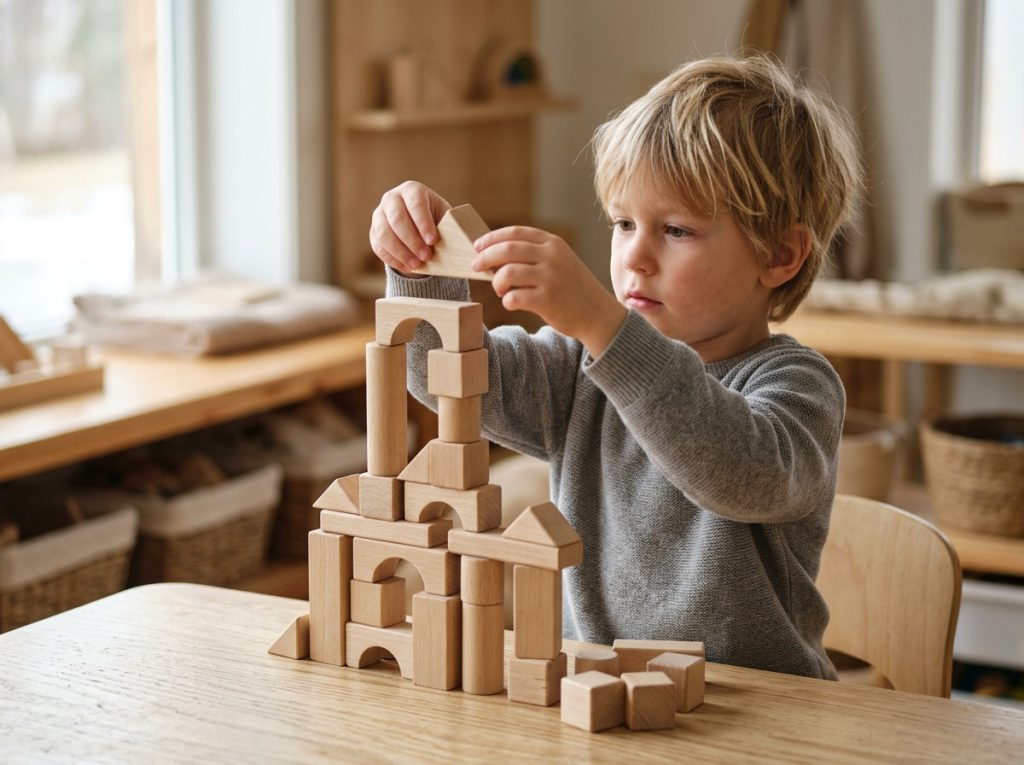
One reason Building Blocks remain popular in educational settings is their ability to introduce STEM concepts naturally. Instead of memorizing information, children discover principles by experimenting with real objects and observing immediate results.
Learning Through Trial and Error
Every unstable tower or collapsing bridge presents a new challenge. Children instinctively begin asking questions such as why a structure failed, how weight should be distributed, or what changes could make it stronger. Classroom observations suggest that this cycle of planning, testing, and improving helps children become more flexible thinkers and more confident when solving unfamiliar problems.
Research published in Child Development has also found that children who regularly participate in constructive play generally perform better on spatial reasoning tasks than peers with fewer opportunities for hands-on building activities. Since spatial reasoning is closely linked to later success in science, technology, engineering, and mathematics, these early experiences can have long-term educational value.
Early Mathematics Through Block Play
Many mathematical concepts appear naturally while children play with Building Blocks instead of being introduced through formal lessons.
| Learning Area | How Building Blocks Support Learning |
| Counting | Counting individual blocks during construction |
| Geometry | Identifying shapes, angles, and patterns |
| Measurement | Comparing heights, widths, and lengths |
| Fractions | Dividing structures into equal sections |
| Spatial Awareness | Understanding position and orientation |
Because children experience these concepts directly, they often develop a deeper understanding of mathematics than through memorization alone.
Building Blocks Improve Fine Motor Skills and Coordination
Manipulating Building Blocks requires children to make increasingly precise hand movements. Picking up individual pieces, aligning edges, rotating blocks, and balancing taller structures strengthen the small muscles needed for writing, drawing, and many everyday classroom activities.
For schools and educational buyers, measurable product specifications provide a more meaningful way to evaluate Building Blocks than generalized marketing language. Product dimensions, material density, and structural consistency directly influence how children interact with the toys during daily use.
| Product Specification | Educational Benefit |
| Block size: 40 mm × 40 mm | Easier grasp for developing hands |
| Rounded corner radius: 5 mm | Reduces sharp contact points during play |
| Set includes 120 pieces | Supports collaborative classroom activities |
| Solid beech wood density: approximately 720 kg/m³ | Improves stacking stability and durability |
Providing transparent technical specifications also reflects professional manufacturing standards, allowing distributors and purchasing managers to compare products objectively.
How Building Blocks Encourage Social and Emotional Growth
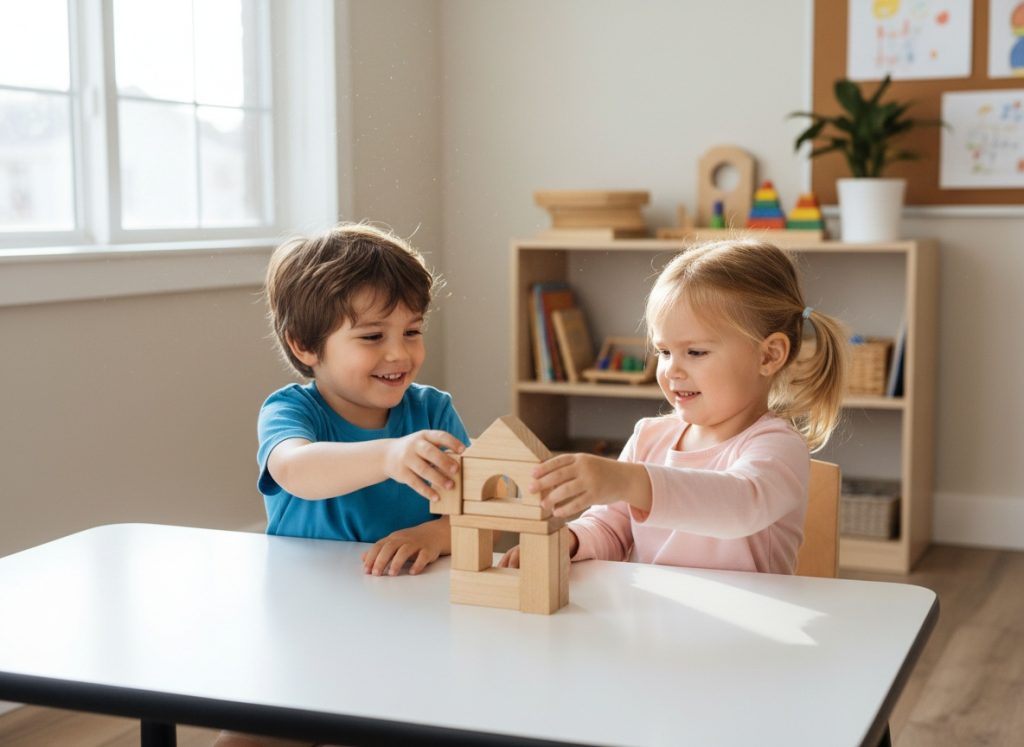
Although many children enjoy building independently, Building Blocks become even more valuable during collaborative activities. Designing a structure together encourages children to exchange ideas, explain their thinking, and adapt their plans as construction progresses.
Educational experts generally agree that cooperative block play strengthens communication and emotional development. Children naturally learn how to listen to different opinions, negotiate design decisions, solve disagreements, and celebrate shared accomplishments. These experiences help build patience, empathy, and teamwork while creating an enjoyable learning environment that supports both academic and social development.
Creativity Without Predetermined Answers
Unlike puzzles that have only one correct solution, Building Blocks encourage children to explore unlimited possibilities. A simple collection of wooden Building Blocks may become a bridge, a castle, a city, or an entirely imaginary invention depending on the child’s imagination.
Long-term studies have demonstrated that open-ended building toys encourage divergent thinking because children are free to test ideas without worrying about making mistakes. As their confidence grows, they become more willing to experiment, revise their designs, and create original solutions that extend beyond structured classroom activities.
Choosing Educational Building Blocks for Schools and Retail Markets
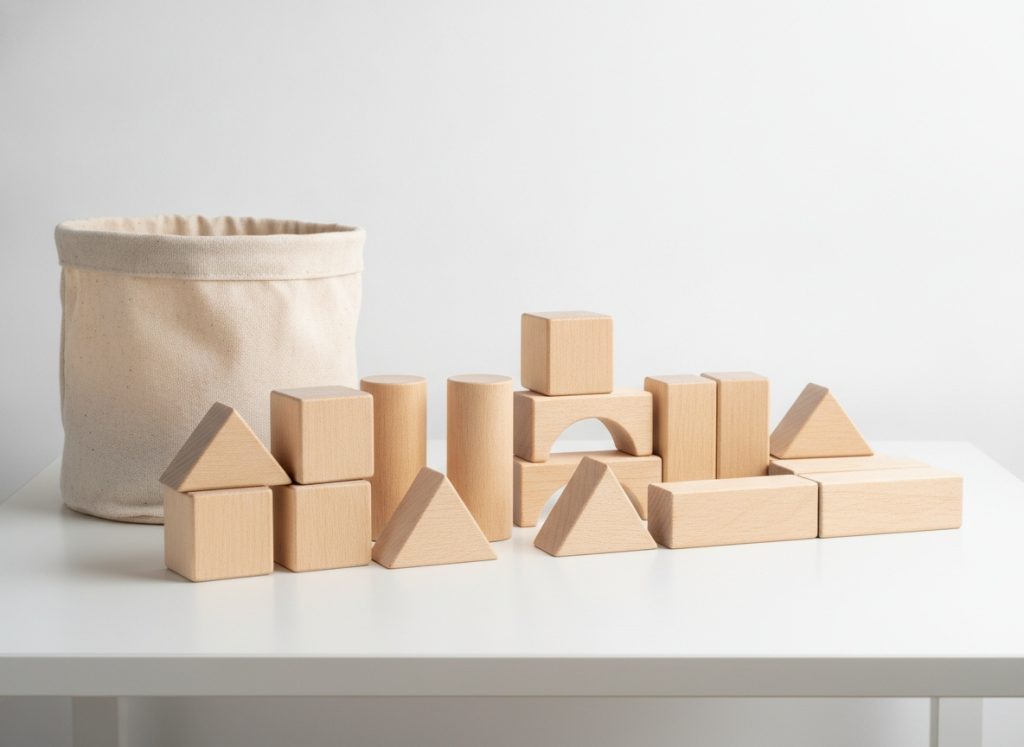
Demand for educational Building Blocks continues to grow as schools and parents place greater value on hands-on learning. However, not all construction blocks offer the same educational performance. Buyers increasingly compare products using objective specifications rather than appearance alone.
Key Factors When Choosing Educational Building Blocks
| Key Factors When Choosing Educational Building Blocks | Recommended Specification |
| Material | Solid hardwood or durable ABS for repeated classroom use |
| Piece Quantity | 80–200 pieces for collaborative activities |
| Block Dimensions | Multiple sizes that encourage structural exploration |
| Surface Finish | Smooth sanding with water-based coating thickness of approximately 20–30 μm |
| Storage | Stackable storage box for efficient organization |
Research indicates that open-ended building toys generally maintain children’s engagement longer than single-purpose toys because every play session creates new possibilities.
For educational toy manufacturers, providing Building Blocks with clearly documented dimensions, material specifications, packaging options, and OEM or ODM customization helps distributors and schools select products that meet different teaching environments. This practical approach not only improves purchasing confidence but also supports long-term business partnerships.
Building Blocks in Modern Learning Environments
Although educational technology continues to evolve, physical construction remains an essential part of balanced childhood learning. Digital applications can introduce concepts visually, but Building Blocks allow children to experience those concepts through direct interaction with real objects.
During a single building activity, children often discuss ideas with classmates, compare sizes and proportions, test engineering principles such as balance and stability, strengthen hand coordination, and apply mathematical reasoning simultaneously. Few educational resources combine so many developmental experiences within one simple activity.
As STEM education continues to expand globally, Building Blocks remain a valuable classroom resource because they encourage children to explore scientific thinking through curiosity and experimentation rather than memorization. Their versatility also allows teachers to integrate language development, creative storytelling, mathematics, and engineering into the same lesson, making block play relevant across multiple educational settings.
Conclusion
Research consistently demonstrates that Building Blocks support children’s cognitive, physical, emotional, and social development. From improving fine motor coordination to strengthening mathematical reasoning, spatial awareness, creativity, and collaborative problem-solving, the educational benefits of block play extend well beyond simple entertainment. Evidence from developmental psychology and early childhood education continues to show that regular construction play helps children develop foundational skills that support long-term academic success.
For schools, distributors, retailers, and educational organizations, selecting high-quality Building Blocks with transparent specifications and reliable manufacturing standards is equally important. Products supported by detailed technical information, consistent quality control, and flexible OEM or ODM services provide greater confidence throughout the purchasing process while meeting the evolving needs of today’s education market.
Whether you are sourcing Building Blocks for classrooms, retail programs, or private-label educational brands, choosing products designed for durability, educational value, and long-term usability creates lasting benefits for both educators and children. If you are looking for OEM or ODM Building Blocks tailored to your market requirements, partnering with an experienced manufacturer can help deliver solutions that combine learning value with dependable product quality.