
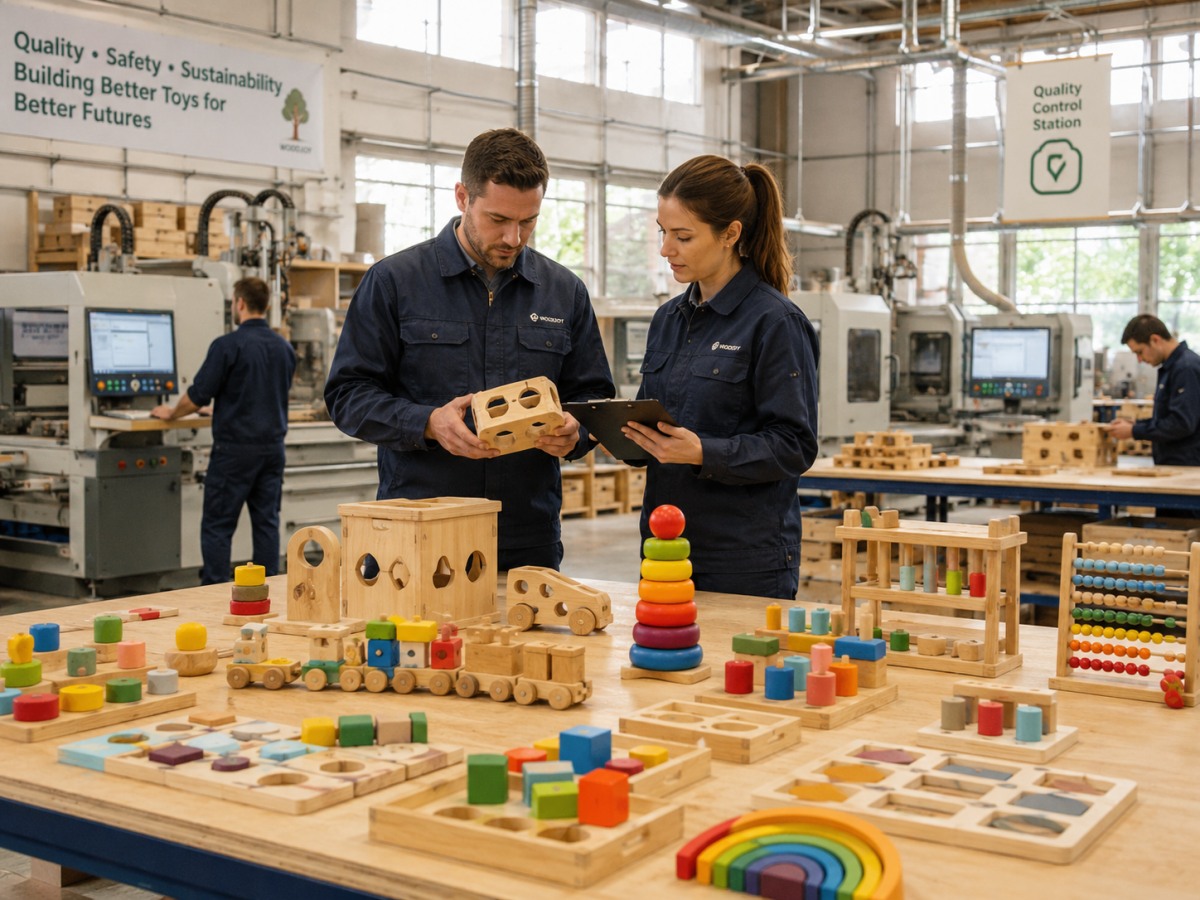
As demand for educational and sustainable toys continues to expand, many brands are seeking an experienced OEM Wooden Toys Manufacturer to develop custom product lines. However, suppliers often differ significantly in engineering capabilities, quality systems, and production flexibility.
Research shows that stable manufacturing processes and strong product development support can directly influence customer satisfaction, repeat purchases, and long-term brand growth. For importers, distributors, and retailers, choosing the right partner is not simply a sourcing decision—it is a strategic investment.
Why Choosing the Right OEM Wooden Toys Manufacturer Matters
The global toy industry has seen increasing demand for wooden products in recent years. Industry data indicate that consumers are paying more attention to durability, renewable resources, and educational value. As a result, brands are placing greater emphasis on selecting a reliable OEM Wooden Toys Manufacturer rather than focusing solely on pricing.
Studies suggest that factories with mature production systems can reduce manufacturing defects by 15% to 30%, while maintaining more stable delivery schedules. These advantages often translate into better product reviews and stronger customer loyalty.
For growing businesses, a manufacturing partner frequently becomes an extension of the brand itself.
Consistent quality and dependable lead times are often more valuable than short-term price advantages.
Key Capabilities Buyers Should Evaluate in an OEM Wooden Toys Manufacturer
Experienced buyers usually evaluate suppliers from multiple dimensions instead of comparing quotations alone.
| Evaluation Factor | Typical Industry Standard |
| Factory Experience | 10+ years |
| Sample Lead Time | 7–10 days |
| Production Capacity | 50,000+ pcs/month |
| Delivery Time | 30–45 days |
| Minimum Order Quantity | 500–1,000 pcs |
| Inspection Procedure | 100% final inspection |
Research indicates that manufacturers with integrated production facilities generally maintain higher on-time delivery rates and lower return rates.
Engineering Expertise Matters More Than Many Buyers Expect
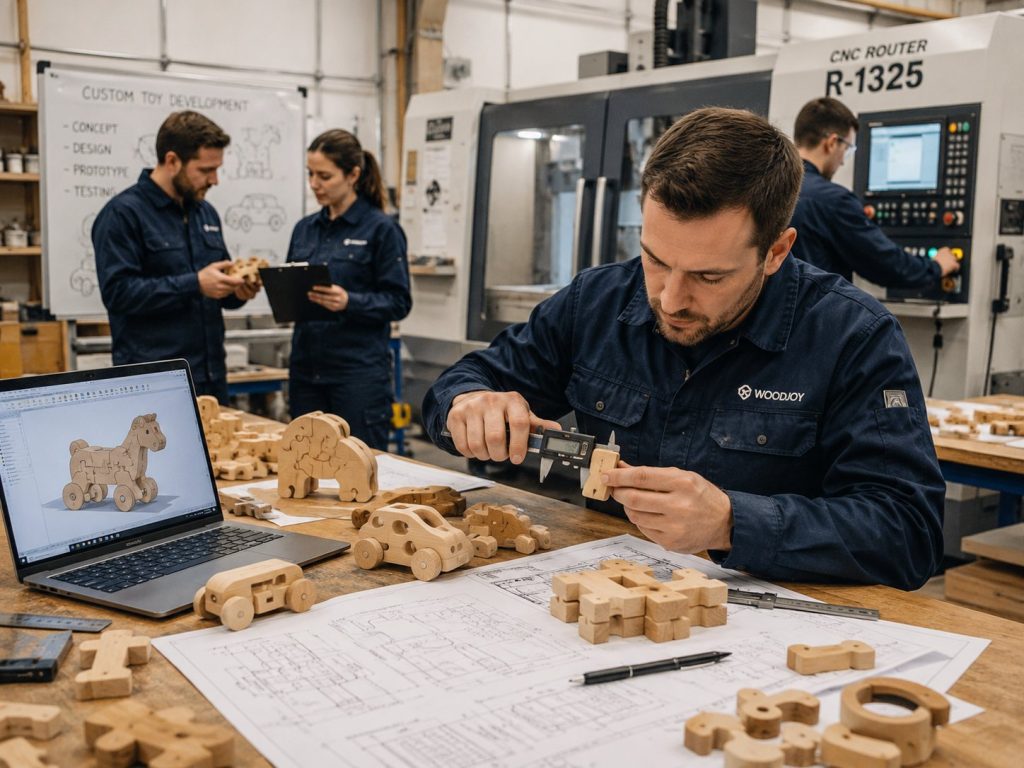
Behind a reliable wooden toy factory lies a combination of precision equipment and process control. Many experienced manufacturers use CNC machining with dimensional tolerances maintained within ±0.2 mm. Wood moisture content is commonly controlled between 8% and 12%, helping minimize deformation and cracking during transportation.
These technical details contribute directly to product consistency, especially for custom wooden toys manufacturer projects that require large-volume production.
Product Development Support Can Accelerate Market Entry
Many successful brands cooperate with manufacturers capable of providing custom toy design services. From CAD drawings and 3D prototypes to packaging solutions and logo engraving, integrated support shortens development cycles and reduces communication costs.
Research shows that companies with efficient sample development processes are often able to respond faster to changing market trends.
How an OEM Wooden Toys Manufacturer Handles Material and Safety Standards
Material specifications are among the most important indicators of product quality. Instead of relying on general descriptions, experienced buyers usually focus on measurable parameters.
| Specification Item | Typical Value |
| Beech Wood Density | 700–730 kg/m³ |
| Birch Plywood Thickness | 6–18 mm |
| Water-Based Paint VOC Content | Below 50 g/L |
| Edge Radius | ≥2 mm |
| Surface Roughness | Ra ≤3.2 μm |
Research shows that appropriate moisture control and edge treatment can significantly reduce splintering and improve durability.
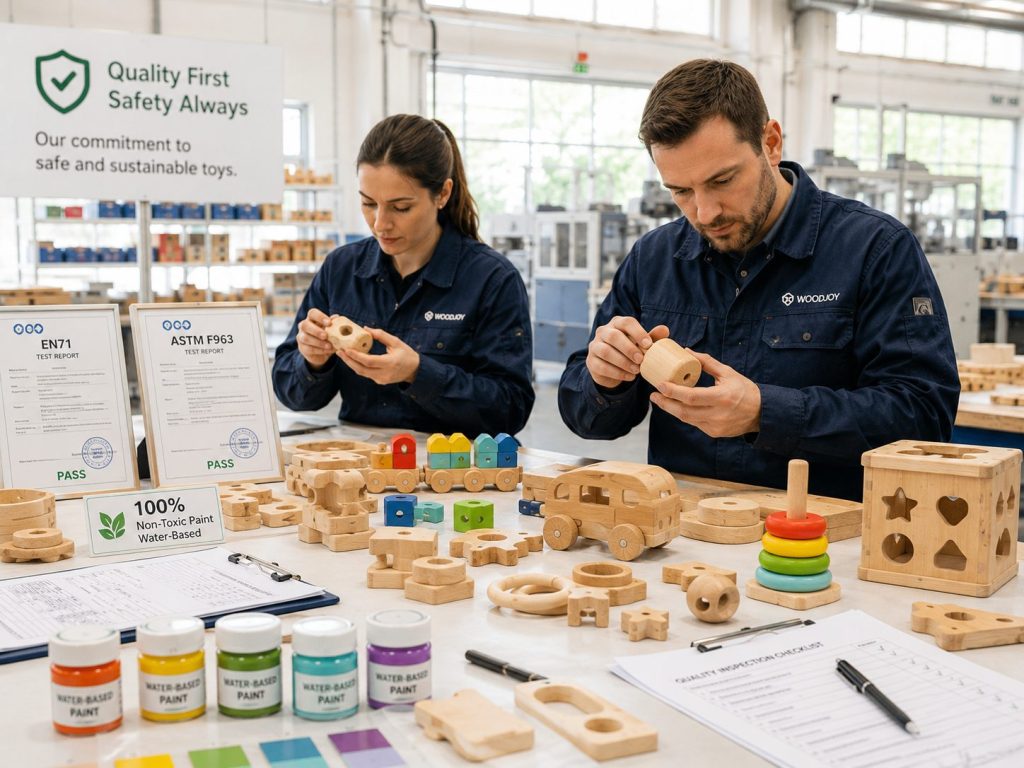
Professional manufacturers serving international markets typically maintain documentation related to EN71, ASTM F963, CPSIA, and FSC wood toys requirements. Batch traceability systems further enhance supply chain transparency and simplify customs procedures.
Data suggest that transparent documentation systems contribute to stronger quality consistency and fewer compliance-related risks.
Why Traceability Is Becoming Increasingly Important
As more retailers require detailed product records, traceability has become a competitive advantage. A professional wooden toy supplier can usually provide batch numbers, material sourcing records, and inspection reports for each production lot.
This level of transparency helps brands strengthen trust with distributors and consumers alike.
Why Many Growing Brands Prefer an Experienced OEM Wooden Toys Manufacturer
Industry observations show that emerging brands rarely begin with large-scale orders. Instead, many companies start with trial quantities of 500 to 1,000 units before expanding into private label wooden toys and exclusive packaging solutions.
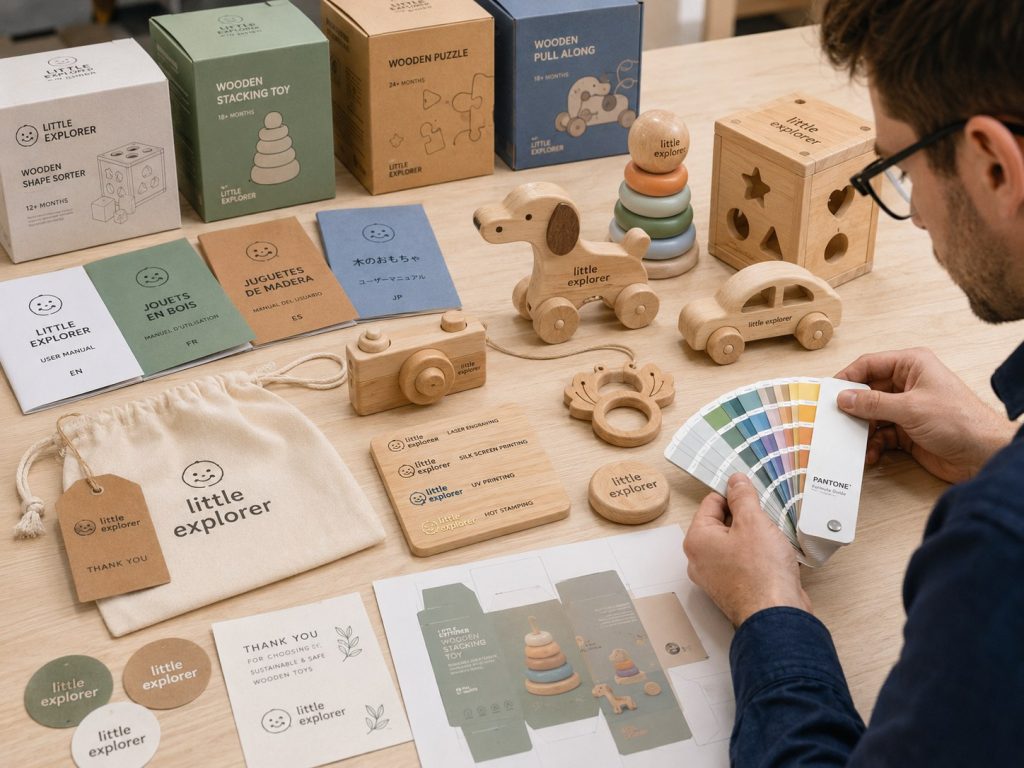
As product sales increase, requirements often evolve from simple logo printing to customized instruction manuals, multilingual packaging, and unique product designs.
Manufacturers capable of supporting this transition frequently establish long-term partnerships with their customers. Rather than acting solely as suppliers, they become strategic collaborators that assist brands throughout different stages of growth.
This explains why many importers prioritize manufacturing stability and communication efficiency over the lowest quotation.
Customization Services Offered by an OEM Wooden Toys Manufacturer
Product differentiation has become increasingly important in competitive markets. Research indicates that customized packaging and branding can improve shelf visibility and contribute to higher conversion rates.
An experienced OEM Wooden Toys Manufacturer typically provides comprehensive OEM toy manufacturing services, allowing brands to streamline product development under one system.
| Customization Area | Available Solutions |
| Branding | Laser engraving, silk printing |
| Color Matching | Pantone colors |
| Packaging | Kraft box, gift box, color box |
| Manuals | Multilingual instructions |
| Accessories | Cards, cotton bags, stickers |
| Labels | Amazon FNSKU support |
For businesses targeting educational segments, some suppliers also specialize as educational wooden toys manufacturer partners and offer Montessori-inspired product development.
What Industry Data Reveal About the Global Wooden Toy Market
Research conducted by market analysts shows that the educational toy sector is expected to maintain steady growth in the coming years. Consumer demand for interactive learning experiences and renewable materials continues to support expansion within the wooden toy category.
Data also indicate that wholesale wooden toys and Montessori wooden toys manufacturer segments are experiencing strong demand from North America and Europe.
These trends have encouraged many brands to cooperate with custom wooden toys manufacturer partners capable of providing flexible OEM and private-label solutions.
Typical Development Timeline for OEM Projects
Understanding the production cycle helps buyers plan inventory and marketing activities more efficiently.
| Production Stage | Typical Timeline |
| Prototype Development | 7–10 Days |
| Sample Approval | 3–5 Days |
| Mass Production | 30–45 Days |
| Quality Inspection | 1–3 Days |
| Shipment Preparation | 2–5 Days |
Research shows that clear project schedules contribute to better supply chain coordination and fewer delivery delays.
Questions Buyers Frequently Ask an OEM Wooden Toys Manufacturer
What Is the Minimum Order Quantity for OEM Wooden Toys?
The MOQ for custom projects varies according to product complexity and packaging requirements. In many cases, the starting quantity ranges between 500 and 1,000 pieces. This level allows brands to test market demand while controlling inventory risks.
How Long Does Production Usually Take?
For most OEM projects, sample development requires approximately one week, while mass production generally takes between 30 and 45 days. Seasonal demand and product complexity may affect the final schedule.
Can an OEM Wooden Toys Manufacturer Support Private Label Projects?
Yes. Many manufacturers offer private label wooden toys services, including logo engraving, customized packaging, barcode labeling, and multilingual manuals. These solutions help brands establish stronger market identities.
Which Markets Require EN71 or ASTM F963 Testing?
EN71 requirements are widely applied in European markets, while ASTM F963 standards are commonly used in the United States. Manufacturers serving international customers usually maintain corresponding testing documents to facilitate market access.
Price Should Be Evaluated Together with Overall Value
Although unit price remains important, research shows that delivery reliability, defect rates, and communication efficiency often have a greater impact on long-term profitability.
A slightly higher manufacturing cost may ultimately reduce after-sales expenses and improve customer retention. Therefore, experienced importers tend to focus on total value rather than short-term cost savings.
In practice, sustainable cooperation usually creates more business opportunities than aggressive pricing strategies.
Conclusion
Selecting an OEM Wooden Toys Manufacturer involves much more than comparing quotations. Factory experience, engineering capabilities, material specifications, customization services, and quality management all contribute to long-term product competitiveness.
Industry data consistently show that manufacturers with transparent production systems, stable delivery capabilities, and comprehensive OEM support are better positioned to help brands grow sustainably. Although different suppliers may offer similar prices, the overall value they provide can vary considerably.
Whether you are developing Montessori collections, educational products, or private label wooden toys, partnering with an experienced OEM Wooden Toys Manufacturer can simplify product development and ensure consistent quality.
If you are evaluating suppliers for future projects, discussing sample development, production capacity, and customization options early in the sourcing process can provide greater flexibility and improve overall efficiency.