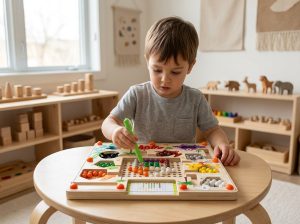

A toy lending library helps families, schools, and community organizations offer children a wider variety of play materials without purchasing every toy for individual use. A well-managed collection can support repeated borrowing, make educational resources more accessible, and help program operators plan purchases around actual demand.
However, setting up a successful toy lending library involves more than collecting donated toys and placing them on shelves. Operators need a realistic budget, a consistent cleaning procedure, a reliable checkout system, and a rotation plan that keeps the collection useful over time.
This guide explains how to start a toy lending library, estimate startup and operating costs, manage hygiene between borrowers, and select durable educational toys for long-term circulation.
Why a Toy Lending Library Works
Young children develop new interests quickly. A toy that captures a child’s attention today may receive little use a few weeks later, while another family may be looking for exactly that type of play experience.
A toy lending library allows families to access different play materials without purchasing every item. For schools, preschools, libraries, and community programs, a shared collection can also help distribute purchasing costs across a larger group of users.
The Value of Access Over Ownership
A lending model gives children opportunities to explore different types of play, including sorting games, puzzles, building blocks, pretend-play sets, and early mathematics activities.
Families can try different materials before deciding which toys suit their children’s interests. Educators can also observe which resources receive the most attention and use those observations to guide future purchases.
For program operators, the benefits depend on how well the collection is managed. Borrowing records, return checks, and user feedback help determine which toys deserve additional investment and which are no longer meeting demand.
A Long-Running Example: Los Angeles County’s Toy Loan Program
Toy lending is an established community service rather than a new concept. According to the Los Angeles County Toy Loan Program, the free program began in 1935 in the Westchester area of Los Angeles during the Great Depression.
Today, its Toy Loan Centers serve more than 25,000 children each year. The program operates through community locations including parks, schools, libraries, children’s centers, and other service facilities.
Its model demonstrates how toy lending can connect families with shared resources while encouraging children to return borrowed items in good condition and on time.
The lesson for new operators is practical: a toy lending library needs an operating structure that supports both access and accountability. A clear checkout procedure, reliable staffing, and a system for inspecting returned toys matter as much as the collection itself.
Who Can Start a Toy Lending Library?
Several types of organizations may benefit from a shared toy collection:
- Public libraries: Expand family services with educational toys that complement books and other learning resources.
- Preschools and childcare centers: Offer additional play materials while keeping track of inventory, cleanliness, and condition.
- Family resource centers: Provide borrowing opportunities for households that may have limited space or budgets.
- Community organizations: Support families through shared resources and organized borrowing schedules.
- School and preschool networks: Coordinate purchasing and distribute selected toy sets across participating locations.
Each model has different staffing, storage, and funding requirements. A small community program may operate with a spreadsheet and a part-time coordinator, while a network of borrowing locations may need centralized inventory management and more formal operating procedures.
What Does It Cost to Start a Toy Lending Library?
The initial toy collection is only one part of the budget. Storage, checkout materials, cleaning supplies, replacement pieces, and staff time all affect the cost of keeping the service operational.
Rather than relying on a single startup-cost estimate, build a budget using the planned collection size, actual supplier quotations, and expected borrowing volume.
Building the Initial Toy Collection
For a small pilot, 40–60 durable toy sets can be a manageable starting point. This is a planning example, not an industry standard. The appropriate number depends on available funding, storage space, target age groups, and expected demand.
A balanced collection might include:
- Infant and toddler toys designed for the appropriate age range and cleaning requirements.
- Sorting, stacking, and matching activities that encourage early problem-solving.
- Preschool puzzles, building sets, and games with simple rules.
- Educational resources for numbers, shapes, colors, and early mathematics.
- Open-ended play materials that allow children to explore different solutions.
Choose complete sets with clear age guidance, durable components, and instructions that can remain with the collection. For toys containing magnets or small components, check the applicable age grading and safety requirements carefully.
Every set should have a unique inventory ID, a piece-count list, and a contents card. These simple records make it easier to inspect returns, identify missing parts, and prepare sets for the next borrower.
Starting with a smaller, well-curated collection is often easier to manage than accepting a large number of uninspected donations.
Estimating Startup and Operating Costs
Separate one-time expenses from recurring costs before purchasing inventory.
| Cost category | What to include | Budget approach |
|---|---|---|
| Initial toy collection | Toy sets across target age groups | Use actual supplier quotations and planned quantities |
| Storage and organization | Shelves, containers, labels, and borrowing bags | Price the storage required for the planned collection |
| Checkout and tracking | Inventory records, contents cards, and software if needed | Start with a spreadsheet if it meets operational needs |
| Cleaning and sanitizing | Suitable products and cleaning materials | Estimate based on materials, use frequency, and return volume |
| Replacement stock | Spare pieces and replacement sets | Identify replaceable components when placing initial orders |
| Staffing | Checkout, inspection, cleaning, and administration | Estimate weekly hours and local labor costs |
| Ongoing maintenance | Repairs where appropriate, packaging, and storage upkeep | Review actual spending after each borrowing cycle |

Calculate the initial setup budget separately from the annual operating budget.
Startup budget = initial toys + storage and setup + checkout materials + initial spare parts.
Annual operating budget = staffing + cleaning supplies + replacement stock + software and other recurring expenses.
These calculations give program coordinators a clearer picture of the funds needed to launch and maintain the service.
Choosing a Checkout and Tracking System
A simple spreadsheet can be sufficient for a small program. Useful fields include inventory ID, toy name, age range, checkout date, due date, return date, piece count, cleaning status, and damage notes.
As the program grows, an inventory application may make it easier to track reservations, overdue items, waitlists, and borrowing frequency.
Regardless of the system, returned toys should be inspected before they are marked ready for circulation. Checking a set while the borrower is present can make it easier to resolve missing-piece questions immediately.
Hygiene Between Borrowers
Cleaning is a core operating requirement for any toy lending library. Shared materials move between households, classrooms, and other environments, so the program needs a written process that staff and volunteers can follow consistently.
The CDC’s guidance on cleaning and disinfecting early care and education settings explains the differences between cleaning, sanitizing, and disinfecting and emphasizes the importance of selecting suitable methods for different surfaces and items.
Create a Cleaning Procedure for Returned Toys
Every return should trigger an inspection. Staff should look for visible dirt, signs of contamination, missing pieces, damaged components, and packaging problems.
A practical return workflow includes:
- Check the toy set against its contents card.
- Separate visibly soiled or potentially contaminated items from ready-to-shelve inventory.
- Clean the toys using a method appropriate for their materials.
- Sanitize or disinfect where required by applicable guidance and the program’s procedures.
- Allow items to dry completely when the method requires it.
- Record the completed inspection and return the set to storage only when it is ready for use.
Toys that children may put in their mouths require particular attention. Cleaning methods must account for the toy’s material, manufacturer instructions, and applicable public health guidance.
The same approach applies to magnetic components, printed cards, wooden toys, molded plastic parts, and fabric items. Not every material can safely undergo the same treatment.
For additional practical guidance, see Vindstier’s risk-based toy cleaning routine for daycare.

Set Aside Soiled or Potentially Unsafe Items
Do not return a dirty or damaged toy directly to the borrowing shelf. Keep it in a clearly marked holding area until the required cleaning, inspection, or repair process is complete.
A universal quarantine period should not be assumed for every returned toy. Any additional holding requirement should follow relevant public health guidance or a documented risk-management policy.
Maintain a simple cleaning log that records the toy ID, the date of return, any issue identified, the procedure completed, and the release status. This makes it easier for staff to see which sets are ready for circulation and which still require attention.
Cleaning products should be used according to their labels, kept away from children, and never mixed unless the product instructions explicitly permit it.
Remove Damaged Toys From Circulation
A cracked component, loose magnet, sharp edge, or missing safety-critical part is a reason to withdraw a set from circulation until its safety has been properly assessed.
Create a withdrawal log recording the inventory ID, the problem identified, and the decision made. Repair or replacement should take place only when it is appropriate for the product and consistent with the manufacturer’s guidance.
If a toy cannot be restored to a safe condition, retire it from the lending collection. Do not return questionable components to children’s general play materials.
A clear withdrawal process protects borrowers and helps the program monitor which products withstand repeated use.
Rotation Strategies That Keep Borrowing High
A well-managed toy lending library needs to offer variety without constantly purchasing new inventory. Rotation can help operators make better use of existing sets and respond to changing interests.
Build a Toy Rotation Schedule
Create a rotation calendar based on borrowing periods, school terms, seasonal needs, and the available storage space.
For a pilot program, rotating or refreshing approximately 15–20% of the displayed collection per borrowing cycle can be a starting hypothesis to test. This is not a universal benchmark. Adjust the proportion after reviewing reservations, borrowing frequency, and user feedback.
Keep some frequently borrowed sets available while temporarily storing others. Reintroducing a previously unavailable toy can give returning borrowers another reason to explore the collection.
The goal is not to change everything at once. It is to offer enough variety to meet different interests while maintaining a manageable inventory.
For related ideas, see Vindstier’s guide to setting up a Montessori toy rotation system.

Inspect Frequently Borrowed Sets
Borrowing history helps identify toys that receive heavy use and may need more frequent inspections.
For example, a set reaching 40 recorded borrowings could trigger a scheduled condition review. Treat this as an optional inspection trigger rather than a fixed retirement rule. Some toys may need inspection much earlier, while others may remain in good condition after more cycles.
Check the finish, joints, moving parts, magnets, instructions, and packaging. A toy does not need to be retired solely because it has reached a particular borrowing count; its condition and safe usability should guide that decision.
Use Waitlists to Guide Future Purchases
A waitlist can reveal which categories the current collection does not serve well.
Track the requested item, request date, age group, and whether the family eventually borrowed a suitable alternative. Over time, this information can help distinguish a temporary spike in interest from consistent unmet demand.
When a particular set is repeatedly unavailable, purchasing a duplicate may offer more value than adding an entirely new item. This decision should also account for price, storage, maintenance, and the usefulness of the rest of the collection.
Demand records can also strengthen funding proposals by showing how available resources are being used.
Common Challenges in Toy Lending Libraries
The lending model can be useful, but its success depends on practical decisions that are easy to overlook.
Set Realistic Expectations About Developmental Benefits
Research on toy lending libraries offers useful insights, but the evidence should be interpreted carefully.
A 2020 qualitative study by Cih-Cian Jheng and Hui-Yun Sung, published in the Journal of Library and Information Studies, examined two public-library toy libraries. The study included 76 preschool children, 62 caregivers, and 7 librarians. Its findings described connections between toy-library use and early-literacy experiences, including vocabulary, oral language, narrative skills, and opportunities for shared learning.
The researchers also reported that toy libraries could help ease family budget pressures and provide opportunities for caregivers and children to share resources. Read the study’s abstract and publication details.
Toybank’s 2023–24 annual report states that approximately 80% of Anganwadi workers observed improvements in children’s cognitive skills in connection with interaction with toys in Toy Libraries.
These findings are useful context, but qualitative research and staff observations do not establish that toy lending alone caused developmental improvements. Program operators should present the available evidence accurately and avoid making claims that go beyond the underlying research.
Practical outcomes worth tracking include borrowing frequency, repeat participation, waitlist demand, and the cost per borrowing event. These measures help assess how well the service operates, even though they do not independently prove developmental effects.
Plan for Consistent Staffing
A lending program requires someone to manage checkout, inspect returns, maintain records, and oversee cleaning and storage.
Depending entirely on volunteers with unpredictable availability can disrupt opening hours and make it difficult to apply procedures consistently.
Before launch, assign responsibility for each recurring task. If several locations share one collection, identify who manages inventory, who handles cleaning, and who authorizes damaged toys to return to circulation.
Even a small program benefits from a documented schedule and a backup plan when the usual coordinator is unavailable.
Do Not Rely on Donations Alone
Donations can expand a collection, but they may also arrive incomplete, unsuitable for the target age group, difficult to clean, or impossible to track.
Screen every donated item before adding it to inventory. Check its condition, completeness, age suitability, cleaning requirements, and availability of replacement parts.
Use a curated collection as the foundation, then accept donations that meet the program’s needs and safety requirements. A modest replacement budget is also important because borrowed items will eventually be lost, damaged, or retired.
What to Look for in Toy Suppliers
A toy lending library has different sourcing requirements from a household buying a few toys for personal use. A set may circulate across many families, so durability, batch consistency, documentation, and replacement support become important purchasing considerations.
Durability and Batch Consistency
Choose products designed to withstand repeated handling, storage, inspection, and cleaning according to their materials and intended use.
When ordering duplicate sets, confirm that replacement units will maintain compatible components, dimensions, finishes, and instructions. Consistency makes inventory management easier and reduces the risk of having multiple sets that cannot share replacement pieces.
A diversified collection may include wooden sorting toys, magnetic activities, molded plastic components, puzzles, and printed game materials. Each category has different maintenance and replacement requirements, so evaluate products individually rather than relying on material alone as a measure of quality.
Documentation and Product Compliance
Product documentation should match the specific product and the market in which it will be used.
For U.S. imports of children’s products, a Children’s Product Certificate (CPC) may be required for products subject to applicable children’s product safety rules. In the European market, CE marking and supporting conformity documentation apply to products covered by relevant EU legislation. The exact requirements depend on the product, applicable regulations, and intended market.
Buyers should confirm which documentation applies to each SKU and request the relevant records before placing an order. Keep documentation linked to product IDs and purchasing records so that staff can identify the products in circulation.
Why Program Orders Can Be More Effective Than Separate Retail Purchases
A planned program order can account for the needs of the entire lending service rather than treating each toy as an isolated purchase.
The order may specify:
- Complete sets with piece-count cards and clear instructions.
- Labels or inventory identifiers to support tracking.
- Appropriate packaging for storage and repeated handling.
- Spare parts or replacement components where available.
- Documentation and sampling requirements agreed upon before production.
These details help turn individual products into a more manageable collection.
Vindstier supports educational toy sourcing across wooden products, plastic and magnetic components, and printed game materials. Its quality management processes operate under an ISO 9001 quality system, and it offers customization and OEM/ODM support for suitable projects. Product documentation, including CPC and CE-related documentation as applicable to the product and destination market, should be confirmed at SKU level. Sampling typically takes 7–14 days, depending on the design and project scope.
For further purchasing considerations, see Vindstier’s guide to selecting durable educational toys for schools and learning centers.
Making a Toy Lending Library Sustainable
Long-term sustainability depends on whether the program can demonstrate demand, control operating costs, and maintain a collection that borrowers want to use.
Track Four Operational Measures
Start with four indicators:
- Circulation per item: How often each set is borrowed during a defined period.
- Waitlist demand: How frequently borrowers request items that are unavailable.
- Repeat-borrowing households: Whether families return to use the service again.
- Cost per borrowing event: Total relevant operating expenses divided by the number of borrowing events during the same period.
These figures help coordinators decide which products to duplicate, which categories need improvement, and where maintenance costs are becoming too high.
Review the figures each term and compare them with the program’s original budget and goals. Consistent records make funding discussions more concrete and help avoid purchasing decisions based solely on personal preference.
Share Resources Across Partner Locations
Programs operating across several sites may benefit from centralized purchasing and shared procedures.
For example, one coordinating location might oversee inventory records, cleaning requirements, and replacement stock, while participating schools or community centers manage local checkout and returns.
This arrangement can help small sites access a wider collection without independently maintaining every administrative and maintenance function. It works best when responsibilities, transfer schedules, and inventory records are clearly defined.
Start Small and Improve the System
A sustainable program does not need a large launch collection. It needs a collection that matches its users, a reliable return process, clear cleaning rules, and a way to measure demand.
Start with a manageable pilot, review borrowing patterns after the first cycle, and adjust the collection according to evidence. Expand only when the program has the staff, funding, and storage capacity to maintain additional inventory.
Frequently Asked Questions
How much does it cost to start a toy lending library?
The cost depends on the number and type of toys, storage requirements, checkout tools, staffing, cleaning supplies, and replacement stock. Prepare a startup budget and a separate annual operating budget using actual supplier quotations and local operating costs.
How often should borrowed toys be cleaned?
Inspect each returned set and clean it according to its material, condition, and use. Sanitize or disinfect when required by applicable guidance and the program’s procedures. Follow the manufacturer’s instructions and ensure toys are fully dry before storing or reusing them where required.
How many toys does a new toy lending library need?
There is no universal minimum. For planning purposes, a small pilot might begin with 40–60 durable sets across several age groups, provided the collection fits the budget, target users, available space, and expected borrowing volume. Review demand before expanding.
What should a toy lending library look for in a supplier?
Prioritize durability, age suitability, consistent product specifications, replaceable components where available, clear instructions, and documentation appropriate to the destination market. For larger programs, customization and coordinated sourcing can also simplify inventory management.
Start Planning Your Toy Lending Collection
A successful toy lending library combines an appropriate collection with reliable operating procedures. A realistic budget helps the program start on stable financial footing, consistent hygiene practices protect borrowers, and a data-informed rotation plan keeps inventory relevant.
For schools, libraries, preschools, and community organizations, product selection should account for the entire borrowing cycle rather than the purchase price alone.
Planning a new collection or expanding an existing program? Share your target age groups, estimated order quantity, budget range, and customization requirements with Vindstier to discuss suitable educational toy options, sampling arrangements, and product documentation for your intended market.